“Art can be the ultimate handshake of humanity”
ArtReview sent a questionnaire to artists and curators exhibiting in and curating the various national pavilions of the 2026 Venice Biennale, the responses to which will be published daily in the leadup to and during the Venice Biennale, which runs from 9 May through 22 November.
Faiza Butt is representing Pakistan; the pavilion is at Spazio 996/A, Fondamenta Sant’Ana.
Celebrating Visions. Versace partners with ArtReview to share stories from the 2026 Venice Biennale.
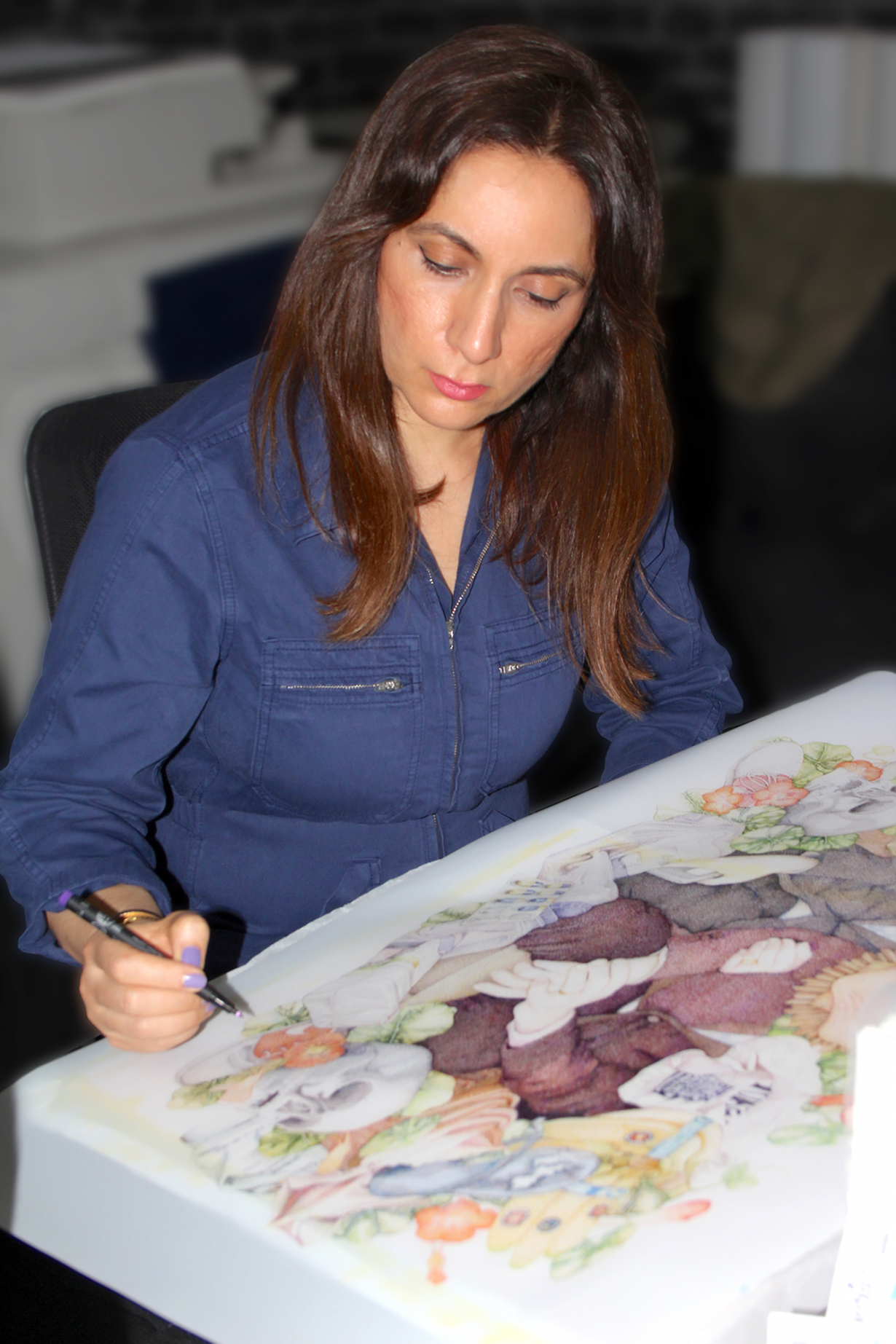
ArtReview Tell ArtReview what you plan to exhibit in Venice. What has influenced or inspired you?
Faiza Butt I have adopted a two-prong approach. Not only do I want to draw from the rich cultural history of Punjab, Pakistan, I also want to combine my research with a social purpose and community engagement. Pakistan, as an emerging South Asian nation of staggering population, faces multiple challenges. I want to present a body of work that can be a legacy in the reservoir of knowledge, and document practices that can potentially go extinct in the current industrial age. Art that engages socially has been the bedrock of my practice. My inspiration comes from non-fine art sources such as folk crafts and intergenerational practices of functional arts. My project combines historic information with aesthetics and craftsmanship. The research is driven from historic monuments, museum collections, memory and imagination, working with women artisans, natural dyes and techniques homed in time.
AR In what ways (if at all) does your work relate to the theme of the Biennale exhibition, In Minor Keys?
FB The poetic premise of In Minor Keys is really inspiring. The minor keys as in musical notes can be melodic, yet wistful and empathetic. In keeping with this notion, I work with historic textile crafts of the Punjab region as the bedrock of my concept. The aim is to collaborate with the artisans practising intergenerational skills, as a bid to preserve and extend the meaning of these traditions.
AR Why is the Venice Biennale still important, if at all?
FB The Venice Biennale is nearly a 133-year-old art event. It has blazed a trail for many other art events globally to follow suit. Pakistan has not had many appearances at such a significant art event, despite having a thriving art scene. I hope to bring a body of work that adds to the pool of world knowledge.
AR What role does a national pavilion play at a time of increasing confrontational nationalisms? Is it about expressing difference or commonality?
FB I strongly believe that artists carry the responsibility to be the cultural ambassadors of their country. It’s their duty to bring to attention the knowledge and information that does not reach popular media. An international biennale is a great opportunity to introduce historic facts, vibrant yet less-known traditions and shared social duties of a country to a global audience.
Art must speak a universal language of humanity. It will fail its purpose if it indulges in nationalism, divisions or exclusions. My project for the Pakistan Pavilion is a reminder that culture is an active system that involves foreign influences in its growth. The exchange of technology, philosophical ideas and arts has created the diverse tapestry of global cultures and traditions. I hope to create a project that connects with cultures of South Asian and Middle Eastern regions. In these divided troubled times, art can be the ultimate handshake of humanity.
AR Who, for you, is the most important artist (in any discipline) that your country has produced?
FB I believe Syed Sadequain Ahmed Naqvi was the greatest artist to have emerged from the state of Pakistan. A giant among the modernists of the South Asian region, his distinct rendering style and his unique subject matter have captivated audiences from East to West.
AR What is something you want people to know about your nation that they might not know already?
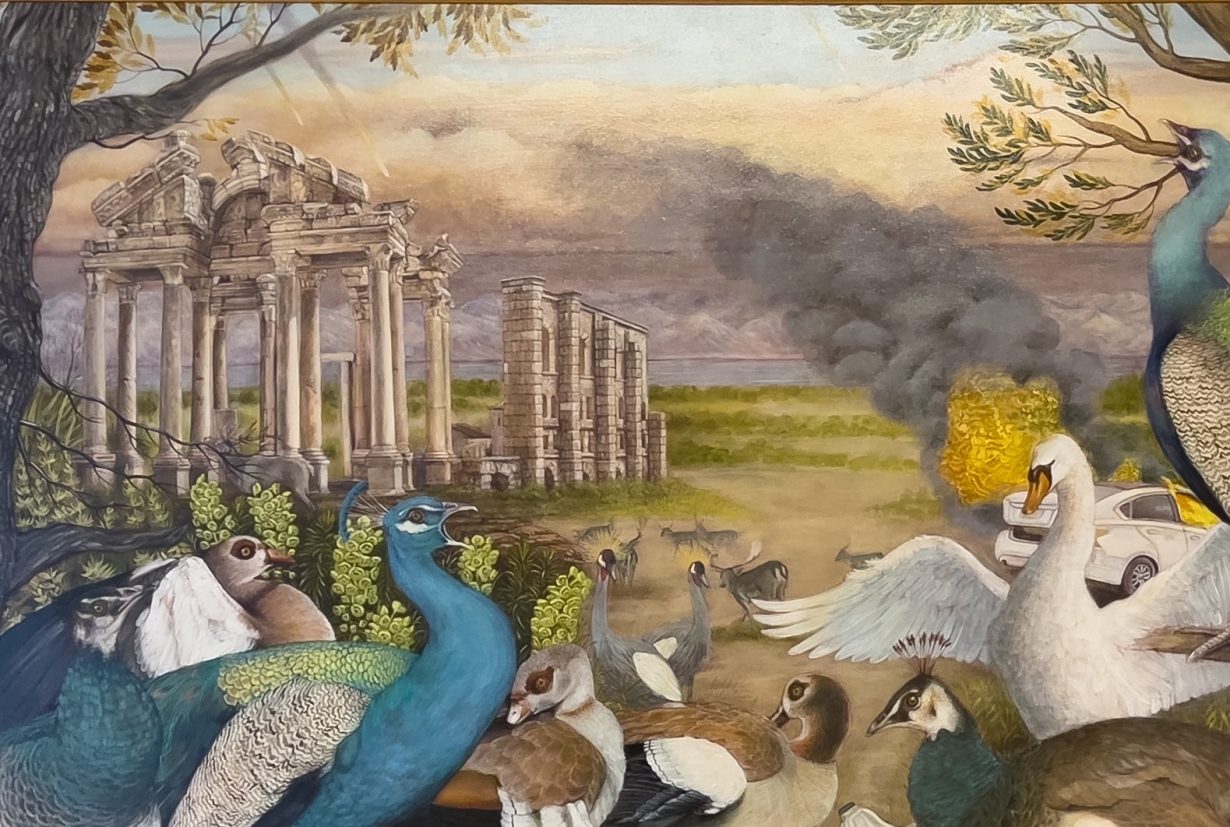
FB It’s difficult to judge what an international audience does or does not know about a particular country. But I am planning a historic survey of Punjab, a region that drew many empires to its fertile lands. Alexander the Great reached the region in 362 BC and founded cities there. He stationed appointees as he retreated. His appointed governor eventually adopted the local Gandharan Buddhist faith, and through that emerged one of the most celebrated strands of Buddhist art from the region. I cite these historical facts because a nation or a region can be reduced to an identity reported in contemporary media. It’s important to develop the perspective that Eastern cultures have syncretised with Western invasions. The region of Pakistan was once part of the Hellenistic Empire.
AR Given that you are exhibiting in a national pavilion, is there something (a quality or an issue or attitude) that distinguishes the art of that nation from that of others? That makes it particular? Are there specific contexts that it responds to? Or do you think that art is a universal language that goes beyond social, political or geographic boundaries?
FB As a Pakistani artist I hold my own aesthetic sense due to my unique cultural experiences. Cultural markers and characters can be differences we celebrate. The artist must rise above the framework and rigid restraints of identity. Pakistan is a nation carved out of thousands of years of history. I can say that most of the international audience is probably not aware of its vibrant cultural past. Hence, I took it upon myself to create a body of work that draws from the cultural history of Punjab (a province that suffered immense violence during the partition of India and Pakistan in 1947), yet also to create work that can serve as a building block towards the story of humanity. I believe that in the current hostile global environment art must respond as a unifying force, and it can only do that by acts of collaboration and engagement.
Artists must not only be social commentators documenting their times, but also torchbearers for the use of materials and resources that are environmentally sustainable. Pakistan has a lower contribution to the global carbon footprint; yet due to recent climate shifts, it has suffered the worst draughts and floods. Not only are the narratives of my project towards an inclusive way of considering history, but the very materials express ideas about preservation of traditional craft practices, using environmentally sensitive materials and production methods.
AR What, other than art, are you looking forward to seeing – or doing – while you are in Venice?
FB I have had the opportunity to exhibit on the occasion of the Venice Biennale many times, and on each visit I don’t miss the Doge Palace, the Gallerie dell’Accademia and the Peggy Guggenheim Collection. No matter how many times I revisit, I always learn and absorb new information.
AR Could you give us a brief overview of your average working day while creating your presentation in Venice?
FB Presenting a national pavilion is an enormous responsibility. My working day starts early, around 6am. The day is divided among studio time for painting, Zoom calls for managing the collaborative productions and various logistical conversations between me and the wider team.
There are months of planning, strategy and production. My working day can easily be up to ten hours and beyond. But I love my work, it does not feel like work.
AR Can art really change the world?
FB Art is present in all human expressions. If we reduce the notion of art to ‘fine art’, the impact of art reduces in its value. But if we try to understand the spectrum of aesthetics, it becomes clear that art is one of the finest examples of the development of human consciousness and intellect.
Artistic exchange has historically occurred among civilisations. Whether it was through trade or invasion, the aesthetics of one culture made their way into the other. Art exhibited itself in architecture, calligraphy, textiles, ceramics, glass, metalwork, poetry, literature and dance. If we analyse art’s value through a historic prism, then it’s very clear that art has changed, and continues to change, the world.
The 61st Venice Biennale runs 9 May through 22 November 2026