What if artistic innovation emerges from material itself, rather than being imposed on it?
The components are simple: sod and a body. The grassy panels, laid carefully over a person underneath, begin to pulse. This is Ana Mendieta’s Grass Breathing (1974), part of a group of performances, recorded on video, that demonstrate the late Cuban artist’s inventive approaches to her environment. Grass Breathing finds new company in this exhibition, which gathers contemporary, often Latinx or Indigenous American artists whose practices stretch Mendieta’s ideas into the twenty-first century, enlivening unpredictable natural materials in similarly unconventional ways. Their grouping, an opening wall text declares, ‘celebrates kinship through a shared aesthetic language rather than fostering an ethnographic gaze or a desire for cultural authenticity’. Some unifying ideas emerge, particularly around nature’s ephemerality and its formal dictates, but the divergent array of artworks on view eventually strays from the exhibition’s compelling concerns.
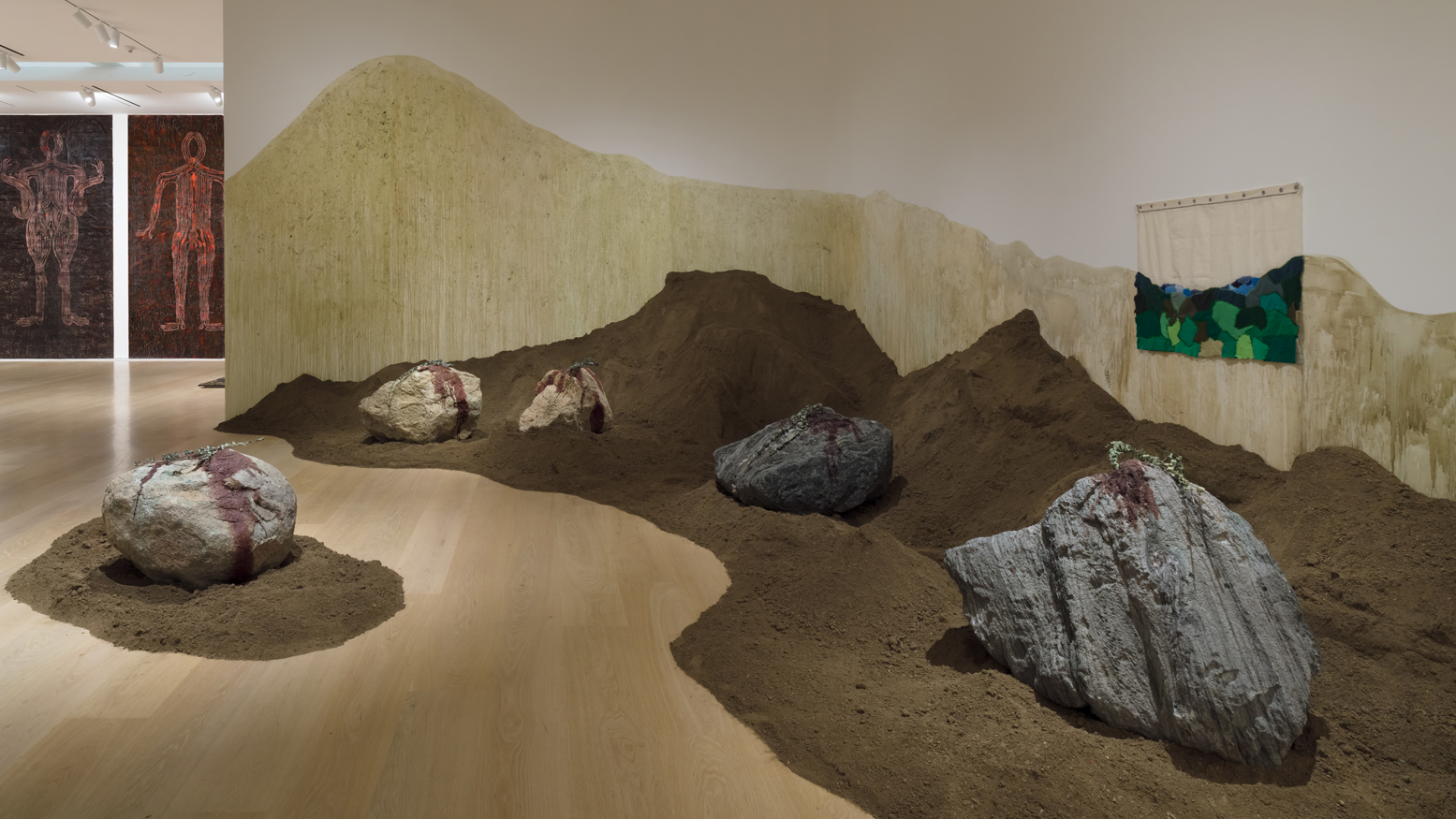
Diné artist Raven Chacon’s aural composition Study for Vertical Earth (2026) fills the foyer: a thunderous, bass-heavy score, the result of underground microphones recording subtle earthly movements. Multiple artworks made using rocks, stone and sand greet the viewer upon entry, in turn highlighting the sanitisation of most institutional spaces. Edgar Calel’s room-size installation Ch’ablin nu rayb’el Chua taj ab’ej (Splashes of My Desire on Top of Stones, 2026) stages local sandstone and lava boulders among mountains of brown dirt, each rock adorned with ceremonial offerings: dried flowers, eucalyptus and the artist’s own oxidised blood. In the next gallery, Jackie Amézquita further deconstructs the visual language of the museum: Cuerpos terrestres en fluidez (Terrestrial Bodies of Fluidity, 2025–26) features the destroyed remains of two monolithic, columnal sculptures, now broken into small bricks that resemble crushed pedestals, as though the museum itself were an ancient ruin.
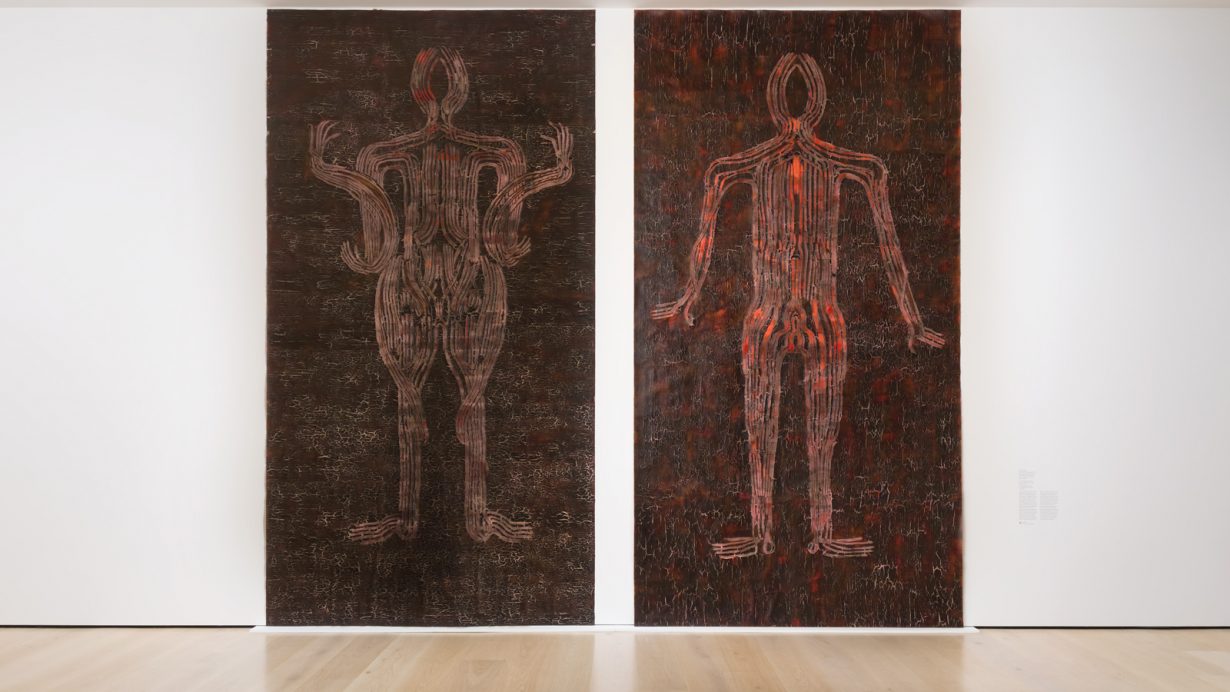
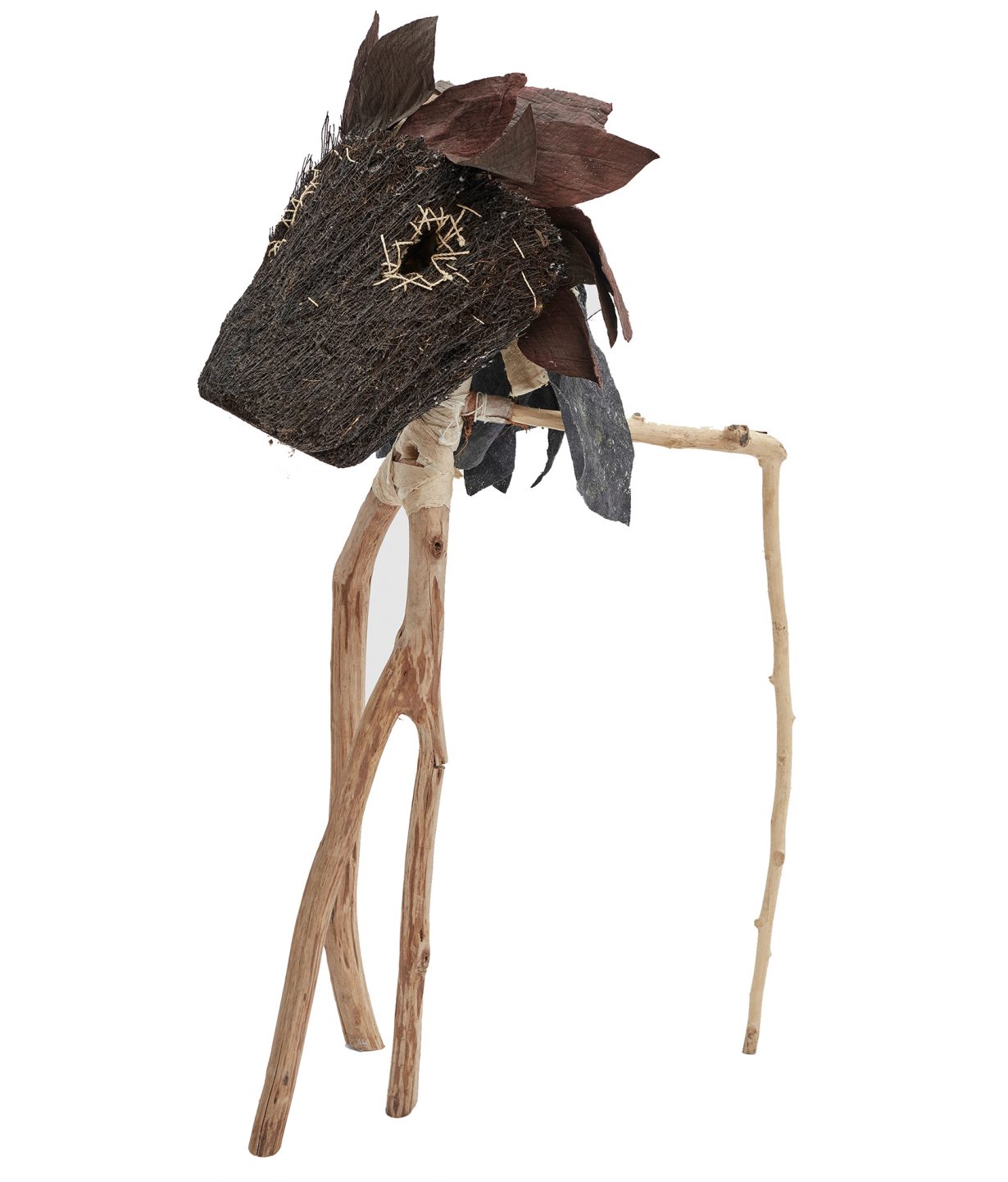
Others deviate less from Western artistic forms but use volatile, restrictive materials – often naturally derived ones native to the Americas. Carmen Argote, in an archetype of stillness (2026) and an archetype of touch (2025), has drawn gestural floor-to-ceiling depictions of human bodies using avocado mashed into an oily pigment – a substance that gradually destroys the paper beneath. Indigenous Amazonian artist Nereyda López crafts strikingly emotive figurative sculptures from chambira palm tree branches; Ta+fe/Sacharuna (2019) transforms one tapered frond into an indignant, hoop-earringed figure, its convex shape curving to form a chin, jaw and forehead. In some cases, an artist’s unique materials are difficult to discern, but require subtle alterations to gallery display: Peruvian artist and cosmologist Santiago Yahuarcani applies colour extracted from local plants – similar in appearance to that of tempera or acrylic – to papery tree bark ‘canvases’ to make vivid narrative paintings that must be kept in low light to avoid damage (Bufeos robando mujeres en la fiesta del yacuche [Dolphins Abducting Women in the Festival of the Yacuche], 2022).
Nature and climate change are recurring subjects, but not all works coherently engage these concerns at a formal level, particularly in later galleries. In Patricia Dominguez-Claro’s Plant Saga installation (2026), dried roses scatter decoratively, and incomprehensibly, alongside watercolour drawings of women and military drones. Others employ clay in order to explore personal history and experience, but this material choice feels incidental: Naomi Gamarra’s wall-hanging sculpture Mirando arriba (Looking Up, 2025) is an arched, decorative ceramic comb adorned with dangling clay lice, an eerie, if heavy-handed, exploration of ancient Peruvian bodily rituals and contemporary femininity that also feels out of place here. These works often deploy ancient ceramic techniques, but their methods have little influence on the results: Raven Halfmoon’s adjacent Soku Sahyodahney’ah (Caddo – Sun Twins, 2023) collages contemporary cultural signifiers with those of her Caddo Nation ancestry: two longhaired, conjoined ceramic figures – the ‘Sun Twins’ of Caddo origin stories – drip with graffitilike red and yellow colouring, the artist’s ‘tag’ scrawled across the back of their shared torso.
What’s most exciting about this exhibition is the idea that artistic innovation emerges from material itself, rather than being imposed on it – and that many sculptors, painters and ceramicists have long considered this challenge as more than a means to an end. But the energy present when I entered – lively chatter punctuated by Chacon’s guttural music – was not palpable as I exited through its final rooms, which overflowed with artworks that diverged from the exhibition’s earlier focus on material into explorations of identity instead. At best, Several Eternities vocalises the radical ‘shared aesthetic language’ of a growing force in contemporary art, but too often its inclusions dissolve into illegible survey.
Several Eternities in a Day: Form in the Age of Living Materials at Hammer Museum, Los Angeles, 5 April – 23 August
From the September 2026 issue of ArtReview – get your copy.