Though these works might resonate with certain experiences of Hong Kong’s recent past, they’re far from political commentary
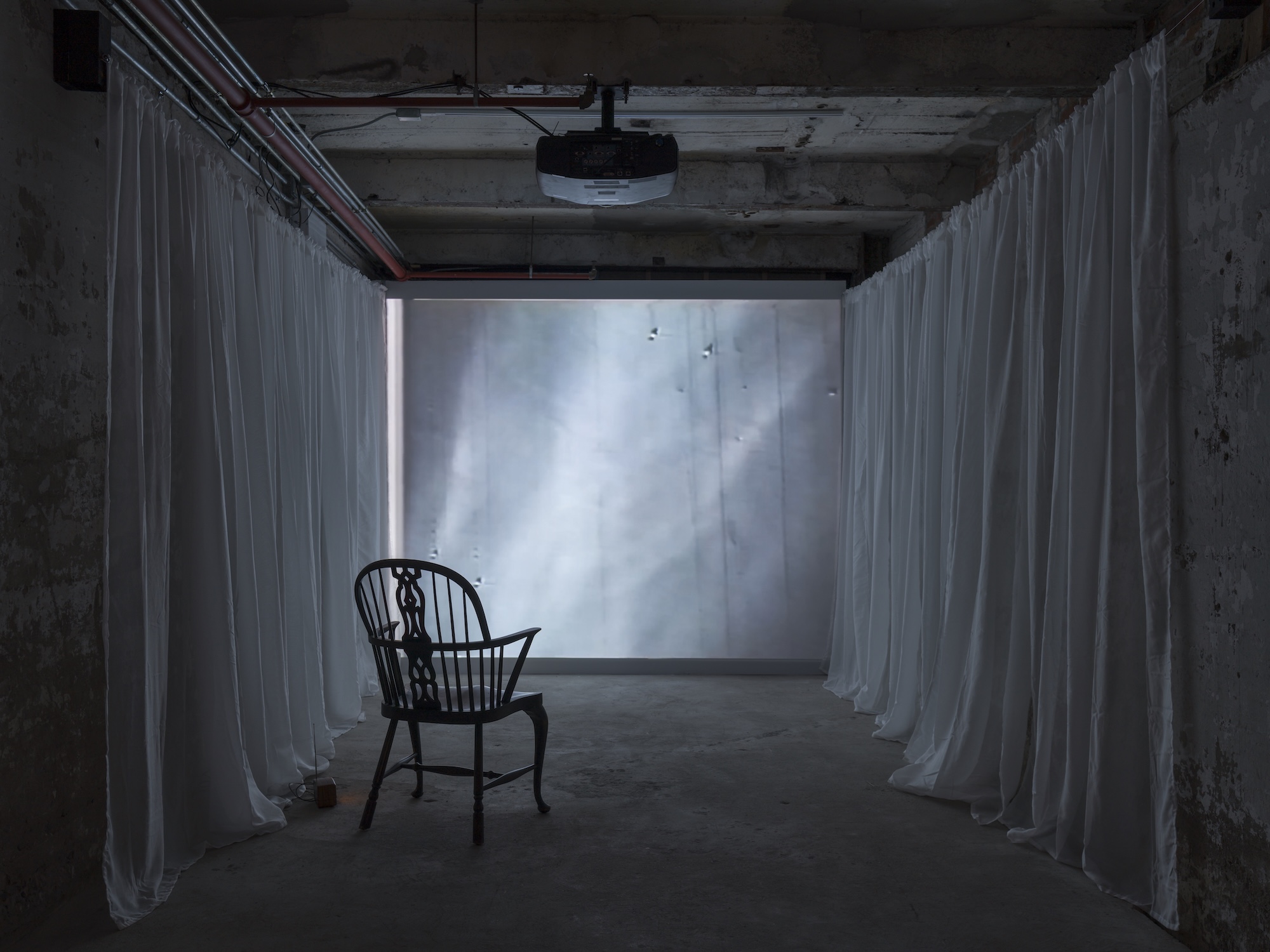
Ellen Pau’s career survey at SculptureCenter is not as political as the circumstances in Hong Kong under which her work emerged – during the 1980s and 90s, between the signing of the Sino-British Joint Declaration and the 1997 handover – might suggest. Take the modest but charming single-channel black-and-white video Operation Theatre (1995), which plays on a monitor mounted high on the wall in the first gallery, as though part of a surveillance system. Semitransparent hospital workers and patients pass through a hallway, their forms rendered ghostlike, evoking the bleary-eyed vision associated with fever or illness in this gently altered but otherwise quotidian fragment. Similarly, She Moves (1988) – the earliest work in the exhibition and a quintessential example of video installation in the golden age of the form – is a wall-size projection showing raindrops sliding down a window. The projection is flanked by sheer curtains; a radio on the gallery floor next to an empty chair blasts the cloying 1939 British ballad We’ll Meet Again. Here and now, the song’s promise of reunion becomes less a foreboding allegory for the authoritarian rule eventually imposed on Hong Kongers by the Chinese government and more of an ironic soundtrack to sentimental wallowing. Though these works present psychological states that might resonate with or stand adjacent to certain experiences of Hong Kong’s recent past – waiting, being watched and grieving – they are, just in themselves, far from political commentary.
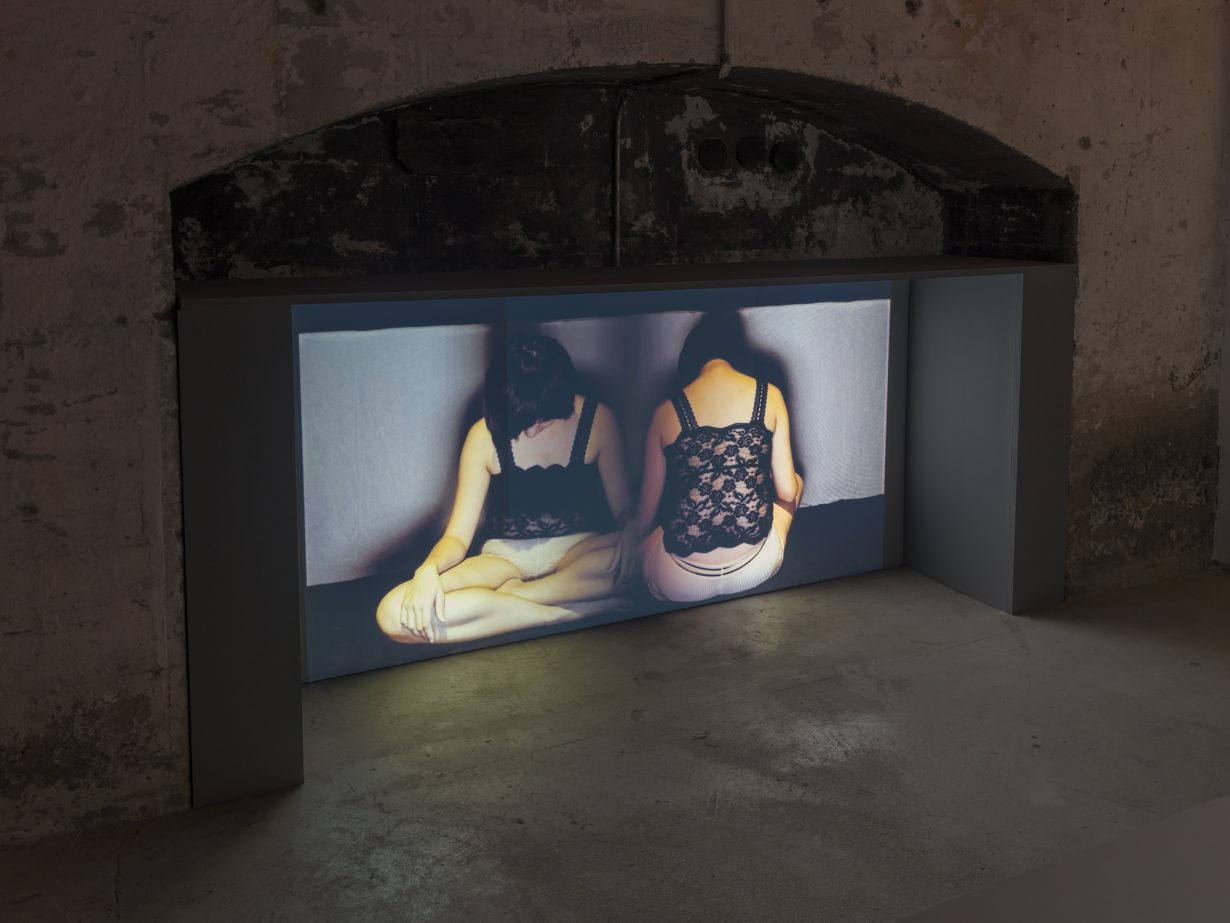
Pledge: Bik Lai Chu (1993/2018) – one of Pau’s best-known works – and Pledge: I Can Only Tell It to Strangers (1996/2018) both deploy video recordings of Pau hunched on the ground in her underwear, rhythmically striking her head against the underside of a dressing table. Curators and critics have pointed out that the word ‘pledge’ here refers to both a popular line of cleaning products and China’s promise to maintain Hong Kong’s pre-handover freedoms, but if indeed Pau is simultaneously hitting her head against patriarchy and broken political promises, the titles are doing a lot of heavy lifting. The same could be said for The Great Movement: Red Stock (1996/2018), a digital projection of a nearly lifeless hand blocking a passageway in SculptureCenter’s mazelike basement. The title refers to China making shares of state-funded companies available on the Hong Kong stock exchange and the territory’s dependence on the resulting capital influx, but the hand alone doesn’t convey what the exhibition guide describes as ‘a sense of foreboding’ related to the economic situation. It just hangs there.
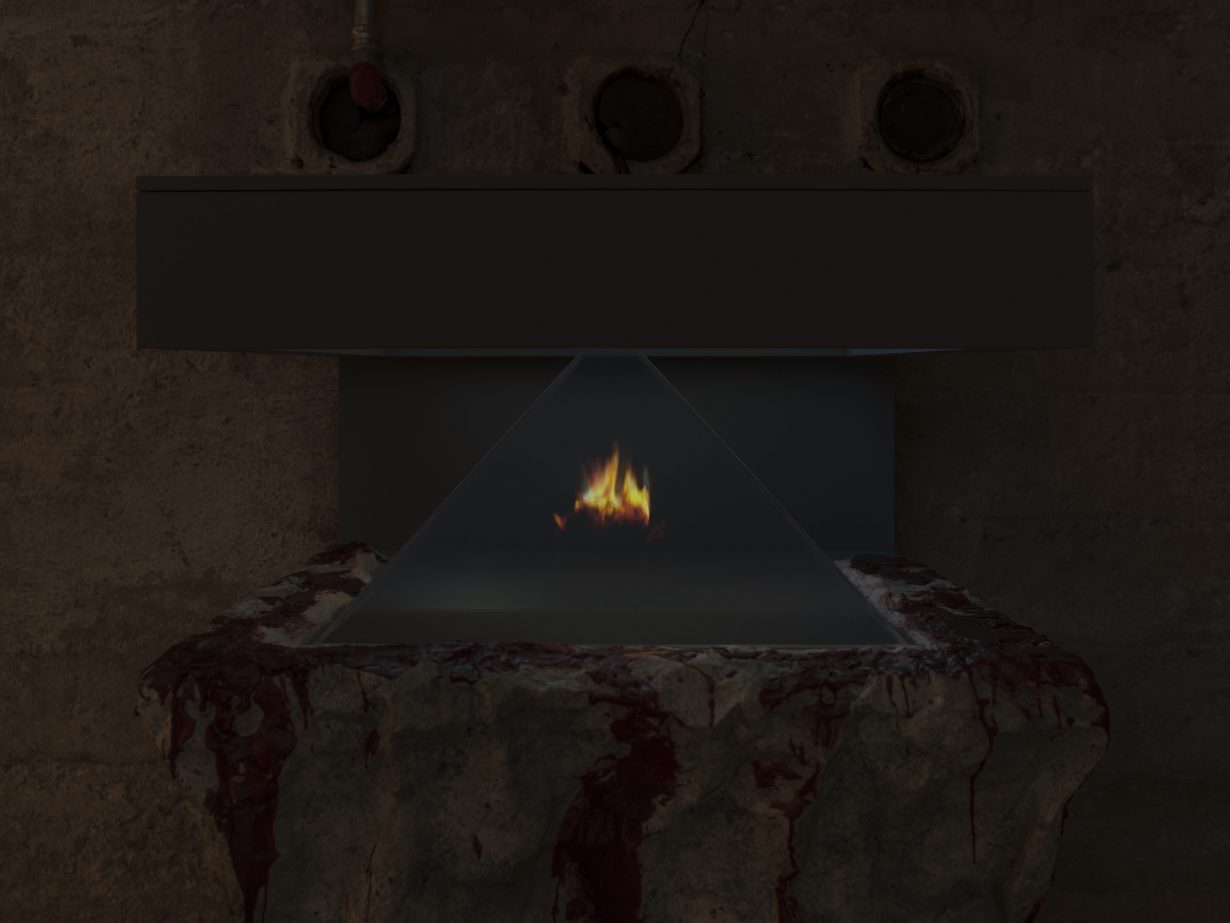
One of the newest and least resolved works in the exhibition, Where Have All the Flowers Gone (2026), is unmistakably bland and unfortunately so, right when the artworld is starting to pay attention to Pau’s long-term dedication to experimental video as an artist and curator. Evoking vigils and protests, its centrepiece, an enlarged candlelike form, displays a three-dimensional video flame that flares when viewers approach. Nearby, two common dinner plates feature thinly decorative designs generated by spinning a representation of the bauhinia, an orchid that serves as Hong Kong’s primary symbol, appearing on currency, on the regional flag and at pro-democracy demonstrations. The works engender none of the fear, exhilaration or solidarity of vigils or protests. At best, they resemble souvenirs from these events.
Ellen Pau: She Moves at SculptureCenter, New York, 28 May – 16 August
From the September 2026 issue of ArtReview – get your copy.
Read next Michele Chu: “In Hong Kong There’s an Undercurrent of Loss”