“Lebanon is often perceived through simplified images: sometimes as an extension of the West within the Middle East, sometimes as a place defined by conflict. But in reality it exists somewhere in between these projections”
ArtReview sent a questionnaire to artists and curators exhibiting in and curating the various national pavilions of the 2026 Venice Biennale, the responses to which will be published daily in the leadup to and during the Venice Biennale, which runs from 9 May through 22 November.
Nabil Nahas is representing Lebanon; the pavilion is in the Arsenale.
Celebrating Visions. Versace partners with ArtReview to share stories from the 2026 Venice Biennale.
ArtReview Tell ArtReview what you plan to exhibit in Venice. What has influenced or inspired you?
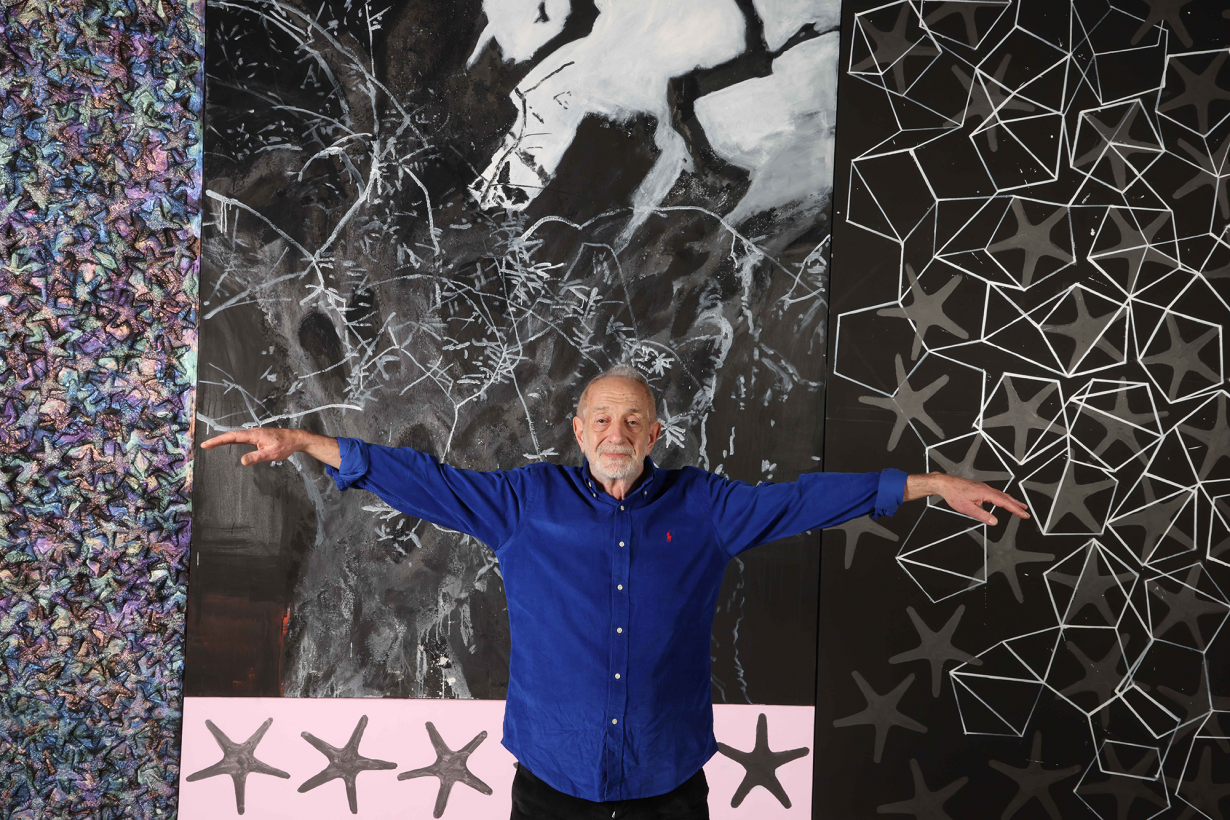
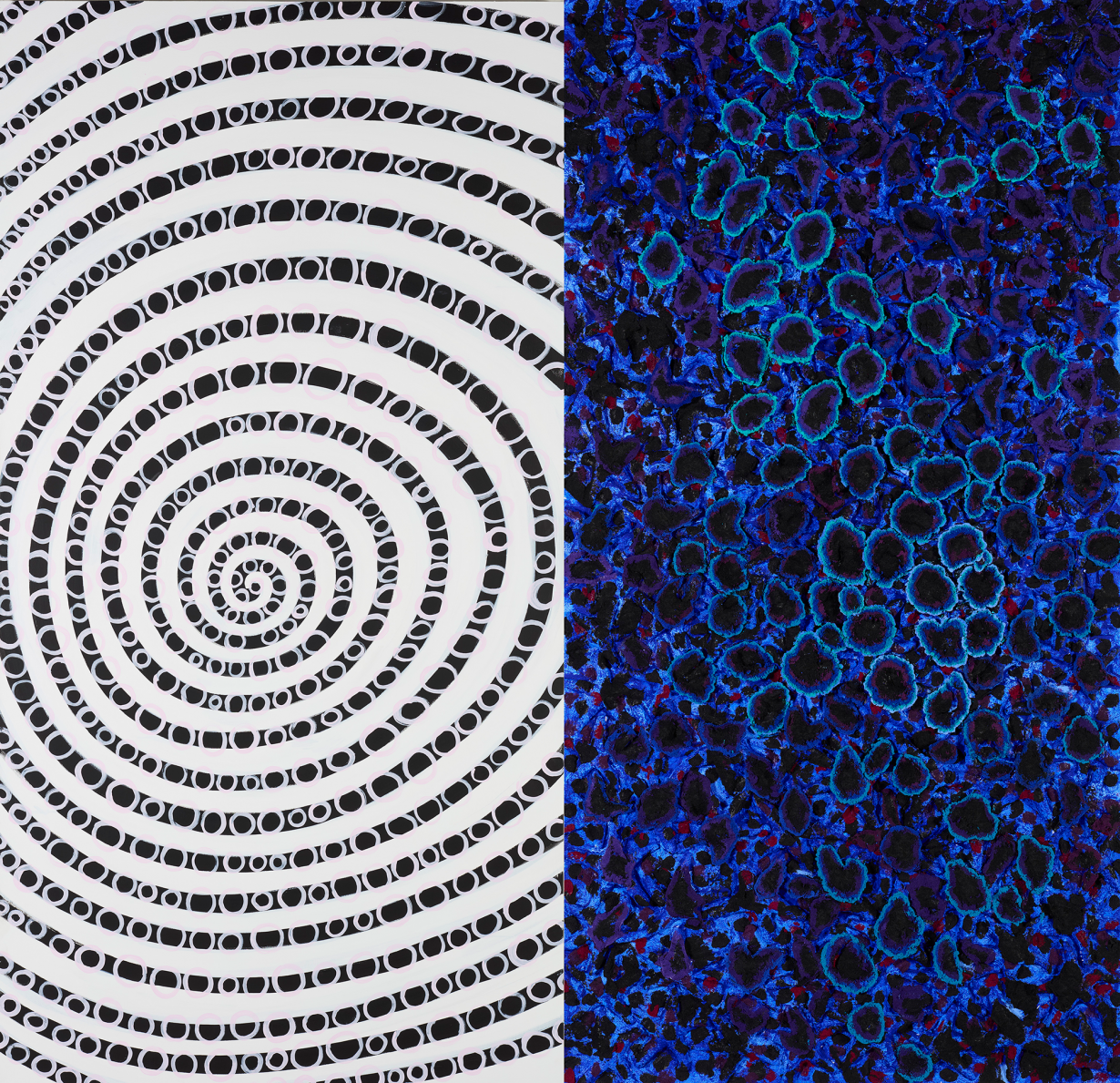
Nabil Nahas I am presenting a 45m-long installation composed of 26 panels, each rising to nearly 3m and forming a continuous frieze that surrounds the viewer and creates an immersive environment rather than a sequence of images. It is not meant to be read in a linear way, but to be experienced, almost navigated. The project is titled Don’t Get Me Wrong – which says everything, or perhaps nothing at all.
I have always been interested in nature in its broadest sense: from the infinitely small to the infinitely large. It makes little difference to me whether I am looking through a microscope or a telescope. A simple phenomenon, like the trace left by a stone in water, already contains the logic of something much larger, almost cosmic. For me, nature is not a subject but a process that unfolds across scales. What fascinates me in particular is its behaviour: the way forms emerge, repeat, transform, organise themselves. In my work, I try not to represent nature but to follow it, to mimic its movements, its internal logic. In a way, it becomes a material that allows me to construct my own visual language.
There was no preconceived idea when I began working on the Biennale installation. The work developed gradually almost on its own terms, which is how I have always worked. But as the installation started to take shape, I realised that I wanted to bring together many of the styles I have invented over the years. I have never settled into a single signature style. I have always moved between different techniques, materials and subject matters. Here, they began to coexist, to overlap, to respond to one another. In that sense, the project became something like a reflection on my own work. Not in a retrospective way, but more as a living system, where different elements interact and evolve. You could say that I was influenced by my own work… which is both the simplest and the most complicated answer.
AR In what ways (if at all) does your work relate to the theme of the Biennale exhibition, In Minor Keys?
NN I don’t tend to think of my work in direct relation to a curatorial theme, but I was struck by the idea behind In Minor Keys. It suggests a shift away from the declarative towards something more subtle and perceptual. In this installation, although the scale is monumental the experience is not meant to be overwhelming in a literal sense. It unfolds more quietly, through rhythm, repetition and variation. By bringing together different visual languages from my work, a kind of internal resonance begins to emerge. Something perhaps closer to a silent musicality than to a fixed statement. What interested me was to invite the viewer into a more meditative, sensorial experience, where meaning is not imposed but gradually felt. There is no hierarchy or single point of focus. The eye moves, returns, gets lost, finds connections. A bit like listening rather than reading. That’s how the work aligns with this idea of a ‘minor key’: not as something diminished, but as a different mode of attention. A way of engaging with painting that is less about assertion and more about presence, about allowing things to unfold in time and perception.
AR Why is the Venice Biennale still important, if at all?
NN It still matters, perhaps more than ever. Not so much as a spectacle, but as a moment of concentration. For me, what sets the Biennale apart is that it exists somewhat outside the commercial framework that dominates so much of the artworld (and art fairs) today. It allows for a different kind of engagement where artists can take risks – or simply take their time. It is also a kind of thermometer. You can sense what is happening in art across very different geographies but also more broadly what is happening in the world. The two are never really separate. And then there is something quite simple: for a few months, in one place, a large number of voices coexist. Not necessarily in agreement, but in proximity. That in itself is quite rare.
AR What role does a national pavilion play at a time of increasing confrontational nationalisms? Is it about expressing difference or commonality?
NN I think it is inevitably both. A national pavilion carries a certain identity, history and context but, at the same time, it exists within a shared space. There is a lot of tension and polarisation, but also a strange and fragile possibility of coexistence. Very different voices are brought together for a moment, not to resolve anything but simply to be present alongside one another. Each artist approaches this from their own position that is shaped by where they come from but also by their own sensibility. What matters is that this space still allows for a certain freedom of expression, without being entirely reduced to a single narrative. Personally, I have never thought of my work as political in a direct or militant way. It is more instinctive, more visceral. But of course, one is always connected to a place and history, consciously or otherwise.
AR Who, for you, is the most important artist (in any discipline) that your country has produced?
NN Excluding myself?
More seriously, Lebanon has always had a remarkably rich artistic scene across disciplines and generations. It would be very difficult to single out one figure as the most important because each artist, in their own time, has captured something essential about the country. What is interesting is that Lebanese artists often reflect different layers – historical, cultural, emotional – of a very complex reality. Each one reveals a particular nuance, a moment, a way of being in the world. So rather than one defining figure, I would say it is this accumulation of voices over time that forms the real richness of Lebanese art.
AR What is something you want people to know about your nation that they might not know already?
NN It is something I cannot help but feel and that I think many Lebanese people would recognise: a persistent sense of pride, shaped perhaps by the many fractures the country has endured over time. Lebanon is often perceived through simplified images: sometimes as an extension of the West within the Middle East, sometimes as a place defined by conflict. But in reality it exists somewhere in between these projections, in a space that is far more complex, layered and difficult to define. What people may not fully realise is how deep these layers run. You are standing on a land where civilizations have overlapped for thousands of years, without ever completely erasing what came before. There is a remarkable capacity to absorb, to adapt, to transform and yet to retain a sense of identity. Byblos, for instance, is considered one of the oldest continuously inhabited cities and is closely tied to the origins of the alphabet. These are not just historical facts but part of a longer cultural memory that still resonates today. Perhaps this is what defines Lebanon most: not a fixed identity but an ongoing negotiation between histories, influences, contradictions. A place that has learned, out of necessity, how to remain open without entirely dissolving.
AR Given that you are exhibiting in a national pavilion, is there something (a quality or an issue or attitude) that distinguishes the art of that nation from that of others? That makes it particular? Are there specific contexts that it responds to? Or do you think that art is a universal language that goes beyond social, political or geographic boundaries?
NN I have always been a little cautious with the idea of national exceptionalism. I don’t think art can be reduced to a fixed identity or confined within borders. At the same time, artists are inevitably shaped by where they come from, whether they choose to address it directly or not. In the case of Lebanon, there is a layered, turbulent but also deeply formative history that is difficult to escape. It tends to leave a kind of imprint. Even when artists leave, even after many years, something of that experience remains. Not necessarily as a subject but as a way of perceiving, responding to and navigating complexity. I have spent 55 years of my life in the United States. That has been an essential part of my development as both a human and artist, but it has never replaced my connection to Lebanon. The two exist in parallel, sometimes in tension, sometimes in dialogue. So perhaps what distinguishes Lebanese artists is not a specific style or theme but this continuous negotiation between different contexts and histories. And beyond that, of course, there is something in art that resists all of these categories, a language that ultimately moves across boundaries, even as it carries them within it.
AR What, other than art, are you looking forward to seeing – or doing – while you are in Venice?
NN Having dinner at Da Arturo, which has become a kind of ritual for me in Venice. I have always loved the place – its atmosphere, owners, food and warmth.
AR Could you give us a brief overview of your average working day while creating your presentation in Venice?
NN I tend to work long days, around ten hours, often more, especially in the lead-up to the Biennale. For this project, I chose to work from my studio in Lebanon, in the village of Ain Aar. It is a place I am deeply connected to, surrounded by nature, and it offers a kind of quiet concentration that I need in order to work. My process is not linear. I move constantly between different canvases, different techniques, different visual languages. Sometimes within the same day or hour I shift from one work to another, from one approach to something entirely different. It is a way of keeping the work alive, allowing each piece to evolve in relation to the others. Working from Lebanon this past year has also given the project a particular meaning. In many ways, it has been a very challenging time for the country. But perhaps that makes the act of working, of continuing to create, even more essential.
AR Can art really change the world?
NN I wish it could, but I really doubt it.
The 61st Venice Biennale runs 9 May through 22 November 2026