The artist and activist rages against environmental destruction and the efforts to call those responsible to account
Carolina Caycedo is an artist and environmental activist – dual roles that are fully evident in this retrospective. The exhibits flow between the LA-based Colombian’s more formal assemblage sculptures, to documentation of the political causes she is involved in. It is the latter that engages the most.
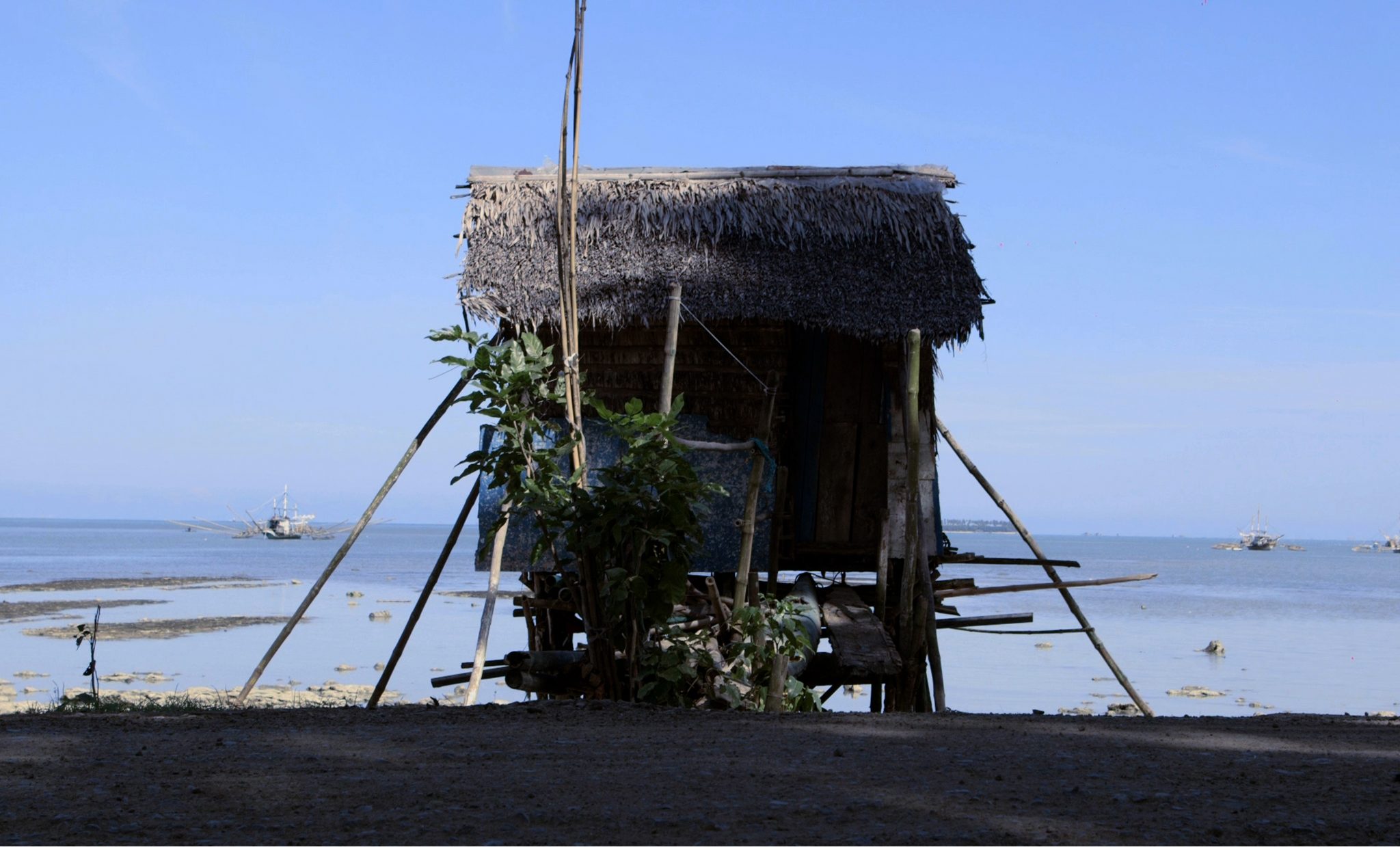
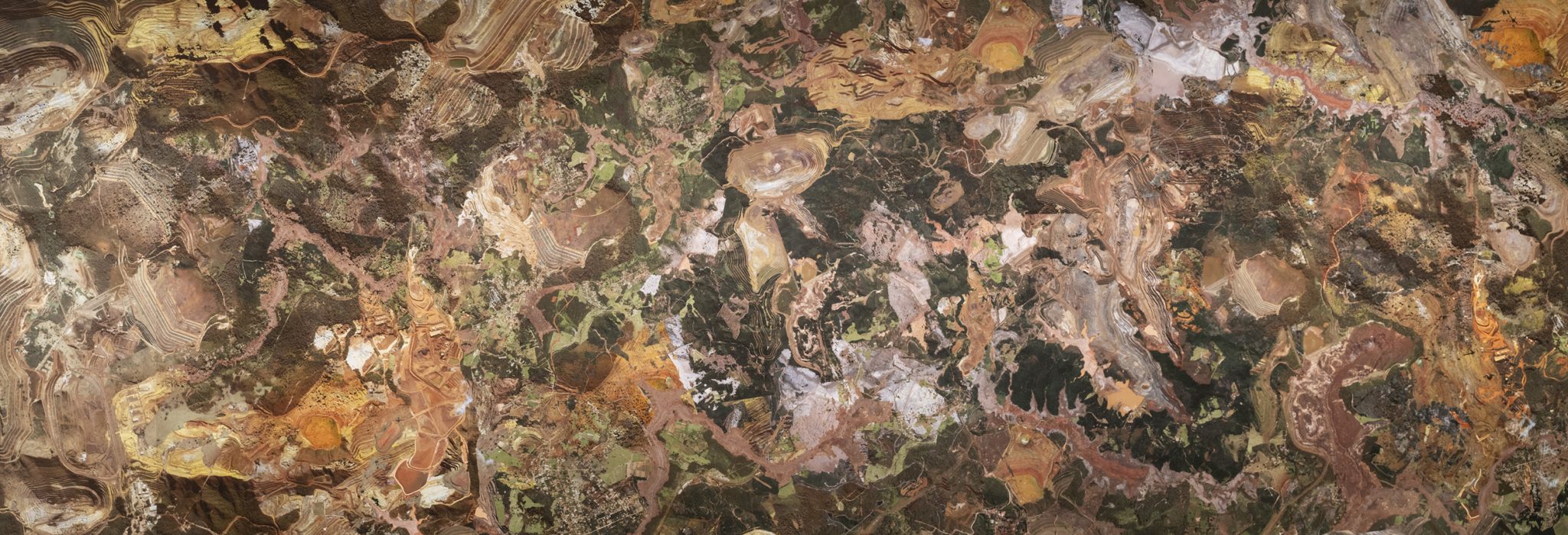
On opposite walls of the main gallery are two vast photomontages: The Collapsing of a Model (Brumadinho) (2019) could, at first glance, be mistaken for a murky abstract painting in a likeably Per Kirkeby vein. Closer inspection reveals manipulated and repeated aerial photography of a devastated mud-caked landscape, while the title suggests that we are witness to the awful aftermath of the 2019 Brumadinho dam disaster in Brazil. The sweeping brown sludge is a testament to the fatal consequences that befell the residents, the environment and local economy of the Minas Gerais town, when 12 million cubic metres of toxic mining waste broke through its manmade concrete wall. On the opposite side of the gallery, Elwha’s Healing (2022/26) is more hopeful, a mural documenting the blue waterways of the titular river in the US Northwest, which returned to its natural course after dams were (carefully) removed following years of activism.
Between these are paintings, drawings, photographs and sculpture that document both environmental destruction and the efforts to call those responsible to account. Confluências (2026), a new work that gives the exhibition its title, is a delight: a textile collage of sloganeering T-shirts, flags and banners from environmental activist groups, hung on a curving architectural frame to form a spiralling corridor. LOS AFECTADOS DE TODO EL MUNDO, ÚNIVOS! proclaims one; ÁGUA E ENERGIA NÃO SÃO MERCADORIA!; TEVGERA EKOLOJI UA KIRDISTAN A EWRUPAYE! No need to speak Spanish, Portuguese or Kurdish for these to ignite a fire in your belly; particularly when these calls to action run alongside pumping fists and similar insignia of militancy. Nearby a whole wall of framed and captioned line drawings pay homage to Caycedo’s heroines: women who have fought, and many who have died, for environmental and intersectional rights. My Feminine Lineage of Environmental Struggle (2018–19) includes portraits of Adelinda Gómez Gaviria, part of the Women of the Colombian Massif movement, who battled gold mining in her country. Assassinated in 2013, she is shown stern and determined. Dora Alicia Recinos Sorto, the El Salvadorean activist, likewise killed, smiles, her hair tied back; towards an unseen crowd Marielle Franco, the slain gay, Black favelada councillor from Rio, rallies into a microphone.
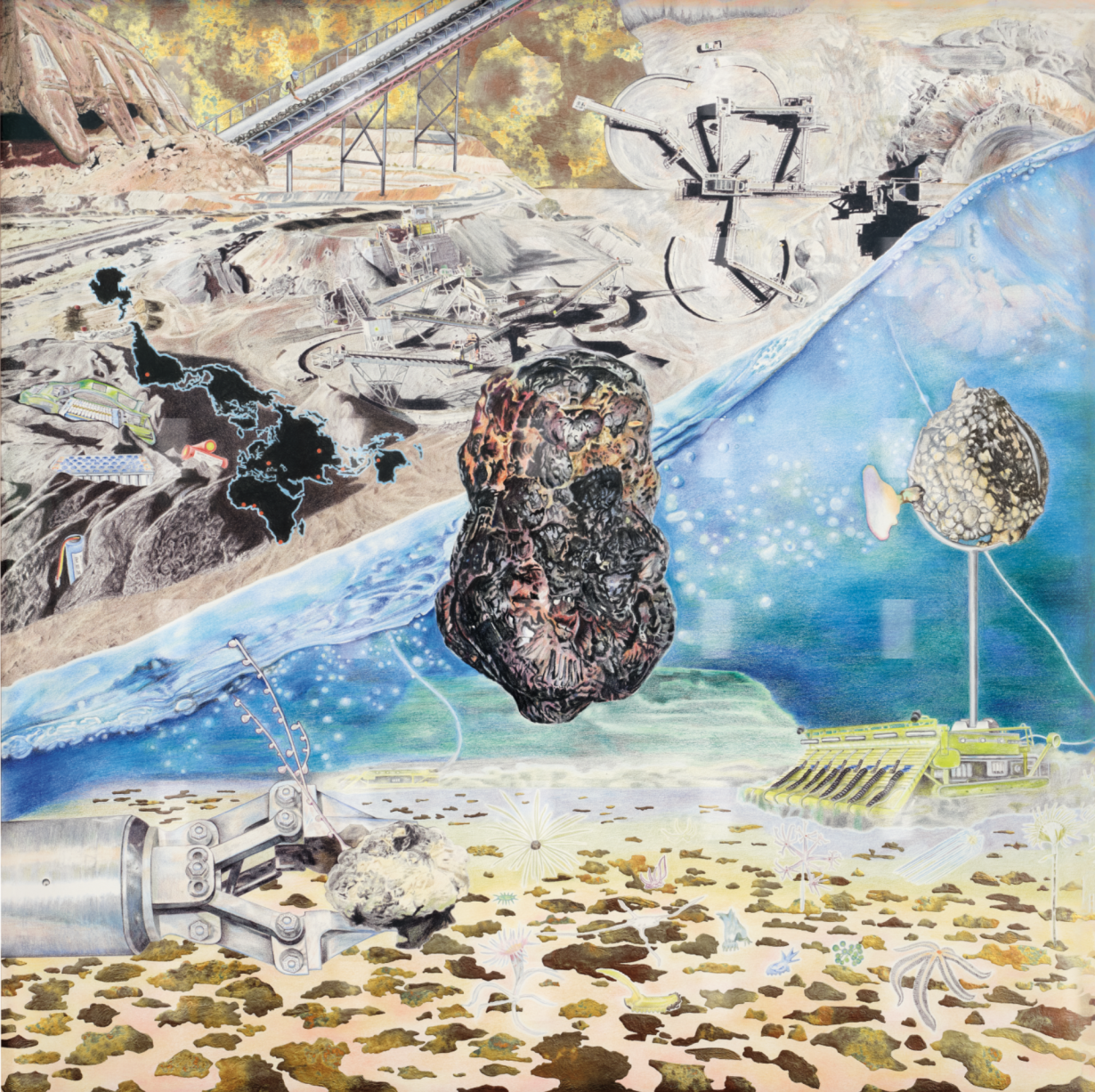
Protest will only ever be one facet in the fight against environmental degradation; the issues are tangled, but Caycedo questions whether or not capitalism has the answers. For the Mineral Intensive series (2023–) she draws anonymous mining facilities that are extracting the various minerals that the World Bank has identified as necessary – ironically – to the clean energy transition away from fossil fuels. (The gallery’s interpretive texts do a lot of necessary contextual heavy-lifting in this show: without the explanation one wouldn’t be able to assume the artist’s critical stance in this series, for example.) Manganese Intensive (2025) and Titanium Intensive (2024) show in crisp detail (exploiting the pseudo-innocence of a child’s colouring-set-like palette) the billowing chimneys and scarred land that one would not normally associate with a ‘green’ revolution. In a series of nine wall sculptures, precious stones and pendants on chains (all presumably found), which Caycedo describes as Amulets for Fair Energy Transition (2022), are made from the same raw materials.
Amid these documentary-inflected works hang more formal sculptures – art that looks like art – a series of ceiling-hung fishing nets, each filled with objects found on Caycedo’s travels. They feel slight in contrast to the more pedagogic projects: formally they are a little kitsch; conceptually they carry none of the political heft of the works aforementioned. This mixed success is carried into a video room that closes the exhibition. The longest of three films, playing sequentially, A Gente Rio (2016) is beautifully shot and gives voice to the people affected by an earlier Brazilian dam disaster. It is powerful, gut wrenching stuff (it was first shown at the Bienal de São Paulo, though its warnings didn’t stop Bienal organisers from last year accepting Vale, the dam’s operator, as a sponsor). In contrast, the shorter videos in the showreel, Apariciones (2018) and Fuel to Fire (2023), both invoking ancestral rites and contemporary dance, are opaque at best, dubiously mystical at worst, dropping a bum note at the end of an otherwise powerful portrait of an artist, and her comrades, fighting the good fight.
Confluences at Museu de Arte de São Paulo, through 4 October
From the September 2026 issue of ArtReview – get your copy.