“The Venice Biennale remains one of the few places where it is possible to speak freely about everything, on equal terms”
ArtReview sent a questionnaire to artists and curators exhibiting in and curating the various national pavilions of the 2026 Venice Biennale, the responses to which will be published daily in the leadup to and during the Venice Biennale, which runs from 9 May through 22 November.
Faig Ahmed is representing Azerbaijan; the pavilion is in the Campo de la Tana.
Celebrating Visions. Versace partners with ArtReview to share stories from the 2026 Venice Biennale.
ArtReview Tell ArtReview what you plan to exhibit in Venice. What has influenced or inspired you?
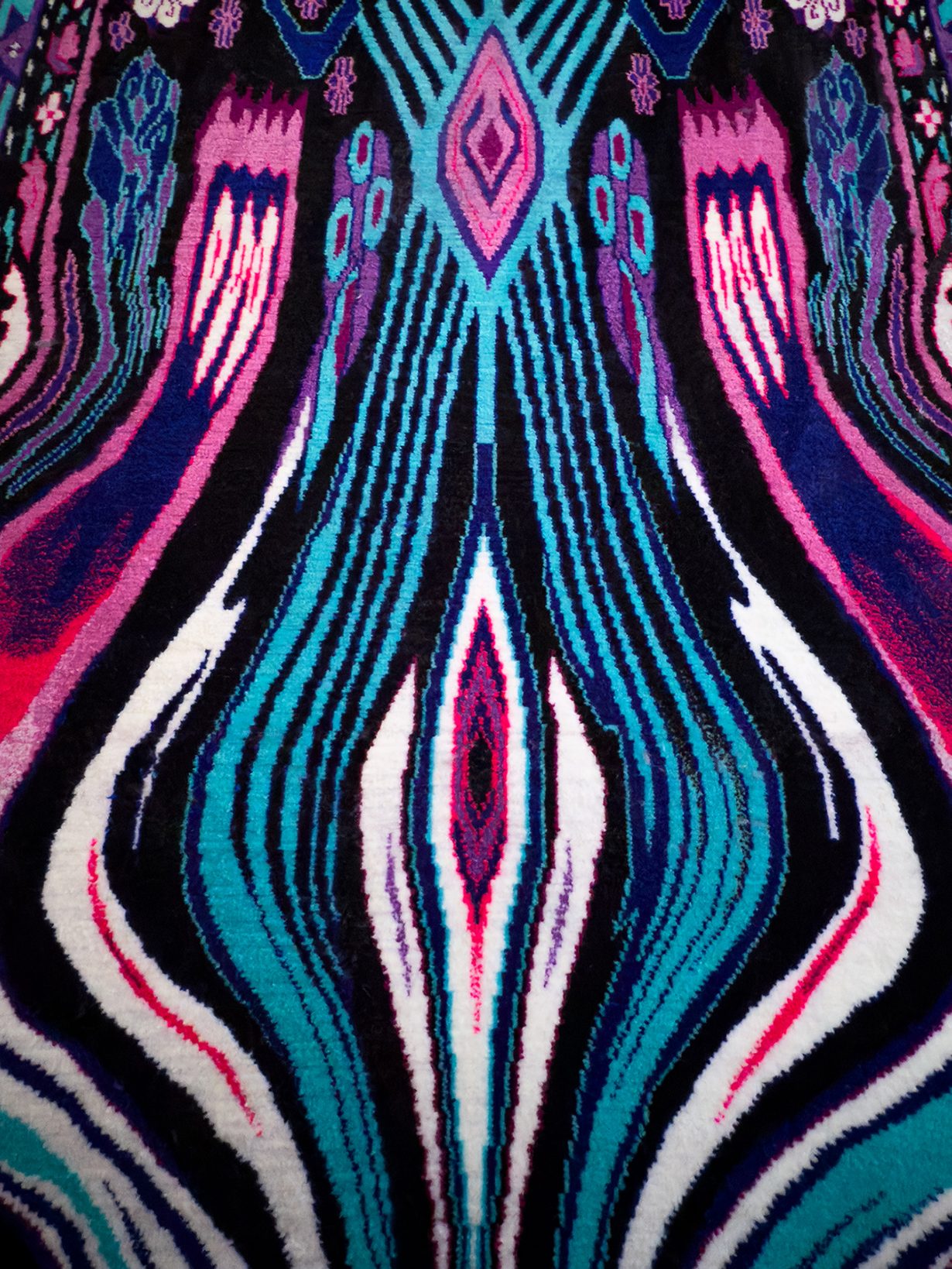
Faig Ahmed For most of my life, I have been interested in the connection between mystical poetry and quantum physics. In these two disciplines, I have always sensed something that seems completely opposite yet remarkably similar.
AR In what ways (if at all) does your work relate to the theme of the Biennale exhibition, In Minor Keys?
FA What drew my attention in Koyo Kouoh’s curatorial theme was the way it directs our focus towards things that may seem unimportant: subtle, often unnoticed and sometimes even outside the public eye. I wanted to create a space where a person can interact with themselves. The media of this interaction are poetry and technology, through quantum events.
AR Why is the Venice Biennale still important, if at all?
FA As there are fewer and fewer platforms in the world for dialogue without conflict, the Venice Biennale remains one of the few places where it is possible to speak freely about everything, on equal terms.
AR What role does a national pavilion play at a time of increasing confrontational nationalisms? Is it about expressing difference or commonality?
FA Yes, we are different and we speak different languages. But every two years at the Venice Biennale, we speak about one common thing.
AR Who, for you, is the most important artist (in any discipline) that your country has produced?
Ahmed did not answer.
AR What is something you want people to know about your nation that they might not know already?
FA The everyday speech of many Azerbaijanis is often poetic, rich in imagery and emotional forms of expression. We constantly use metaphors, hyperbole, playful curses and affectionate exaggerations. This way of speaking is connected to the tradition of oral poetry that has existed in Azerbaijan for centuries.
AR Given that you are exhibiting in a national pavilion, is there something (a quality or an issue or attitude) that distinguishes the art of that nation from that of others? That makes it particular? Are there specific contexts that it responds to? Or do you think that art is a universal language that goes beyond social, political or geographic boundaries?
FA Of course. Art is a global language but with different local dialects. It comes from the human being and is addressed to the human being. Because of this, though the language of art may seem very diverse, we all understand it regardless of our origins – if of course, we can speak it. Art is not only part of our culture, but also of our biology.
AR What, other than art, are you looking forward to seeing – or doing – while you are in Venice?
FA Nothing, just art.
AR Could you give us a brief overview of your average working day while creating your presentation for Venice?
FA For several months now, I have been working closely with a large team almost every day, including the curator of our project, a physicist, production managers and even doctors. Since I live in the countryside, I spend my free time walking outside.
AR Can art really change the world?
FA No, but art can change a person.
The 61st Venice Biennale runs 9 May through 22 November 2026