The artist’s works read as an attempt to package an idea of masculinity through found ephemera
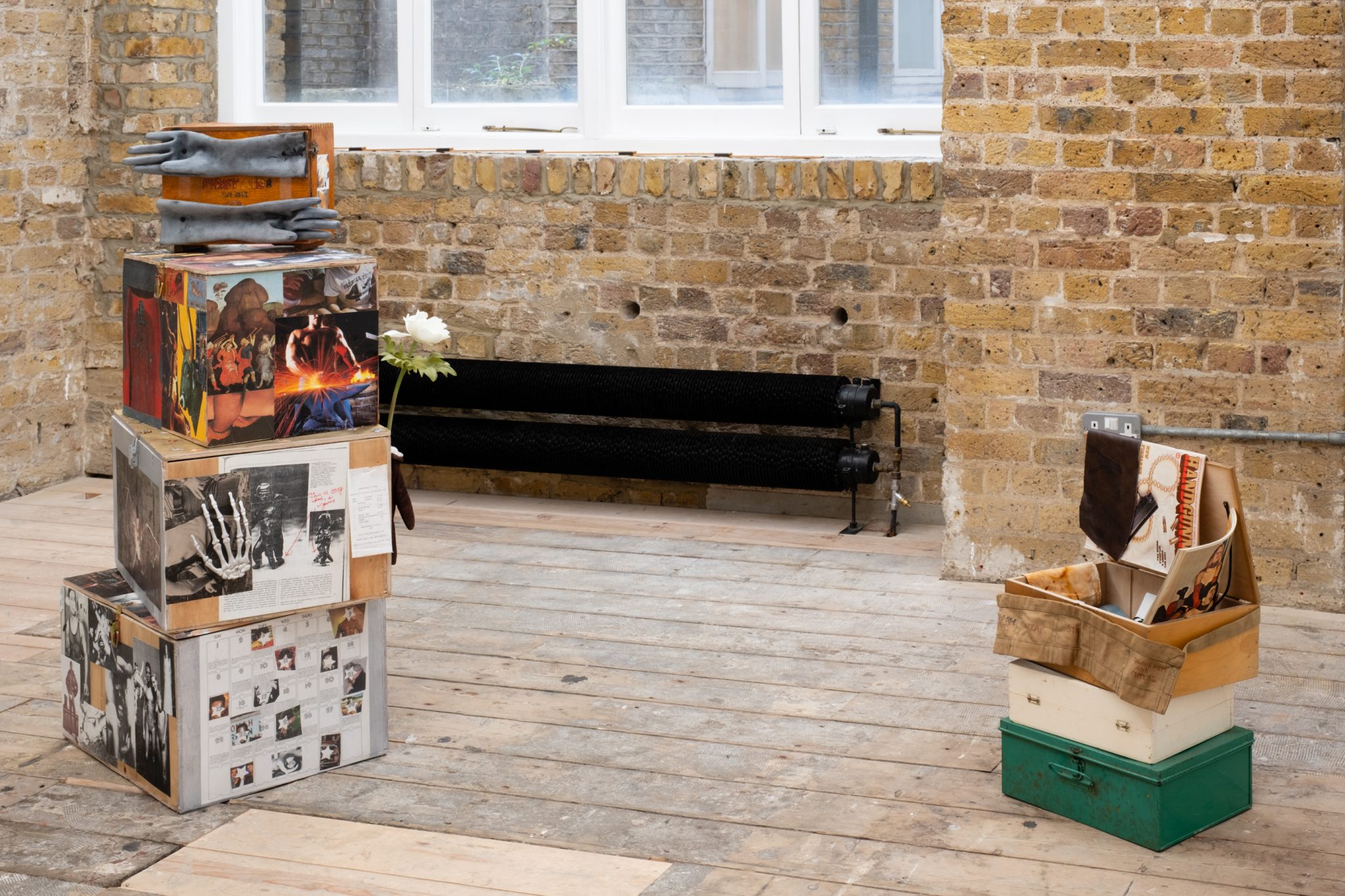
Placed across a table are an assortment of variously sized sculptural objects. The works read as an attempt to package an idea of masculinity through found ephemera: a novel by queer writer Truman Capote; photos of scantily dressed jocks; cigar boxes; a gold chain that can be worn around the neck. All of these items are held in a series of keepsake boxes packed with straw, textiles or pompom ribbons that explode from the centre and cascade down the sides.
Gray Wielebinski draws on a wide range of consumer-culture references, from the pages of pornography magazines to paper Abercrombie & Fitch bags, which are split at the seams and displayed in a cross-shaped frame hanging behind the table. These paper bags are a recurring motif in Wielebinski’s practice, and these works, such as A Man (all works 2026), with their depictions of ideal white American masculinity via the handsome, muscled models printed on their surfaces, accentuate the complex relationship between consumerism and how masculine identities are produced through imagery. Meanwhile, boxes like Little Brother and Menswear, their sides decorated with magazine clippings of nude men, veiny arms and muscular backs, are reminiscent of how fantasies and images of fanciable bodies are stuck to the walls of teenage bedrooms. These boxes present another version of the tender, private spaces where one collects, and perhaps hides, those growing queer desires.
Yet Wielebinski doesn’t shy away from violence, either. Making textual interventions on these collected materials, labels such as ‘LOSER’ and ‘GAY’ appear over the buff jocks on the paper bags and nude men on the boxes. These words carry the look and sentiment of those that might have been scrawled on a locker by a school bully. But a moment of amnesty appears pasted to the side of Now What? Universe Box, on a crudely cut piece of paper: ‘You have a right to be here…’
The boxes all seem to represent a man in a stereotyped form, whether stuffed with rugged textiles or camp pompoms: some show images of guns pasted to the sides, others an intimacy only seen when one peers inside the open lids, such as in A Deskful of Boys, in which appears a small photo of two naked men running along a dimly lit street, their connection palpable. Wielebinski’s use of collage, and references to their own trans identity, are the crux of the show, calling into question what masculinity is and can be, and how such an identity is formed, shaped and reshaped over a lifetime.
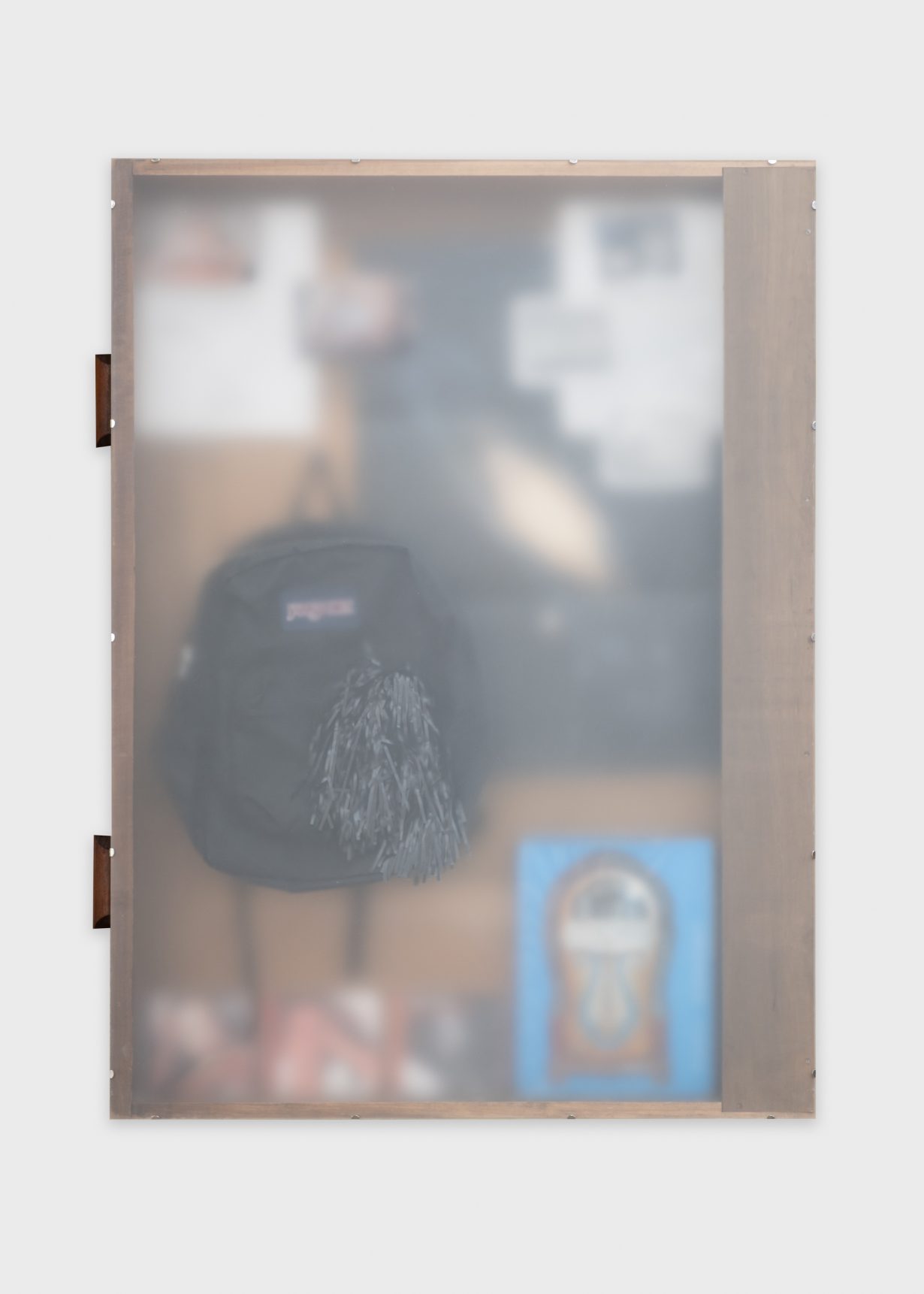
It’s in the gallery’s back space that an adolescent energy becomes even more overt. Take Confessions of a Mask, one of three wooden drawers mounted flat on the wall like a frame: its contents, partially obscured by a sheet of frosted Perspex, include a cheerleading poster, some black pompoms, a dartboard and a battered copy of Yukio Mishima’s autobiographical novel, which lends the work its title. The novel explores his growing homosexual urges in postwar Japan, and it’s within this reading of desire and anxiety that these drawer works – and the boxes – become ever more melancholic. Wanting both to hide in adolescence, but still find the courage, through one’s collected paraphernalia and experiences, to become a man of their own making.
Gray Wielebinski: Bring Me Men at Nicoletti, London, 28 May – 4 July
From the September 2026 issue of ArtReview – get your copy.