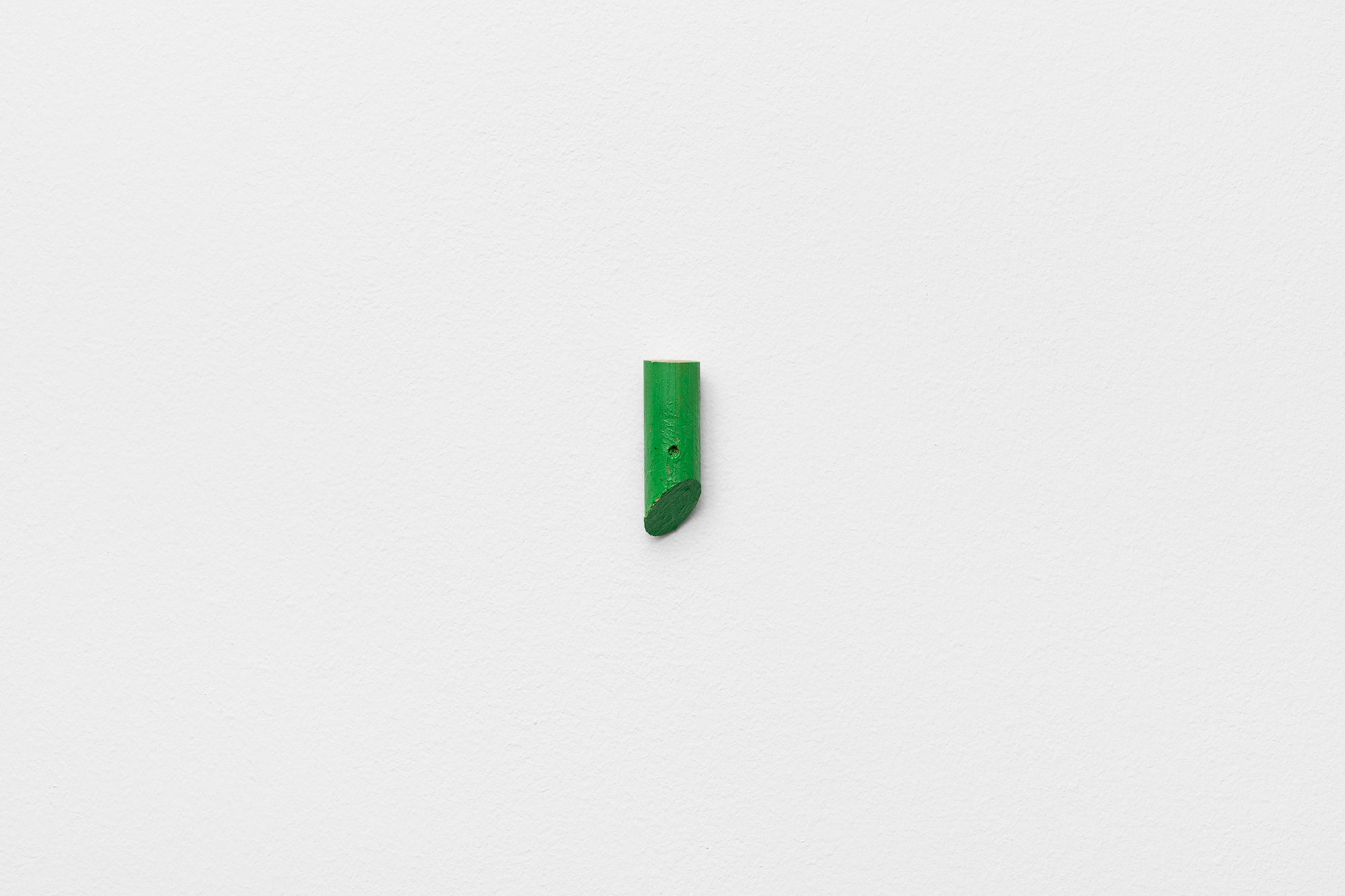
The artist’s sculptures are odd little morsels that, if you let them, might satisfyingly tickle some preintellectual part of your brain
Richard Tuttle’s Homage to Claude (1977) is a sculpture composed of two miniscule pieces of painted wood, nailed slightly above waist height to perpendicular walls. They are physically tiny – hardly taller than pen lids – and formally modest, but pleasingly imperfect and characterful. They were inspired by the little figures that punctuate the French Baroque painter Claude Lorrain’s landscapes, but they don’t look like people. One is a cylindrical green dowel whose bottom edge is cut on a bias; the other is red and rectangular, intersected near the top by a black canopy. Before it was hung, alone, in the West Gallery of Modern Art in Mayfair, Homage to Claude was stored in an envelope.
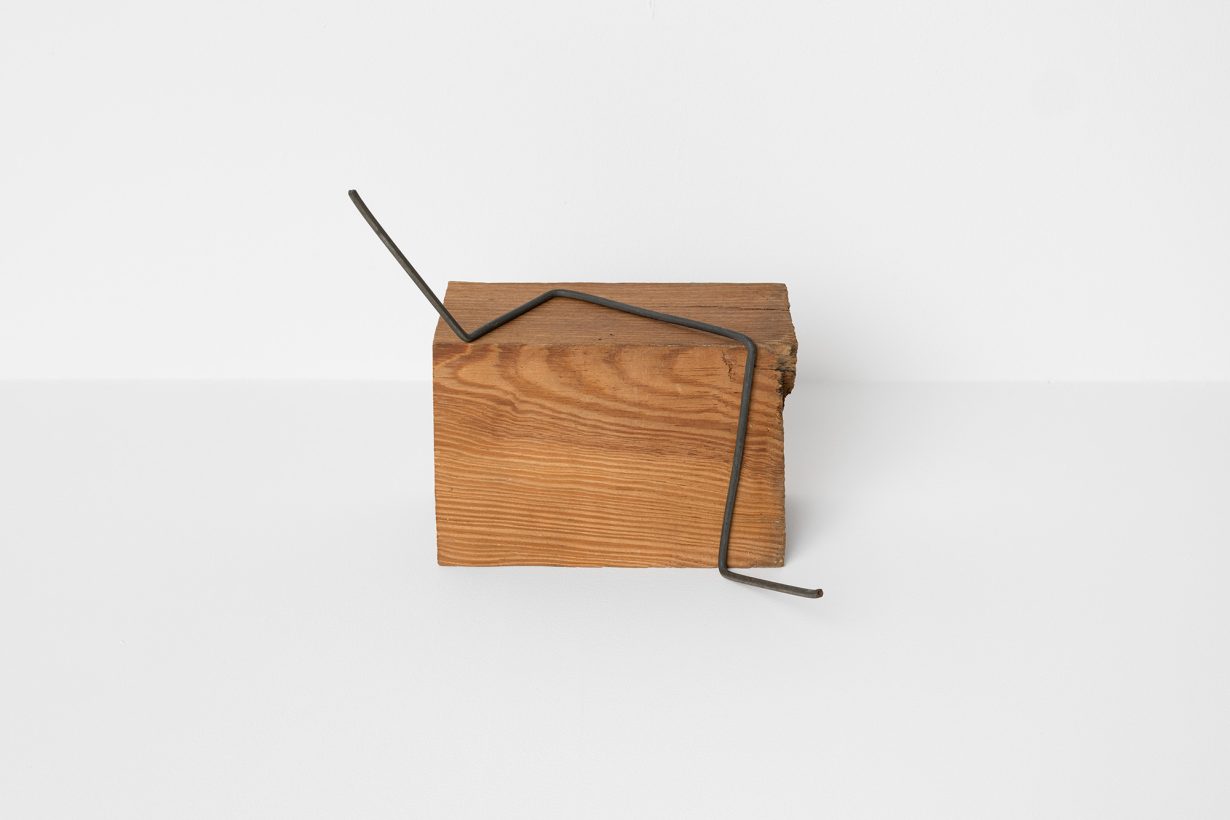
Small Sculptures of the 1970s comprises 18 similarly slight sculptures by the American postminimalist, made from materials that give the impression of rescued workshop detritus: cardboard, aluminium gauze, bent wire. They are odd little morsels that, if you let them, might satisfyingly tickle some preintellectual part of your brain. Most of them are lined up in the main gallery on a long, low shelf, looking a little like a cast of oddball characters. Though strange, perhaps even unfinished, everything feels like it’s in the right place.
We’re told that Tuttle’s work from the 1970s, a period that saw a shift in his practice towards the kind of hyper-modest gestures seen in this exhibition, was the subject of some fairly juicy artworld controversy. Much commentary on the artist, including the text accompanying this exhibition, mentions the story of his 1975 exhibition at the Whitney Museum. In The New York Times, Hilton Kramer described the show as ‘egregiously subordinate to the most minor of minor art’, and, so the story goes, it eventually led to its organiser Marcia Tucker’s departure from the museum. But there’s a happy ending: in 1977 Tucker founded the New Museum and Homage to Claude was exhibited at the Whitney Biennial. Tuttle came out on top, and his work was furnished with a useful story.
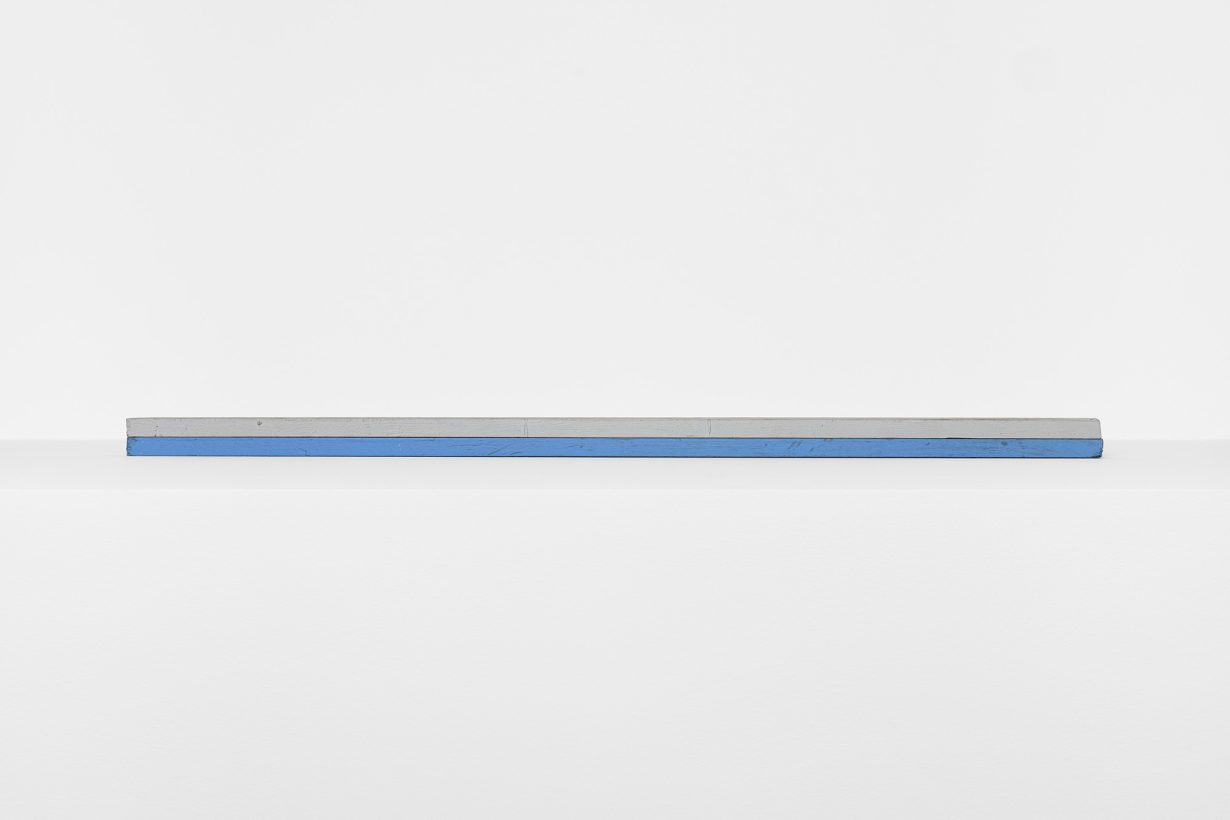
Such mythologies can make what they’re attached to seem more significant than it really is. We’re often told that things are more controversial, radical or urgent – and thereby more worthy of our chronically dwindling attention – than they really are. Invoking Tuttle’s 1970s fall-and-rise animates these sculptures by suggesting that, though themselves achingly subtle, they precipitated a dramatic, important art-historical narrative. Any of their inherent qualities aside, sculptures like Pressure (early 1970s) – which comprises two slender grey- and blue-painted wooden battens laying in a neat pile – are infamous, and therefore worth looking at.
But looking at the work on its own terms might be enough here. It’s certainly audacious. By displaying the sculptures below eye level, Tuttle implores the viewer to bend down if they want to see them properly, a gesture that forces some complicity. (This isn’t a new strategy for him. In 1992 he installed a group of small sculptures inches above the floor at Mary Boone Gallery). You might, as I did, end up walking around the gallery, hunchbacked, smirking with something between disbelief and delight at the fact that Tuttle has you playing by his rules. If furnishing the gallery with a small suitcase’s worth of these little things is ridiculous (‘a bore and a waste’, wrote Kramer), then, in crouching to get a better look at them, smiling at the interaction, we are ridiculous too.
Richard Tuttle, Small Sculptures of the 1970s at Modern Art, London 3 September – 3 October
From the October 2026 issue of ArtReview – get your copy.


