An exhibition examining ‘heat as bodily sensation, historical memory and cultural language’ is more a hotchpotch of the three curators’ pet topics than a satisfying whole
In traditional Chinese medicine, ‘heatiness’ describes the body being in a state of excessive yang energy, when one might experience symptoms such as feeling feverish or having a sore throat. There are tinctures made of special herbs to help that, and in Drawing by Folk remedies_Island (2024), Taiwanese artist Chihhung Liu uses such ingredients to make watery pigments with which he then paints a landscape. The ochre, arid desert scene, with a flat plateau in the distance, captures the parched experience of heatstroke he experienced as a child.
This work is part of an exhibition about ‘heat as bodily sensation, historical memory and cultural language’, featuring 50 works by 33 artists and collectives mainly from tropical or subtropical regions, including Central America, Southeast Asia and East Asia. It is positioned as an exploration of the lived experiences, epistemologies and colonial histories of people living in these regions. This is a pretty broad slate of issues to attribute to the weather, which is presumably why the curatorial conceit of the exhibition can feel like it is stretched thinly in places. The show more resembles a hotchpotch of the three curators’ pet topics than a satisfying whole.
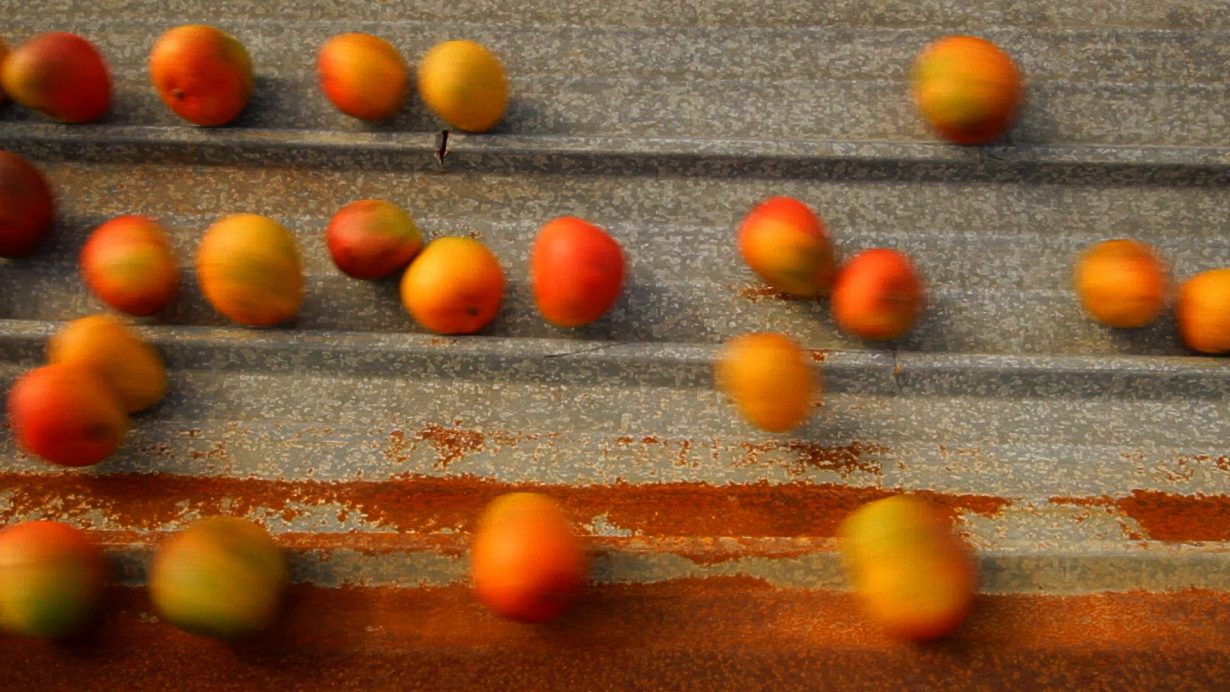
Its lighter moments capture a certain warm-weather mood, whether it’s the overripe languor in Wang Shou-Ying’s painting Summertime (1972), depicting the artist’s young daughter standing in a field of hazily abstracted red flowers, or the bursts of energetic play in Donna Conlon and Jonathan Harker’s video Tropical Zincphony (2013), which is inspired by Panama’s streetscape and shows mangoes thumping and rolling across di³erent zinc roofs.
One of the commonalities between these tropical places, the curators propose, is the experience of colonisation. But the exhibition’s treatment of colonial legacies is not particularly urgent, and it is difficult to relate these conversations to tropicality or warmer climes. Zih-Yan Ciou’s Takasago stag beetle (2026) explores how insect studies in Taiwan were shaped by Japanese colonial interest, which foreshadows the beetle mania and commercial trading of bugs now common in both Japan and Taiwan. The installation comprises a set of natural-history-museum-style cabinets, as well as a meandering film in which an actor dresses up in samurai armour with a helmet decorated with stag-beetle-horn-like kuwagata and wanders around a forest in Taiwan,seemingly lost. In 1,432 km of Humiliation: Gestures Against the Evil Eye (2025), Ana Elena Tejera walks along the boundaries of the former us-occupied Panama Canal Zone while unspooling a red thread – believed to ward o³ bad luck in Latin American folk tradition – through a landscape of forts, bunkers, watchtowers and abandoned buildings.
More troubling is another theme that is pursued very conscientiously in the show – disease. The documentary film Klotos Mangohain (2026), by Musquiqui Chihying and Gregor Kasper, delves into the unethical medical research undertaken by the German colonial government in Togoland, now Togo, in West Africa, where drugs deemed too dangerous for Europeans were tested on locals. Then we have another film about disease in Africa: Chang Chien-Chi’s Bongo Fever (2011), a documentary about the HIV epidemic in Tanzania, which at the time affected more than 6 percent of the population. The unintended effect of these works is to make illness exemplary of the tropics, and more specifically, because Africa is the only region so implicated in this discourse in the show, it risks perpetuating the harmful narrative of the continent being a victim of disease and poverty.

Juxtaposed with colonial management (or mismanagement) of epidemics, we are presented with a focus on Indigenous or local knowledge, positioned as more embodied than Western frameworks and in touch with the earth. A paradigm of this is Verónica Navas’s installation Vis medicatrix naturae: The healing power of nature (2026), comprising various elements associated with traditional healing and nature’s bounty: a net made from natural fibres holds several jícaras, vessels made from gourd, historically used to hold medicines and elixirs. In the video Toritaencuetada (2023), Elyla performs a liberating ritualistic dance inspired by the Nicaraguan tradition of toro encuetado, in which a bullshaped frame filled with fireworks is paraded through a festival.
The rest of the exhibition unfolds in other seemingly unrelated islands of feelings and subject matter, which are best experienced on their own terms. Ampannee Satoh’s sombre black-and-white video-essay shows footage of an Islamic religious school established by the artist’s grandfather in Pattani, a Muslim majority region in Southern Thailand (remembering 1963, 2026). Jaekyung Jung’s fictional film details the vicissitudes of a magpie’s nest-building efforts in utility poles (Tale, 2025). More affecting is Posak Jodian’s Misafafahiyan – Friend from Afar (2025), which brings together a small community of trans women in Yogyakarta with Hao Hao, a transgender performer from Taiwan’s Indigenous Amis community. In one scene, Hao Hao, dressed in a little stage dress and long feathered headdress, sings the Amis-language song Friend From Afar while the Indonesian women provide backup dancing on a Yogyakarta street. It is funny, tender and slightly awkward; the chemistry between them feels accidental but authentic – which can’t always be said of the connections between works in the rest of the show.
Horizon Ablaze at Taichung Art Museum, 15 May – 30 August
From the Autumn 2026 issue of ArtReview Asia – get your copy.