The artist’s solo at American Academy of Arts and Letters, New York, recalls a time when data didn’t feel so evil
In a plush gallery inside the academy’s palatial beaux-arts building, video screens line the walls, high and low, black wires between them hanging like festive garlands. The wires run around the room, close to the baseboard. At one point, they curl upward into the shape of a tulip. A monitor lights up: a video of two women in a car trying to manoeuvre out of a parking lot, the camera in the backseat (Esewin, 2021). They barely say anything. It makes me feel sad, homesick for London, where I’ve never lived but where Josiane M.H. Pozi was born and still resides. I follow the wires into a small closet in the gallery, where they form the outline of a four-window house.
Like me, Pozi is a zillennial. We watched TVs get bigger and grow grey carapaces, only to slim down again and evaporate into silver – one of the last generations to experience analogue media. In addition to using LCDs and the ubiquitous iPhone to display her works, Pozi mines obsolete formats like the CRT, as if trying to recover a more emotional, more personal version of the internet than what today’s algorithmic shortform video apps offer. 84,16,28,54 ejejecp (2026), the eight-channel video installation encountered in the first room, showcases video sketches made over the last eight years, ranging from music videos to slice-of-life clips to short dialogues. Sometimes the screens go blank while sonic landscapes – music from movie soundtracks, clubs and TV shows – filter in and out. In a nearby hallway are a glass table, a laptop (Omegle, 2021), a painting (Bed!, 2025) and a pair of headphones. The laptop displays a random white guy playing the guitar while Pozi chats to strangers on Omegle, a roulette-style online chat website. Before the internet felt like a trap, it felt like a funhouse.
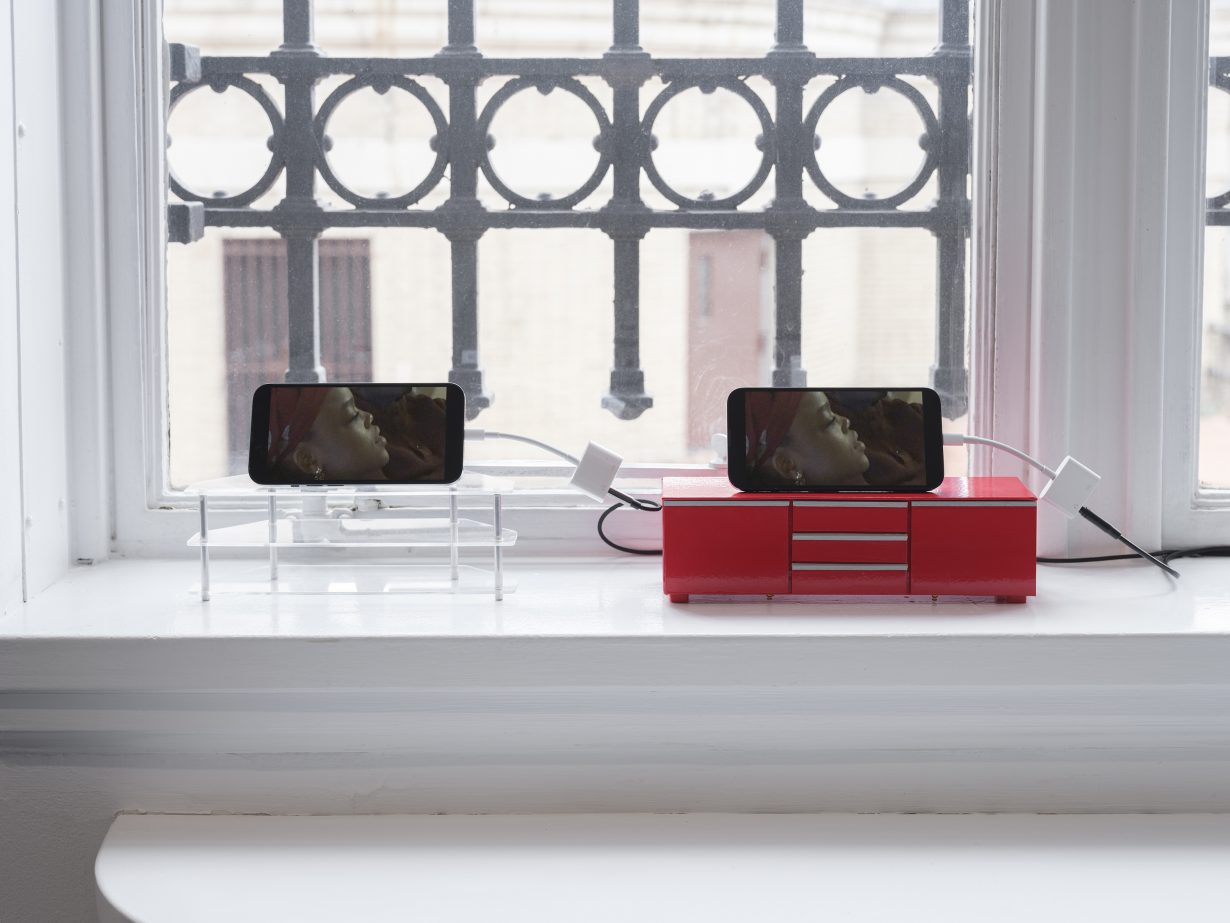
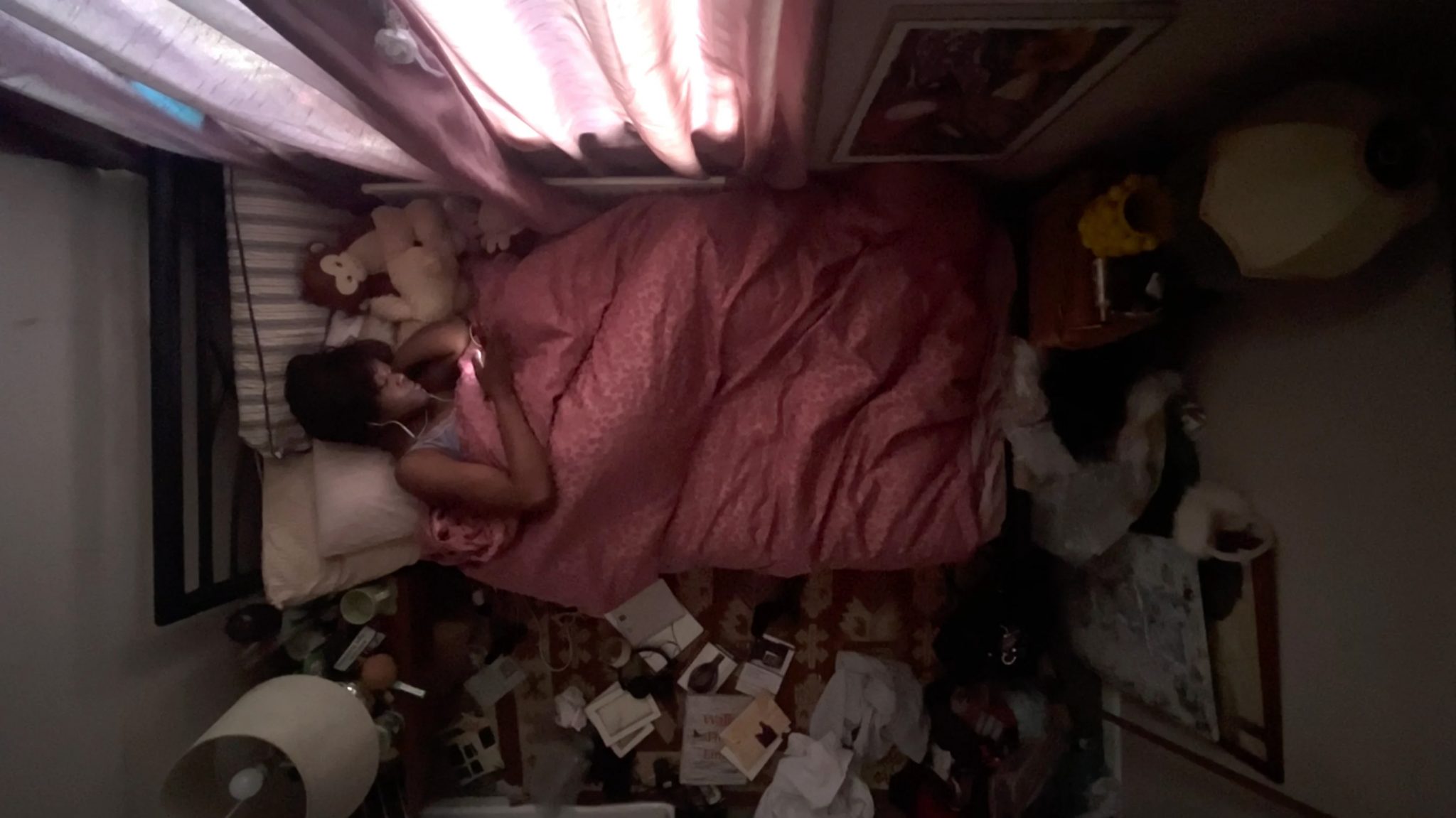
“Do you love me?” she asks her father in Pingey (2026), a videowork in the next room that intercuts their conversation with short clips of the artist with her friends. Pozi has vowed to remake the video every five years, and this is the second. The two iterations play on adjacent headphone-connected iPhones standing on doll furniture on the windowsill, cutting the gallery’s grand neoclassical architecture down to miniature scale. Pozi dances next to her father, and through the discomfort of the scene and the thick, disorienting time of Pozi’s videos, she shows how the domestic is always a little baroque, a little emotionally dramatic. One of the galleries suggests a bedroom. In the dark, viewers recline on cushions, while Rhythmic Stimming (2025), a video projected onto a slanted screen, careens down over them, offering a bird’s-eye view of a bed and the halting, heaving bass beat of TellaX’s hip-hop track Alienz vs Monsterz (2024). We see Pozi with a pair of wired headphones; she dances, writhes in bed, lies still and restarts the song on her iPod, recalling how the internet of the early 2000s made domestic space feel like a portal, a place to explore your loneliness.
In the lightless last room, I step up onto a large black plinth and gaze down into m.c. (2025), a video monitor embedded at the bottom of a rectangular well, featuring the conversation of a couple at the movies, shot secretly by Pozi, intercut with a conversation at a party. In the dark, I feel like I’ve entered that black wire that connected the screens in the first room, insulated and fast. Pozi’s strange, precise installations do not depict the internet so much as propose an alternative version of it: a living membrane of memory and feeling. This feels optimistic somehow, even nostalgic, from a time when data didn’t feel so evil.
In Pursuit of Feeling is on view at American Academy of Arts and Letters, New York, through 3 July
From the Summer 2026 issue of ArtReview – get your copy.