The artist and curator speak to ArtReview about silence, mindfulness and the joy in spiritual realisation
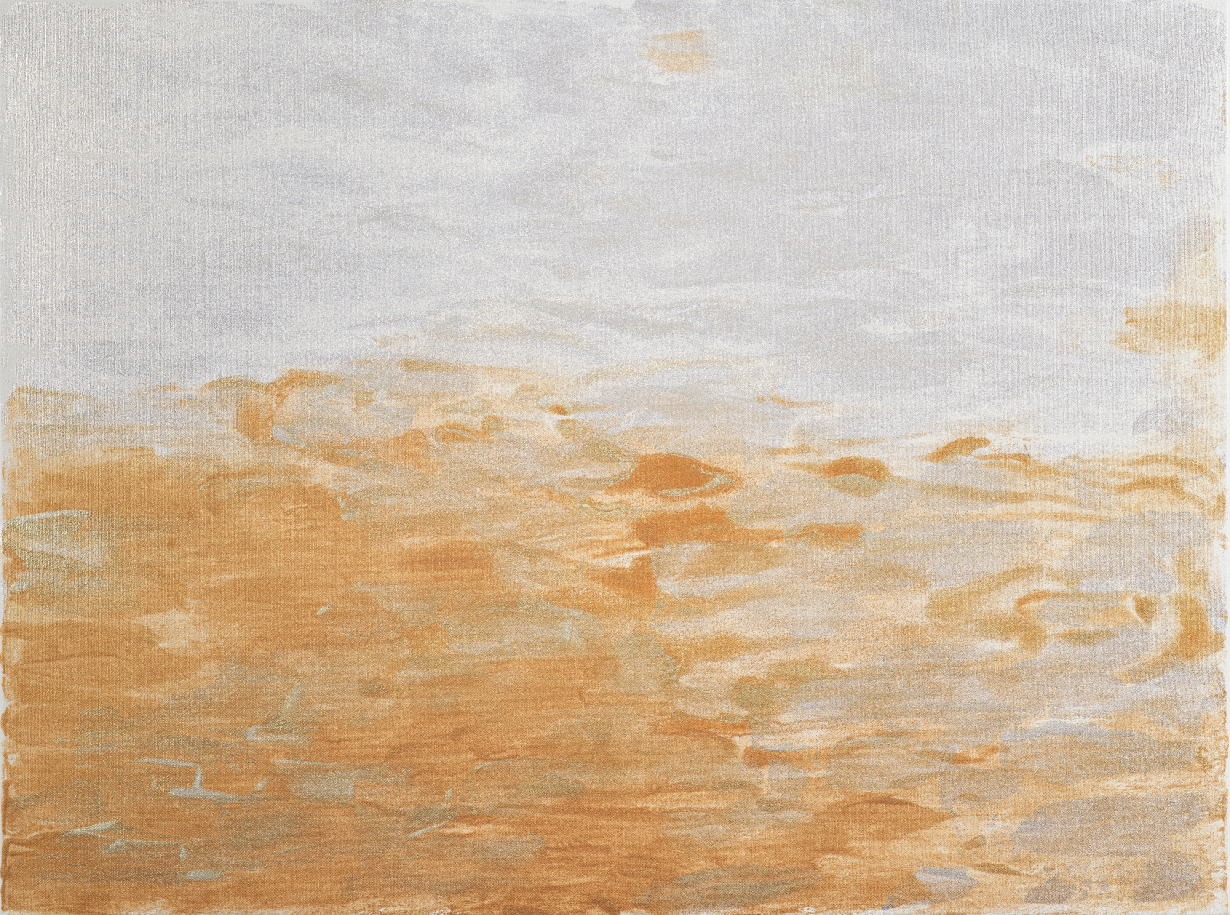
Marigpa’s exhibition AETHER – Golden Journey, shown at The Oneness Gallery, presented a new series of mixed-media paintings made following an extended period of silence and retreat undertaken by the artist. Curated by Nicole Fung, the exhibition was divided into three sections: The Human Spirit, The Ascent and The Realised Soul. Across the works, Marigpa considers ideas around spirituality, perception and inner change via abstraction, colour, texture and light. Here, Marigpa and Fung discuss the development and structure of the exhibition, the role of silence and landscape in the work, and the relationship between material process and spiritual practice.
ArtReview Marigpa, you spent several months in total silence before realising this new series of works. What changed in the studio when language fell away, and what did silence make possible in the paintings?
Marigpa Silence allowed me to stop painting about things and start painting from a state of pure being, transforming the work into an unmediated translation of energy free from the baggage of words.
AR Nicole, from your perspective as curator, how does that experience of silence register in the work?
Nicole Fung Silence in Marigpa’s work doesn’t feel like absence. It feels like something carefully held. Knowing that these paintings came after a long period of silence changed how I approached the exhibition. I didn’t want the space to over-explain the work or compete with it. The curatorial role involved creating enough room for people to slow down, notice the texture and meet the paintings on their own terms.
AR The exhibition is structured in three parts (‘The Human Script’, ‘The Ascent’, and ‘The Realised Soul’) that mirror a journey of self-discovery centred around ‘quieting’ the world of matter. Within that context, what role do material and texture play in your practice?
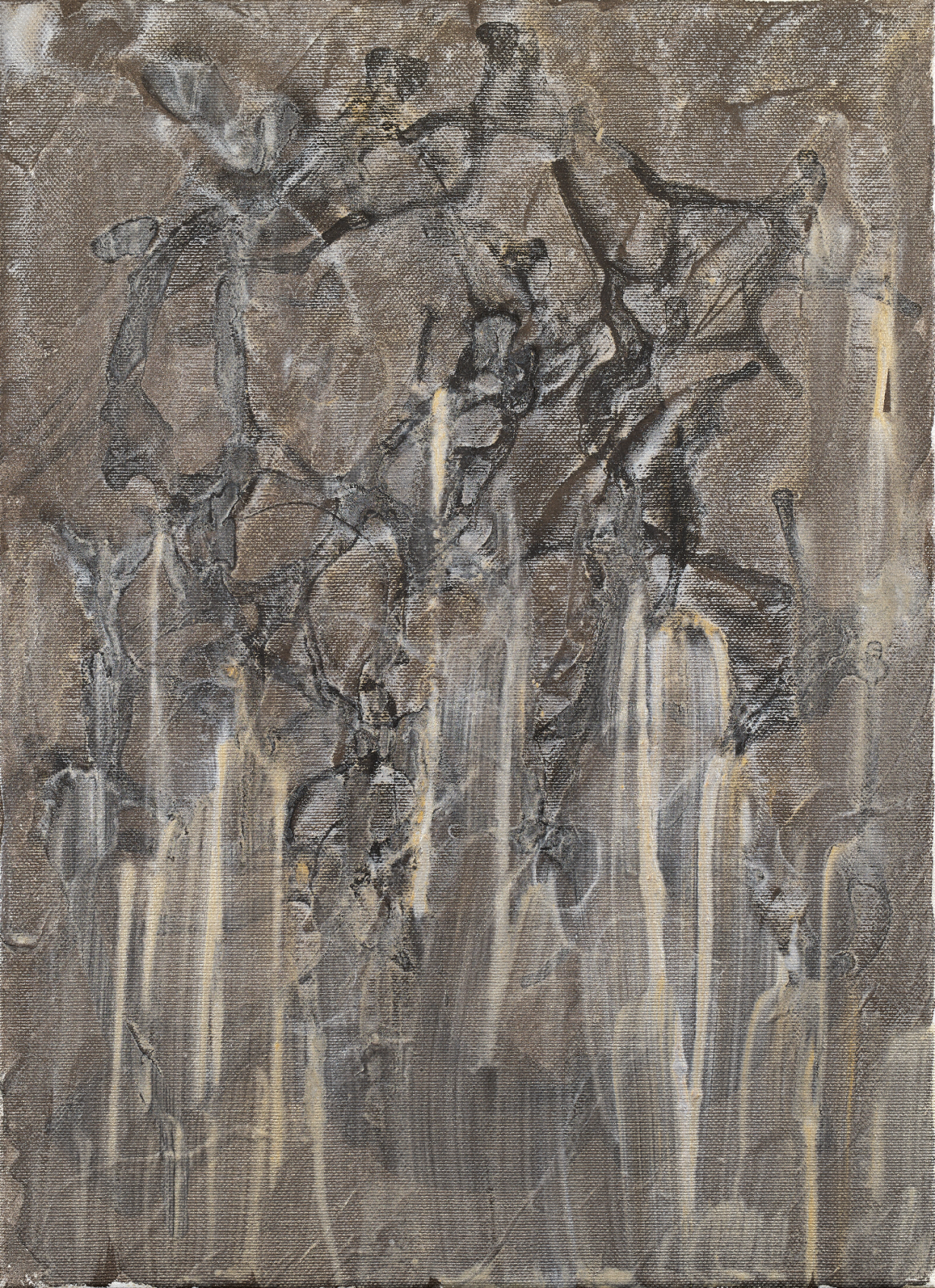
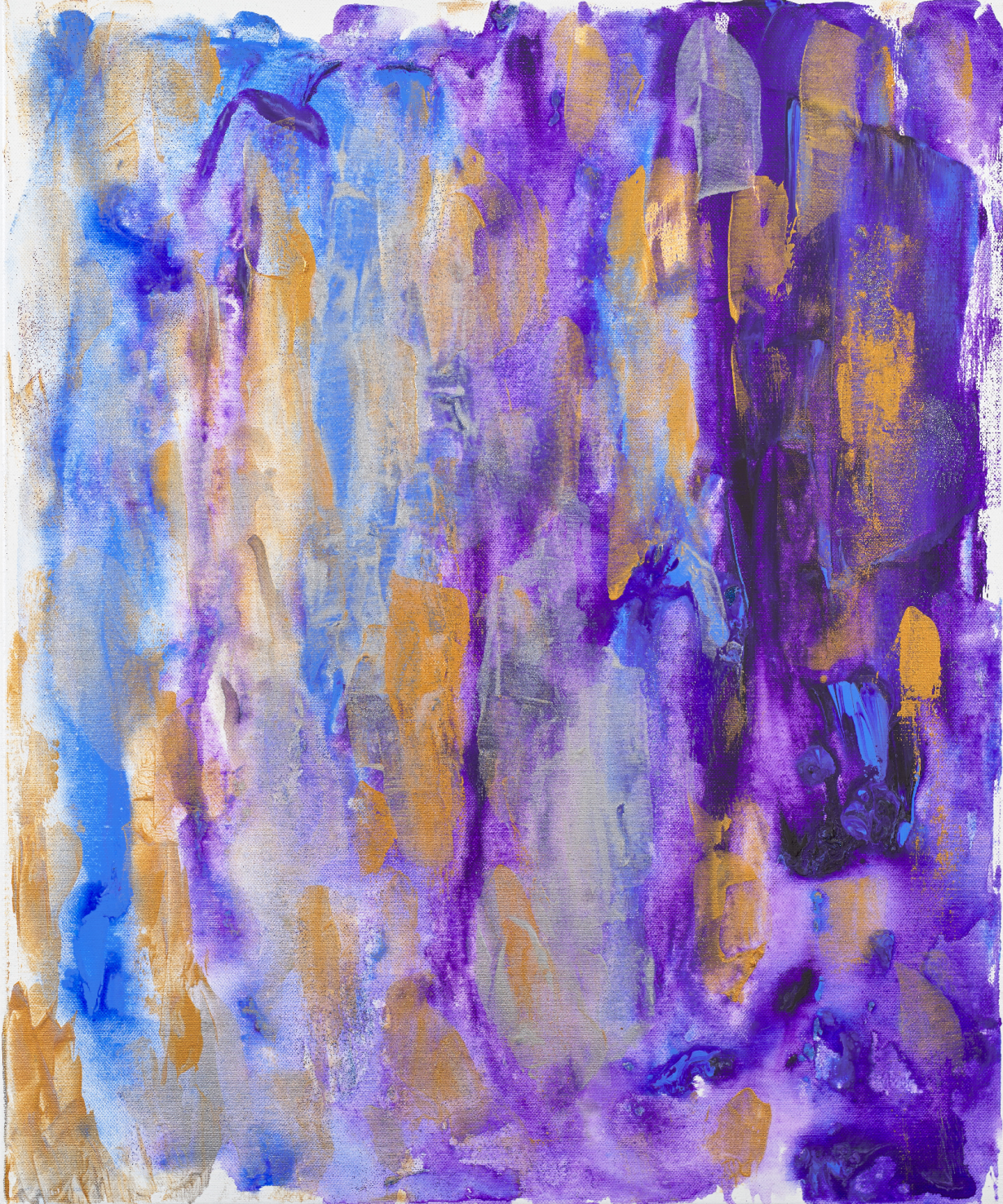
M Texture bridges the physical and spiritual realms. I use mineral media and metallic pigments that thin out from heavy, worldly entanglement in ‘The Human Script’ to shimmering, weightless washes by ‘The Realised Soul’.
AR Nicole, how did you approach shaping that experiential journey through the exhibition sequence for the viewer?
NF Material is central to how the journey is felt. The mixed media surfaces were layered, built up and sometimes scraped back, mirroring the process of accumulation and release that runs through the exhibition. As the works move from ‘The Human Script’ to ‘The Ascent’ and finally to ‘The Realised Soul’, there is a gradual shift from density to lightness. The metallic pigments also change depending on where the viewer stands, so the work is never completely still. Our role was to shape the sequence so that this movement felt intentional: from heaviness, to quieting, to a more open sense of joy.
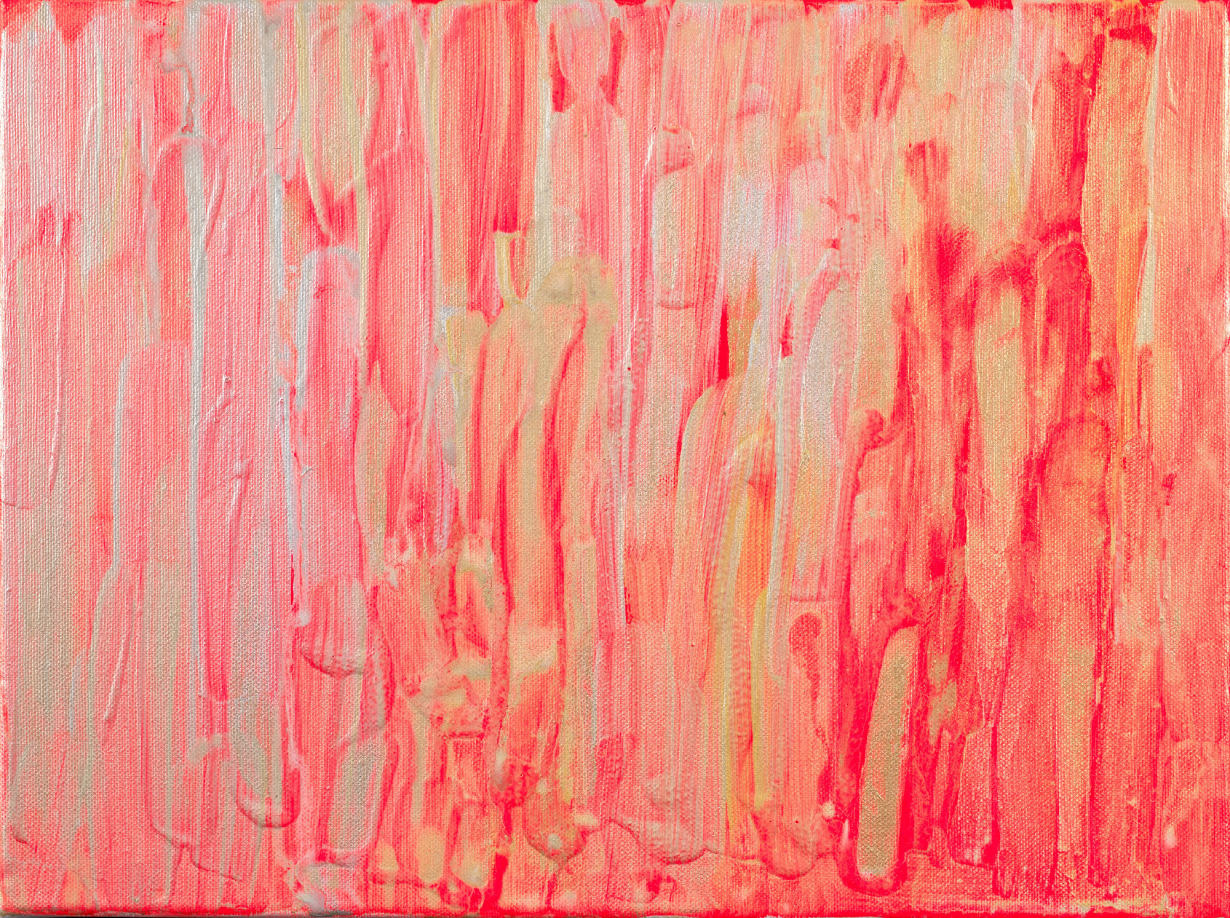
AR The final section of the exhibition is characterised by expressive, colourful works themed around ‘the return to joy’. Can you talk about the place of playfulness here?
M Spiritual realisation isn’t a cold void, but a radiant joy. By placing the painting of the trapped figure of Little Harvey (all works 2026) opposite that of the unbridled four-year-old Abu, we celebrate returning to the world with pure, liberated playfulness.
NF Joy feels like the most important place for this exhibition to arrive. The final section does not feel light because it avoids depth but because something has been released. What moved me about this section is that it refuses the idea that spiritual depth has to be serious or restrained. The colours become bolder, the rhythm becomes freer. There is a sense of playfulness, but it feels earned: as if joy is not a distraction from the journey, but its result.
AR How has the concept of the Aether influenced your understanding of space and light in your work?
M The concept of the Aether made me stop viewing space as empty. It turned negative space into a live, interconnected energy field where dynamic metallic pigments make the light feel like a tangible frequency.
AR Nicole, how did the Aether influence the design and spatial pacing of this exhibition?
NF The Aether gave us a very specific curatorial direction: don’t fill the space, activate it. In practical terms, that meant resisting the urge to overcrowd the walls. Each painting needed enough space around it for the viewer to feel the shift in light, texture and atmosphere. We were also very conscious of the gallery’s warm light in Edinburgh. It gave the exhibition a quieter rhythm, and we wanted the spatial pacing to support that, allowing moments of pause between works rather than rushing the viewer through the journey.
AR The exhibition text describes abstraction as a way of stripping away the superfluous to reveal an underlying truth. How do form, colour and texture allow you to express what cannot be said directly?
M Abstraction bypasses literal representation, using form as a skeleton, colour as an emotional chord, and texture as a visceral reality to speak directly to the subconscious where language fails.
NF Abstraction works here because it asks the viewer to stop looking for a single explanation. Without literal representation, you cannot rely on narrative in the usual way. You have to pay attention to what the work does to you: where your eye rests, how the colour shifts your mood, how the surface invites you to move closer or stay with it longer. In this exhibition, colour carries emotional weight. The deeper, more muted tones in the earlier works feel very different from the gold, luminosity and openness of the final section. Texture also slows the experience down. The layered surfaces ask for a more sustained kind of looking.
AR The exhibition was developed in collaboration with Noran Design. How do the paintings and their environment come together to create a contemplative space?
M Working with Noran Design allowed the exhibition to become more than a display of individual works. The spatial design, pacing and visual identity helped create a contemplative rhythm around the paintings, giving each piece enough room to breathe and allowing the viewer to enter the work more slowly.
NF A painting always exists in relationship with the room, the light, the works around it and the person standing in front of it. Our job was to make that relationship intentional. We thought carefully about how a viewer enters the space, what they encounter first, where the room invites stillness and where it encourages movement. The goal was not to create a dramatic environment around the paintings. It was to create the conditions for a genuine encounter with them, a space where the viewer has enough silence to pay attention.
AR How does art fit into your mindfulness practice?
M Art is my mindfulness practice. Balancing wet, mineral-based media demands absolute alignment of body, breath and presence on the canvas to connect with the universe.
NF Working on this exhibition reminded me that encountering art slowly, without an agenda, can itself become a practice. Marigpa’s paintings do not really allow for passive viewing. They ask for attention. You have to slow down enough to notice the surface, the shifts in colour, the way the work changes depending on where you stand. That kind of looking feels close to mindfulness to me. It is not about trying to understand everything immediately, but about being present enough to notice what is there.
AR Having arrived at this space of stillness and joy, what feels like the next step in your journey?
M For me, the path doesn’t change. I will keep doing my own thing, tuning out the noise and creating more work while deeply caring for the world, the people, the animals and the nature around me. The energy has to keep moving.
NF We are looking forward to our upcoming project with Charoen Pokphand Group in Beijing at the end of the year. It feels like a meaningful next step to bring this message of stillness and alignment out to the wider world!
Marigpa’s work was on view in AETHER: Golden Journey, Dundas Street Gallery, Edinburgh, from 27 February – 10 March
Find out more about The Oneness Gallery program on Instagram