On a cultural stage, we’re starting to see a shift towards collective, wilful amnesia when it comes to Russia’s discernible crimes, says Aliide Naylor, journalist and editorial consultant at the Reckoning Project
In early March, Russia announced its participation in the 2026 Venice Biennale, the oldest and most visited of the world’s art biennales, and the reaction was vociferous. The European Commission has said it will suspend or terminate funding if organisers go ahead with plans to permit Russia’s participation. ‘Culture in Europe should promote and safeguard democratic values,’ the commission spokesperson Thomas Regnier said in March. ‘It should foster open dialogue, diversity and freedom of expression. These values are currently, in today’s Russia, not honoured.’ Several European ministers have also expressed their disapproval in the form of a joint letter, with signatories including 22 culture and foreign ministers from Norway, Spain, Denmark, Germany and Latvia, among others. Lithuania’s foreign minister Kęstutis Budrys even called the move ‘dark cultural diplomacy’.
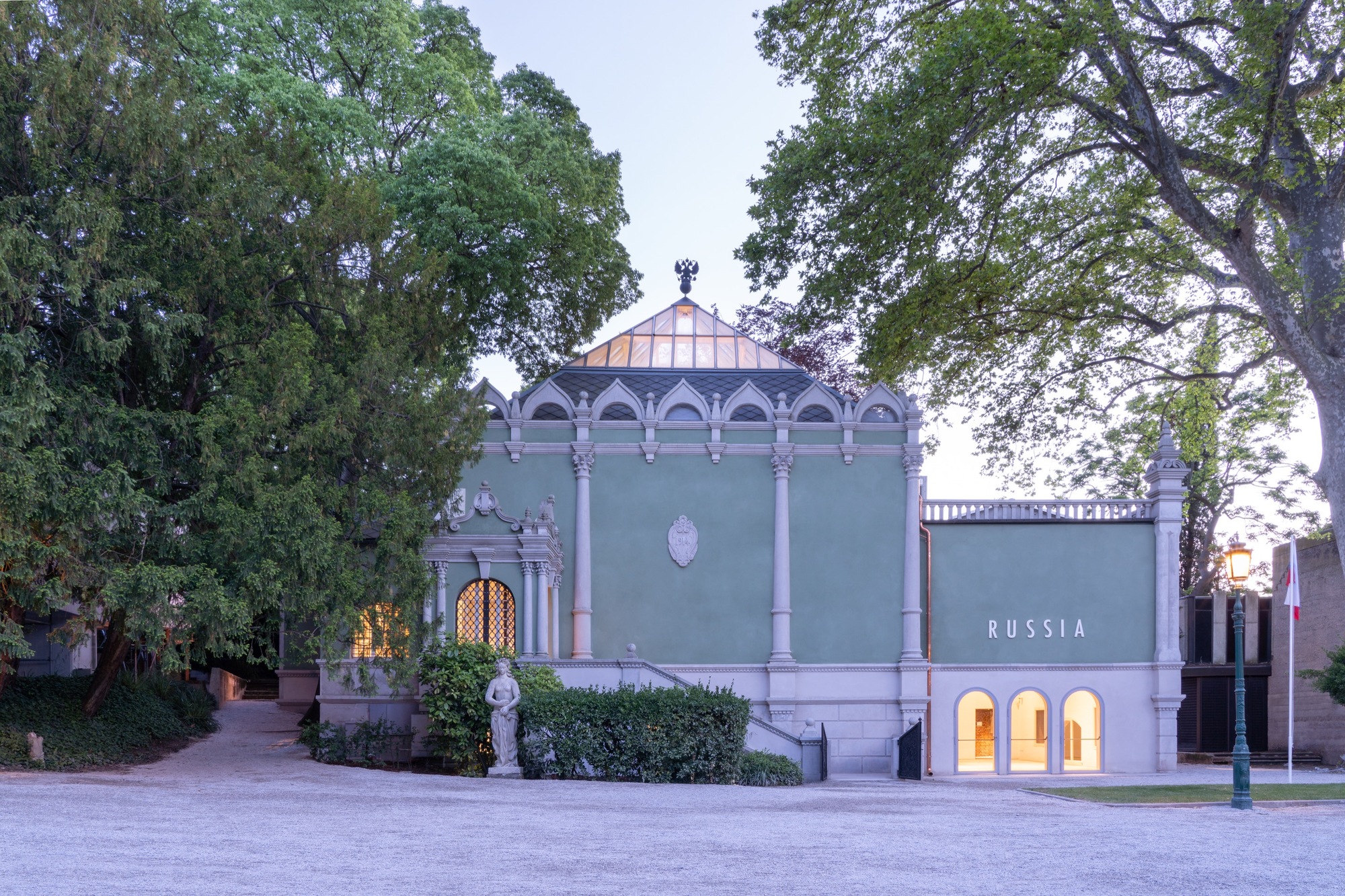
But this doesn’t mean the pavilion won’t move forward. Russia has not participated in the Biennale since it invaded Ukraine in February 2022, but it holds a permanent exhibition space in the Giardini, and so how much power the Biennale Foundation would have to deny it access to the building is unclear. Should it even want to, that is: the Giorgia Meloni-appointed Biennale president, Pietrangelo Buttafuoco, has previously praised Putin as ‘the only true right-wing statesman’. The Italian culture minister has since criticised the Biennale management, to no tangible consequence.
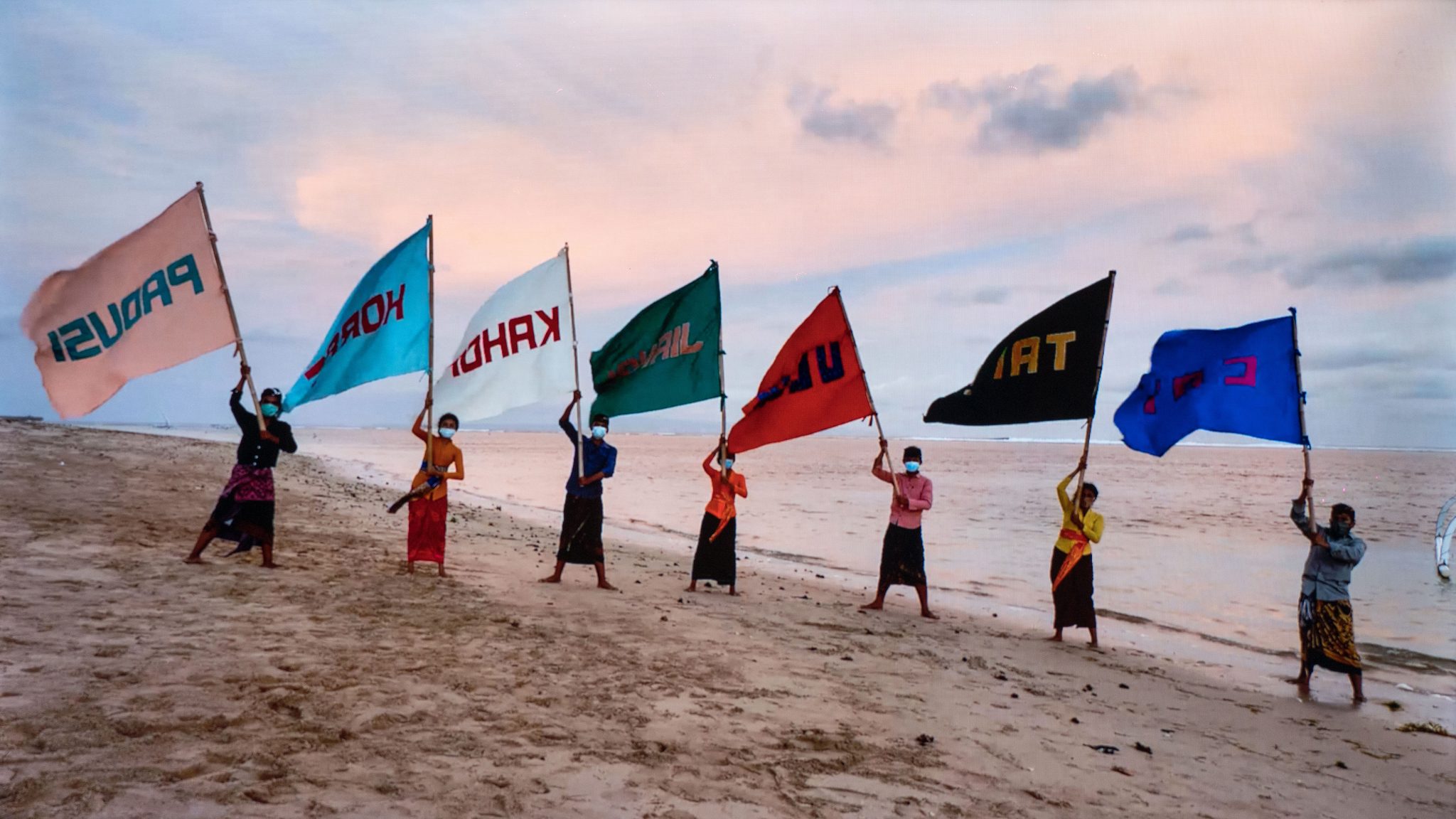
The proposed pavilion exhibition is titled The Tree is Rooted in the Sky. Some 38 participants from Russia, as well as Argentina, Brazil, Mali and Mexico, will be present, with performances focused around sound and experimental music. A statement from organisers said that ‘the project will be dedicated to peripheral areas and practices’ – sinister wording, given that many in Russia aggressively claim Ukraine as one of ‘their’ peripheral areas, and problematic in the face of ongoing policies against Indigenous populations.
Venice’s mayor, Luigi Brugnaro, stated that ‘if the Russian government were to carry out propaganda, we would be the first to close the Pavilion’ (perhaps ignoring the fact that the Biennale has long been used for such purposes). While he sought to make clear that ‘[w]e are not at war with the Russian people, and art is open’, the country’s very participation is itself political, despite Brugnaro’s denials. Russia’s ‘goal is not the exhibition itself’, Ukrainian ministerial adviser Anton Gerashchenko recently stated, ‘the goal is normalization’.
We’re starting to see a shift towards collective, wilful amnesia when it comes to Russia’s discernible crimes, facilitating attempts at rehabilitating Russia’s cultural image as the country continues to wage war in Ukraine. The stakes shouldn’t need restating: last year Russian forces reportedly killed 2,248 civilians in Ukraine, while in February alone Russia fired 288 missiles into Ukraine, as well as more than 5,000 long-range drones. Elements of Russia’s fullscale invasion and occupation of Ukraine have been characterised as cultural genocide. Russia has killed 346 artists and 132 Ukrainian and foreign journalists. Ukraine’s foreign and culture ministers Andriy Sybiha and Tetyana Berezhna said in a recent joint statement that it has destroyed or damaged more than 1,700 cultural heritage sites, while looting more than 35,000 museum relics. The aggressive displacement of the local culture in favour of the culture of the oppressor is imperialistic at its core. Russia’s return to the Biennale recalls a long-established imperial method, to promote its own culture on a world stage while aggressively eradicating that of its neighbour.
The Reckoning Project (with which I often work) has frequently documented how education and culture are not just a casualty of Russia’s invasion, but a key battleground for the country. In Russia-occupied Ukraine, teachers are tortured, children are separated from their parents and people promoting the Ukrainian language or culture are routinely punished. Some Ukrainian civilians are even forced to participate in Russian propaganda projects under soldier intimidation. The supposedly apolitical (according to Brugnaro) spheres of art and culture are a direct target for Russia. ‘Don’t bring politics into it’ goes the age-old cry of those who directly benefit from politics not being brought into it. But how could politics ever not be part of it? Just ask Ukrainian artists who, enduring a winter of sub-zero temperatures with no access to heating after Russian strikes on energy infrastructure, couldn’t work with their hands.
While those involved in representing Russia at the Biennale may not be directly responsible for atrocities committed in Ukraine, they are still actively choosing to represent their country at a time when they know exactly what their country stands for. Indeed, in 2022, Kirill Savchenkov pointedly withdrew from the Biennale, not wanting to artistically represent his country under the circumstances of its fullscale invasion. And when Mikhail Shvydkoy, Russia’s delegate for international cultural exchanges, announced Russia’s artistic representatives at the pavilion, his statement was clearly political, proclaiming that the country’s presence is ‘further proof that Russian culture is not isolated, and that attempts to “cancel” it – undertaken for the past four years by Western political elites – have not succeeded’. Russia’s own political elite is desperate to spread notions of victimhood through tiresome accusations of ‘Russophobia’ and newer protestations that Russian culture is being ‘cancelled’. As a recent report titled ‘Words That Kill’ noted: ‘Any expert who deliberately steps into the bubble of Russian propaganda will quickly see how tightly orchestrated it is. TV hosts, journalists, cultural figures, and entertainers appear to follow an invisible conductor calling the cues.’
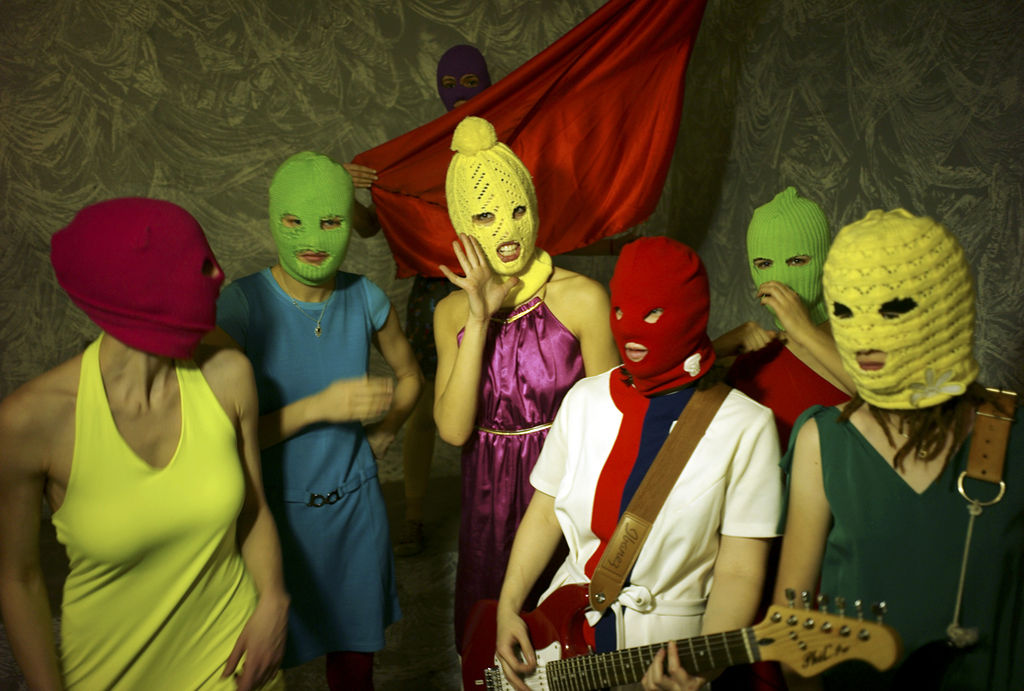
‘The Kremlin has long used culture as a continuation of foreign policy,’ Pussy Riot’s Nadya Tolokonnikova stated in response to the Venice news. ‘This is not culture outside politics, but politics disguised as culture,’ they said, noting that the Italian government, local authorities and the Biennale were all in a position to prevent the decision. Groups like Pussy Riot remain rare, essential voices from a country that overwhelmingly supports Russia’s fullscale invasion. A recent independent poll, for example, shows that, while 67 percent of respondents wanted peace talks, 72 percent still support Russia’s current military presence in Ukraine – but somehow the Russian victimhood narrative still grips the West. In the meantime, Pussy Riot are planning further protest action at the Biennale. However, Tolokonnikova, the group’s most famous member, has faced her own controversy for deciding to exhibit in Tel Aviv at the end of last year, in what could be criticised as further selective attention to politics. Then, a group called the Art Not Genocide Alliance (ANGA) has gathered nearly 200 signatures calling for Israel’s exclusion from the Biennale. No such petition against Russia has materialised from the same organisation (though a different collective of artists and curators have pushed to exclude ‘all current regimes committing war crimes’). And there has been scant European pressure calling for the exclusion of the US in the wake of strikes on civilian infrastructure in Iran. Everything is political.
Cultural boycotts can make, and have previously made, an impact. Take the anti-apartheid campaign of the 1980s, which significantly impacted white South Africans’ access to global culture. The ongoing BDS movement, promoting boycotts, divestments and economic sanctions against Israel, has boosted public awareness about businesses financially linked to the violation of Palestinian rights. International displays indicating a lack of tolerance for the commission of mass atrocities is a decisive response, especially if the aim of a country is to assert and manipulate perceptions of its own power and global influence. And cultural boycotts can be supplemented by further measures to exert pressure, including diplomatic, economic or conventional legal responses. But over the past years, weak Western reactions have incrementally emboldened Russia.
Perhaps it should come as no surprise, given how many in the West – as well as powers in the Global Majority – are still invested commercially, personally and professionally in the idea of Russia, the potential Russian market and what its natural resources can offer – particularly as Iran’s blockade of the Strait of Hormuz drives up oil prices. Such a stance tells the world that there are no consequences for atrocities, money is more important than humanity and international organisations are happy to overlook, and even accommodate, the perpetrators of war crimes. The Biennale is becoming a symbol of a broader willingness to ignore (or perhaps even deliberately undermine) societies and individuals who have been victims of war crimes, of crimes against humanity, if their own lives can be made a little easier, a little less uncomfortably ‘political’. There needs to be more unity in the face of violations that are very punishable. And consequences are a language war criminals can understand.