What do you get when you combine art, marine conservation and tourism? Max Crosbie-Jones visits the Cambodian beach-resort town of Kep to find out
The vibe at Knai Bang Chatt is, as you might expect for an upscale beach resort in Kep, a drowsy town on the Cambodian coast, carefree. Days are spent eating modern Khmer food, lazing in the pool, sailing or doing yoga – and doing so guilt free, thanks to the resort’s proudly touted sustainability credentials. Guests who wish to leave the neatly manicured bubble for a bit can hire an auto-rickshaw and head for the mildly more rugged attractions of Kep itself, from its salt fields and crab market to its mangroves and crumbling modernist villas built in the heyday of French Indochina (left to rot since the Khmer Rouge’s genocidal mid-1970s reign.) But while the guest ethically fritters away their time here, another visitor is being more productive: the artist.
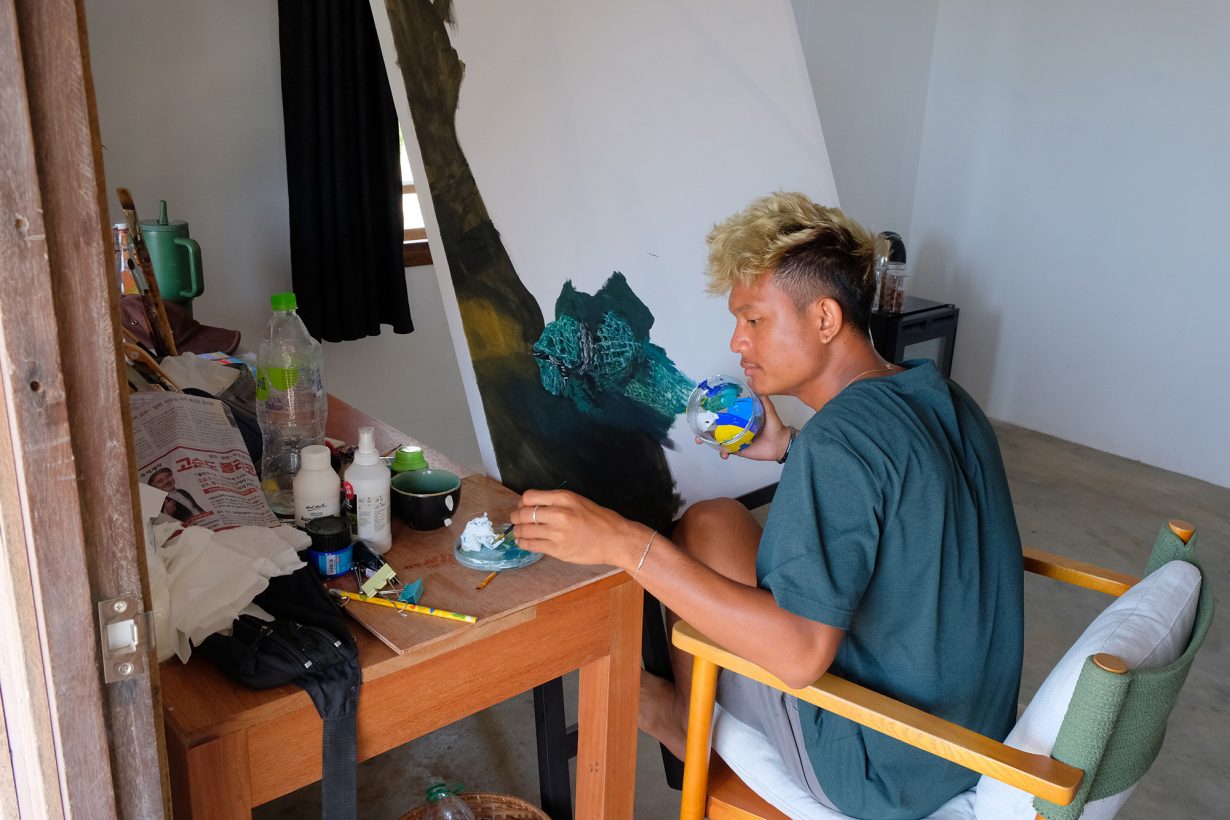
Two of them, originally from the city of Siem Reap in northwest Cambodia, Kanha Hul and Karona Hoeuy, are also settling in, but for a few weeks rather than the few days I’ll be here. Hul, a twenty-seven-year-old whose practice centres around community engagement is planning to interview locals who make their living from the sea; while Hoeuy, a twenty-three-year-old who typically paints incidental moments that express his connection to places, is drawn to a block of Styrofoam he spotted bobbing on it. The marine creature that nested in the block, probably a crab, has struck a chord. “Most of my work is about looking for home,” he tells me, “but also, at the same time, it’s about the environment.”
Launched earlier this year, this artist residency is not the first in Cambodia. Prior to its closure in 2024, Sa Sa Art Projects – a not-for-profit art space in Phnom Penh founded by the pioneering Stiev Selapak artist collective – ran a residency programme. Another collective in the capital run by artists for artists, tiSamjort, currently offers short-term residencies to international and local participants. But this one in Kep is the first in Cambodia to unfold beside the ocean – and to sit at the heart of a bigger scheme that encompasses marine conservation and tourism as well as culture capacity building.
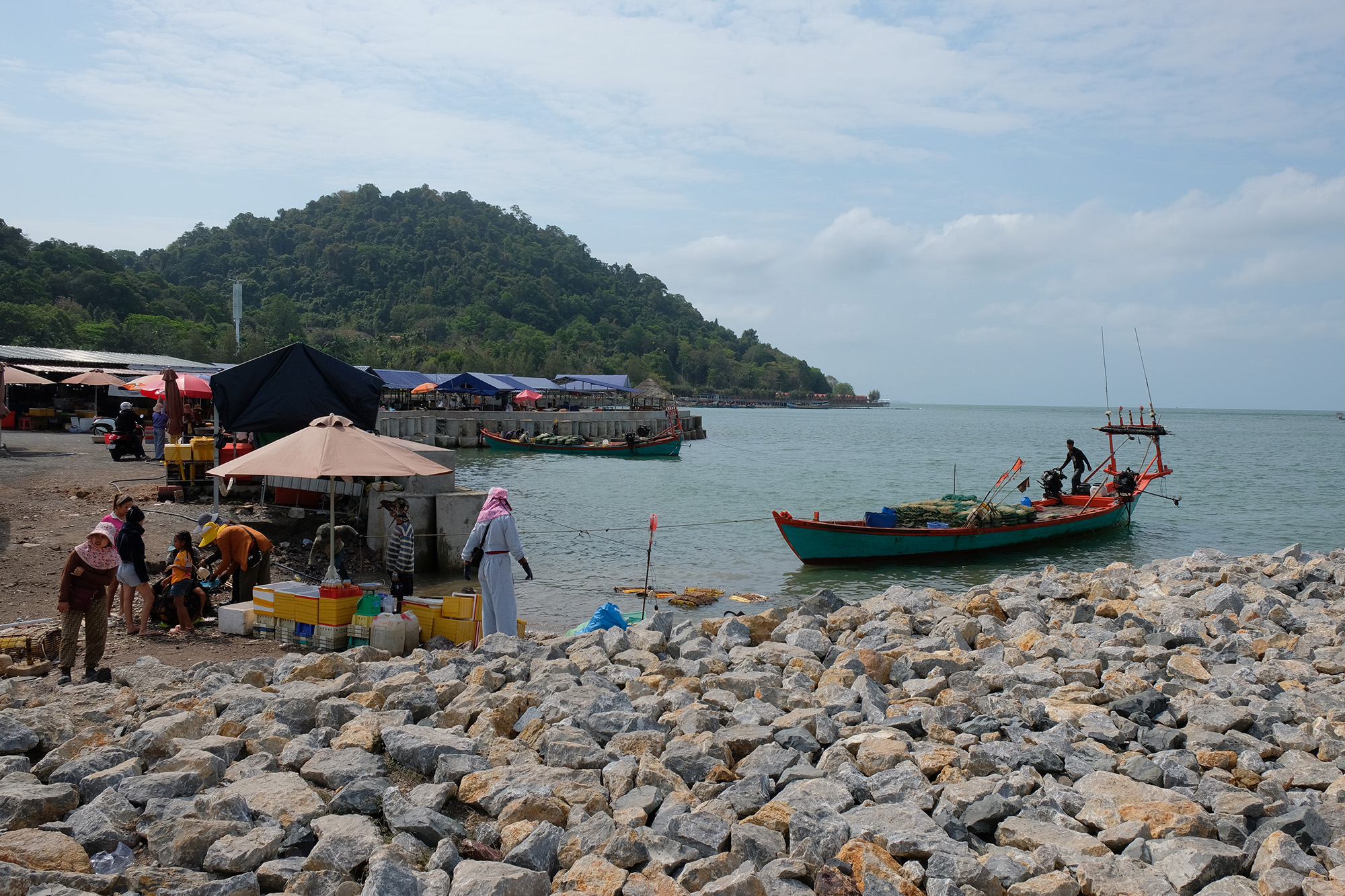
Another glaring difference is the CEO-driven nature of this programme. ‘Art for Kep’, as this wider initiative is called, is the brainchild of Knai Bang Chatt’s founder, a Belgian entrepreneur with Khmer citizenship named Jef Moons. As he tells it, this is a project born of adversity. In 2021, his resort – which occupies mid-century modernist villas – was thrust into disarray when the Cambodian government announced a plan to extend the 2.7-kilometre section of beach that passes in front it. The goal: to beautify and redevelop the surrounding area.
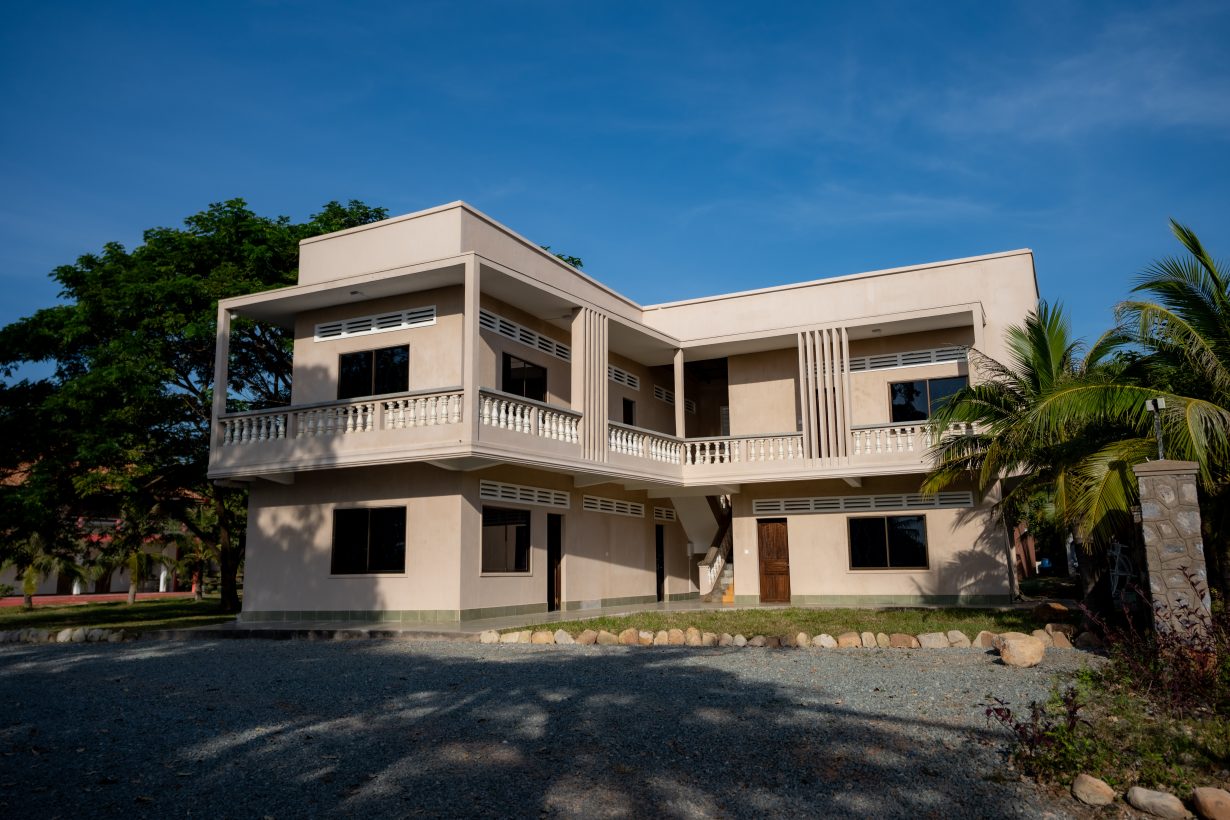
Local fishermen and crab-market vendors were worried about the impact of this state reclamation project, according to some news reports. For Knai Bang Chatt, meanwhile, it has resulted in a 50-metre buffer zone separating it from the beach, albeit a zone that Moons has been able to lease and build on. Faced with a need to rethink his no-longer beachfront resort, he dreamed up a broader, boosterist vision for the area. In addition to the residency (and inviting art writers to come see it), this strategy includes a plan to turn Kep into a ‘music and film city’ and to build a snorkeler-friendly gallery of underwater art like those already found off the coasts of Cancún, Mexico and Townsville, Australia. “Kep is too quiet,” he says, “so now we’re slowly making it into an artistic, cultural destination.”
One of the residency’s first monthly intakes, Hul and Hoeuy are happy to be here. They get to keep any work they produce. They can use the resort’s facilities and mingle with guests. And while the ateliers in a converted staff-building are, as things stand, bare rooms, their rustic lodgings flanked by the resort’s herb garden are comfortable, and close enough to the ocean to catch a breeze. Here, I find Hoeuy painting with the shutters wide open and Hul planning her exploration. “I’ve never lived near the sea, so everything is new and exciting,” she says.
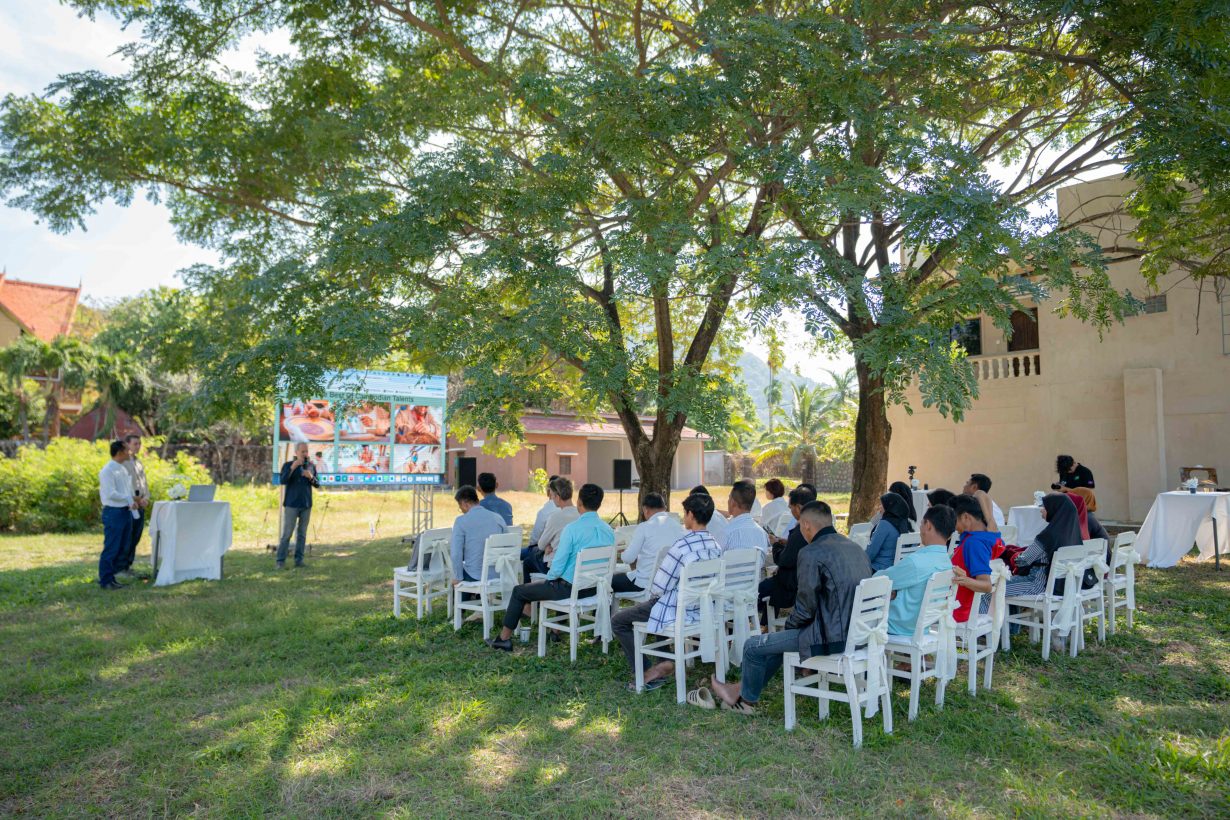
‘Art for Kep’ also boasts the imprimatur of some distinguished names in Cambodia’s creative sphere, among them the Phnom Penh-based curator Reaksmey Yean, who is on the art selection committee. When I ask Yean why he was drawn to the project, he points to the weak infrastructure across Cambodia at large. “We need new players, new voices, new platforms to promote and to foster growth in terms of creativity and innovation in the arts,” he says. “So, for me, it’s important.”
The enthusiasm among those involved is understandable, especially now: a time when Cambodia’s economy, tourism industry and pride is suffering due to both the recent border war with Thailand and the negative publicity surrounding its illegal scam centres. However, other elements of the project leave me in two minds.
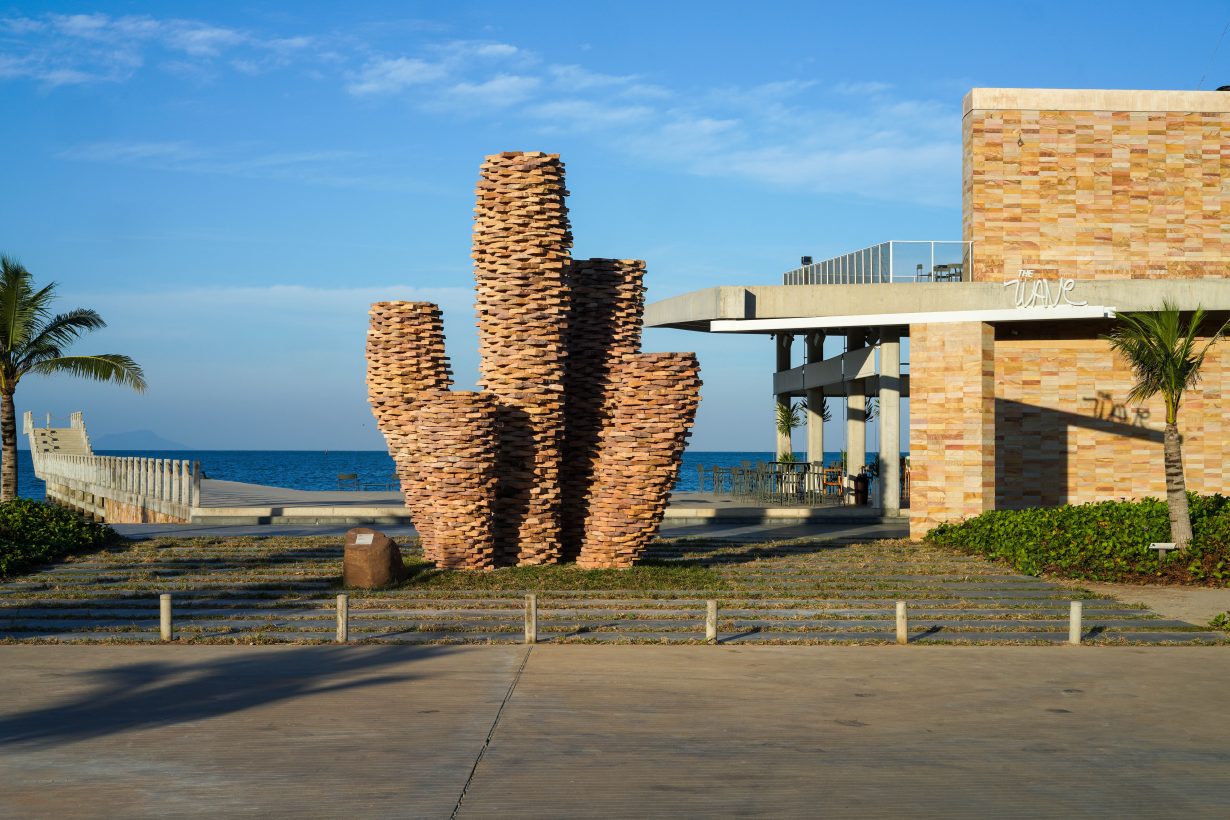
Since the oceanfront was extended, an openair dining complex where events are staged has been built in raw concrete on it. Two sculptures by the Cambodian artist Sothea Thang, including a sandstone tower of coral (Coral Kingdom, 2024), have been installed here. But there’s a lot more to do, judging from the mounds of exposed earth next door (where an exhibition plaza will, pending permission, be erected) and a pitch deck for the ‘S.E.A. Ocean Gallery’ (in which partnerships with leading architects and cultural foundations are sought). What, however, will happen to the residency – ‘not a standalone project’ but ‘the engine behind a larger cultural ecosystem’, Moons insists in a promotional video message – should the other pillars not materialise?
In that same video, Moons also talks of ‘creative breakthroughs’ emerging from ‘artists taking ownership of their own narratives, stepping beyond restrictions, and creating work deeply rooted in real experiences’. But when I raise sociopolitics and the rapid changes afoot in Cambodia with him – topics many artists in the country are exploring – he is adamant that there are restrictions. “We have to be very careful to filter,” he says. “If an artist is ‘I hate Hun Sen’ [the previous Prime Minister] and talking about politics, then no, we don’t accept.” I imagine too, that any artist who wanted to explore the development head-on would be similarly refused. This risk averseness stems from a need to keep many stakeholders on side, especially given that he is in the process of seeking government approval and private investors for his ocean gallery. “The reason why I still survive here is because Kep province, the village and the national level all hundred percent support me, because I’m good for the people,” he says. It is likely that the other three members of Moons’s steering committee – also European men with deep roots in Cambodia’s culture and tourism industries – are no less wary of controversy.
My misgivings were brought into sharper relief a few days later, when I hit the galleries of Phnom Penh. The most arresting show is House on Fire at Silapak Trotchaek Pneik, the gallery that Reaksmey programmes. It comprises photos shot by artist Vandy Rattana on the city’s outskirts during the late 2000s: images of firefighters putting out blazes engulfing houses, and people trying to salvage their belongings. Would this kind of searing work – art that the scholar Pamela N. Corey cogently describes as a ‘reactive form of image-making’ that, through its subtle framing of social upheaval, constitutes ‘an alternative mode of protest’ – get the nod in Kep? While developments such as the reclamation project have potential as source material, I suspect not. Then again, some residents have already gravitated towards the overgrown old mansions nearby – an eerie feature of Kep more consistent with the country’s dark tourism industry than Moons’s “regenerative travel”. And who can say what will become of ideas hatched and materials sourced during a stay here? Hul, since herself returning to Phnom Penh, where she is based, has been marshalling the “meaningful stories” gathered from the people she met into work that is still taking shape. Thus far, it comprises repeating, wavelike cut-outs on recycled paper – materials and textures that “explore the connection between people, livelihoods and the sea”.
Foreigners – from the French polymath George Groslier (who founded the École des Arts Cambodgiens in 1920) to tourists looking for trinkets to take home and curators eager to see traumatic memories relating to the Khmer Rouge genocide surfacing in readily exhibitable forms – have long influenced the nature and direction of Khmer artistic expression. They have also had a less problematic, bottom-up impact on the art scene: the Cambodian-run Stiev Selapak collective, for example, came about in 2007 after classes given by the French photographer Stéphane Janin. Along the new shoreline of Kep, where artist interests are now rubbing up with business interests (and KPI-driven luxury holidays), the dynamic at play appears no less complicated, or potentially significant, despite the carefree veneer.
From the Summer 2026 issue of ArtReview Asia – get your copy.