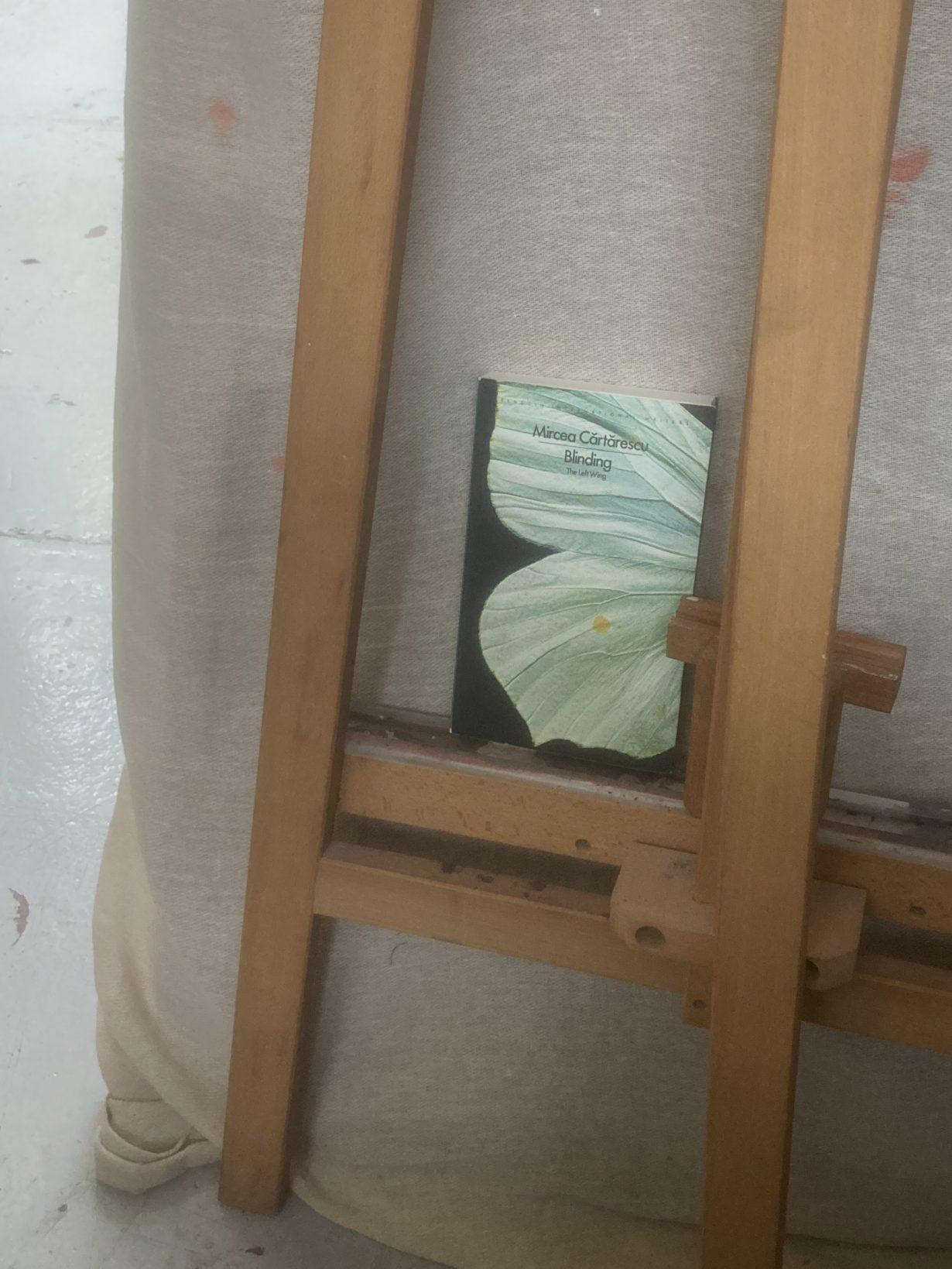
Blinding: The Left Wing by Mircea Cărtărescu is a loose account of the writer’s childhood as well as a paean to twentieth-century Bucharest
The adjective ‘dreamlike’ is overused as a form of criticism, both of art and literature. It’s invariably deployed when the reviewer actually means something strange or unexpected. Mircea Cărtărescu’s writing is dreamlike in the truest sense: Blinding (1996), the first volume of a trilogy by the Romanian author, is 430 pages of literary imagery that follows little logical or lineal structure. Cărtărescu vomits inexplicable scenes onto the page as if mentally to purge himself. It is an effluence – prose at times decadently grim and at others shimmering and ethereal – that this reader, like a dog, couldn’t help but lap up.
This is the first UK edition of a translation released in the US in 2013, newly published as a precursor to the next two volumes, which are being translated into English for the first time. Through Cărtărescu’s kaleidoscopic writing, a loose account of the writer’s childhood emerges, but the book also serves as a paean to twentieth-century Bucharest, with the Romanian capital less a backdrop and more a central protagonist. Moments of realism, hyperrealism and long dadaist tangents mix, characters come and go: there’s Mircea in the opening and closing pages (‘which Mircea?’ asks Cărtărescu in parentheses) as a frightened boy and a sickly teenager, staring out of his bedroom and confined to a hospital respectively; there is Maria, his mother, ‘in hundreds of forms’; her sister, Vasilica, with whom Maria moved to Bucharest as a young woman. We meet their boyfriends and lovers, including Ionel, Mircea’s father; Cedric, a New Orleans jazzman with whom we return to the US and follow into a supernatural death cult; and Estera, a Communist youth activist who, during sex, urges her lovers to scream expletives against Party grandees: ‘Marx is a shithead, say it… Gheorghiu-Dej is an asshole’.
The sickly teenage Cărtărescu is hospitalised with an illness that is never identified, but perhaps explains the urgent desire for escape and the feverish feel of this ‘autobiography’. It is as if the clinical white walls provide a stage on which anything can happen: men turn into butterflies, worms protrude from abscesses, a village becomes so intoxicated on poppy vapours that an orgy erupts and continues uninterrupted to the point that the community’s dead awaken for lack of prayer. Romania’s history emerges through these multilayered narratives. There is a scene from the Second World War that describes the aftermath of a US bombing of the street on which the sisters live: Cărtărescu conjures the splayed insides of the neighbours’ bodies and exposure of their private lives – secret professions and hobbies – in typically excruciating detail. The photographer who is revealed to be a spy as he lies dead amidst photos of porny pinup girls and aerial shots of military bases; the sullen neighbour whose sweet passion for collecting shells is revealed only as his liver and intestines ooze exposed over the scattered conches. The sense of unveiling is writ large through the book as a whole: Bucharest hiding magical underworlds and strange secrets at every turn.
At one point Maria attends the funeral of her landlord’s husband, a miserly man who has been saving all his money to build a great mausoleum: exactly how great is revealed when Maria enters its subterranean vaults. ‘Its sides were so far away that they almost disappeared into a pearly mist. Supported by colossal porphyry columns, a golden dome stood too high for words to describe.’ In another moment Ionel gets a job cleaning the statues in the park, scrubbing away at ‘countless Gorkys, Solohovis, Lermontovs’ until he discovers that Pushkin’s head provides a portal to another underworld. Such magical adventures are prone to continue for pages upon pages: I often found myself daydreaming beyond the sentences, a wandering born not of boredom but something more mesmeric and hallucinogenic, broken only as Cărtărescu lands the character, and the reader, back to the grey reality of twentieth-century Romania, the previous madness a reverie from which the reader is suddenly shaken.
Blinding: The Left Wing by Mircea Cărtărescu, translated by Sean Cotter. Penguin, £16.99 (softcover)
From the November 2025 issue of ArtReview – get your copy.