The Malaysian poet’s posthumous collection situated his works within the context of the country’s development
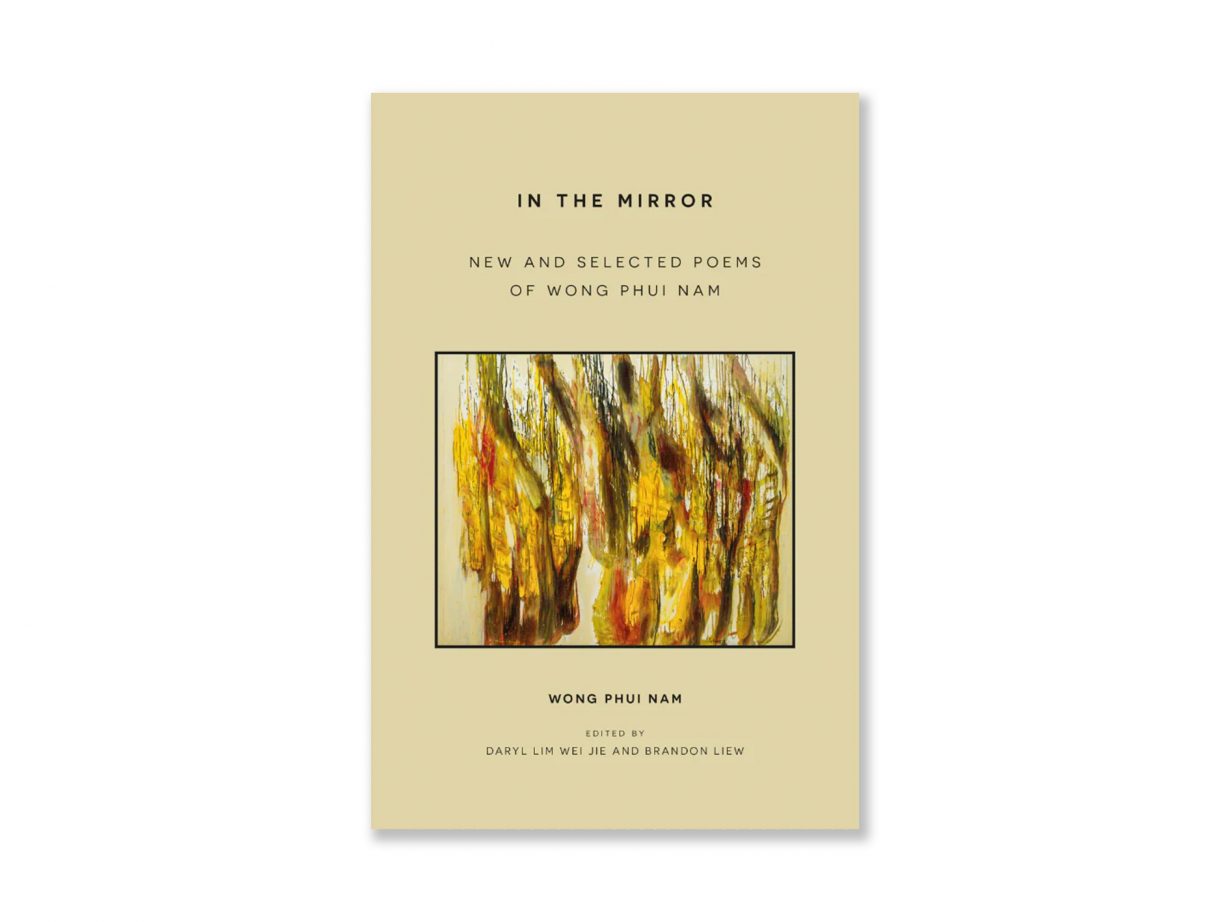
There is the wilderness in the late Wong Phui Nam’s verses, and then there is the wilderness that surrounds them: the cultural landscape of his homeland, Malaysia, wherein the writer in English suffers a special kind of desolation. That is the abiding impression given by both the poems that comprise this posthumous collection, and the essays and biographical odds and ends included that situate them within the context of the country’s development.
Halfway through In the Mirror, the reader is introduced to a series of nonrhyming sonnets from the late 1990s, some of which express a dislocation that speaks to Wong’s Straits Chinese heritage: ‘So long of the sea, I became its aborted creature / dropped from the land, from the soil of rooted community / bled to a shocked exhaustion.’ Other lines in Against the Wilderness nod to the rapid acculturation that the migrant’s arrival in Malaya forced or prefigured: ‘When the valley dawned about us, we sensed / that we had come, each to our particular end.’ Meanwhile, an intoxicating sense of place manifests in these earthly poems, often via deft lexical touches. In Boars, for example, it is the vision he paints of the titular animals ‘bursting upon our careful dusun with the rain’ – a ‘dusun’ being a village – and their violence leaving ‘blood thickening into black buds upon the yams’. But alongside the careful use of words that, to the native English reader, might sound like markers of foreignness, the potency of his imagery also situates us within the tropics: the ribcage of a dead keeper, for instance, ‘agape for its trail of ants / and shocked by the morning’s fresh, devouring sun’.
That Wong had a facility for producing English poetry that served his context well is one clear takeaway from this book. Another is that being an Anglophone poet in nationalist Malaysia for the past half century was not plain sailing. ‘The central theme in all of Phui Nam’s work, directly and indirectly, was the question of attachment,’ writes the Singaporean poet Edwin Thumboo in his afterword. ‘He needed a country in a fuller sense.’ Five years after the 1963 founding of Malaysia, Wong released How the Hills are Distant – a sequence of 20 poems (included here) that stands as a key foundational work of early Malaysian literature in English. But any momentum was rudely disrupted by the declaration, in 1971, of Bahasa Malaysia as the official language of national literature. With English branded ‘Sectional Literature’, Wong spent the next 15 years, this book’s editors write, in ‘a state of literary despondency and self-exile’ before reemerging with his second full-length collection, Remembering Grandma and Other Rumours, in 1989. Yet this was no exultant return: these poems – which trace the ungraceful decline and deaths of his Chinese relatives – are, he said in a contemporaneous interview, ‘outward expressions of spiritual decay in Malaysia’.
An even deeper sense of alienation manifests in a 1991 polemic included here, ‘Out of the Stony Rubbish’, in which he states that the Malaysian writer in English brings ‘to his work a naked and orphaned psyche’. Using English to describe his experiences of the life around him, but having no similar recourse to native or official languages, has rendered him ‘a stranger cut off and always looking in as an outsider into that life’.
These supplementary texts make clear why Wong is considered a totemic, and slightly tragic, figure within ‘a wasteland of Malaysian poets’, as coeditor Brandon K. Liew has put it, that give the impression of him as a somewhat embittered character resulting from an acute postcolonial pathology. His world building, on the other hand, cannot be so easily labelled: this book is full of shadowy mirror worlds, evocations of colonial history and, in the new poems he was apparently refining until the very end, self-elegy. In ‘At Eighty-Six’, a signoff of sorts, he directs our attention away from the wildernesses that so preoccupied and bedeviled him, inwards towards a kind of supreme yet restful reality – ‘not an utter, unremitting nothingness / but a homecoming, a return to stillness’.
In the Mirror: New and Selected Poems of Wong Phui Nam by Wong Phui Nam, edited by Brandon K. Liew and Daryl Lim Wei Jie. NUS Press Singapore, 32 SGD (softcover) / £43 (hardcover)
From the Winter 2025 issue of ArtReview Asia – get your copy.