In Palermo, Mariacarla Molè finds a city building an audience for art from the ground up
During a short residency in Palermo, I often found myself thinking about Naples in 1943, as described by Curzio Malaparte in the autobiographical novel La pelle (The Skin, 1949). The first Italian city to be liberated by the Americans, Naples is portrayed as a place infected by a kind of moral plague, where everything is for sale – even the virginity of a child, who, at one point in the book, is tested one finger at a time by soldiers queueing outside her door. Today, in Palermo, external capital is invested in the acquisition and restoration of entire palaces.
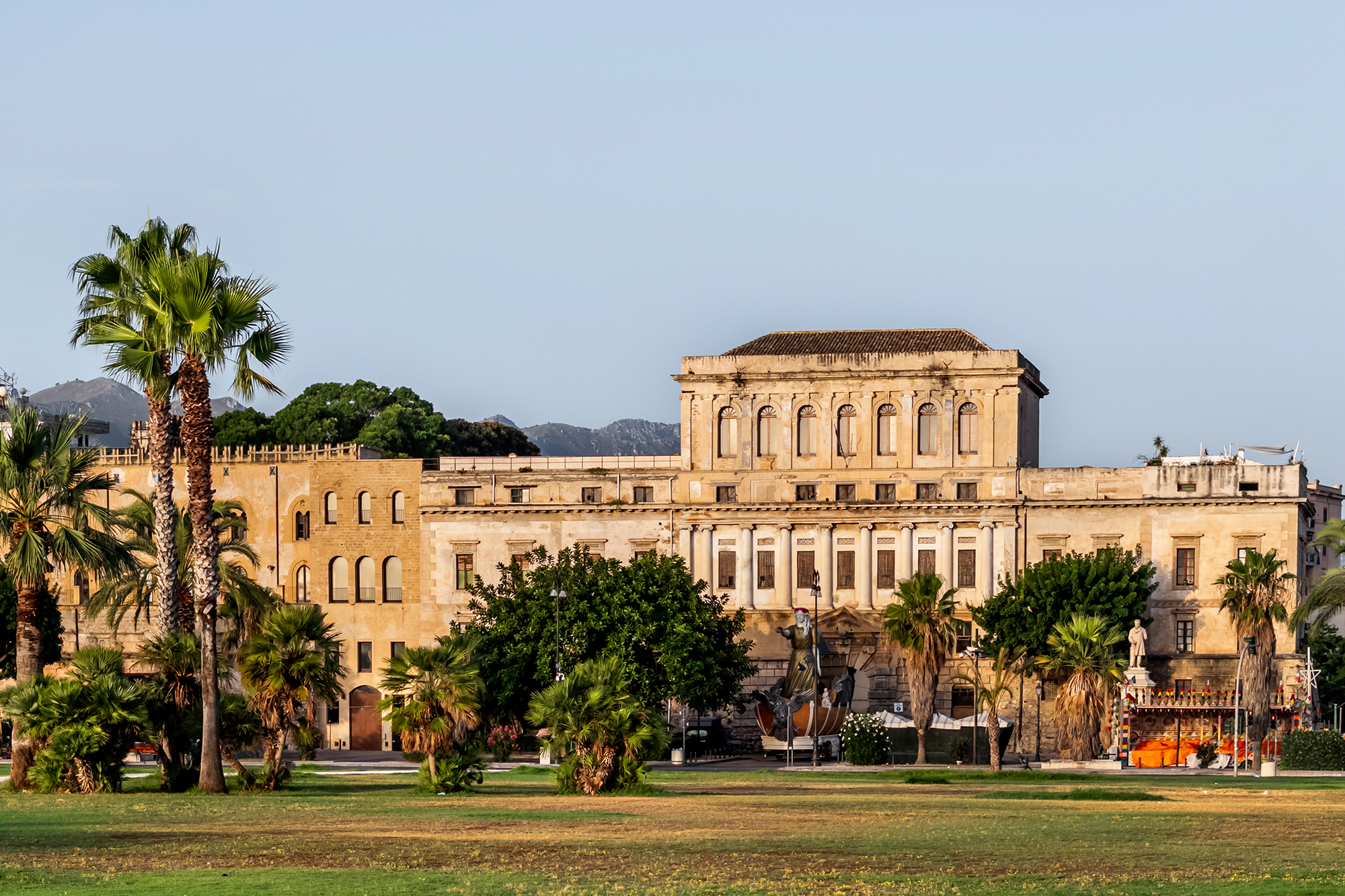
The most recent example, which has drawn attention in the artworld, is Hauser & Wirth’s purchase of Palazzo Forcella de Seta. The building has so far been opened only sporadically – one such occasion being Manifesta 12 in 2018. Another palace in the Kalsa district, also a venue during Manifesta, announced its restoration in 2015: Palazzo Butera reopened in 2021 as the house-museum of collectors Massimo and Francesca Valsecchi. Beyond its undeniable conservation value, the project remains a somewhat vain exercise in the display of a private collection. The sparse collection, comprising the recurring works of a few artists, is presented, without labels, purely as an expression of the owners’ taste. Only a year ago, another venue opened its doors: Officine Bellotti, the renovated premises of a former paper mill transformed by a private company into what is intended to be a cultural space. In practice, it functions as a container for exhibitions, concerts and events, yet without any recognisable artistic direction or curatorial programme. The underlying logic is by now familiar: private capital as the engine of urban regeneration, regardless of whether or not the same dynamic has turned the historic centre into a vomitorium of tourist consumption.
Private initiatives – enlightened or otherwise – advance into the vacuum left by political agendas at multiple levels, a vacuum that is particularly evident in the field of contemporary art. RISO, the city’s contemporary art museum, which opened in 2008, is in severe difficulty. Fondazione Merz has, since 2024, been relieved of its management role of the project space ZAC (Zisa Zona Arti Contemporanee) by the municipality. The Centro Internazionale di Fotografia, founded and directed by Letizia Battaglia, did not survive the photographer’s death. This institutional disengagement is reflected in an artistic community struggling to find spaces and in a collecting scene that is largely nonexistent.
Palermo feels like a city orphaned from a system, lacking networks of professional relationships, communication and resource flows. The contemporary art scene resembles less a structured ecosystem than an archipelago of episodic, largely disconnected initiatives. One such island is the participatory programme developed by Maria Rosa Sossai at the Museo Civico di Castelbuono, located around 100 kilometres from Palermo. The museum recently closed an exhibition by Aterraterra, an artist duo based in Palermo whose practice experiments with ways of thinking about food, agriculture and interspecies relations outside the logic of genetic control, industrial standardisation and the myth of naturalness. For the project, the museum garden was transformed into the habitat of a community of tomato varieties – cultivated and wild – placed in conditions that allowed them to cross-pollinate and hybridise through a specially designed wooden structure. Calling it a vegetable garden would miss the point. The intention was to abandon an anthropocentric model of control and allow the spontaneous interaction between plants to generate unpredictable varieties of tomatoes. This community, described as ‘postvarietal’, will outlive the exhibition, entrusted to the care of a citizens’ committee and students from the university’s faculty of agriculture, who will treat the museum’s garden as a space of shared responsibility.
In a context like Palermo, the public cannot simply be engaged – it has to be built from scratch. Palermo has a unique history in the national context, having missed the process experienced by many other Italian cities from the late 1980s onwards. Those were the years in which a sensitivity to the contemporary was cultivated through the creation of museums, fairs and foundations dedicated to contemporary art – institutions essential for constructing a system, and therefore a public, and ultimately an aesthetic taste. During those same years, Palermo was confronting the so-called Second Mafia War, a civil conflict that would reach its peak during the massacre years of 1992 and 1993. It was the Palermo-based curator Giulia Monroy who, during a convention about Palermo, prompted me to reflect on this history. It is also the reason she initiated Studio Moy, a programme of studio visits with artists living in Palermo. These small gatherings – never more than a dozen participants – are designed to create direct exchange. For many artists, and for most of the guests, it is the first opportunity for artists to meet a not necessarily specialist audience encountering the language of contemporary practice for the first time.
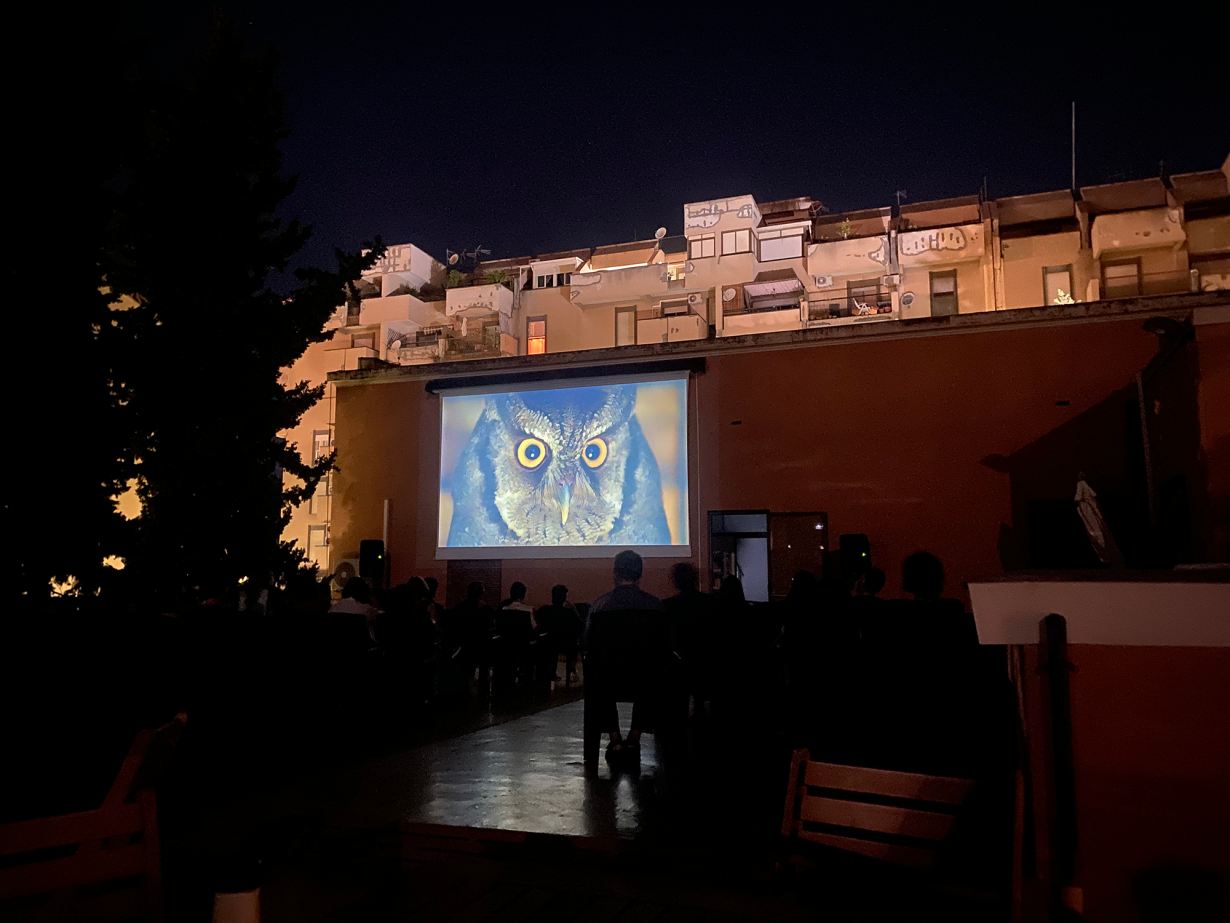
The question of building a public also emerged in my conversation with Beatrice Gibson, a British artist who has lived in Palermo for several years, where she launched Nuova Orfeo, a programme of analogue video screenings informed by a feminist perspective. Yet the education of the gaze in Palermo has an important precedent: the Sicilia Queer Film Festival, founded in 2010 in a city – the fifth most populous in Italy – without an arthouse cinema, and in a region, Sicily, in which film distribution faces enormous difficulties. Directed by Andrea Inzerillo, the festival reactivates the Cinema De Seta every year, attempting, one screening at a time, to compensate for a deficit of imagination and representation.
Wild though it may be, Palermo is alive. There is a radio station, Radio Commons, attempting to reimagine collective practices. Artist-run spaces are thriving – the longest-running being L’Ascensore, founded in 2015. Foreign cultural institutes remain important points of reference, among them the Goethe-Institut and the French–German Cultural Institute’s Kultur Ensemble residency programme, while students at the art academy are increasingly aware of what is happening around them. Each of these projects seems to claim a form of civic legitimacy for art, asserting its role within society. The underlying idea is that Palermo would be a better city if spaces dedicated to culture also functioned as sites for the formation of citizenship. What Palermo communicates is a vitality that is rarely institutionalised, almost never systematised – largely informal, organic and, above all, human.
From the Summer 2026 issue of ArtReview – get your copy.