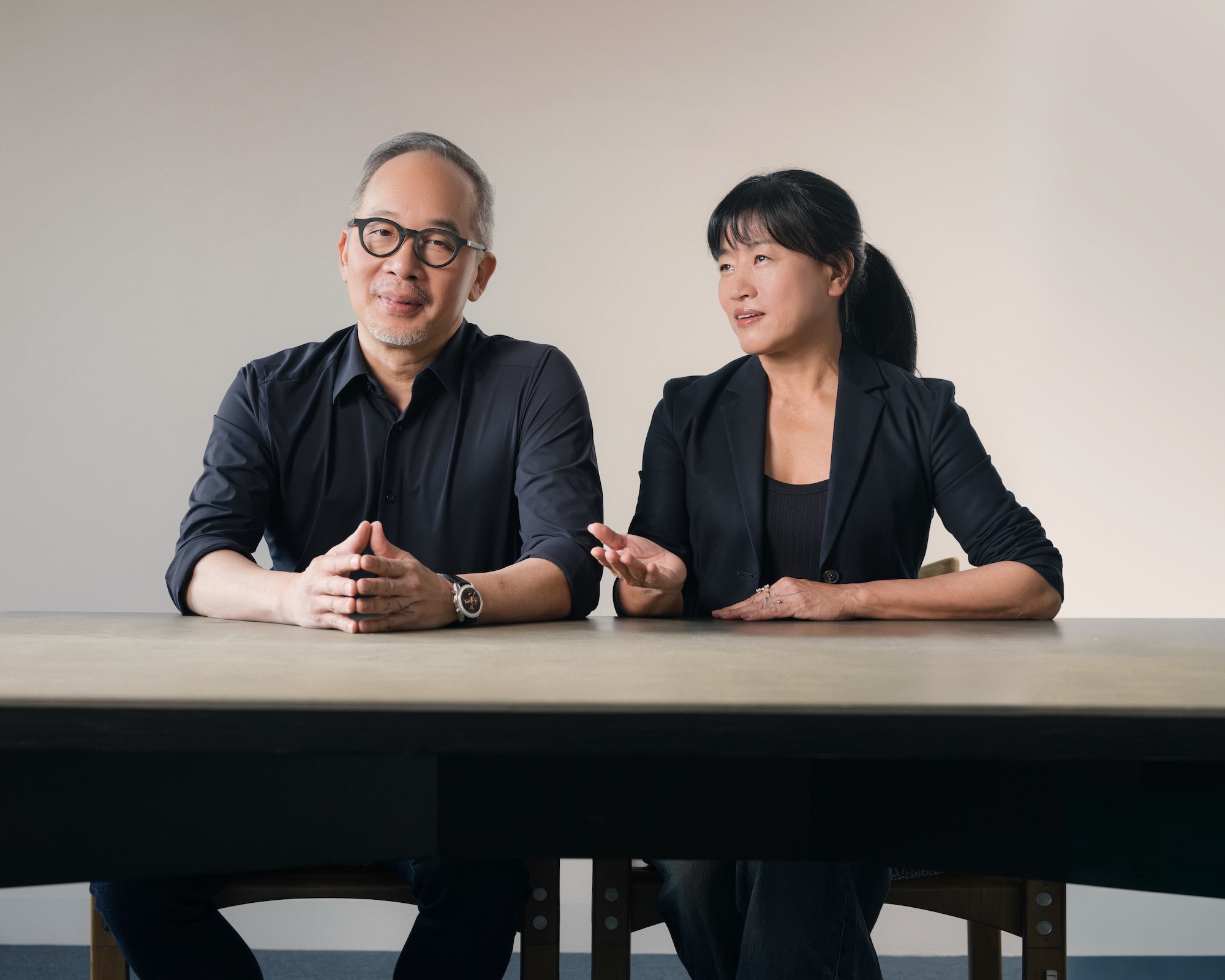
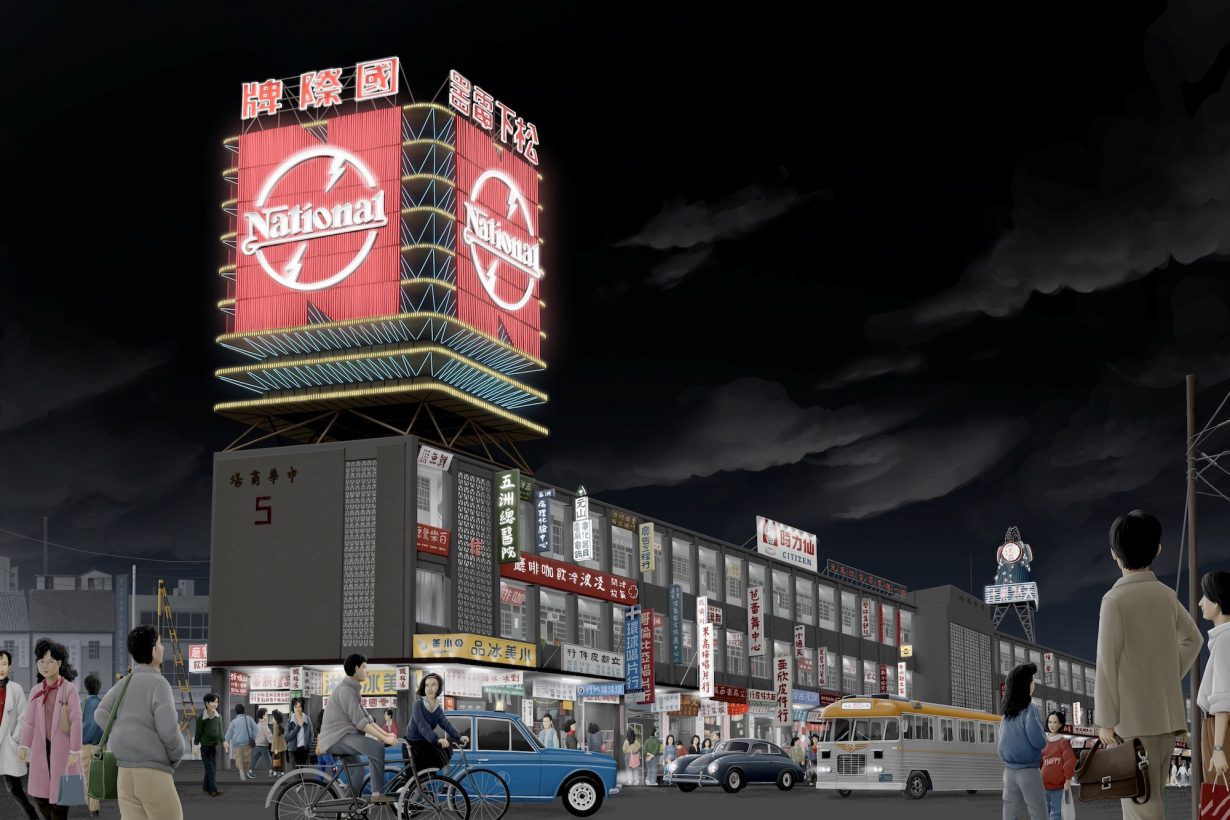
The Hong Foundation was founded in 1971 by Hong Chien Chuan, who established the National brand of home electronics in Taiwan, and later Panasonic Taiwan. The foundation runs a series of prizes and projects, and supports various cultural practitioners both on individual projects and through the development of their careers. It launched a contemporary art programme in 2014 under Grace Cheung, the founding principal of XRANGE Architects and executive director of the Hong Foundation.
ArtReview The Hong Foundation dates back to 1971: how and why was it founded?
Grace Cheung The foundation was founded when Taiwan was still under martial law and dominated by strongman politics. As you can imagine, back in the 1970s, in Taiwan there wasn’t what you might call a literary scene, let alone an art scene. A lot of the philanthropy back then took the form of charities helping people without the means to navigate basic necessities. We were the first foundation to be set up with the express purpose of supporting education for arts and culture, and remained distinct in our commitment to education. That has been what has set us apart all these years. In November, we will be 55 years old.
AR Do you think the mission has changed over the course of that history?
GC I believe for our foundation to still be able to do the work it does, change is inevitable. With new ideas and new people, you look for the best way to move forward in any current situation. To give you an example, in the 1970s, there were no children’s books written by local writers, or the telling of local stories. A lot of the history and the culture is oral. Our foundation started a children’s literature prize. We found writers and illustrators, and essentially built up children’s literature. We were also the first to sponsor Cloud Gate Dance Theatre’s Lin Hwai-min when he just started out in the 1970s. Our executive director, Celia Hong, who is also my mother-in-law, always tells this story of when he would come to the foundation just wearing flip-flops and a pair of shorts and nothing else. This became a long-term relationship, with us sponsoring them over 14 productions. These were instances of support for culture where there was none. I became involved with the foundation by starting the visual art programme 12 years ago; it was a completely new thing.
AR Why support visual arts, rather than, say, your own discipline – architecture?
GC I have been interested in art ever since I was a child. When I was six, I really thought I wanted to be an artist. This fire has always been inside. When I began to participate in the foundation, I thought looking into art would be a really great way to engage, to learn something new and get refreshed from architecture. Over the years, this has become a really great balance for me personally: I have the professional architecture side, where it’s always busy with projects. Then on the art side, I can take a different angle, searching for artists and creative people that resonate with me, and then to try and support them on their journey.
AR What kind of thing resonates with you? Would you ever support an artist whose work you really didn’t like?
GC I think if you don’t like the work, it’s hard to feel like you want to be a part of it. Maybe it has to do with an important or a relevant issue, but if I don’t like how they tell the story, or the artistic means they chose, or if I think it could be done in a better way, then something is missing. Finding the resonance is a really abstract, but highly visceral thing.
AR Do you get a sense of the kind of things you’re going to be attracted to?
GC Yes, I do. I think my art-history and architecture-school training gives me a good understanding. When I encounter an artist, I always like to know where they’re coming from: what propels you? What is the artistic means? I think I can tell when I look at a piece how difficult it is to produce and to edit conceptually. How difficult it is to combine the two into something completely new. I’m often not satisfied if it’s just about beauty. How deeply does it connect? What is the cosmic story, where is that spark? I think I look for that.
AR Does that extend to particular mediums like video or photography?
GC I’m pretty open with all types of mediums: it could be from graffiti to machines to oil painting, mixed media, video, etc. I don’t think the medium matters that much. I think what I look for first and foremost is the story, and the person, because it is a long-term relationship that I’m interested in. I never believe that one particular work can represent someone’s entire career. Artists don’t work like that, and the same is true of the foundation. Historically, we have been doing things long-term. The children’s literature programme ran for 18 years; our support for Cloud Gate went on for 20 years. Now these projects are self-sustaining and don’t need our support anymore.
AR Do you know when they reach that moment?
GC They come to you less and less. Then there will be a time when they come and ask for your help to support just a portion of a project. That’s why part of our art programme is structured like that: we have what we call the extension project, for artists that we work with long-term, so that from time to time when they do a project and they’re short that bit of funding, then we can come in and support. It really depends on what they need. Luckily, Taiwanese artists are generally quite humble and they’re not greedy. Long-term, it really does become a trust relationship. It’s really great to be there and see how their work transforms, seeing the success that they have and then still being able to lend a hand whenever they need it. Being an artist, it’s extremely difficult to survive, even though, I think, making art is one of the most important pursuits for human beings.
AR What is it, do you think, that art, and culture more generally, bring that is so important?
GC I feel like it’s an innate human longing to want to have that special spark. You could think back to cavemen making handprints and then varying the sizes, the colours. It’s playful, even useless, but it gives a lot of pleasure. Through that pleasure, you reflect on a lot of things. Building, let’s say, hospitals – those are important, but what makes the patient happy in the hospital? Perhaps it’s just a really beautiful drawing. I think that art still has that ability, it’s as important as sustenance in a way. It’s basic and it breaks down all barriers without language faster and easier than anything we’ve got.
AR How much do you think the foundation’s activities are tied to an idea of nation-building for Taiwan, and supporting the development of a particularly Taiwanese type of art?
GC I’d be lying if I said the foundation was completely independent of that. If you look back, my husband’s family has been in Taiwan for nine generations. It’s always been an unspoken understanding that we will support talents and ideas from Taiwan. It’s not intentionally political. I find it much easier, much more direct that we focus locally. It’s ultimately the goal.
AR At the same time, a lot of the artists and projects you support are not only located in Taiwan anymore: you work, for example, with Dia in the US and the Rijksakademie in the Netherlands. How does that support your goal?
GC Taiwan is a very small place, but we’ve had a high proportion of good artists working in different genres and with great diversity. I think we’re quite lucky with that. We started collaborating internationally last year because I’m really interested in giving these artists the training and the exposure that they need to become better artists. For example, with the Rijksakademie, the education that they provide would be impossible in Taiwan: for us to replicate it would cost an insane amount of money, a lot of red tape, and would perhaps be extremely difficult to kickstart and sustain. It’s much easier to work with Rijks. If there is a Taiwanese artist that makes the cut there, then we will definitely come in and support.
With Dia, Hsieh Tehching started out as an artist when we founded our foundation. Of course, Hsieh Tehching considers himself an American artist with Taiwanese roots, but he’s still highly revered in Taiwan. That’s why it was a project that we wanted to get involved in, and recap on his inimitable life’s work in a sense.
AR Is that indicative of some of the changes that have happened with the times since the foundation began? In the sense that the idea of ‘Taiwanese’ art is now something that exists on a more international plane, in the context of a diaspora, for example, than it may have when the foundation began.
GC When I look at the artists from Taiwan, I also want to see that they’re not trapped in a Taiwanese identity. They need to be able to tell their story, but in a way that can resonate with as many people as possible. To do that, you have to actually go down to a deeper human level. For example, you can be very political, but you don’t have to flash national flags. There are ways to describe these very complex situations and emotions without going there. I believe the artists that we have supported are all capable of doing that.
AR What does success look like? When you have a project, that it gets shown in a museum or a biennial, or that the artist you support just makes their work?
GC I use myself as the first hurdle. When I support an artist and then I see the work and I’m genuinely impressed and blown away, that is success. Because if we hadn’t supported the artists, they would not have been able to make these works. Then there are pieces that are really stunning, where artists have broken through their own barriers, beyond what they usually do, and moved forward conceptually. If I see that the artist actually managed to break free of whatever limitation, some kind of glass wall or ceiling, then I would also say that is success. In our experience, these pieces would then get exhibited elsewhere, outside of Taiwan, because they are really that good. That is also success.
AR Does the foundation have a collection?
GC Previously, when we commissioned all the work, we didn’t seek to collect it because we didn’t have the space. We just recently changed our by-laws so that we can now take on a collection. We’re also just starting the process of building our own building. Through this, I want to start commissioning more artists to put work in situ, so that the commissioned work is embedded with the building, in the building material, in the spaces.
AR Given the developments of new technologies, and AI in particular, is this something that you feel might change the purpose of the foundation?
GC We are testing how we can have a relationship with AI. We have sponsored artists looking into AI previously. Li Yi-Fan, when he won our award, my condition for him was to look into AI. To use his crazy logic to look into this and to tease out some issues, because I know he will use it smartly, not in a dumb way to just generate a lot of smooth AI images. This is still in progress. We’ve also recently commissioned a young artist, a recent graduate, Chang Shu-Wei, exploring this idea of AI companions. I am interested in seeing how artists might use their own creativity to respond to AI. It’s part tool, part database, but not exactly a producer. I am interested in artistic practice that is not drowned by AI but still maintains the human quality above all, that could navigate this very fine line to look for that really unique take. In short, I won’t say no to AI, but I’m very critical.
With the foundation, the way we sponsor artists, a lot of it is really trial and error. The best way really is to learn by doing. We really believe that culture can generate industry. This is an issue that we are very interested in.
AR Would this be a new programme that you would introduce into the foundation’s mission?
GC If there is an opportunity, we are very open to doing that. When we have our own building, I won’t say no to, for example, starting a small production arm. It just takes one opportunity where this could work, and then it could generate new things. We own, on the one hand, quite a few companies. We also have investment companies that generate income to support the foundation. Then, in turn, the foundation can support the kind of cultural production that eventually could become an industry. We are very interested in seeing how it could come full circle. We’ve done a lot of pairings for artists, connecting them with the larger business network to help them with their research. So far, there hasn’t been a moment where we could, say, embed an artist somewhere or have an artist collaborate with business yet. The final goal is to grow a new type of artist, if you will. A completely new form of practice. How exciting the world would be if there were no such categorisations about what, say, an architect can do, what an artist can do, but that someone trained in either discipline can be generally a creative problem-solver. I think that would be the day we really succeeded.
ArtReview’s October issue is accompanied by Philanthropy Today, a standalone 66-page publication on the evolving nature of philanthropy in the arts, including feature articles on key concerns within the field, case studies on how philanthropy is involved in shaping the public sphere, and interviews with prominent philanthropists. This publication was created with the support of the Hong Foundation