Is the future nomadic? Jeni Fulton takes a look at the extent to which private foundations are starting to eschew brick-and-mortar structures
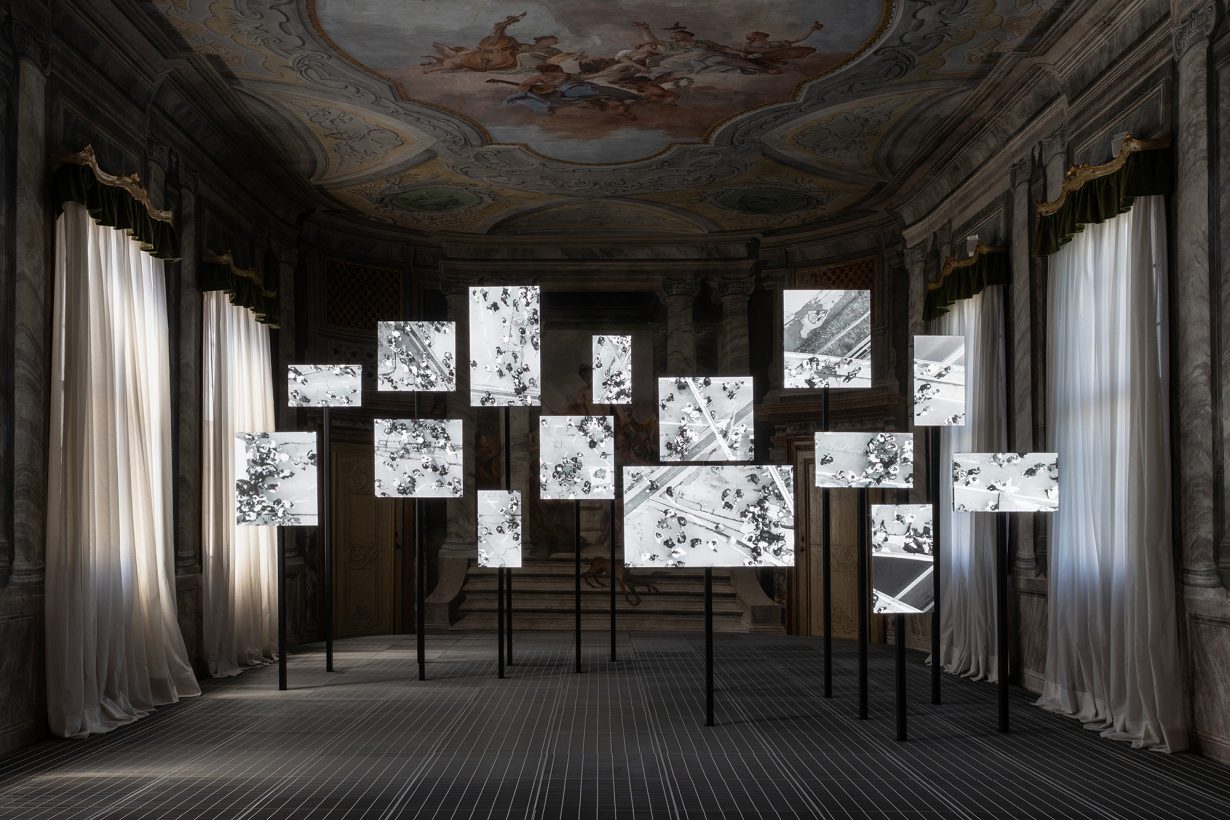
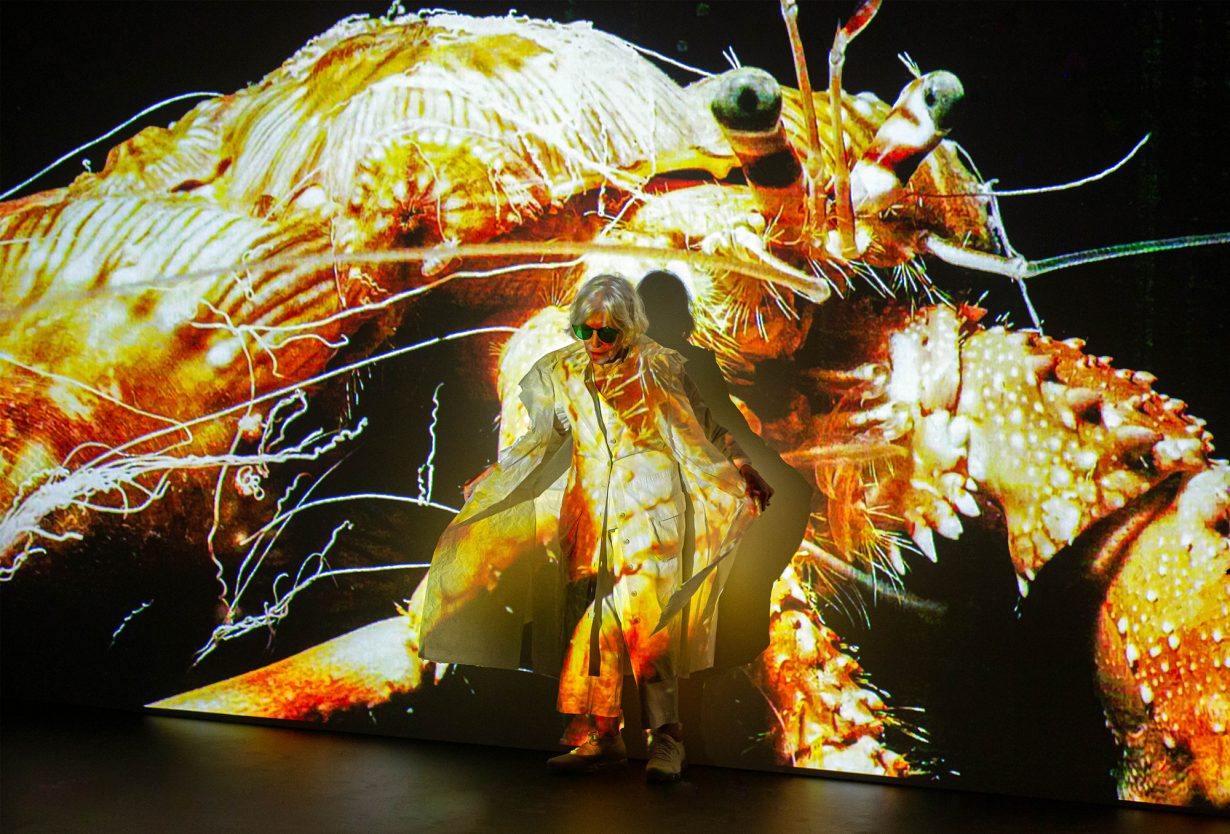
Venice, May this year, a temperate beginning to the 61st edition of La Biennale dell’Arte. Alongside the national pavilions and Koyo Kouoh’s posthumous exhibition, In Minor Keys, over 20 presentations backed by as many private foundations are scattered across the city, both on and off the official list of collateral events. In addition to permanent establishments such as the Fondazione Prada and the Pinault Collection, the Biennale has become a magnet for a new breed of nomadic foundation: one that commissions works, rents exhibition spaces and moves on. Alongside presentations supported by Francesca Thyssen-Bornemisza’s foundation TBA21, the Autotelic Foundation and Victor Pinchuk Foundation, LAS (originally Light Art Space) Art Foundation and Amos Rex are showing an immersive installation by Natasha Tontey at the Ateneo Veneto, an institution that supports science and the arts. Meanwhile, Fondazione In Between Art Film opened Canicula at the Complesso dell’Ospedaletto, a sixteenth-century hospice and orphanage, for its third consecutive Biennale in the same space.
LAS was founded in 2019 by Jan Fischer, an entrepreneur and collector, and Bettina Kames, an art historian and adviser, with the stated aim of ‘establishing one of the leading institutions in contemporary art’ in Berlin. It was important to Fischer, Kames says, “that [LAS] should be a different kind of institution, one strongly oriented towards the future”. As such, it has no collection and instead commissions two to three projects a year and exhibits the results in eye-catching venues – Kraftwerk Berlin, the Halle am Berghain, the forecourt of the Museum für Naturkunde, the Accademia di Belle Arti di Venezia courtyard in 2024, the Ateneo Veneto in 2026. “We let resources flow into the projects that would otherwise flow into the building,” Kames explains.

Although foundations have begun to travel – the ICA San Francisco went fully nomadic last year, and Julia Stoschek will shutter her Berlin space in October 2026 in a ‘strategic alignment’ towards international projects – the nomadic foundation is still a young breed. “There really aren’t that many worldwide,” Kames notes. “Most [foundations] do have a home of their own, an anchoring.” Some nomadic foundations take the concept even further: Audemars Piguet Contemporary, the art arm of the Swiss watch brand, and Fondazione Nicola Trussardi commission singular works by artists, which then travel through existing institutions, or pop up as site-specific installations in cities. TBA21’s The Current goes further still. The three-year curatorial fellowship, now in its fifth cycle, ran its first two editions with no exhibition at all: artists, scientists and writers moved between flotations, itinerant research voyages made in those years entirely by boat, and convenings, multiday public gatherings at which the fellows showed what the voyages produced. “Only in the third cycle did we turn the final year of the fellowship into an exhibition and public programme at Ocean Space,” says Markus Reymann, TBA21’s codirector.
Many nomadic foundations were founded from 2019 on, in the years the private museum began to fall into disfavour among wealthy patrons, when the financial commitment of running a permanent space became apparent. When the Zabludowicz Collection closed its chapel location in Chalk Farm, London, in 2023 after 16 years, it was not an outlier: Olav Velthuis, a cultural economist at the University of Amsterdam, counted 446 private museums still active internationally in his 2023 analysis, against an estimated peak of 546.
The nomadic foundation rests on very little in terms of official structures, often depending on a single benefactor. LAS has over 20 members of staff, enough to run a midsize European Kunsthalle, to support its expansive commissions, and discloses no budget. In Between Art Film was founded in 2019 by Beatrice Bulgari, the spouse of Nicola Bulgari, the billionaire vice-chairman of the eponymous jewellery brand. She funds the foundation’s activities on an undisclosed annual basis: there is no endowment, and staff are scattered between Florence, Milan and Rome. It produces artist films shown in festivals and exhibited at biennials and museums – Karimah Ashadu’s Machine Boys (2024) won the Silver Lion in Venice in 2024, Saodat Ismailova’s film Melted into the Sun (2024) was shown at Venice’s Complesso dell’Ospedaletto as part of the NEBULA group exhibition, and later travelled to Pinault’s Bourse du Commerce space in Paris, and Wang Tuo’s work The Experimental Paradigm of Ownership and Autonomy (2026), which was first shown at Canicula, is currently on view at the Gwangju Biennale in Korea. For its Venice outing, the foundation financed and exhibited eight new films by Lawrence Abu Hamdan, Janis Rafa, P. Staff and Maya Watanabe, among others. “A building puts you in the position of having to organise several events a year,” the foundation’s artistic director, Alessandro Rabottini, says. “We react to what we feel are the needs of the artist.” Unlike traditional artworld institutions, the foundation moves fluidly between the rules of cinema and those of the exhibition, according to its curator Leonardo Bigazzi. “We bring artists who do not have a network in the film world into the circulation of film festivals and the context of cinema,” he says. “Some artists who had never exhibited in cinema before, like Karimah Ashadu or Jonathas de Andrade, started showing their work in cinemas thanks to the bridges that we have built.” LAS is also equipped to take risks: with no board, no endowment and no building, it can commission artworks that would otherwise take years to produce through a publicly financed model. As Rabottini notes: “When you apply for public funding, artists need a clear idea of what they want to do. But there is a level of intuition, a level of risk … [traditional institutions] have created a system that doesn’t favour intuition.”
TBA21 also devolves the curatorial decision itself. While the foundation maintains its Ocean Space site in a former church in Venice, TBA21 has long taken the nomadic aspect more literally, running an artist-at-sea residency since 2015, placing over 50 artists since then aboard the oceanic research vessels of the Schmidt Ocean Institute. The Current hands each three-year cycle to a curator in a different region – Barbara Casavecchia in the Mediterranean, Yina Jiménez Suriel in the Caribbean and currently Natasha Ginwala is exploring the Indian Ocean – and the fellow’s authority has grown with each: while TBA21 chose the commissioned artists in the first two cycles, Casavecchia chose her own in the third. “The Current was designed to learn from the fellows’ own practices, methodologies and networks,” says TBA21’s Reymann, “not to impose TBA21’s way of working on them.” “The Current”, he continues, is “the most structurally unstable – and most alive – programme inside the institution.”
New approaches matter at a time when cultural funding and institutional budgets have been cut on both sides of the Atlantic. Among the nomadic foundations that set up temporary shop in Venice this past May, many tend towards funding research – such as LAS’s projects addressing the link between art and technology – or funding mediums that are underrepresented on the art market: film, video and digital art. Perhaps itinerancy is a natural response to the ambitions of contemporary artists: working with scientists, creating technologically advanced works or simply making films, which – unlike heavy sculptures and delicate paintings – lend themselves to travel.
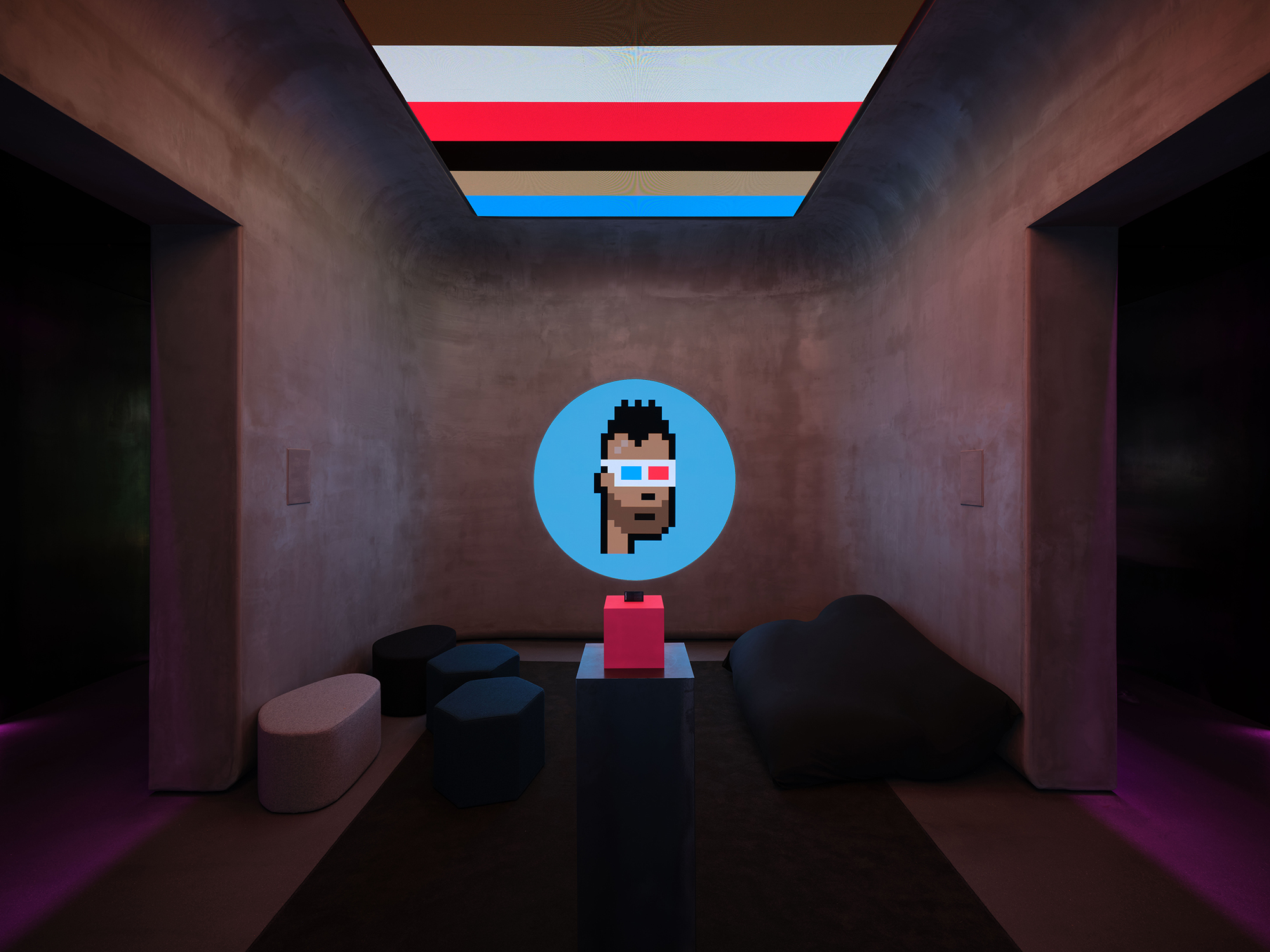
One would think, then, that digital art patronage has taken to gallivanting around the globe as well. Surprisingly, it has not. In November 2025, Padimai Art & Tech Studio made its home, for now at least, at Tanjong Pagar Distripark in Singapore, and in 2027 Canyon, a 3,700-square-metre cultural space, will open on New York’s Lower East Side with an exhibition dedicated to ‘Worldbuilding’. In January this year, Becky Kleiner and Micky Malka opened the NODE Foundation’s building in Palo Alto. The founders chose the Bay Area city because, as Kleiner stated, “The technologies that have reshaped our lives were born here”, even though “the artistic movement emerging from those technologies had no permanent home”. The foundation is home to the CryptoPunks collection and mainly shows digital artists such as Kim Asendorf, Beeple, Ana María Caballero and Maya Man. In return, they have been supported by the digital art community, with artists including Larva Labs (the makers of CryptoPunks), Beeple, Dmitri Cherniak and Asendorf donating works and technology applications. Kleiner and Malka’s stated ambition is to bring digital art out of the screen – off Instagram, X and OpenSea – and to a mass audience, or, more specifically, a Silicon Valley tech audience. Malka, an affable fifty two-year-old venture capitalist, is bullish. “Becky and I have funded it with over $45 million of our own capital, so it is a foundation, but it’s not run like one.” NODE, according to him, is more of a production company, shows go up in six hours and the space is never dark for more than two or three days. Speed is of the essence. The fixed venue is key to their strategy: if the foundation is nomadic, Malka reasons, audiences will come for just one show. “If it’s permanent,” he says, “they’ll come to every single show.” The founders plan to expand to New York City, then worldwide. And for those who are sceptical of such ambition: “I’m on the board of MoMA,” Malka says with a laugh, “so it’s not like I’m foreign to all of this.”
What can a nomadic model – relieved from the burden of the lease, free to think ambitiously and expansively, but also tasked with rebuilding the intrigue and trust of audiences from one city to the next – contribute to an oversaturated artworld? Without endowments, published budgets or other visible indications of long-term funding, itinerant foundations can come across as structurally opaque and overly dependent on the goodwill of their founders, their work in turn viewed as contingent and temporal – a temporary boon for an artist as opposed to sustained support for a career.
Giving up the building means sacrificing space for an archive; even Rabottini concedes: “Archives are a fundamental aspect of cultural production” – this, it seems, is someone else’s problem for now. However, TBA21’s Reymann points to what outlasts a cycle: after Armin Linke proposed, in 2017, centring his commission on deep-sea mining, TBA21 applied for a permanent observer seat at the International Seabed Authority in Kingston and has held it since. “Once the cycle ends,” he says, “the relationships continue, and we remain committed to them.” In the end, despite the temporary nature of the nomadic model, their aim is still to create things that have long-term cultural importance.
ArtReview’s October issue is accompanied by Philanthropy Today, a standalone 66-page publication on the evolving nature of philanthropy in the arts, including feature articles on key concerns within the field, case studies on how philanthropy is involved in shaping the public sphere, and interviews with prominent philanthropists. This publication was created with the support of the Hong Foundation, Fundación Ama Amoedo, Padimai Art & Tech Studio, Amos Anderson Fund & Amos Rex and PARKSEOBO FOUNDATION