Set in a near-future Tokyo, the short novel revolves around the design and construction of skyscraping prison
Set in a near-future Tokyo, Rie Qudan’s short, awardwinning novel revolves around the design and construction of a new form of skyscraping prison facility at the heart of Japan’s capital, in the Shinjuku Imperial Garden. But really it’s about the architecture of language. Here ‘prison’ is reimagined by a radical theorist, the government and subsequently an architect as ‘sympathy tower’; the criminals housed within it are ‘homo miserabilis’. And they are to be treated with compassion rather than condemnation. What’s at stake is the status of language (and with that, identity) as a fixed or evolving entity. In the Japanese original, the translator informs us, this is partly played out through different Japanese writing systems katakana – which is used to transpose foreign words into Japanese – and traditional kanji, which derives from Chinese script. As more of the former replaces more of the latter, characters in the novel debate what this means for the Japanese national character.
In the same vein, the tower’s architect, Sara Machina (who narrates some parts of the novel), wonders if a compassionate structure really fits the character of Japanese society, before reassuring herself that architecture is a shell; others get to fill it. Meanwhile her younger lover, Takt (who narrates other parts), himself selected for that role by Sara on account of his pleasing looks and good taste in clothes, reflects on the fact that good people today are compassionate people, the two words being identical in practical terms. The Sympathy Tower has been constructed not for those it houses, but those around it, for whom happiness is a privilege (produced by context and environment, as is criminality) and sympathy a duty. The tower, in this sense, is a declaration that the public has performed its duty. Today it’s words, not actions, that construct reality (for examples of that outside this novel, one need only look to how politicians almost everywhere perform in our post-truth world). Indeed, as language unmakes and remakes itself throughout this remarkable text (and no less remarkable translation), you begin to wonder whether or not it’s as alive as the lives it purports to describe. Although Sara’s doubts, we learn, relate to the fact that she was, herself, the victim of an actual and physically violent crime.
In the face of all her uncertainties, Sara talks: ‘she talked and talked and talked’, recalls Takt, ‘as if convinced that she lived in a house made entirely of words and everything about herself could be explained in language’. Eventually she turns as much to an AI chatbot as she does to Takt, initiating a series of moreor-less existential questions and answers that take up parts of the novel. (And for which the author freely admits to using ChatGTP to compose, causing some degree of controversy when she won the Akutagawa Prize, one of Japan’s highest literary awards, for this novel last year.) This in turn leads to discussions about whether or not the words of an AI can be meaningful or ‘real’, and how it is creating a generation of needy AI natives who expect every question to have an answer. Indeed, it’s not long before sympathy becomes something performed by humans for the AI: ‘the poor thing… condemned to an empty life of endlessly spewing out the language it was told to spew, without ever understanding what this cut-and-paste patchwork of other people’s words meant’. On the other hand, Sara is increasingly ‘unable to find the words that would finish her sentence’. Humans, unlike AI, have the right not to speak, the possibility, as one of the characters notes, ‘of leaving words unspoken’. Which is, generally speaking, what you’d imagine any novelist would also find hard to perform. Except here.
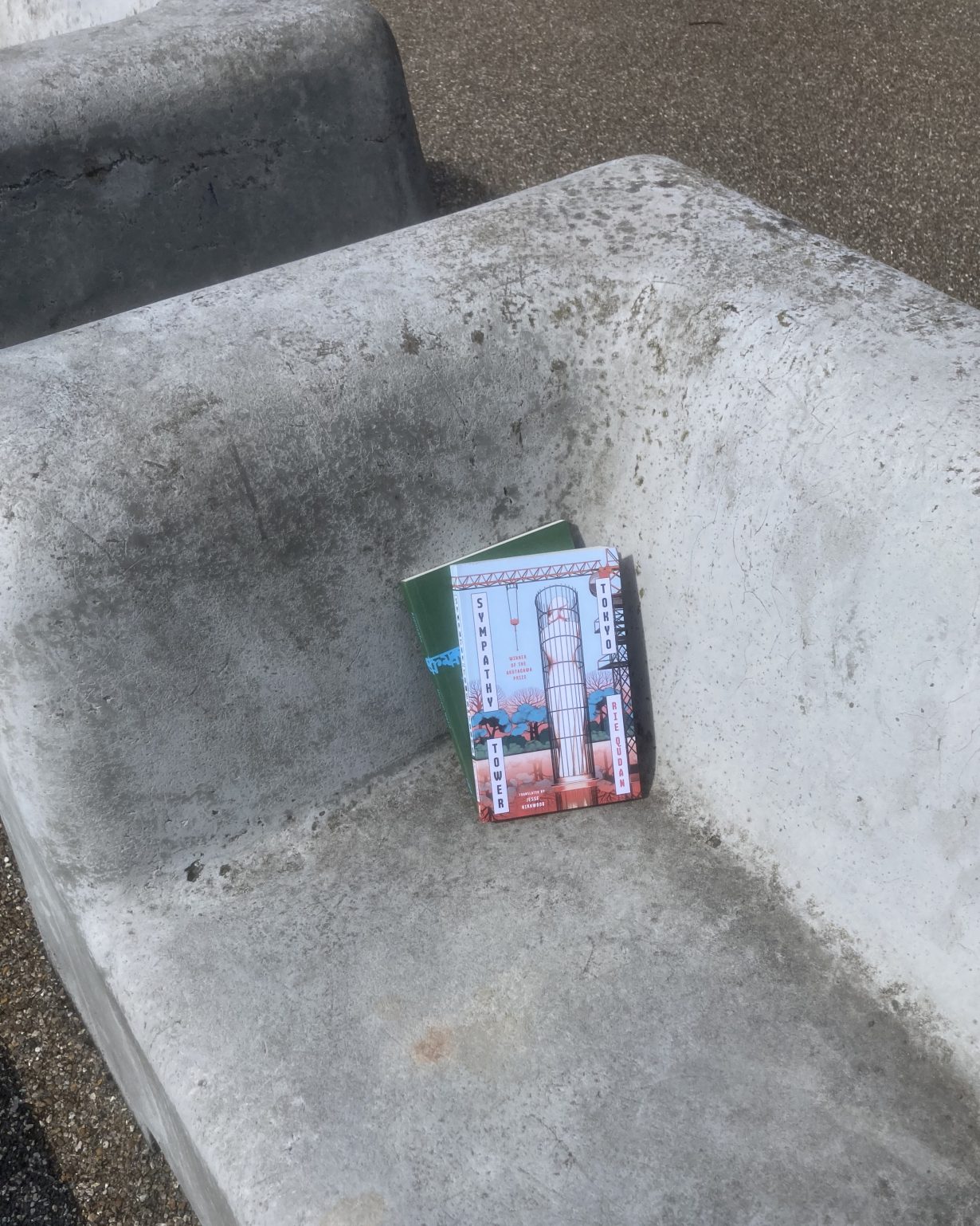
Sympathy Tower Tokyo by Rie Qudan, translated by Jesse Kirkwood. Penguin, £10.99 (softcover)
From the Autumn 2025 issue of ArtReview Asia – get your copy.