A new exhibition traces the legacy of the visionary Belgian fashion designers, asking what it takes for creativity to flourish today
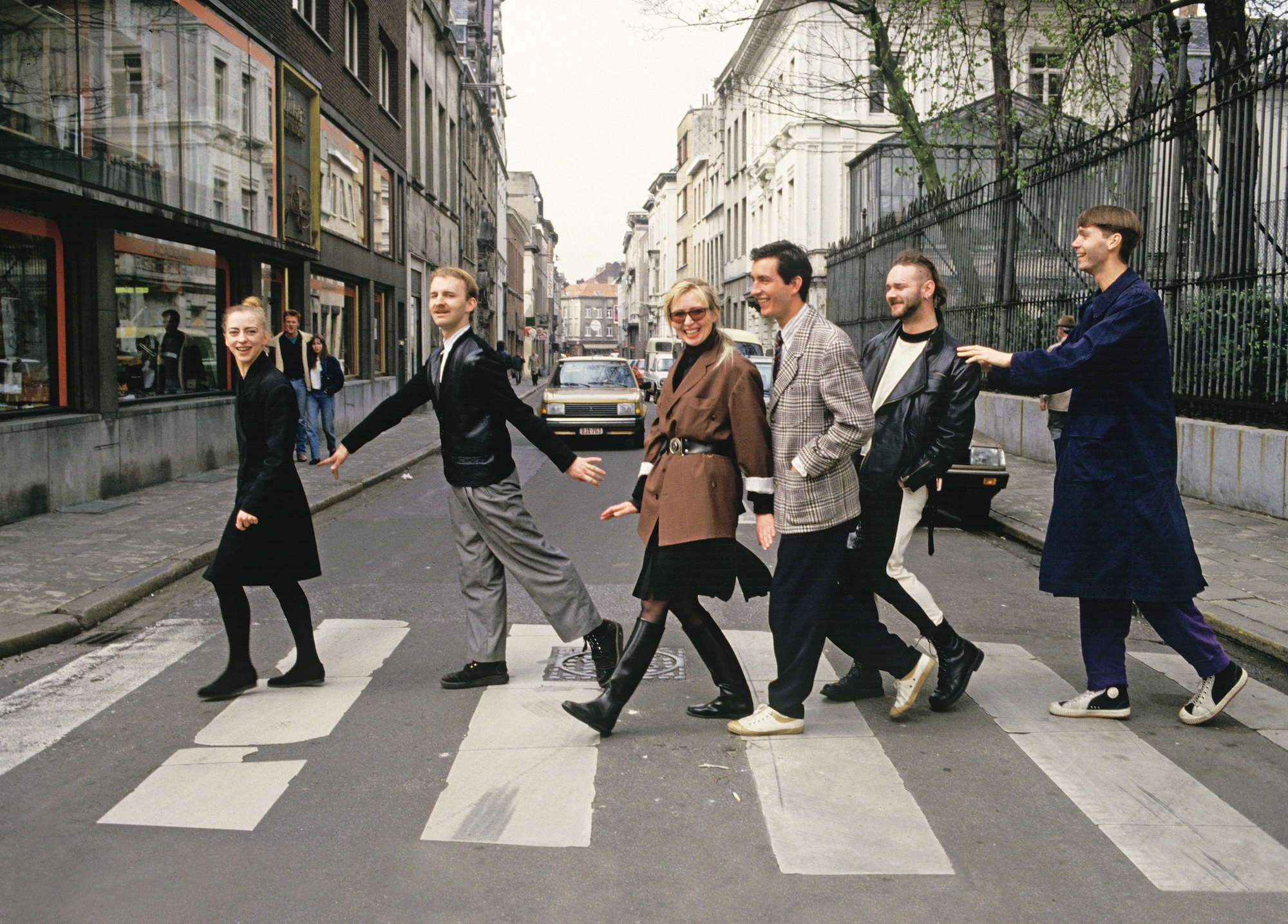
In 1986, six fashion graduates from the Royal Academy of Fine Arts in Antwerp packed a van with their collections and drove to the British Designer Show, a trade fair at Kensington’s Olympia that preceded London Fashion Week. They had no industry contacts, no private financial backing and no invitations to fashion events or parties (although they did forge some). What they had was subsidised tuition fees and government-backed production funding, a body of work, and each other. The British press, unable to pronounce their Flemish surnames, coined them The Antwerp Six, made up of Dirk Bikkembergs, Ann Demeulemeester, Marina Yee, Walter Van Beirendonck, Dries Van Noten, and Dirk Van Saene, with Martin Margiela arriving shortly after as an unofficial seventh. They rented a small booth in the fair among the bridalwear and, when no one visited, collaged a flyer and handed out photocopies to buyers downstairs. Before long, their collections caught buyers’ eyes from Barneys New York. Bergdorf Goodman and Liberty of London followed. Nearly four decades later, the influence of The Antwerp Six is not merely historical; meanwhile, Antwerp’s Royal Academy continues to produce designers who shape the industry including Haider Ackermann, Demna, Glenn Martens, and Raf Simons, who was mentored directly by Walter Van Beirendonck.
A new exhibition spotlighting the group is on show at the city’s MoMu, guest curated by Geert Bruloot, who originally sold The Six’s work at his Antwerp boutiques Louis and Coccodrillo, and initially suggested their seminal trip to London. While, in the early 1980s, high fashion was centred almost entirely on the Parisian grand maisons – a closed, hierarchical system that knew exactly what and who it was for – that dominance began to give way to a more democratised landscape. Musicians like David Bowie and Boy George, club scenes like the Blitz, subcultures like the New Romantics, and Vivienne Westwood and Malcolm McLaren’s shop on the King’s Road were all pulling fashion off its axis. In Paris, Rei Kawakubo and Yohji Yamamoto showed asymmetric, deliberately unresolved clothes that Women’s Wear Daily dismissed as ‘post-Hiroshima chic’ in 1982. The question of where fashion came from and who it served no longer had a single stable answer. The Six were spurred by this shift.
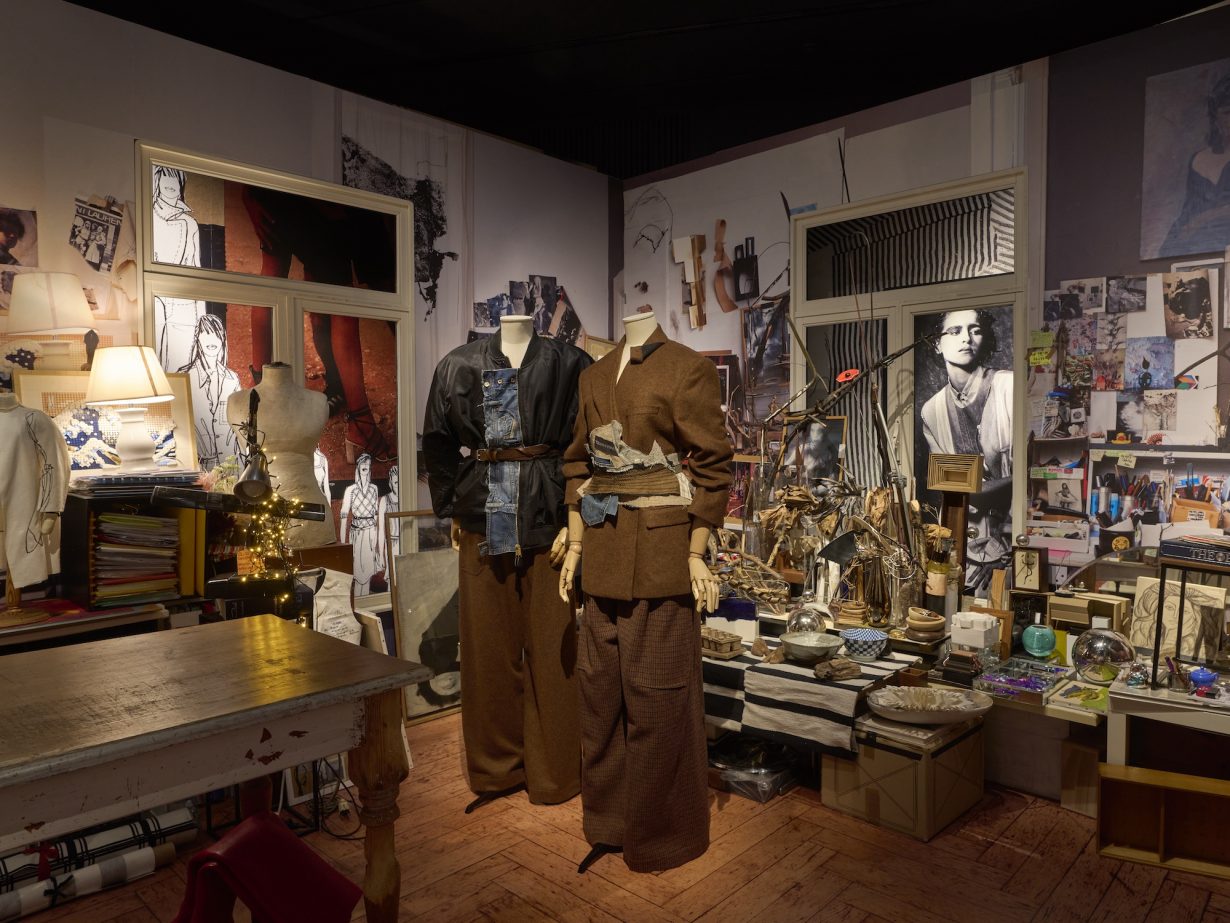
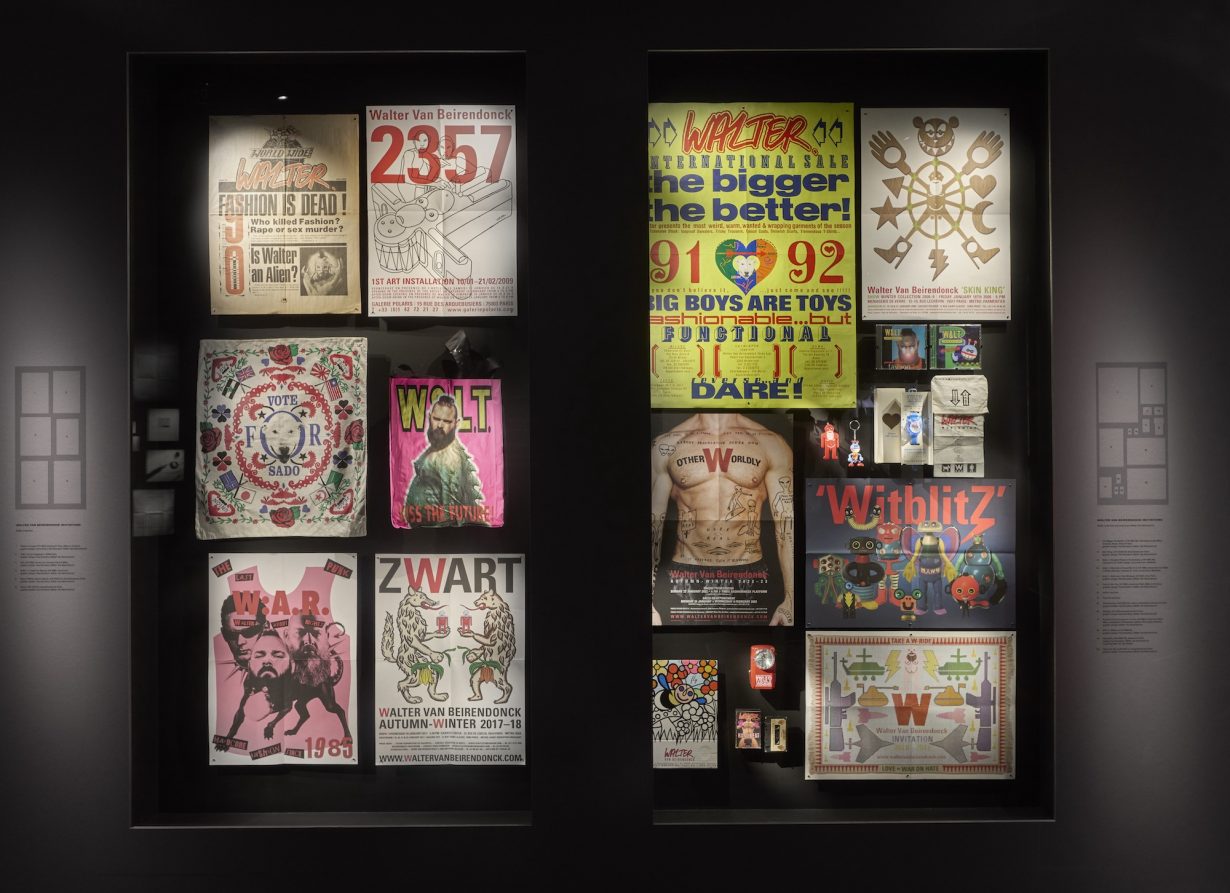
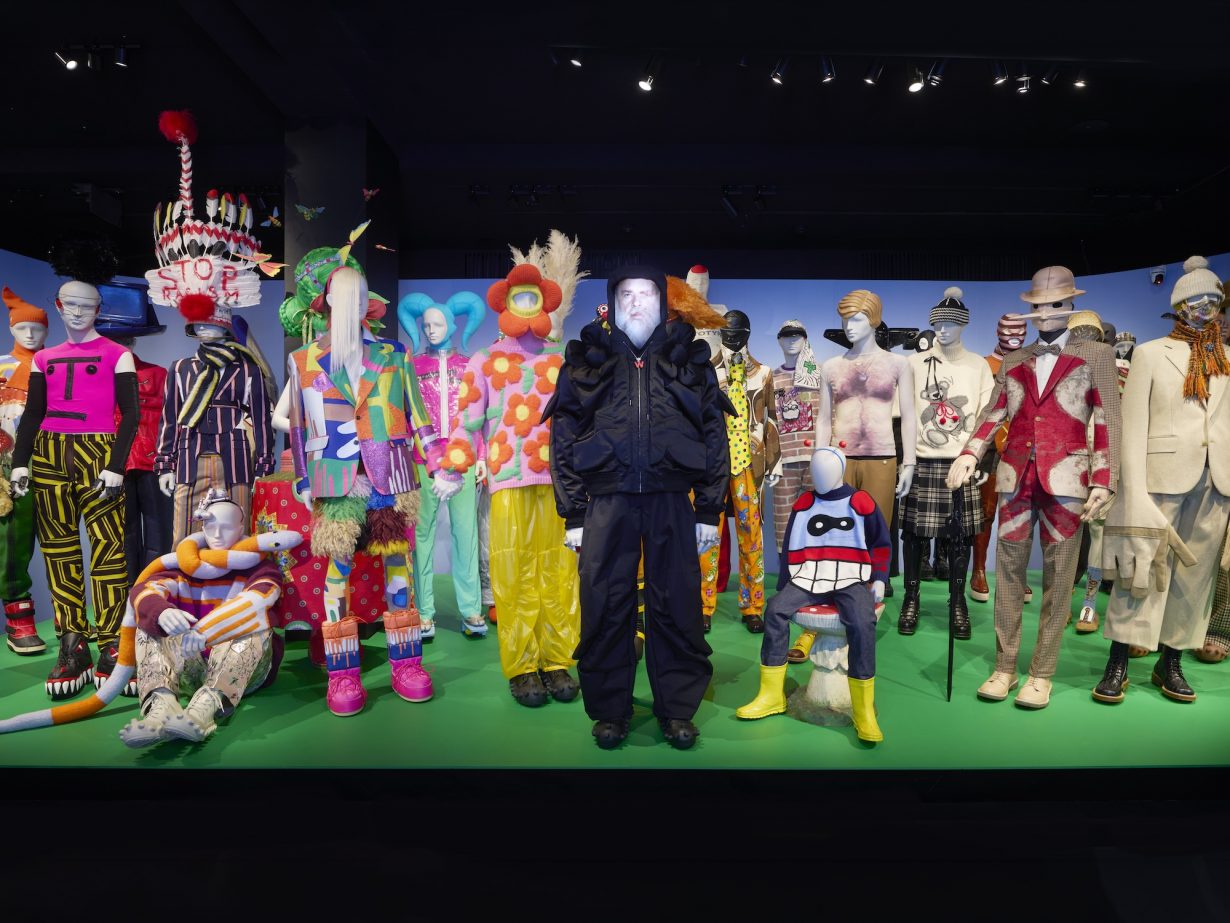
Such is the context that informs the exhibition, which moves one-by-one through The Six designers, each dedicated to a single, distinct room, reflecting the group’s lack of a unified aesthetic. Much of Walter Van Beirendonck’s display, for example, is occupied by an army of mannequins in maximalist, exuberant designs: a skin-tight jumpsuit printed with a naked male body, or an oversized blazer extending into glove-hands, and a life-scale computer worn as a hat. Van Beirendonck, the only one of The Six still producing collections today, was involved with the politically charged queer culture of the AIDS era, which fed into work that addressed sexual politics, environmental collapse and global capitalism in a loud and magnificently absurd visual register. His Wild & Lethal Trash label producing psychedelic rave-wear, launched in 1993, was essentially a document of European rave culture.
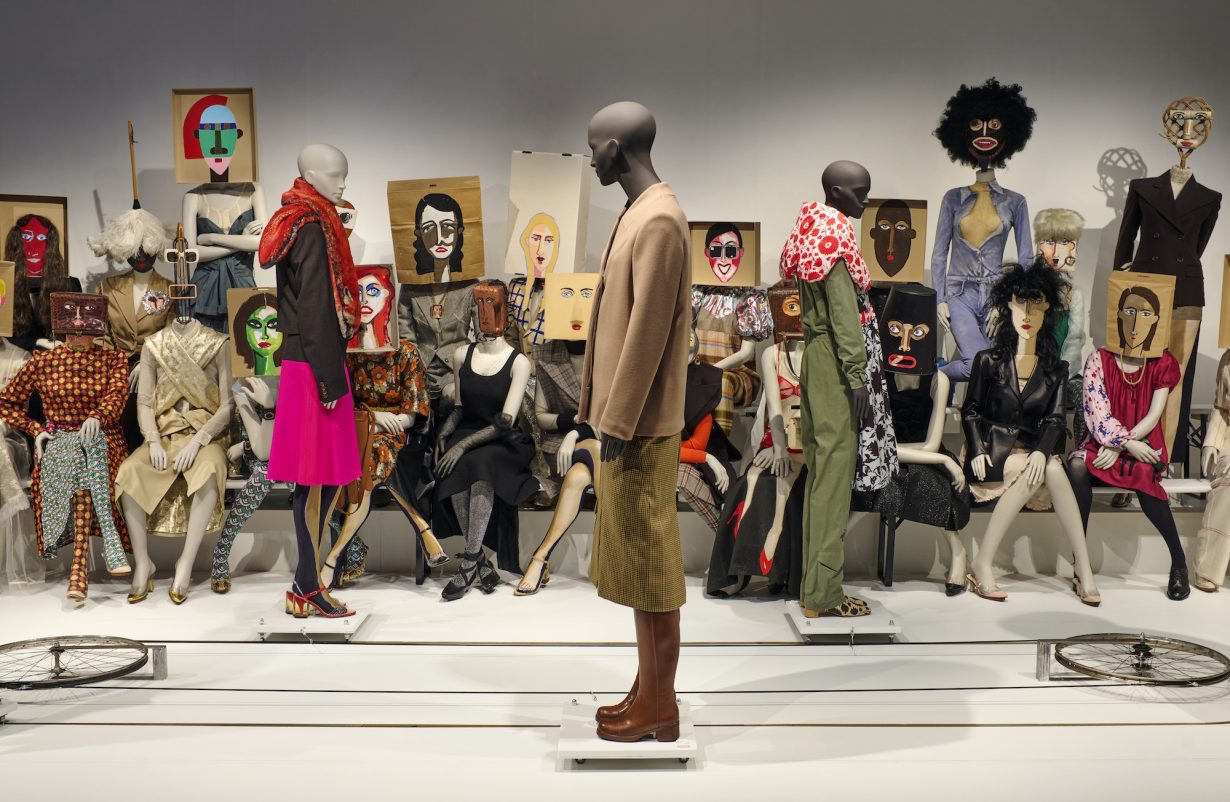
Dirk Van Saene’s room is a recreation of his Autumn/Winter 1998/99 runway. Mannequins circle slowly on a motorised conveyor belt, powered by two bicycle wheels, whilst a soundtrack of a slowed, reverbed version of Britney Spears’ Gimme More and Pipilotti Rist’s cover of Chris Isaac’s Wicked Game plays. It is unsettling and eerie, yet slightly kitsch and perfectly calibrated. An audience of mannequins wearing archival pieces from his career, watches with wide-eyed, aghast expressions painted onto cardboard heads and upside-down buckets. Drawn to irony and surrealism, Van Saene playfully subverted the grammar of French haute couture, cabaret and 1920s actresses: tights are printed with the outline of skin-coloured legs and painted toenails, and one floor-length dress bears the image of a woman in a bikini and red stiletto heels. A joke, perhaps, about fashion’s relationship to the idealised body it perpetually constructs and displays. The focused format underlines each designer’s voice: you leave understanding not just what they made but why people were so drawn to it, and why that pull has lasted forty years.
That draw is perhaps most acutely clear in Dries Van Noten’s display, who was the most commercially astute of the group and maintained independence from conglomerates for decades until the eventual sale of the namesake brand to Puig in 2018. Van Noten came from a family of tailors and retailers, his aesthetic composed of rich fabrics like duchesse satin and eel-effect leather and sharp cuts that translated successfully into sales. His section plays archival runway footage on screens of varying sizes behind his display of dressed mannequins. Watching the collections in sequence you understand Van Noten’s broad ranging references, from Indian craft traditions to Ottoman decorative arts to English garden aesthetics. A leopard print two-piece suit is styled with a brocade jacket, a pillowed floor-length fluorescent pink satin dress elegantly accentuates the body’s natural curves, and military tailoring in embroidered Rajasthani fabric. Combinations that should not cohere and yet do, held together by an instinctive understanding of weight, proportion and colour.
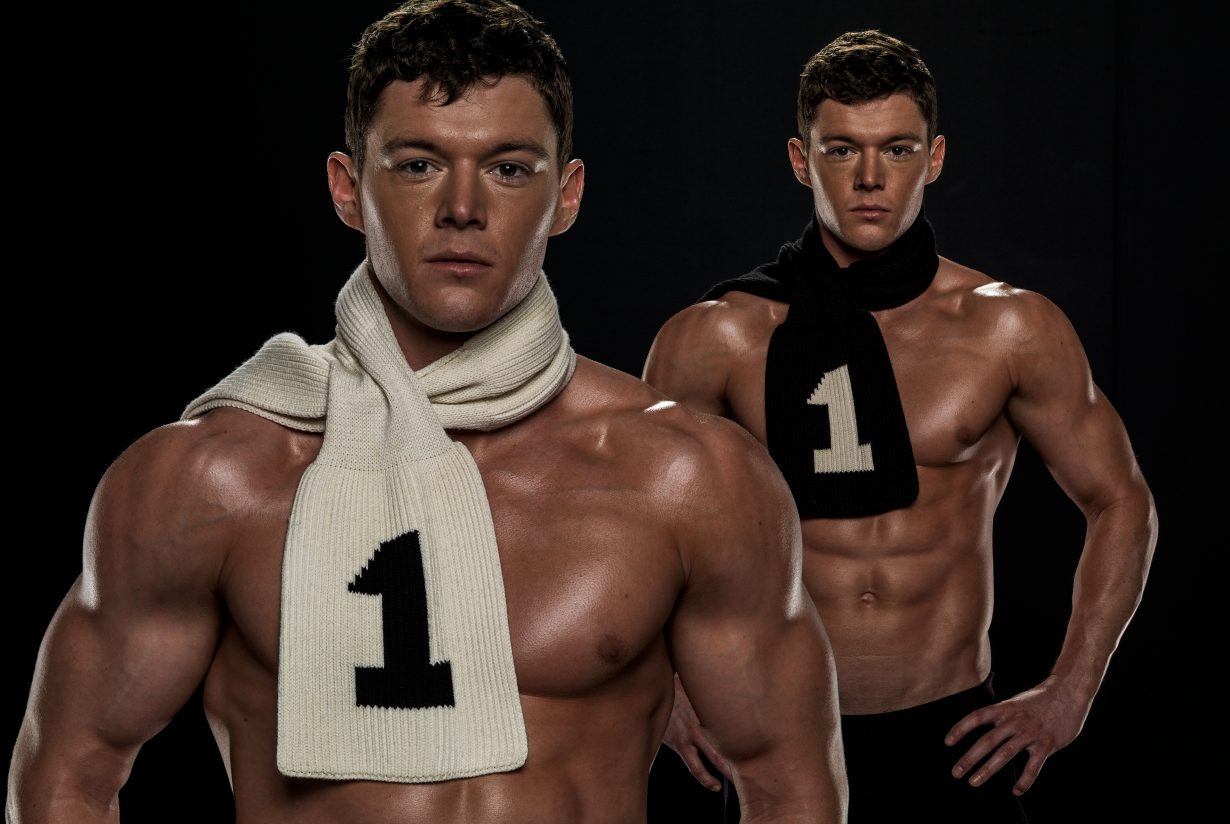
Dirk Bikkembergs’s room, by contrast, opens with screens of his Milan flagship store and sports campaigns, populated by sculpted male athletes and models often wearing minimal clothing. Ceramic footballs from his Fall 2008-09 show are dotted on the marble floor. Bikkembergs was fascinated by how a uniform transforms the body, and how a football kit or a military jacket turns an individual into a role. He would later revolutionise fashion in football as we know it, becoming in 2003 the first fashion designer to dress an elite soccer team, Inter Milan, in official off-the-field custom-made suits. His legacy is also recognised by his cult shoes (not shown here – a missed opportunity) which he presented at the British Designer Show in his International Cadet Boys collection. Their defining feature was structural, with laces threaded through the sole rather than over the tongue, and boots constructed around the mechanics of the foot. Function as form, long before the phrase became a marketing slogan.
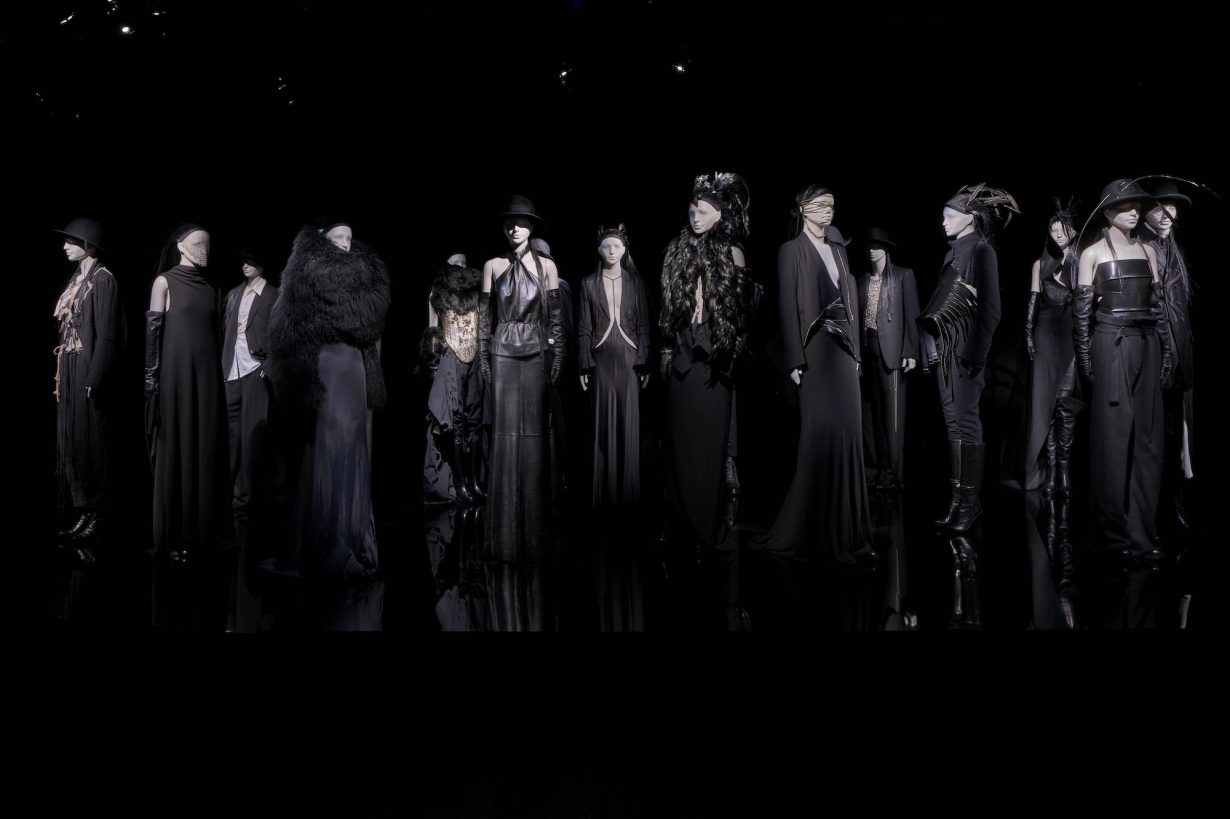
Meanwhile, Ann Demeulemeester’s strand of romantic darkness was all the more musical and literary, counting muses in Patti Smith, PJ Harvey and Arthur Rimbaud. Her room is almost pitch-black, lined with black velvet walls as Portishead’s Glory Box (1994) plays. Mannequins are positioned on a raised platform, reflected in a mirrored floor that elongates their already slender silhouettes. All of the clothing is black. Total attention is directed to the cut and the fall of the fabric around the body. Feather mohawk hats are styled with high-neck dark green feather waistcoats, accentuated with scaled leather bodices that armour the body. One headpiece is made of draped metal zippers, whilst another dress plunges open at the waist, held together by a single strip of fabric running from neckline to hem. The exposed chest is covered, just barely, by a blazer thrown over the top. The clothes are sexy yet robust, moving between feminine and masculine codes without settling in either. Then, we’re shown Marina Yee, who died in November 2025 and whose practice now looks most prophetic. She worked with materials that she already had, cutting up and reconstructing found garments, her clothes showing their workings with visible tailor’s chalk markings and open-hem lining. She prefigured the sustainability conversation by two decades, not solely as an ethical position, but as something that emerged naturally from her way of working by using readily available materials. In an interview with 1Granary last summer, Yee described the simplicity of her work, which was often monochrome, with a focus on the small precise details, such as a pleating accent at the sleeve, or a gathering at the collar. There was a certain wit in her restraint: her references were less about fashion than about ways of organising creative labour.
If the focus of these displays leans towards process and product, then a side room, projecting a film featuring commentary from different industry figures, underlines the lasting influence of The Six. British milliner Stephen Jones describes their work as real clothes: clothes whose value was traceable back to the conditions of their making, accountable to the person wearing them rather than to the brand mythology surrounding them. That observation, decades later, feels like a provocation. The BoF-McKinsey State of Fashion 2026 report describes a luxury sector in crisis of its own making, as between 2023 and 2025, around eighty percent of luxury market growth stemmed from price increases rather than volume gains. Meanwhile, each of these designers, albeit in completely different visual languages, treated fashion as a form of thinking about the body, about identity, about the world. Yet The Antwerp Six did not succeed on talent alone. The opening room sets out the structural and cultural conditions from which The Six emerged, including the government’s Textile Plan. Launched in response to Belgian’s declining textile industry and economic crisis, it directed funding toward education and emerging talent through initiatives like the Golden Spindle competition, which several members of The Antwerp Six won. Today, arts education budgets have been cut across Europe, as tuition fees rise and institutional support is limited. Even at Antwerp’s Royal Academy, students from outside of the European Economic Area who are already enrolled will see their tuition fees triple by September this year. Young designers graduate into a system that demands they spend thousands on a runway show, often before any business infrastructure is ready. Consequently most of those without independent wealth or access to private backing are filtering out.
The question now is not whether early-career designers can find an audience. Social media and direct-to-consumer platforms have changed that. The question is if they can find the infrastructure to turn compelling designs and ideas into a sustainable, scalable practice. The Six’s tuition fees were heavily subsidised and The Golden Spindle competition provided professional production budgets, editorial campaigns, and connections to manufacturers. The exhibition documents this with considerable rigour, and in doing so, makes the conditions available to creatives at present feel particularly lacking. Walking past Van Beirendonck’s political maximalism, Yee’s reconstructed found materials and Demeulemeester’s romantic darkness, the innovation and energy of the work is undeniable. But a gap remains: between who, today, has been given the conditions to make work like this, and who has not.
The Antwerp Six is on view at Momu, Antwerp, through 17 January 2027
Read next What Really Defines a Schiaparelli Look?