Olivia Laing’s second novel, set in the months leading up to the death of Pier Paolo Pasolini, fictionalises the circumstances of filmmaker’s demise
Towards the end of The Silver Book we are presented with a single photograph. Shot in 1975, it shows a crush of bodies packing the Campo de’ Fiori in Rome. It is a picture of the funeral of writer and filmmaker Pier Paolo Pasolini, who was found beaten to death on the road to the beach at Ostia. The novelist Alberto Moravia gave an address to the attendees: ‘The image pursues me of Pasolini running, fleeing something that has no face and which is what killed him, a symbolic image of our country’. The circumstances of the murder remain mysterious and Pasolini’s killing has been interpreted in a number of ways: punishment for his open homosexuality; a retributive assassination facilitated by neofascist cells; fatal silencing for his critique of Italy’s political classes; the symbolic end of Italy’s golden age of cinema.
Olivia Laing’s second novel, set in the months leading up to Pasolini’s death, fictionalises the circumstances of his demise. It begins in autumn 1974, when a guilt-stricken and penniless art student leaves London after the mysterious death of his lover, fleeing ‘possible questions, speculation’. Arriving in Venice, he assumes the name of Nicholas Wade and takes up with Danilo Donati, the illustrious costumier and set designer who worked with cinematic luminaries such as Pasolini, Luchino Visconti and Federico Fellini. Danilo can make a rough sea out of plastic bags, a mosaic out of boiled sweets, snow out of parmesan and feathers. Nicholas is a skilled draughtsman and Danilo usefully takes him under his wing as apprentice and romantic partner. The ‘little English Botticelli’ is put to work in the sensuous, gilded world of illusion and artifice in the storied Cinecittà studios.
Danilo is working on two films, Fellini’s Casanova (1976) and Pasolini’s notorious work of anti-fascist cinema Salò, or the 120 Days of Sodom (1975). Throughout the novel Laing plays with truth, creating a rich embroidery of scenes pulled from history, tangled around ideas of sexual freedom, creative ambition and political dissidence. The Silver Book inches forward in excited anticipation of Pasolini’s murder, an obscene destination. This forecast gives an electric charge; these are the ‘years of lead’, a period of social upheaval and internecine violence in Italy. In many ways, this is a book that explores complicity, unavoidable and direct, with forms of oppression and prejudice.
For Nicholas, his new fortunes mean pastries stuffed with cream, hibiscus flowers, damask, crushed velvet, pink pyjamas, roasted pork chops. With Danilo he works on the set of Salò and then on the set of Casanova. Laing’s prose is sleek and gratifying, purring with sateen grace. Nicholas is awed by Pasolini’s hypnotic speech, ‘his soft, whispery voice and the apocalyptic things he says’, which also seems like a model for Laing’s own discretionary style. Yet the chimerical beauty of Nicholas’s new life begins to collapse, spoiled by vague pressures and political hostilities. Nicholas and Danilo are tossed to the grinder of love and lust, undone by affairs and shifting loyalties. The striving for aesthetic beauty in their work seems a futile, necessary decadence; in defiance of the ugliness, corruption and hate around them.
‘He’s better than a camera, much more observant. Much more useful,’ Danilo says of Nicholas, who is something of a cipher for Laing – observant, inactive, neutral. A guest in this unfamiliar world, he is vulnerable to mistakes and misinterpretation. Inadvertently we are too: prone to overreading, looking for clues to decipher events that lead to Pasolini’s death. Still, Laing is not searching for answers; this book defies easy resolution, and rightly so. Yet, for a text that engages with speculation and historical synthesis in broad strokes, they seem incurious about the stakes of such a fiction. Mining the archive, the gathering of lavish detail seems a terminal point in Laing’s narrative procedure. Concerned with illusion and artifice, The Silver Book is ornamental, a work of uneasy pleasures.
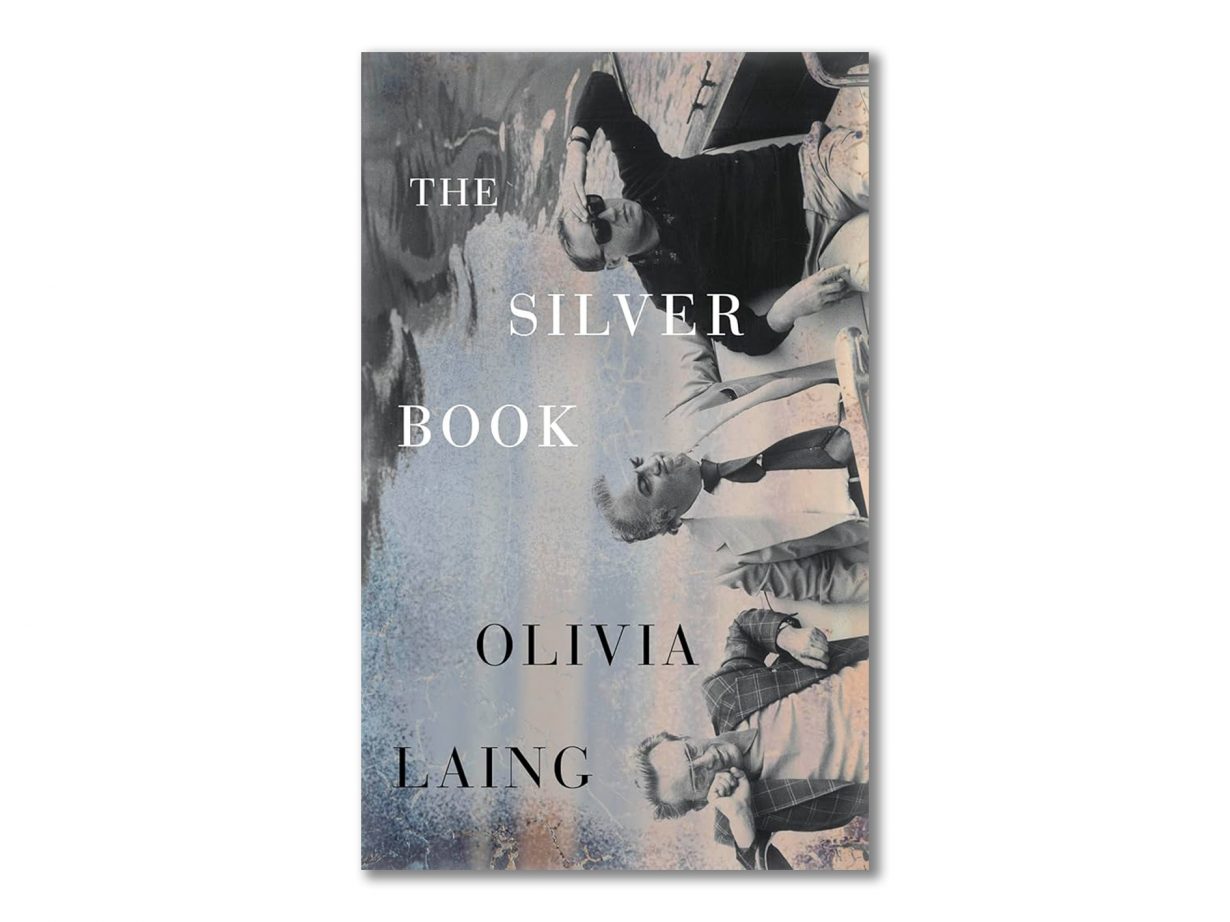
The Silver Book by Olivia Laing. Hamish Hamilton, £20 (hardcover)
From the November 2025 issue of ArtReview – get your copy.