Bharat Sikka’s photobook draws on his work as a fashion photographer, but also his propensity towards idealised reverie
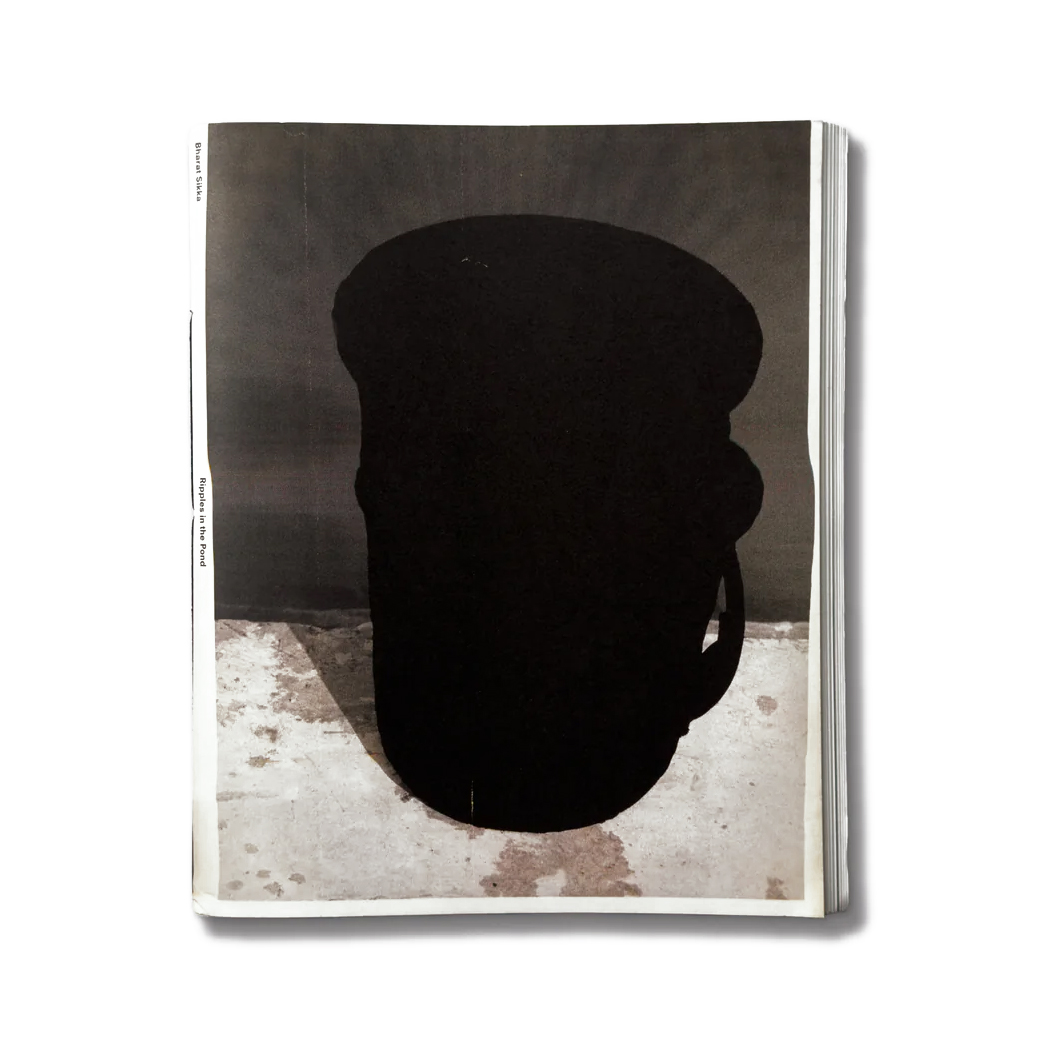
Makharda, on the outskirts of Kolkata in West Bengal, is a township where Bharat Sikka briefly taught photography, and the subject of this photobook. Kolkata is generally viewed as a sleepy city struggling to retain its standing as an Indian metropolis, clutching nostalgically to its time as a colonial capital. But it is expanding, and this increasing urbanism encroaches on suburban towns like Makharda, often without care for their inhabitants. Perhaps this is why the book’s pages are bound with deliberate unevenness, emulating an ancient file – the kind shoved behind dusty government office cupboards, filled with unattended grievances from decades ago.
Sikka’s oeuvre spans an extensive career in editorial fashion photography – a genre in which storytelling and staging is significant – that has existed alongside a more documentary practice towards India in the early twentieth century and the changing state of cities, particularly since the opening of the markets in India. Although Sikka is working in the age of widespread colour print technology, his quiet monochrome imagery links Makharda back to the mid-twentieth century: steering away from photojournalism towards fictional storytelling around the township, he follows the visual language and gestural symbolism of the auteur of post-Independence Bengali cinema, Satyajit Ray, and the imaginary Bengali village of Pather Panchali (1955).
Unlike some of his more documentarystyle work, capturing postglobalisation India as stuck between endless cycles of development, Sikka generates a looking-glass world in which the township glitches and urban developments ripple murkily. He manipulates the images, at times running them through a Xerox machine to create glitches and hints of colour. A schoolgirl in a starched shirt is juxtaposed with a distorted image of a doll, eyes drooping like sockets in a skull. Elsewhere, images are instilled with illusory movement, as in a photograph of a house on the river shifting unstably after multiple refractions, evoking a shapeshifting shadow reality. These glitches echo what artist Sohrab Hura, writing in a 2021 e-flux article about glitches in photography, would call ‘broken’ images whose blurs open ‘fault lines of doubt’.
Sikka’s view of Makharda’s expansion doesn’t always allow for a nuanced reading – he traverses the landscape as if with a child’s eye, abstracting seemingly minor details like ladders, urban waste and stray bricks – leaving readers to piece together an evident story of oppression. He adds another subtext by persistently returning to clay religious sculptures being made for local festivals, suggesting their divine essence is embedded in the people of Makharda. Following a photograph of a barebones bamboo structure of a god, we see a staged image of a man standing holding tree bark in a near-similar pose, like a guardian of the township’s natural landscape. Such divine association is made even more explicit in a spread in which a man wears traditional pointed-toe jootis – associated with rich zamindars in the colonial era – his legs, elongated like stilts, towering over an old grandmother on the adjacent page whose head is obscured by a halolike flash of light.
Such performative staging draws on Sikka’s work as a fashion photographer, but also his propensity towards idealised reverie. Most of the figures we encounter in Sikka’s book have their faces shapeshifted, funhousemirror style, or hidden in shadow, Sikka’s narrative taking away their agency. While the photographer attempts to return that agency through metaphors and symbols, an unease remains – and perhaps through this staged fiction of Makharda it’s this unease he wants us to hold on to.
Ripples in the Pond by Bharat Sikka. Fw:Books, €45 (softcover)
From the Spring 2026 issue of ArtReview Asia – get your copy.