Amid a media landscape saturated with violence, the artist duo find new ways to portray the Ukraine war
Ever since Russia’s invasion of Ukraine in 2022, Ukrainian artists Roman Khimei and Yarema Malashchuk have drawn increasing attention for capturing aspects of contemporary life in their homeland without, unlike the news media, focusing on violence. Pedagogies of War features four film installations that highlight how digital media and technologies shape our view of war, inviting reflection on how we respond to such images while processing trauma and grief.
The six screens of You Shouldn’t Have to See This (2024) each show Ukrainian children – from toddlers to teenagers, seen sometimes individually, sometimes in twos or threes – sleeping peacefully in their beds, having returned from capture by Russian military forces – some for up to two years. (Ukraine has officially documented around 20,000 such abductions, but only around 2,000 children have returned.) The gravity of the phenomenon contrasts with the films’ ambience, wherein soft lighting, deep pillows and cosy quilts create a soothing quality.
The artists’ chosen medium of film feels like a commentary on news media’s onscreen representations: we consume the artwork as we might watch our TV, computer or phone. Since the scenes lack obviously recognisable markers of war, the viewer must project their own ideas of these children’s experiences, highlighting how passive or active a role we play in acts of empathy when staring into a screen.
The question of empathy also underpins the most puzzlingly ambiguous piece, The Wanderer (2022), in which the artists themselves lie, corpse-like, among rocks, woodlands and dirt tracks, mimicking (says the wall text) images of fallen Russian soldiers that they saw online. Whether it’s a plea for compassion towards soldiers as victims, or an act of symbolic revenge against Ukraine’s aggressors, this highly staged work exposes the indeterminacy of the screen image on its own: evidently, there are bigger ideologies determining our identification or sympathy with certain bodies over others.
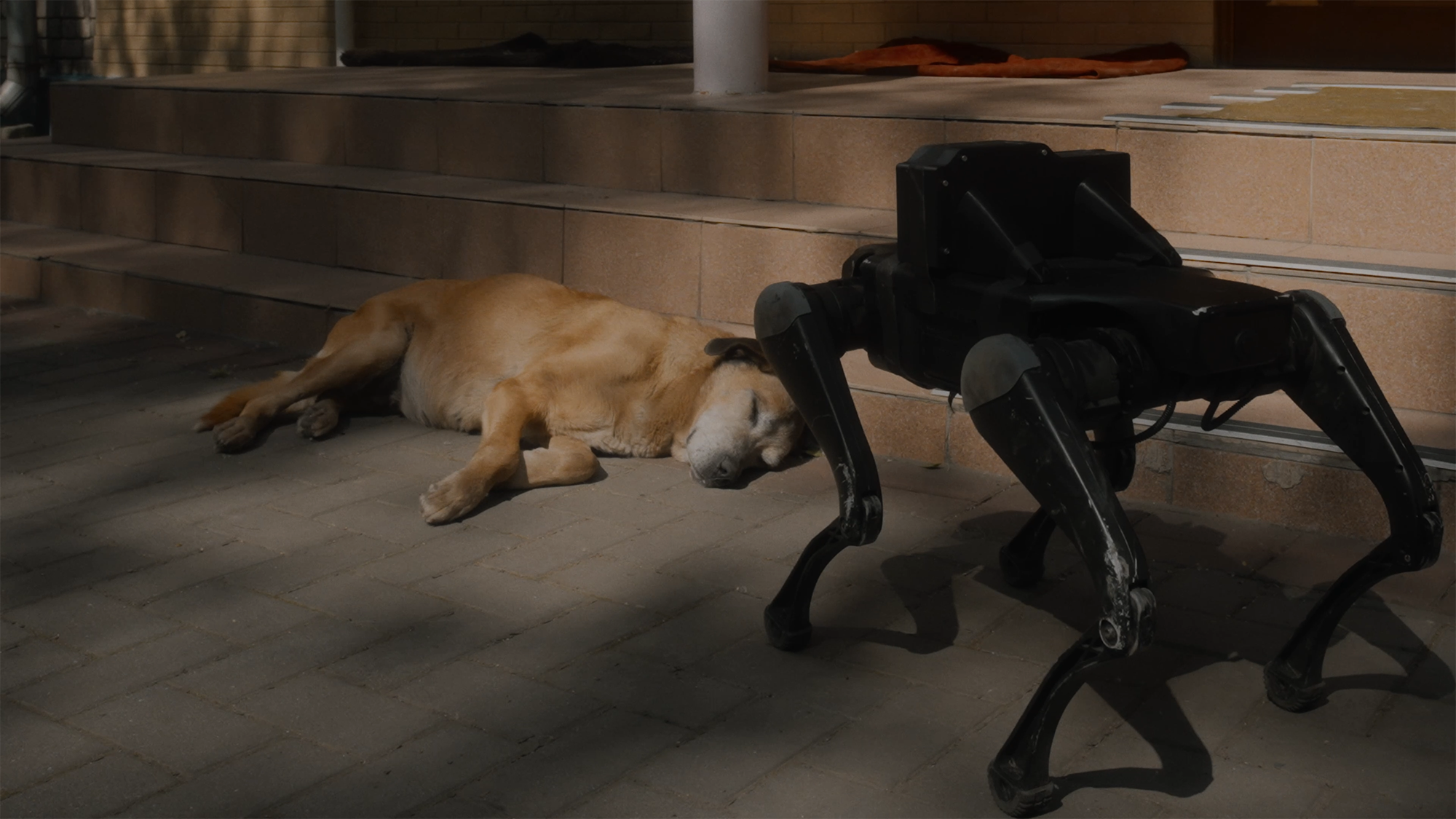
Later works look more starkly at everyday life in besieged Ukraine. Open World (2025) follows Yarik, a teenager from Zaporizhzhia now living in Poland, as he remote-controls a military robot dog given to him by the artists to revisit the city he left behind. Through the dog’s camera, he encounters various people – from a young girl playing outdoors to his own mother at home – with this machinery of warfare seeming absurdly normalised as it permeates collective life in conflict zones. The underdramatised emotions he experiences – nostalgia, affection, amusement – seep through the peculiarly depersonalised, videogame quality of the virtual experience.
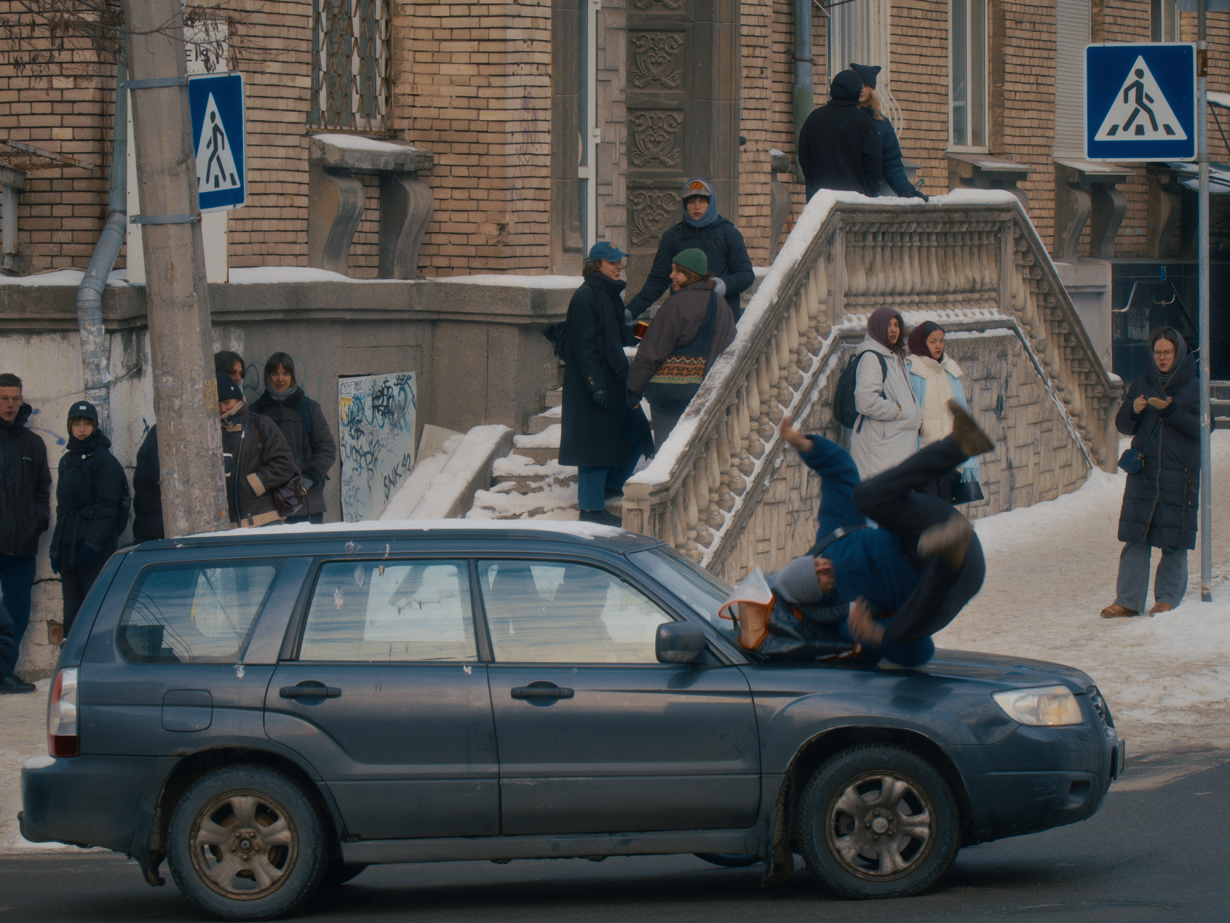
The playful ease with which Yarik, an expert gamer himself, takes to manoeuvring a piece of equipment normally used for surveillance or combat echoes a deceptive quality of tranquillity that runs through the exhibition – not least in the final piece, We Didn’t Start this War (2026), showing people in mundane scenes on Kyiv’s streets. While standing around chatting or walking their dogs, brief moments of disruption – a slip on the ice, or a minor road accident – are quickly and easily resolved, leaving the subjects seeming detached from the national circumstances framing their lives.
Such scenes – also staged, with actors – seek to show how certain aspects of everyday life continue during war, but the emotional distance with which the subject matter is treated also recalls the numbed impassivity with which many observe conflicts from behind their screens. It mirrors a vision of war in its most abstract form: as something occurring in the background, instead of in plain sight. The artworks therefore highlight how onscreen images can provoke ambiguous or indeterminate affective responses – but they also expose the ongoing acceptance of averting one’s eyes from the most unfathomable atrocities of warfare.
Roman Khimei and Yarema Malashchuk: Pedagogies of War is on view at TBA21 Thyssen-Bornemisza Art Contemporary, Madrid through 21 June
From the Summer 2026 issue of ArtReview – get your copy.
Read next When the Ukraine War Continues