As India is reshaped by Hindu nationalist politics, a new translation of Bhisham Sahni’s 1973 Hindi novel seems timely
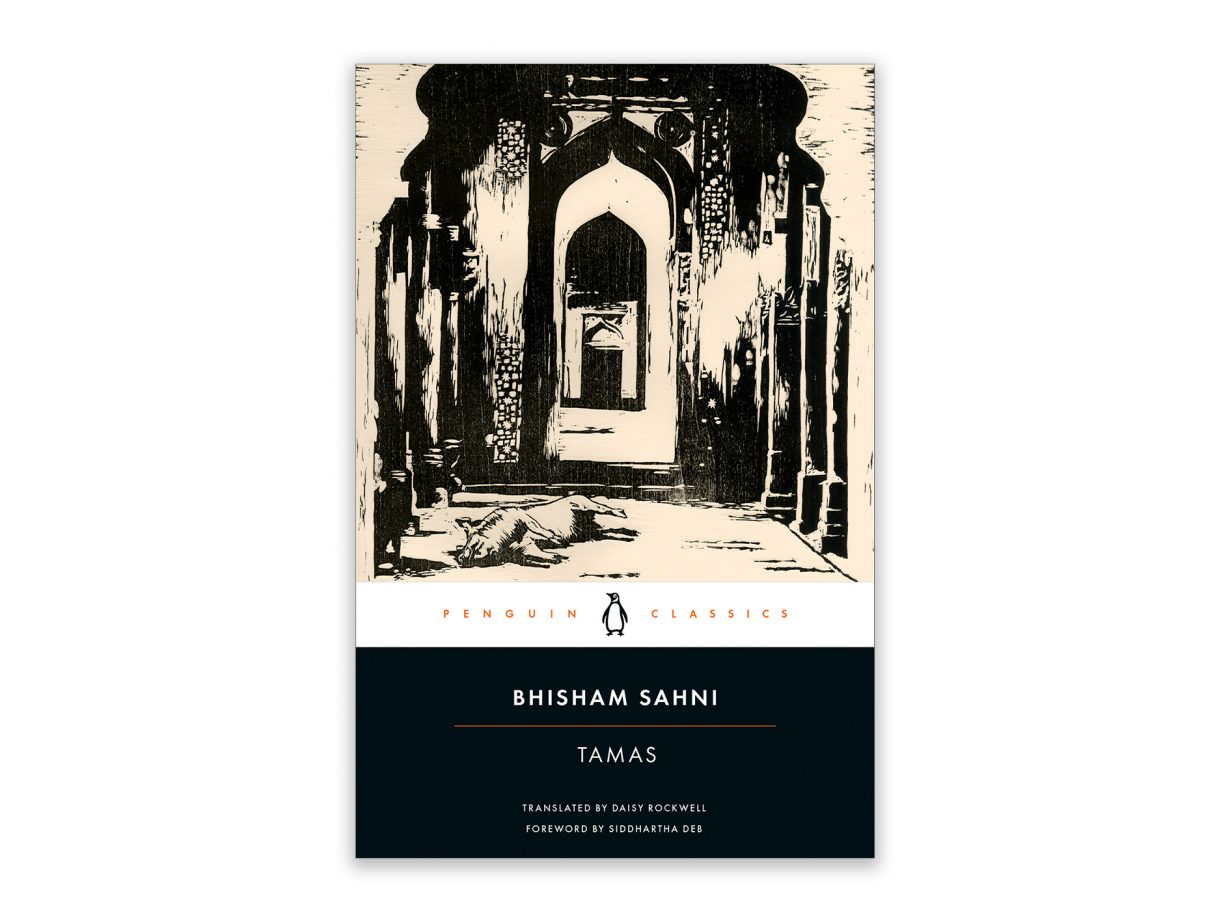
As India is reshaped by Hindu nationalist politics, a new translation of Bhisham Sahni’s 1973 Hindi novel – its title translates as ‘darkness’ – by the excellent Daisy Rockwell, seems timely. Set in the period immediately preceding Partition, it chronicles the ease with which the nation’s inherent religious and caste differences can be exploited as a weapon of disempowerment and repression. And to lethal ends.
Jumping between multiple characters and perspectives, the novel charts how a low-caste tanner, who has no experience of doing such a thing, is tricked into secretly slaughtering a pig. The pig is then dumped outside a mosque, which in turn unleashes a tidal wave of sectarian violence that pits Muslims against Hindus and Sikhs, and that swallows up cities and villages across the Punjab. And the pluralist communists who try to stop it. By contrast, the British colonial authorities who are technically in charge of everything choose not to stop it, instead dispensing anthropological, historical and archaeological opinions about India from the comfort of their drawing rooms. Until, that is, a divide-and-conquer policy has worked itself out, the local populations have worn themselves out, the army can be deployed, a curfew has been imposed and it’s time to organise a Relief Committee and take credit from the locals for their perceived acts of charity. Needless to say, it’s implied (but never stated) that the British were manipulating the whole scenario, from the pig dumping onwards, in an attempt to make sure that the natives never unite to organise themselves around any common cause (or as the district magistrate indirectly explains in a lecture to his drunk, bored wife, before the natives realise that they are really all the same race).
With that as a backdrop, the novel documents firstly how people of all religions contributed to the delivery of the goods and services that kept the unnamed city at the centre of the novel running. Then, how easily that unspoken cooperation can be undone; how neighbours can be turned against neighbours, how the people who have washed your clothes for decades can suddenly become a mortal enemy, as immediate realities and cartographies are quickly replaced by distant, fantastical and impractical visions that map out military manoeuvres from ancient epics such as the Mahabharata over the mud huts of the city’s back alleys. ‘There will always be riots and fighting,’ says the owner of a tea shop in a village where he and his wife are the only Sikhs, resignedly. ‘But you can’t let that shut down your business.’ Shortly afterwards his shop is burned to the ground and his valuables are looted, and he and his wife have barely managed to flee with their lives. In one of the few uplifting episodes in this generally horrifying tale, he is eventually given sanctuary in the house of a Muslim customer in a nearby village.
Even though it was written over half a century ago, Tamas’s message remains powerful and urgent. At the beginning of the novel we encounter a group of people contesting the leadership of the local branch of the Congress Party (which eventually formed India’s postindependence government) and a Congress Party that’s competing for national leadership with the Muslim League. When the rioting stops and the dust settles and the novel ends, none of them are in charge of anything. By then, Sahni concludes, everyone ‘felt trapped in an inexorable cycle of events, over which they had no control at all. There was no one in charge of making decisions… They all moved about like puppets.’ In one episode, Baldev Singh, stripped to his underwear, kills the local blacksmith in revenge for the imagined tortures inflicted on the Sikh’s mother. ‘He’d firmly resolved to revenge blood with blood, and old Karim Bakhsh [the blacksmith, a Muslim] was the only person he’d come across.’ Singh, in the grip of a psychosis related to the medieval Delhi Sultanate, refers to Muslims as ‘Turks’. The lesson, now as then, is to live in the present, not the past, and not to let others pull your strings.
Tamas by Bhisham Sahni, translated by Daisy Rockwell. Penguin, £12.99 (softcover)
From the Winter 2025 issue of ArtReview Asia – get your copy.