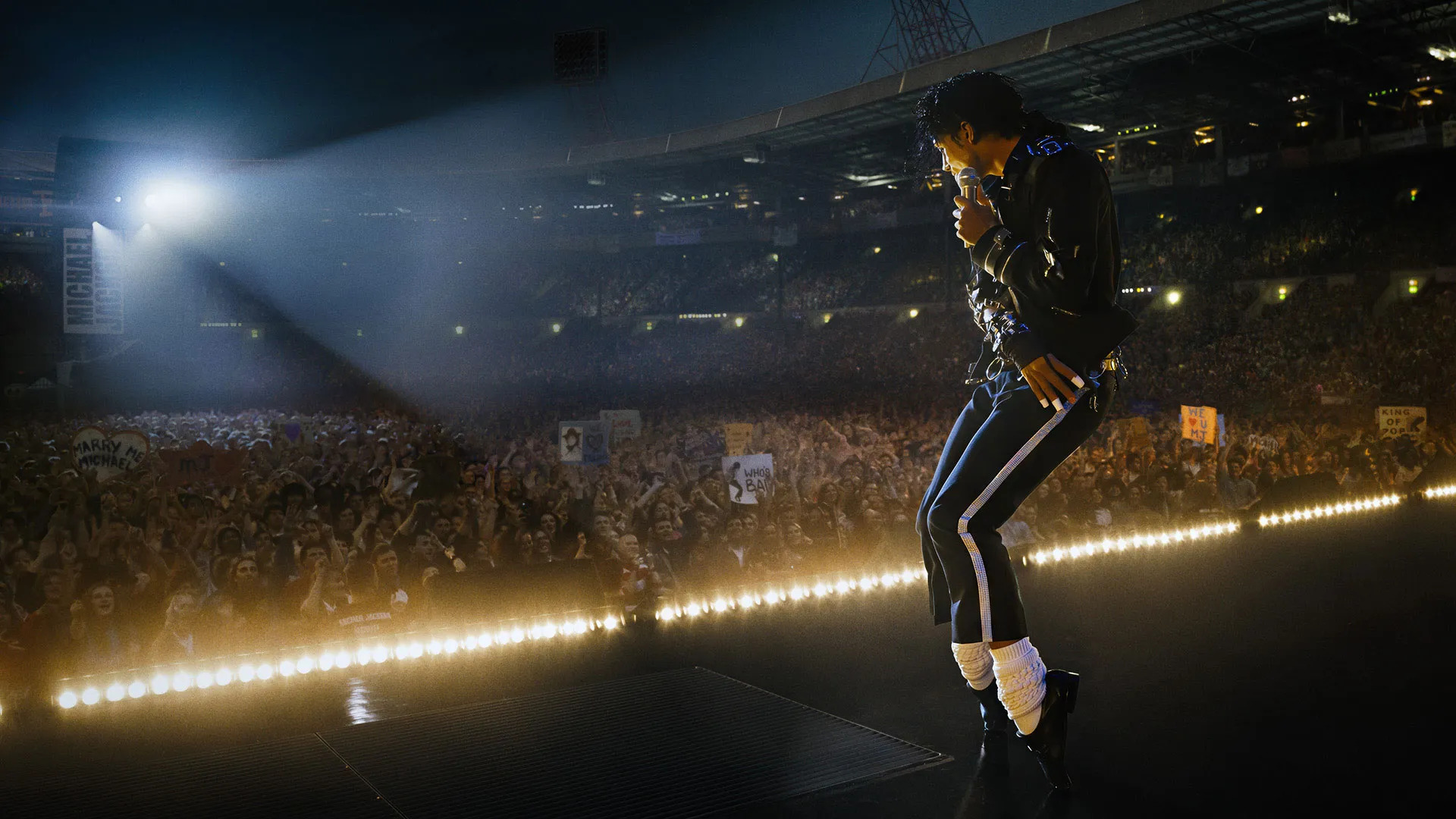
The scale of the revisionism and image-massaging in the new Michael Jackson biopic is staggering, says Rosanna McLaughlin
Michael Jackson was many things. A genius, a ghoul. A child star with perfect pitch and spellbinding feet, who transformed from a Black boy into something else entirely – a ‘white girl’, to borrow from Hilton Als, a pale creature with a new face who dressed like a First Lady who had staged a coup d’état, all flowing wigs and bedazzled military couture. A global icon on a mission to save the children, fight racial equality and heal the world, who was accused of multiple instances of child sexual assault. Jackson’s rise and fall – from poor kid to apex celebrity, ignominy and eventual death from drug addiction in 2009 – charts a macabre course from American dream to American nightmare.
Of course, none of these complexities are explored in Michael – the latest estate-approved biopic to launder a dead artist’s life story, following on the heels of 2024’s Amy Winehouse hagiography Back to Black. In fact, the most remarkable quality of Michael is its absolute rejection of anything approaching psychological depth. In the world of the Jackson estate – which financed the film and reportedly spent $15 million on a reshoot in order to remove the abuse allegations from the plot – saccharine superficiality is key to massaging the image of their prized and controversial asset, allowing his myriad fans to immerse themselves in the fantasy of the innocent genius. And it’s a formula that works: the film made $217m globally in the first week, breaking the record for a musical biopic set by Bohemian Rhapsody’s $124m in 2018.
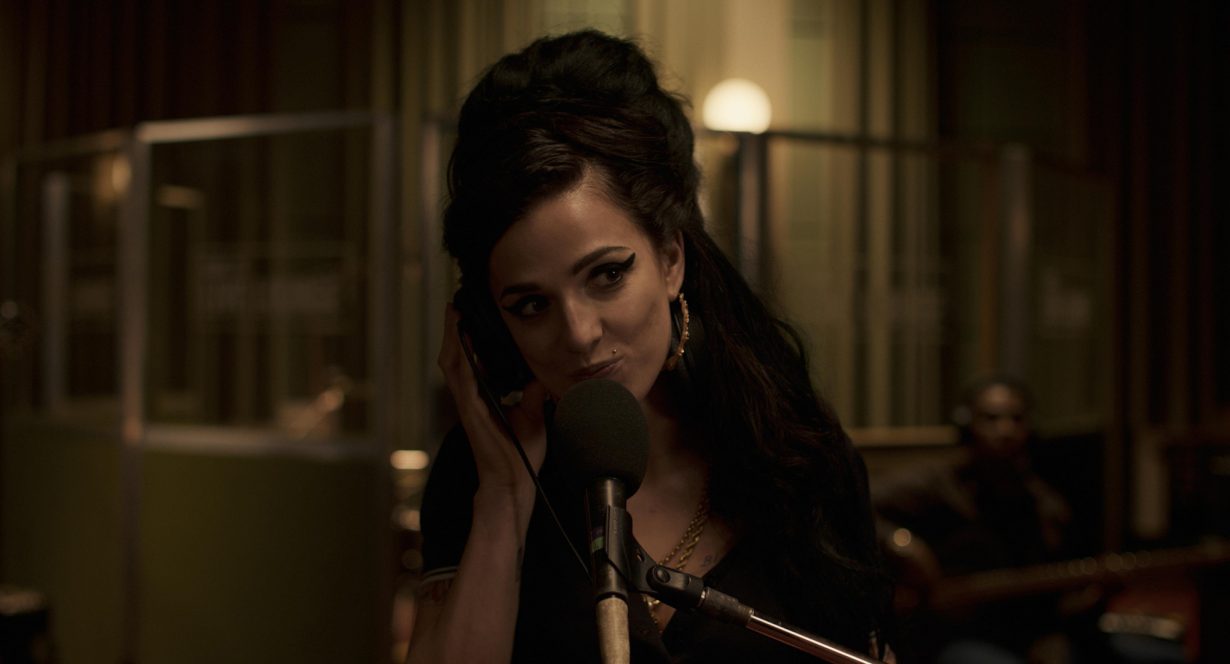
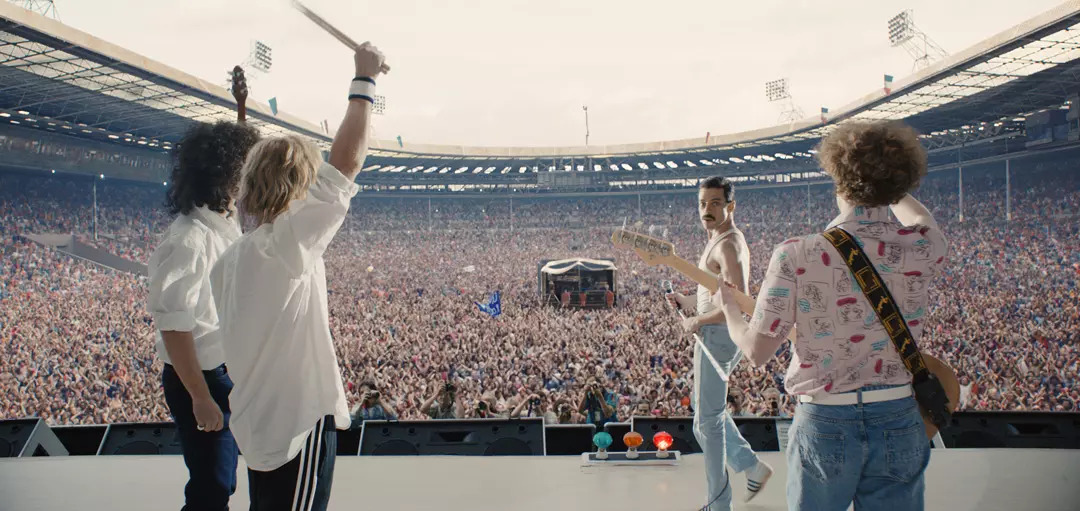
Conveniently, the time period Michael covers begins in childhood and ends in 1993, the year before the first assault allegations surfaced. This allows the film to swerve all that nastiness and instead tell a story about the rise of a poor but supremely talented boy from Gary, Indiana, who emerges from the shadow of his avaricious and abusive father in order to embrace his God-given destiny to become a solo superstar.
Along the way the audience is served a number of narrative simplifications and revisions, aimed at presenting Jackson as a misunderstood beacon of virtue, talent and otherworldly innocence. That single white glove he wore? Covering his vitiligo – and thus a purely medical explanation for the wholesale transformation of his skin colour. His penchant for collecting exotic animals? A sign of his saintliness, and his loneliness. Viewers are shown Jackson taking a llama for a walk down the streets of Encino, California, and playing Twister with Bubbles the rescue chimp when his brothers are too busy to entertain such childish pursuits. And then there is his love of children. Jackson frequently visits them in hospital and donates to children’s charities – a pious soul at one with babe and beast alike.
Yet try as director Antoine Fuqua might to exclude the dark side of Jackson’s story, it haunts the film, present by its conspicuous absence. Take, for instance, the retelling of Jackson’s hospitalisation for severe burns, following the famous incident when his hair caught fire while shooting a Pepsi advert. The film depicts Jackson in full Lady Di mode visiting the children’s ward, while he’s an in-patient at the hospital. Here, he affectionately calls a sick young boy he befriends “doo doo head” – the same nickname he gave to Wade Robson, one of the men who accused Jackson of sexual assault in the documentary Leaving Neverland (2019), who first met the star when he was five years old, and was subsequently bombarded with phone calls and faxes, and was flown out on multiple occasions to Neverland Ranch. And when we watch Jackson as a boy reading Peter Pan while lying in bed, dreaming of breaking free from the clutches of his evil father and finding his own Neverland, it is hard not to think of the eerie monument to fame he would later call home, which was abandoned in 2005 following a police raid and his eventual acquittal of child molestation.
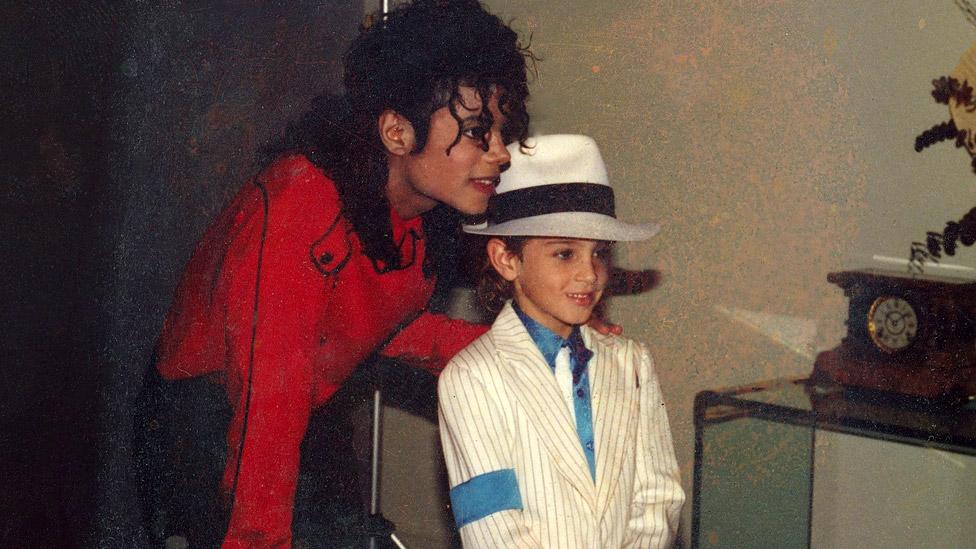
For all the film’s emphasis on its star being exploited by an unscrupulous father who put profit above love, the estate is still bent on squeezing every penny from Jackson’s name – and the casting of his nephew, Jaafar Jackson, in the lead role continues the sordid family business. But not only does the film paint Jackson in a superficially pure light, it also gives key beneficiaries of his will a moral and physical glowup. When Jackson died, his estate passed to his mother and children, with lawyers John Branca and John McClain as executors. In the film, Branca appears as a loyal and handsome beefcake in the mould of a young Steven Seagal. Quite a transformation for a man Jackson fired in 2003, having accused him of funnelling money into offshore accounts. After years of estrangement, the pair reconciled a mere eight days before Jackson died, following which Branca produced a will naming himself as coexecutor. The estate has since made over $3.5 billion from Jackson – a remarkable turnaround for an artist who died with more than $500m in debt – with Branca taking 5 percent of the profit.
Estate-backed biopics have plagued cinema screens for years, treating the medium of film as long-form advertising for their macabre products, exploiting the financial potential of readymade audiences. Yet Michael stands alone in the staggering scale of its revisionism. There are many fascinating films about Michael Jackson that could be made, exploring extraordinary talent, the vagaries of power, racial dynamics and the horrors of twentieth-century celebrity, if the rights to his likeness and songs did not reside with those still profiting from his death. Self-serving, artistically vacuous and commercially shameless, Michael was never going to be among them.
Read next Long Live the King?