Beneath the artist-turned-novelist’s real-estate fantasies is a real world that won’t go away
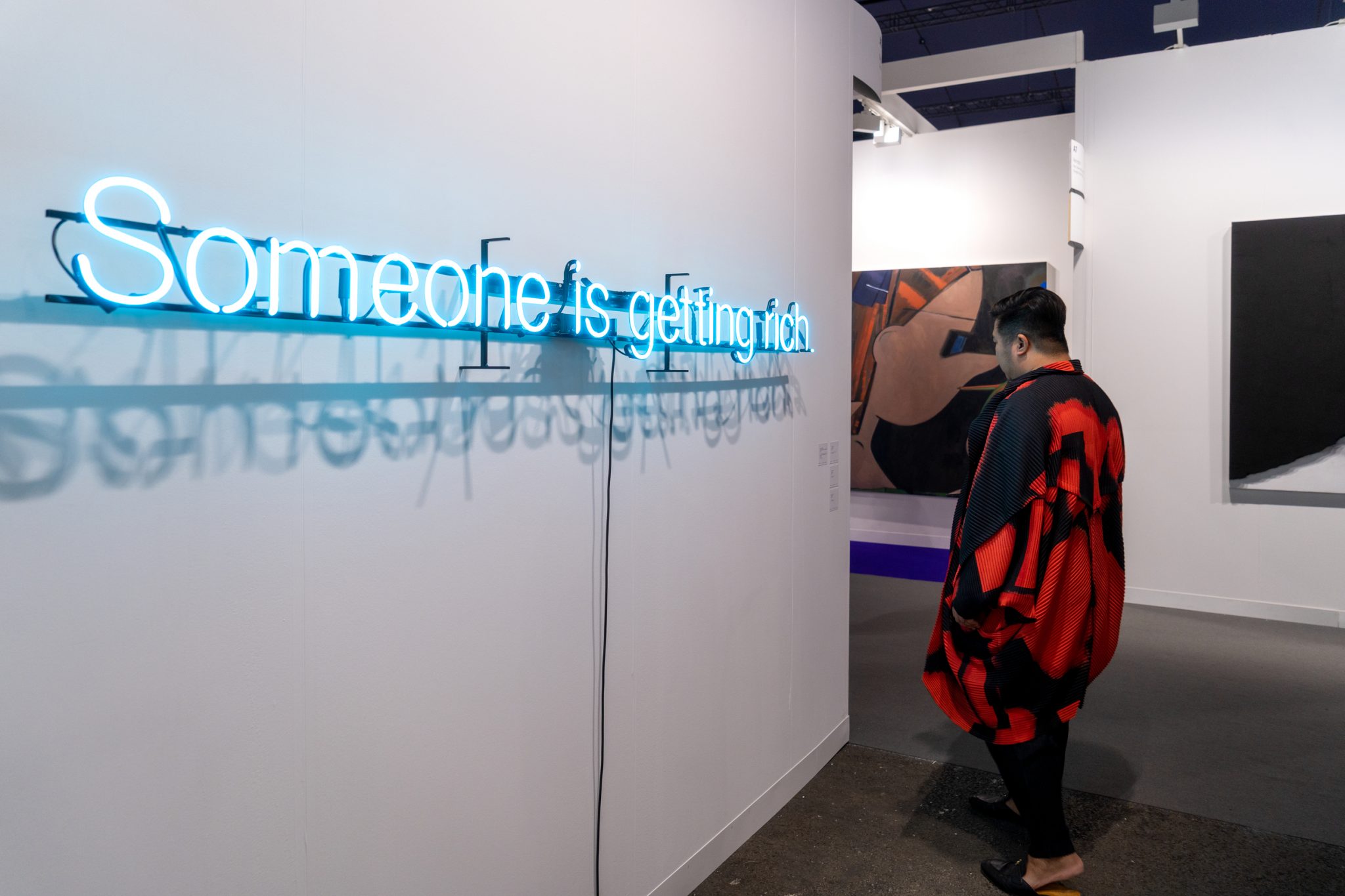
‘The point is the fantasy of being moored,’ the narrator of Nancy Lupo’s debut novel, Meow Meow Real Estate (2026), admits, ‘the thicker the rope the better.’ Meow Meow Real Estate is an oneiric roman à clef, a thin veil of fiction drawn over the artist’s own recent life, chronicling an itinerant artist’s search for an apartment. Lupo’s exhibition Several Chickens Later, currently at Spike Island, Bristol, concludes the American artist’s omnibus project: a series of ten interrelated exhibitions in the UK, Europe and the US. Fragments of the novel have functioned as supplementary texts for the connected exhibitions; a draft of the entire manuscript accompanies the show here at Spike Island. Like the itinerant condition of its protagonist, the novel’s form is unmoored; the narrator drifts through architectures both real (a pink-stuccoed pool house in LA; a bed and breakfast in Greenland) and assumedly fabulated: ‘Everyone knows I have the most beautiful apartment in all of Berlin,’ the narrator proclaims. ‘The walls are over four meters tall.’ She interacts with secondary actors who are never fully drawn – curators, friends, disappointing lovers. A sense of heartbreak pervades Lupo’s novel, but it’s funny too: ‘I have a home now and there are a bunch of things arriving. The thing for the bed, to go on top of the mattress. I was waiting for you to arrive.’ The dream house, the subject of the narrator’s fantasies, remains a mirage, flickering at the heart of the text.
The formal groundlessness in Meow Meow Real Estate evokes the contemporary disorientation involved in home finding: the successive rentals and sublets that render us increasingly tenuous and mostly untethered. In the sculptures that comprise her installation at Spike Island, Lupo restages this disorientation and the implication of a fragile reverie as a domicile fantasy on the edge of collapse.
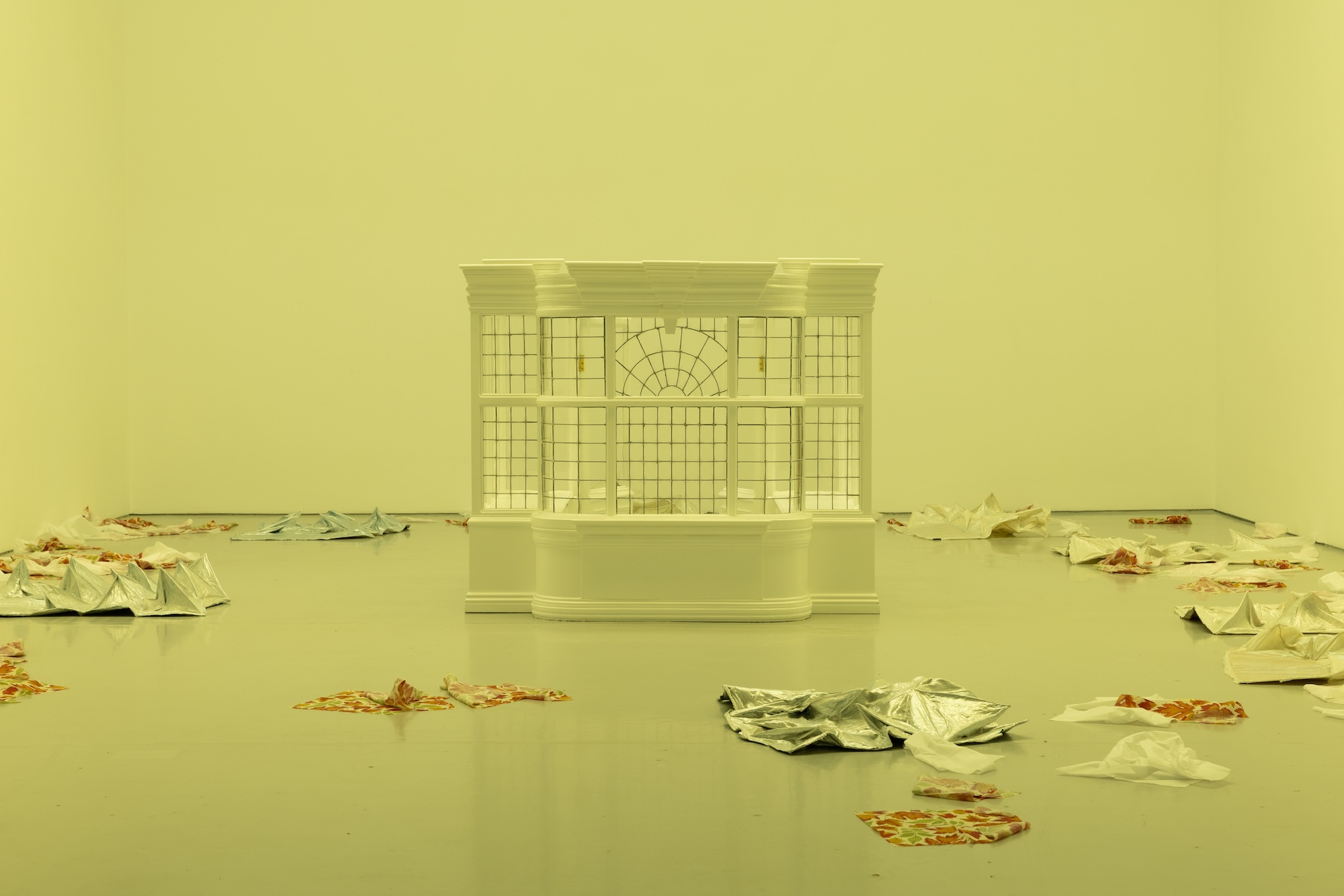
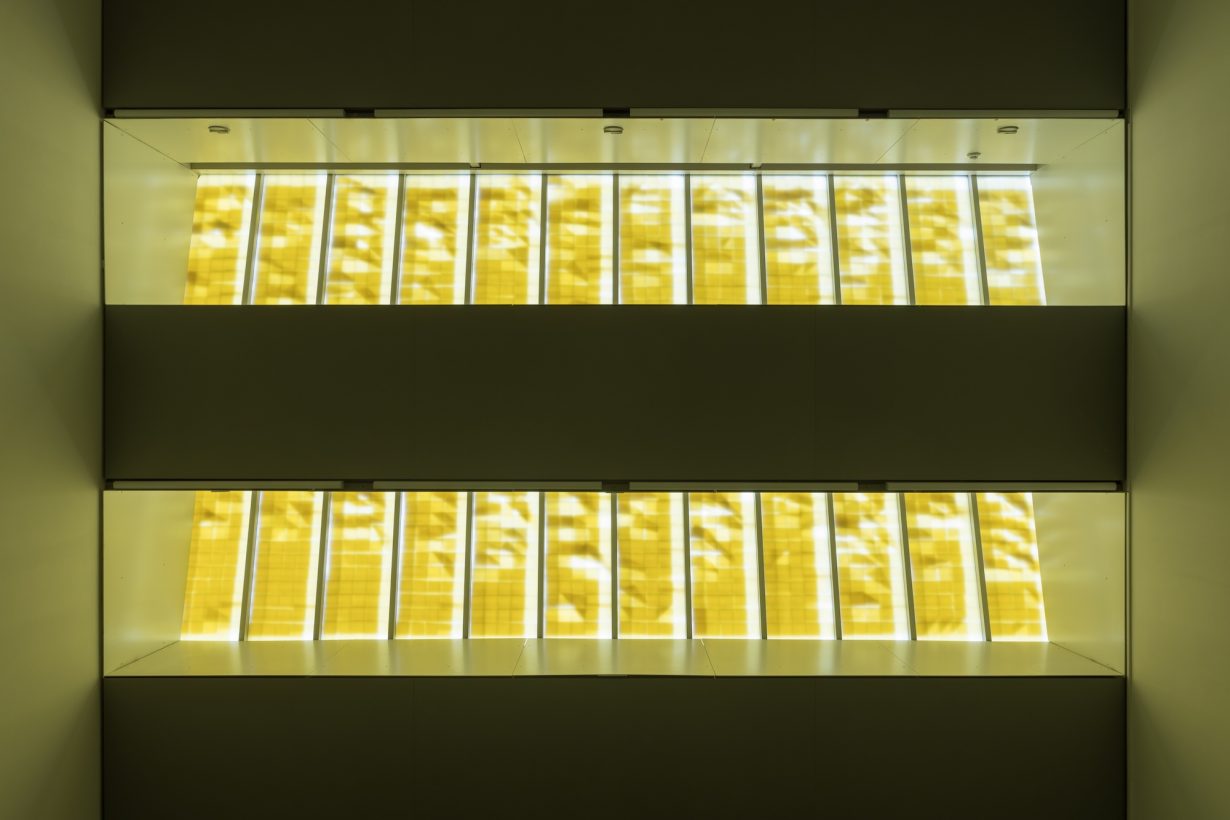
The artist has tinted Spike Island’s soaring central gallery yellow. Hark (all works 2026) involves a contiguous formation of yellow napkins in protective plastic cases that have been taped over the outer side of the skylights on the roof above. The napkins filter the natural light; the effect is disorienting, a quality of light akin to the insomniac time of night which is also morning. Occasionally their corners flip down in the breeze, letting in open triangles of undoctored daylight. The yellow firmament flickers. It strikes me that Lupo has notionally augmented a small and incidental object-theatre here, the partial folding of a napkin, into a kind of sublime practical effect, creating a pervasive yellow haze that washes over the junior-size, jewellike architectural feature situated in the centre of the room. Titled The Enclosure, this is a three-quarter-scale, highly polished replica of a Victorian bay window, slightly elongated here to allow visitors to sit inside Lupo’s sculpture on two opposing benches.
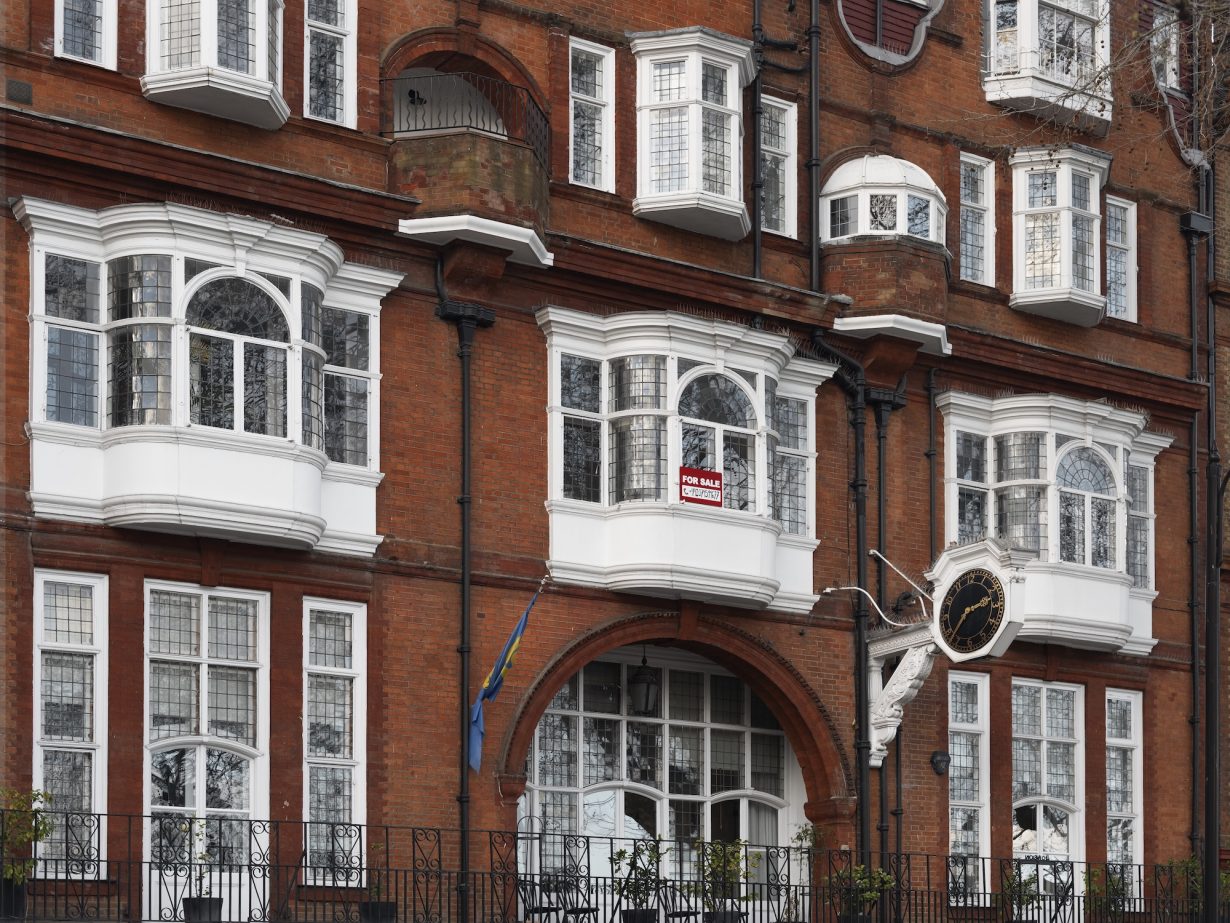
Lupo fixated on the original bay window during her tenure at the Fiorucci Foundation’s luxurious Chelsea apartment in London, where the artist lived prior to her exhibition there. The exhibition, immediately preceding this one, involved Lupo listing the apartment for sale with a specialist estate agent and inviting visitors into what appeared to be a tastefully dressed open house. Lupo left behind some trace interventions, including a painted ‘for sale’ sign positioned outside the building’s bay window. The artist invited us to behold the fantasy architecture as a distinct, mostly hollowed out object, visitors LARPing as prospective buyers and dialectically as trespassers, confronted by the implausibility of our fantasies. The show read as archly conceptual, an incongruent lens through which to fathom Lupo’s more emotive, overarching narrative project. Here at Spike Island Lupo articulates the pathos of her attenuating fantasy more convincingly through the weird, intimately wrought objects that make up her subdued, glimmering finale. With The Enclosure, Lupo literalises the sense of tenuous immersion she conceived at Fiorucci by isolating and downsizing an original feature from the dream apartment. The conceptual evacuation Lupo staged in London is replaced in Bristol with a lapidary idol, extracted from the fantasy and compressed to an ambivalent scale: too large to trample, too small to feel immersed.
Scattered in orbit around The Enclosure are ground-level, wilted pyramidal sculptures, referred to as ‘tellers’ in the materials list, 12 of which comprise The Mirage, formed from layers of glue, patterned paper towels and pearlescent paint that Lupo methodically applies and reapplies onto balsa wood armatures. The tentlike points have been completely inverted on some of the tellers, italicised on others, as if by a strong wind. Some appear like oversize origami figurines, or miniaturised cartoonish mountainscapes. The tellers are often repurposed between shows, their signification apparently leasable. In Disko, her 2025 exhibition at Kunstverein Kevin in Vienna, the tellers became abstract stand-ins for icebergs, relating to a massive calving event Lupo witnessed in Greenland. In Bristol, though, the tellers fold and wilt a bit pathetically under the laminations of glue, as though, having been passed from context to context and burdened with accretions of meaning, they arrive at Lupo’s denouement anthropomorphically enacting their failure to be anything really – even upright.
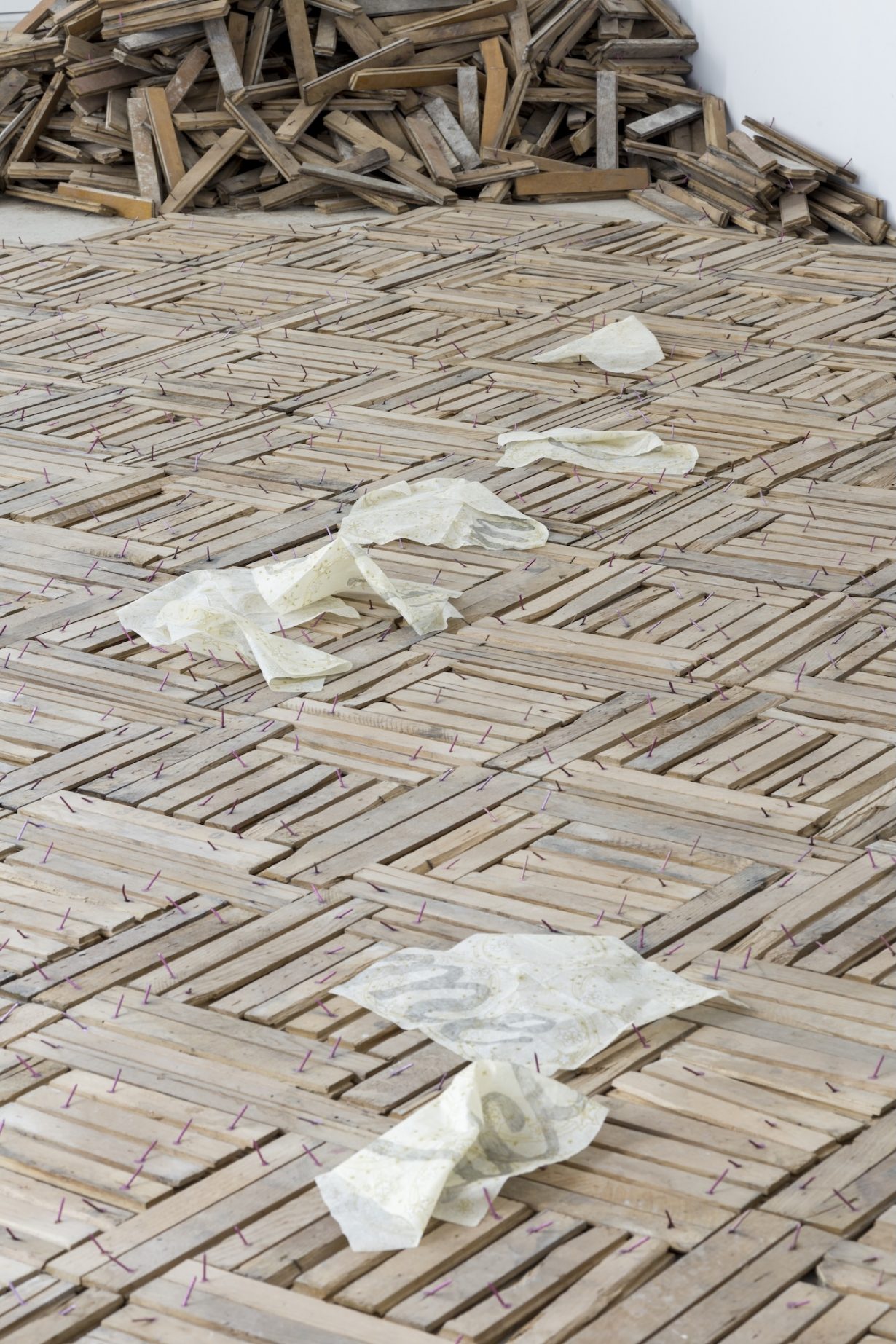
The fall leaves. The leaves falling are dispersals of paper towels patterned with Thanksgiving-style autumn leaves. In an act of childlike busywork, the individual layers of paper towel have been carefully peeled apart (a procedure running counter to the accreted forms that produce the tellers), and they have the quality of something sloughed off, like epidermal skin. They accumulate around the tellers at the edges of the room, some positioned over vertical, pistonlike motors that cause successive areas of the gathered, diaphanous textile to rise and fall like breathing. In Our Villas, Lupo’s 2025 exhibition in Mainz, similarly peeled hotel napkins caught in the currents of air from dehumidifiers snagged on metal nails sticking out of an inverted parquet floor. If, according to Meow Meow Real Estate’s unnamed narrator, ‘The point is the fantasy of being moored’, the leafy napkins that accumulate at the fringes of the main gallery in Several Chickens Later have none of the implied velocity of those in Our Villas and no nails to latch onto, no mooring. It seems apropos then that at the end of her quest, with nowhere left to go, Lupo makes a magical, anthropomorphic insinuation, animating the untethered napkins as objects of fantasy, enchanting them.
At Spike Island Lupo’s theatrical, sculptural meditations on the tremulous situation of our fantasies cunningly involve a challenged sense of immersion. The breathing motors, for example, are visible through the delicate paper towels – no effort is made to mask their battery-powered whir; The Enclosure’s playhouse proportions rise to shoulder height when I crouch inside; and the hallucinatory, pervasive yellow that fills the room is attributable to the ubiquitous cocktail napkins that comprise Hark, taped to the skylight overhead. Ambivalence, giftshop pathos and a sense of thwarted majesty live in these objects, giving the dream house tenuous, precious form. If these sculptures are moorings, securing the dream to some kind of material reality, then Lupo has tied a loose and fugitive knot.
Nancy Lupo: Several Chickens Later is on view at Spike Island, Bristol, through 6 September