“Women in Iran are the second sex, not the first sex, and that has not changed. Iranian women still face the same problems they have always had”, the late Shahrnush Parsipur told Shirin Neshat in Parsipur’s last published interview before she died on 3 July
Having published stories since the late 1960s, Shahrnush Parsipur was this year longlisted for the International Booker Prize for her novel Women Without Men, in a republished translation into English by Faridoun Farrokh (it first came out in 2011; an earlier translation had been released in 1998). Originally published in 1989 and shortly thereafter banned in Iran, the novel is set against the backdrop of the 1953 coup that overthrew Prime Minister Mohammad Mosaddegh. The book follows five women who abandon the constraints imposed on them by family, marriage and social convention, eventually converging in a garden that exists somewhere between refuge and fantasy. Here, Parsipur treats reality as permeable: bodies transform, time folds and the ordinary slips into the mythical. Yet these moments of magical realism are never escapist. Instead, they expose the absurdity and violence of the structures that govern women’s lives.
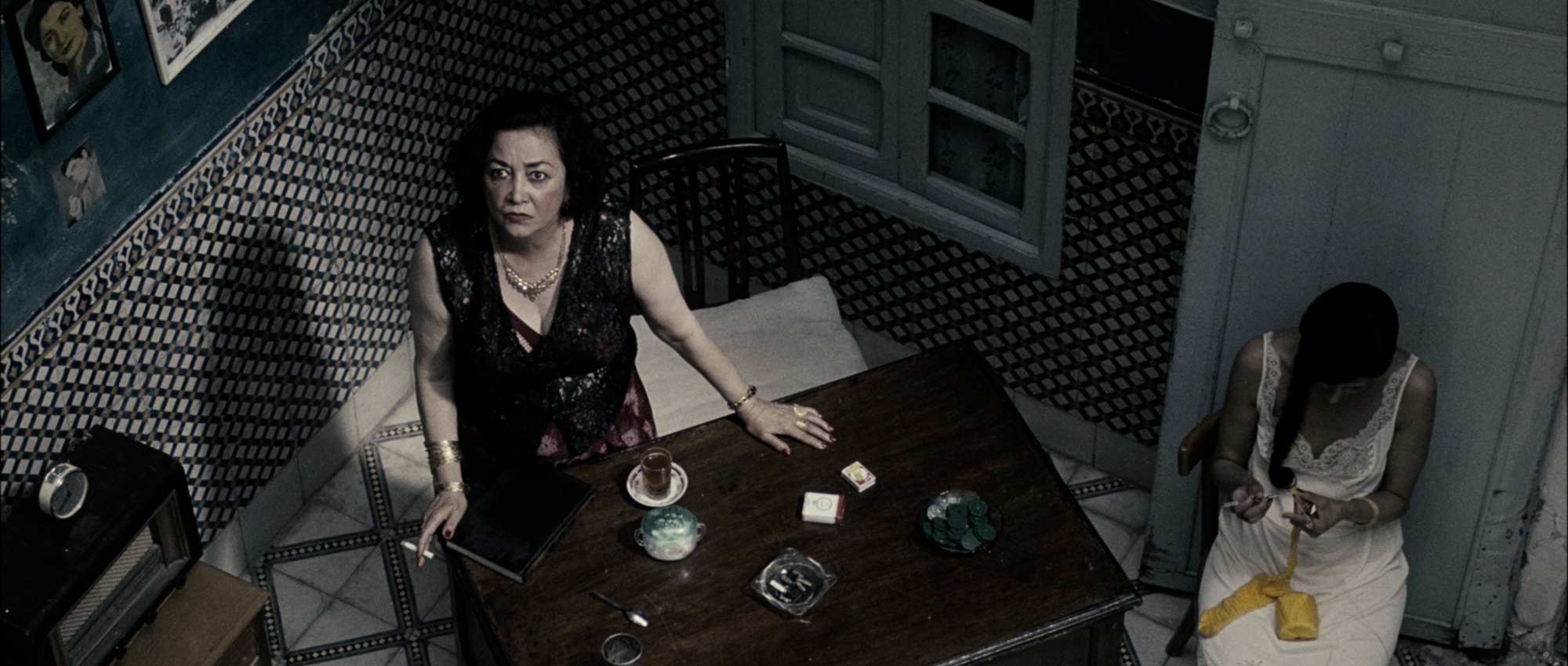
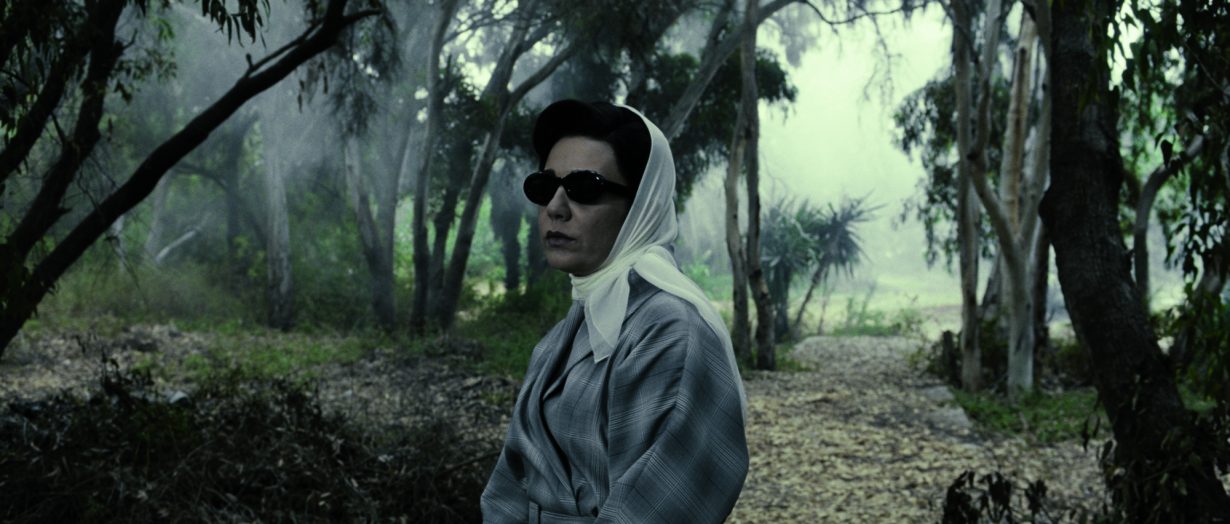
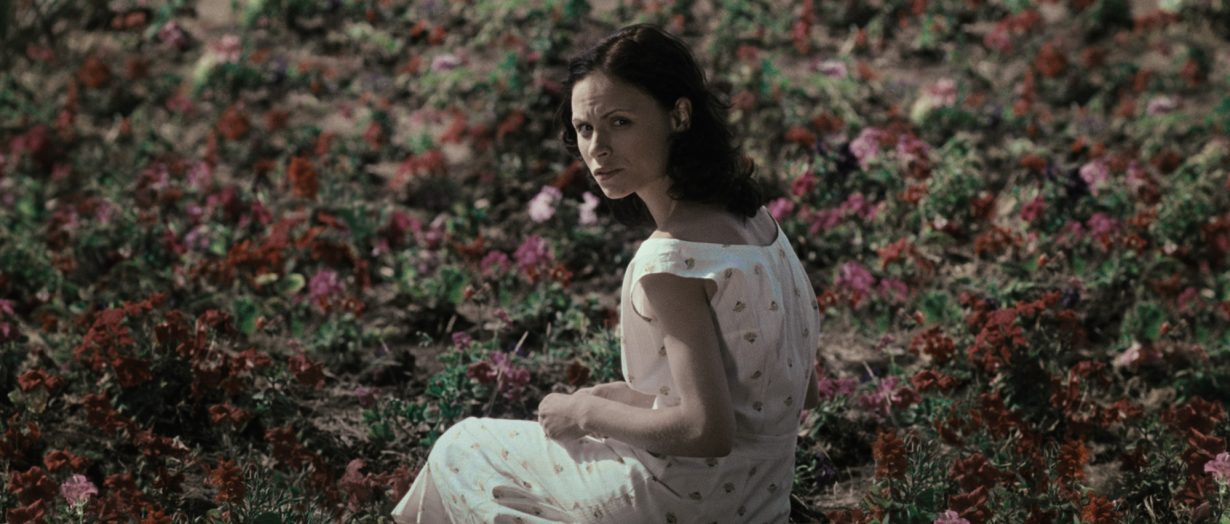
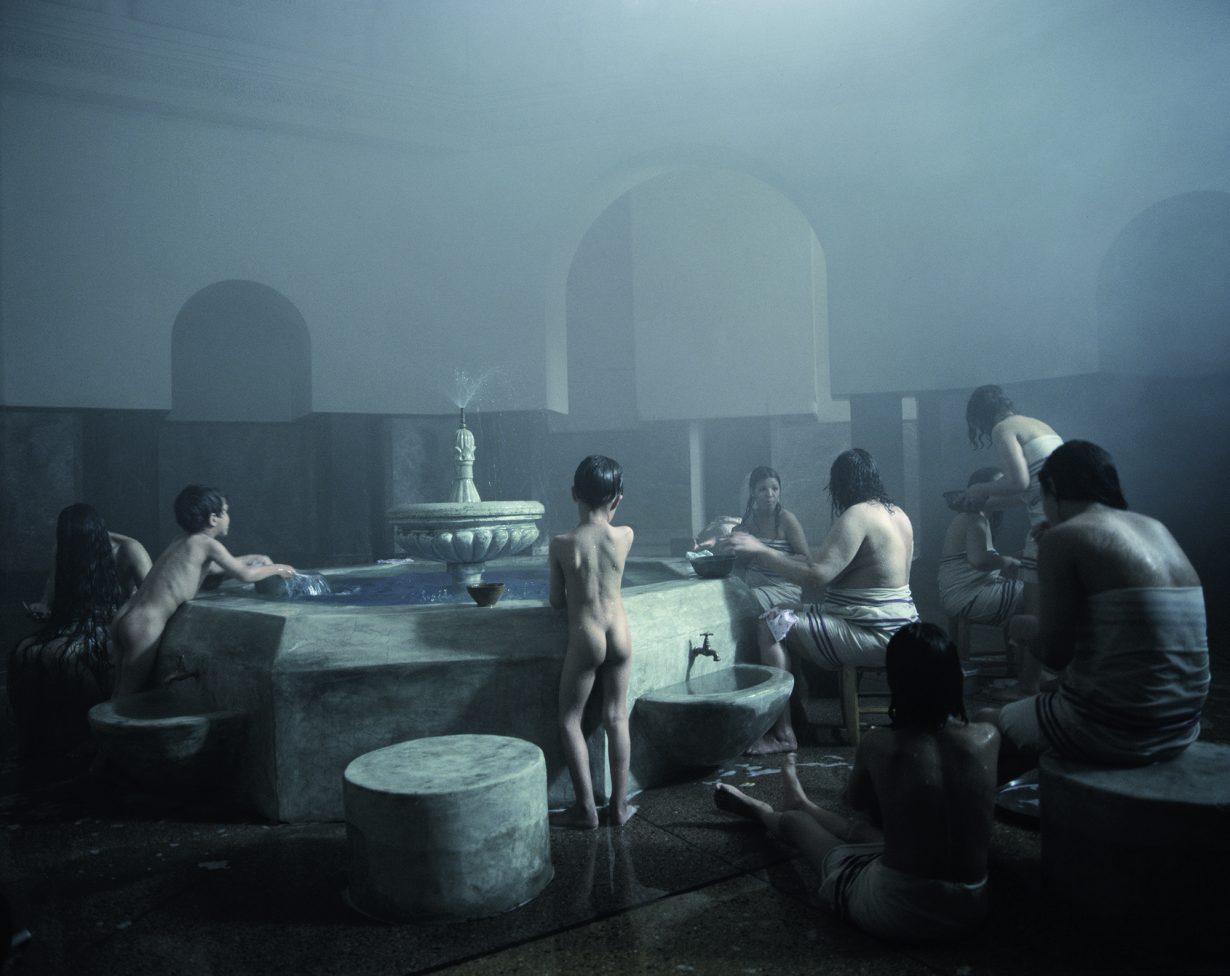
Parsipur, who had spent time in prison in Iran for both her family’s activism and her writing, left the country and now lives in Northern California. Artist Shirin Neshat made her first feature film, loosely based on the book and taking its title, in 2009 (having previously produced a series of five immersive video installations, each of which is named after one of the novel’s central protagonists – Mahdokht, Zarin, Munis, Faezeh and Farokh Legha – between 2004 and 2008). In Neshat’s adaptation, the political context of Women Without Men becomes more explicit: the film follows four women from different social backgrounds whose lives intersect during a period of political unrest in Tehran. While Neshat preserves many of Parsipur’s surreal and allegorical elements – including Munis’s death and return, and the orchard where the women eventually gather – she also includes scenes of public demonstrations, military intervention and the atmosphere of uncertainty surrounding the overthrow of Mosaddegh. The result is a work that moves between intimate stories of desire, isolation and autonomy and a pivotal moment in modern Iranian history. For the feature film (which includes Parsipur in a minor role) Neshat was awarded the Silver Lion for best director at that year’s Venice Film Festival. Here, the author and artist, who both live in exile in the US, discuss the original text, its afterlives, its translation into film and its continuing relevance today.
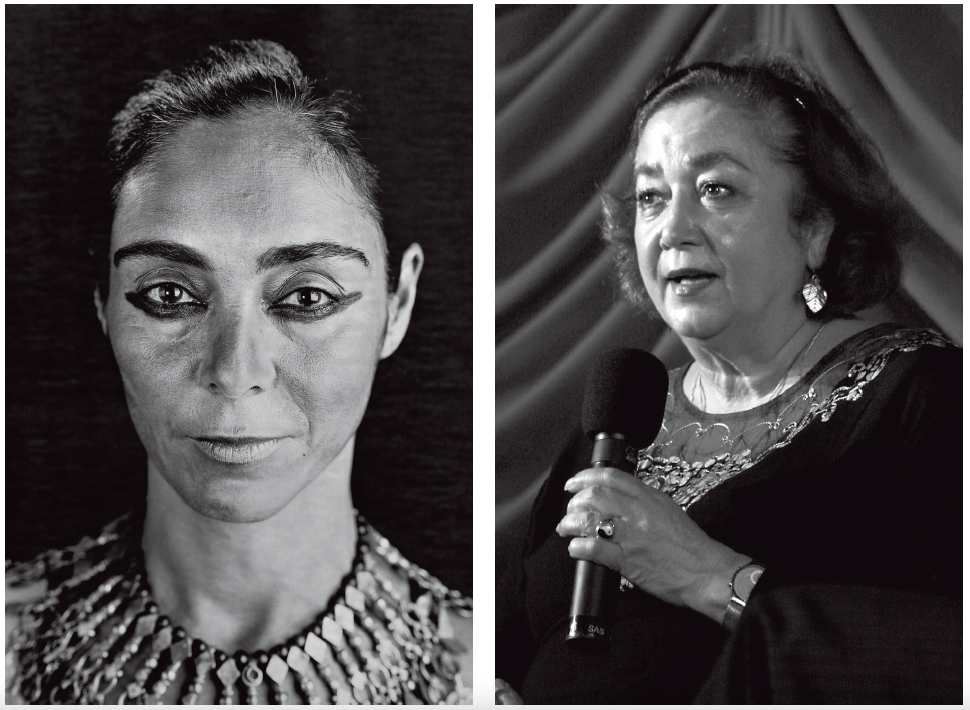
right Sharhnush Parsipur. Wikimedia Commons CC 3.0 / Manfred Werner-Tsui
Publish and be Banned
Shirin Neshat I wanted to congratulate you on being longlisted for the 2026 International Booker Prize. Especially for a book that you wrote many years ago, despite all the challenges it went through, including being banned in Iran. Where did the idea for this book, Women Without Men, originally come from?
Shahrnush Parsipur I had written several short stories titled, ‘Farrokhlaqa’, ‘Sadr al-Divan’, ‘Golchehreh’, ‘Zarrinkolah’ and ‘Mahdokht’. Then I decided to connect them, because at the end of the stories the main characters all went to Karaj [a city at the foothills of the Alborz mountains]. I added the stories of ‘Munis’ and ‘Fa’iza’ as well, and that is how the novel came into being. I had originally intended to choose 12 women, but then I decided, or rather realised I wasn’t able to do it.
SN Tell me about the fate of this book, it has had many ups and downs. When was it published? When was it banned? There is something particularly special about this book.
SP I sent the manuscript to the Ministry of Culture and Islamic Guidance [who needed to approve the book for publication]. They raised one or two objections. I addressed them, and the book was published. The activist Mrs Fatemeh Karroubi – wife of Mr Mehdi Karroubi [a Shia cleric and reformist politician] – filed a complaint against it.
SN Why?
SP She said it was anti-Islamic because it addressed the subject of virginity. The book was banned and I was arrested and taken to prison. I was incarcerated for about a month. Soon after, the book was banned permanently. Other problems followed and eventually I left Iran. I published the book abroad and it was very well received. It has now been translated into almost 40 languages. Its Korean translation has also recently been scheduled for publication.
SN There are five women in the book. Some are very down-to-earth, very real. Others are very dreamlike, mythical, surreal and magical. What was your inspiration for these characters?
SP This book naturally took on a magical-realist form, because I was trying to weave together strange and unusual stories. For example, a woman who turns into a tree, or a woman who dies and comes back to life. All were my inventions. I mean, I wanted it to be that way. In the film you made based on the book, some of these points appeared and some did not.
SN Let’s talk about the significance of the garden where the women take refuge, so to speak. They are all there, and they all find one another. What did you intend with this? Was the garden a particular symbol, or did it have a certain meaning for you? Could you talk about that and about the role of the gardener?
SP Gardening has been a common Iranian practice since ancient times and being a gardener is one of the earliest occupations in the world. The concept of paradise was formed from Iranian gardens and it entered Iran’s religious literature. That is why it has an important role in the lives of Iranians. I made use of this idea. The gardener is the most important character in the book. In a way, he is also an embodiment of God. A God who, this time, takes Zarrinkolah as his wife, because he wants to give value to prostitutes and save them from the misery of their fate.
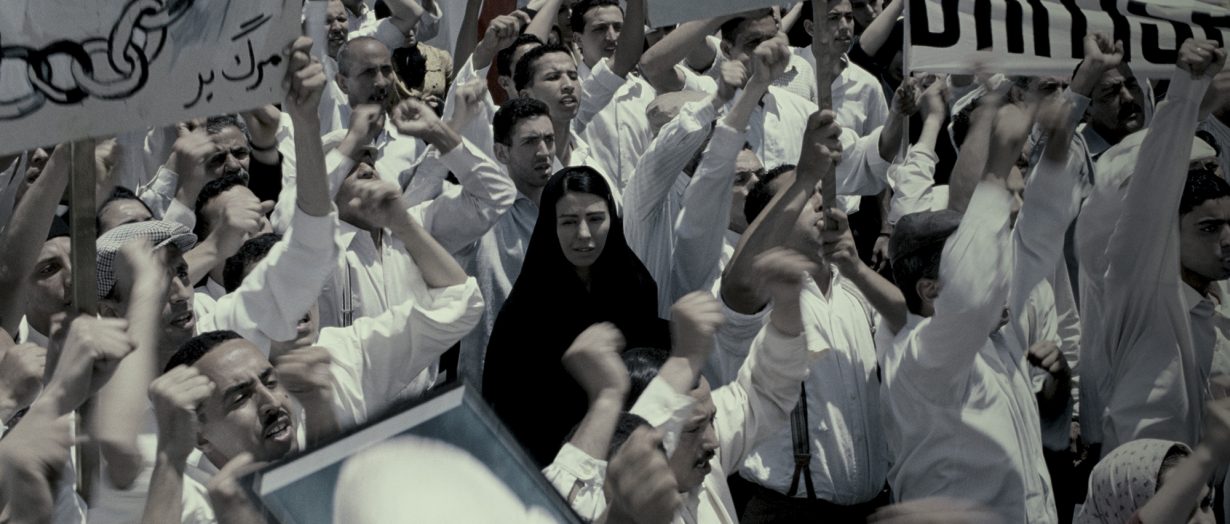
SN Your books have always had elements of magical realism in them – Touba and the Meaning of Night (1989) did as well. And as you know, in general, books that are magical realist, for example the works of Gabriel García Márquez, are very difficult to adapt for cinema. Everyone was telling me that I was crazy for even thinking of making this book into a film, because this kind of literature, this kind of storytelling – with one foot on the ground and one foot in the air – is generally difficult to make into a film, especially on a low budget.
The reason I was drawn to this novel was that the story takes place in 1953, a time that was politically, socially and culturally very critical and important for Iran. On the other hand, it took place in a garden that had the quality and meaning of paradise. That contrast was always interesting to me. Did you deliberately decide that, even though the story takes place in 1953, you would not touch on politics and political issues, the coup d’état, and so on?
SP Politics is a dirty phenomenon, and political issues disturb people. I moved past that because it was not important to me, and I covered it up.
SN I want to go back to the five women – Fa’iza, Farrokhlaqa, Zarrinkolah, Mahdokht and Munis – do they resemble you in terms of character? Was what they wanted to achieve, to some extent, something you yourself had in mind? In my own work, I always feel that there is some aspect of myself in all my characters.
SP You cannot create a character other than yourself. Naturally, all five women in this book resemble me, because I created them. That is the rule of the game, that is how it always happens.
SN In my opinion, Women Without Men is an extraordinarily important book because it is one of the few books about a beautiful period in Iran’s history, culturally speaking. For example, one of the things that was very difficult for me to recreate in my film – especially because of the small budget – was pre-revolutionary Iran: Iran before certain events and issues. What do you see as the success of this book? Is it the period you focused on, or the storytelling itself?
SP It did not matter to me whether the story took place during the Shah’s era or the Islamic era. Since my upbringing was mostly during the Shah’s period, I chose that period. I mean, I did not have a particular intention in doing so. But I set it on 19 August 1953 [which marks the coup d’état], an important date in the country’s history, because I wanted to show how foolish the character Fa’iza is, who, at the very moment when historical events are taking place, is worried about her virginity and comes to discuss it with Munis.
I Hate the Word ‘Feminist’
SN In what way do you think your book still connects with Iranian women today? What has still not changed?
SP Women in Iran are the second sex, not the first sex. That has not changed. Iranian women still face the same problems they have always had, and this continues.
SN You have experienced censorship, been in prison and have been living in exile. You have paid a high price for your work and endured great hardships. How much do you think this has affected your work?
SP A great deal. My literary life has practically been burned away, because of the situation that was created for me in Iran. And Iran is a country whose literature is not international; it has a specific, limited sphere. I was very lucky that this book received international attention and entered the world market. But as for how this story was created, it was because I was trying to write a metaphysical book, and it has value in any era.
SN Women Without Men was translated into even more languages and circulated more widely than Touba and the Meaning of Night, which is one of the most beautiful books I have ever read. Why do you think this book became more successful internationally than that one?
SP I think it is because Women Without Men is shorter and is easier to translate and can be sold more quickly. At the same time, Women Without Men has a more international context. It encompasses ideas that make it an international book as well as an Iranian book.
SN Your book has been banned in Iran, but somehow it is still circulating, still succeeding, and has been nominated for the International Booker Prize. Why do you think it has survived in this way?
SP Let me ask a question: how is Shakespeare still being read, and does he remain important in world literature? For the same reasons, Women Without Men remains important. It has been accepted by the world and is being read.
SN The garden you created in the novel, was in a way a metaphor, a symbol – a place that all these women were drawn to hoping to somehow save themselves from the world, from social and political realities, from their families. Metaphorically, allegorically, symbolically, what kind of connection does this have to issues Iranian women are facing today?
SP Each of the women in this book faces certain problems – problems that other Iranian women also face. It is through examining these issues that this book came into being and continues to exist. But I get annoyed by the repeated use of the term ‘women’. This book is for women and men. I prefer that we count men, too, as part of humankind.
SN So for you, the gender of this author or that artist is not important. Because you are not really a feminist.
SP Not at all. I hate the word ‘feminist’. The word ‘feminism’ reminds me of ‘masculinism’.
SN I have brilliant memories of the six years we worked on making the film based on the book. We faced many obstacles and struggles. Yet it was truly one of the most important and beautiful experiences I’ve ever had in my life. Even now, when I watch the film, despite its flaws, I am very proud of it, and proud of how close it brought us together. A large part of that was the complexity of the book, with each character having her own independent story, which you ultimately decided to bring together in one novel. That was a very big challenge. We follow each one of them, but then bring them and their fate together.
When you brought them into the garden, how did you imagine the ending? It’s interesting that you have five women who are all running away from men, but the kindest person is that very gardener. Did you take the story of the gardener from the relationship between Mary Magdalene and Jesus Christ?
SP No, not at all. I don’t know the story of Mary Magdalene.
And So to Mr Trump
SN As a great Iranian artist living in America, would you like to comment on America’s attack on Iran?
SP I was, and still am, very much against this war, and I have repeatedly spoken about it. I am very worried about Iran. Because when the power of the US and Israel are combined, they can send Iran back to the Stone Age, just as Mr Trump said. Iran does not have the power to resist them. I am vehemently opposed to this war.
SN I agree with you and share your thoughts. As you know, Iranians living inside Iran and abroad – especially those abroad – are very divided right now. They are fighting each other over ideas and ideologies, and over what Iran’s future should be. Some support the Shah; some are fiercely against this regime, everyone is saying something different. In my opinion, this is one of the worst periods in the sense that not only is our country under attack and at war, but we are fighting with one another.
SP I am very saddened by this. There are many Iranians who think that the Islamic Republic must fall at any cost, and they are very much in favour of this war. They raise the Israeli flag or the US flag and take pleasure in that temperament and try to support them. These Iranians are insane. They do not know what war means. They do not know what the obliteration of all of Iran’s industries means. And they do not know that this will take Iran back to year zero.
SN Amid all this chaos what do you think of the role of artists, writers, filmmakers, poets, musicians? Can art really have an effect in these violent and frightening times?
SP Of course it can have a role. Artists can sometimes save their country. They can help their country by influencing the world. It is very clear that this issue is important, and I hope Iranian artists will fight against this war with all their strength.
SN You have said that you no longer write. It makes me very sad that you have not continued your work for some time now. Is there any chance you might start writing again? Can we hope to have another book by you?
SP No, my dear. I wrote as much as I could. I have nothing more to say. It has been a long time since I stopped writing.
SN You have been living in exile in the US for many years. Don’t you think you have something to say about US culture as an Iranian who migrated here? Don’t you think of stories to tell from the perspective of an Iranian immigrant woman artist?
SP I live in the US, but I spend all my time with Iranians. The books I read are in Persian. Everyone I speak with is Iranian. I have very few American friends. I don’t know much about American society because I never intended to come here. I was forced to come and, for now, I don’t know much about America.
SN Do you ever want to go back to Iran?
SP I am ill. I have difficulty breathing. Most of the time – throughout an entire 24 hours – I am on an oxygen machine. I took it off for this interview. If I go back to Iran, I will die immediately. These are my circumstances. So, I will stay here.
SN How did you feel when you heard that you had been longlisted for the International Booker Prize?
SP The truth is that I didn’t know anything about this prize. I later learned that it was an important prize, and I was happy to have been considered for it. And now the matter is over.
SN I found it very unusual for a book that was written such a long time ago to be nominated now. This shows that your book has truly been successful, that it is timeless and universal. It has been an honour to get to know you and to collaborate with you. God willing, if we are given the chance, perhaps we will work on another project together.
Transcribed from Persian by Kayvan Tahmasebian Dehkordi and translated by Sara Khalili
Shirin Neshat’s new video trilogy Do U Dare! is on view at the Palazzo Marin, Venice, through 6 September. Women without Men by Shahrnush Parsipur, translated by Faridoun Farrokh, is published by Penguin
From the Summer 2026 issue of ArtReview Asia – get your copy.