When all aspects of life are controlled, Priyageetha Dia’s artworks ask: how do we carve out space for resistance?
Under a strobe light and a driving techno beat, a brown woman is dancing. Little things are off: her torso is stiff and locked, and her black T-shirt is stretched flat, as if over the smoothed-out contours of a mannequin. But it’s her face that is most uncanny. Covered by a waxy sheen of sweat, it has a faraway look – mouth hanging open, eyes dazed and blank. And yet, at the same time, her expression, like that of a bad human actor or a digitally-generated character, is a little over-designed: a performance of feeling that never settles into feeling itself.
This is Night Shift (2025), a hypnotic videowork by Singaporean artist Priyageetha Dia featuring the world’s most miserable one-woman rave. In interviews, the artist says she intends the work to draw connections between the repetitive and collective bodily movements of rave dancing and labour. The not-quite-human, spent-but-carrying-on performing body here, made using MetaHuman software, is deeply ambivalent: one could read it as capturing not only the physical exhaustion of labour but also something of the psychic exhaustion of contemporary existence in general. An exhaustion in which compulsive actions (doomscrolling, selfoptimisation, everything-maxxing) extract our humanity and render us depersonalised zombies. It is perhaps for this reason that, at the end of 15 minutes, the trancelike focus of the dancer eventually generates a sympathetic resonance in the viewer. One senses her defiance, her self-respect. Her stamina. Neither victim nor protestor, her motivations and the ends of her actions are opaque.
Given the oppressive and extractive structures under which modern life takes place, what kinds of spaces remain for resistance? This is the question that Dia has been returning to in her works of the last five years – works that create new affective worlds or dimensions using digital animation, sound design and installation. A great deal of her recent practice draws on the Black radical tradition – from thinkers Stefano Harney and Fred Moten’s propositions in The Undercommons (2013) to Zakiyyah Iman Jackson’s meditations on the plasticity of black bodies in Becoming Human: Matter and Meaning in an Antiblack World (2020) – which she adapts in her inquiries into the Tamil diaspora in Southeast Asia. One of her inspirations is the practice of refusal, by way of theorists such as Slavoj Žižek and Gilles Deleuze, as a way to resist dominant, state-sanctioned or colonial narratives, often by presenting radical outsiderness that refuses to support or negate dominant paradigms by rendering them irrelevant.
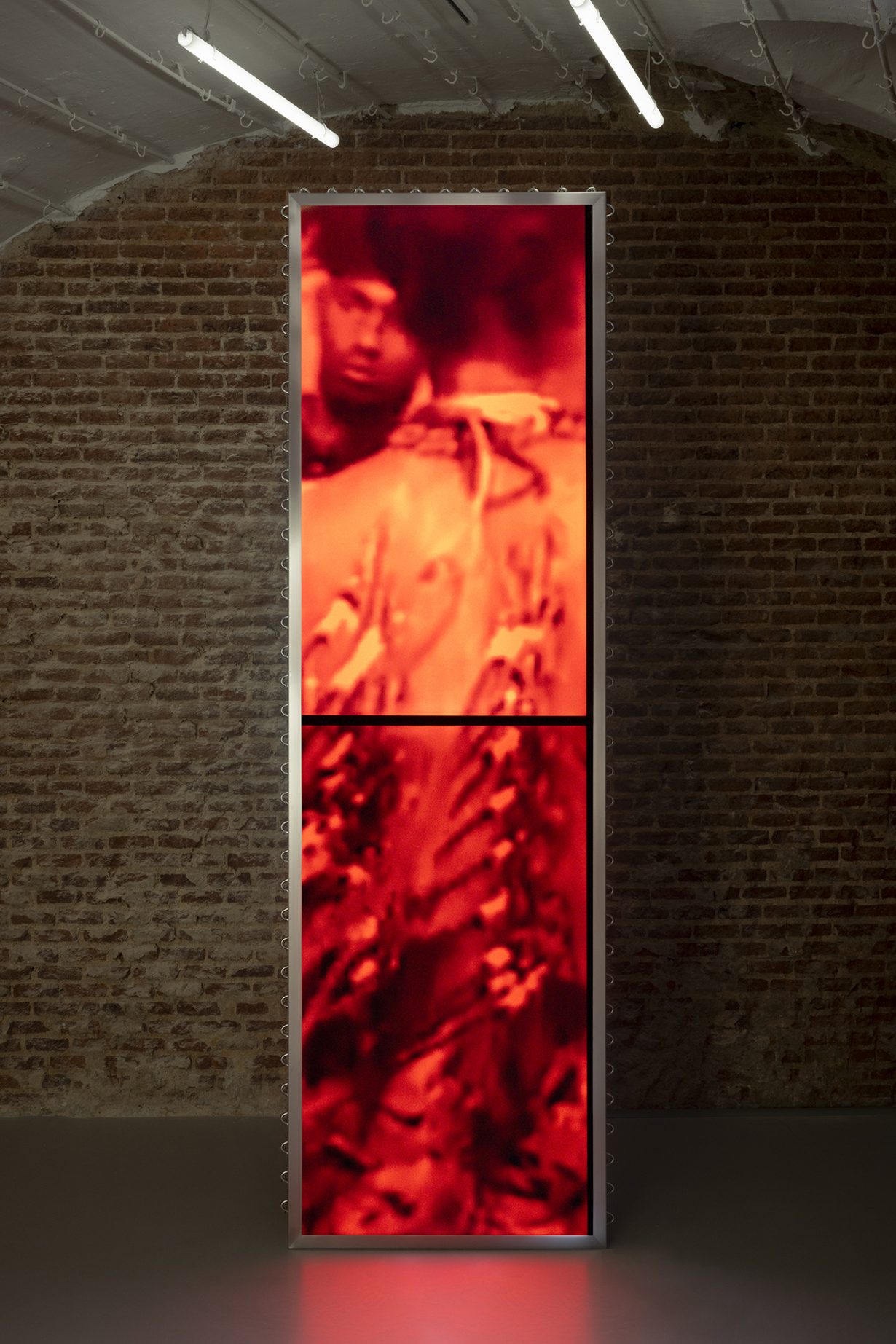
This illegibility can be seen in the videowork kokki (2025). Meaning hook in Tamil, the video centres on a meat hook of the type used in slaughterhouses and the hooks employed in kavadi structures used in kavadi attam, a ritual performed by Tamil Hindu communities in Singapore and Malaysia during Thaipusam. In these countries, some devotees dance along a pilgrimage route carrying kavadi, or burdens, attached to their bodies through hooks pierced into the skin. Archival footage of kavadi cuts in and out of CGI images of bloodstained curtains, slabs of meat and a complex machine whose moving parts are viewed only in fragments. We never grasp a sense of the whole. Sometimes the mechanisms interlock around what resembles a spinal column; elsewhere they evoke rows of hooks and piercings along devotees’ backs.
The work is displayed on a thin, vertical screen, as though the viewer were peering through a narrow slit. The limited vantage further obscures a visual field in which distinctions between human, animal and machine are dissolving. In its elliptical way, kokki touches on a raw nerve in Singapore. Thaipusam has long been subject to restrictions on the playing of loud, live music, which helps devotees maintain the trance state, and remains excluded from the country’s list of public holidays despite its religious significance to Singaporean Tamil Hindus. Public debate around the issue often centres on questions of representation and fairness within Singapore’s CMIO (Chinese, Malay, Indian, Others) framework – a colonial racial classification system inherited from the former British administration. Yet kokki refuses to participate in these terms. Rather than seeking recognition within existing categories, it produces images that evade categorisation altogether. Instead, imagery spins and clicks like patterns in a kaleidoscope that never quite settle into coherence.
Dia’s interest in refusal was not always expressed through opacity. Her earliest works sought to reclaim public space directly through acts of symbolic occupation, reflecting more libertarian beliefs in the right to that space. As an art-school student, she covered a concrete staircase in her public housing block in gold leaf (Golden Staircase, 2017). Gold leaf was a reference to her maternal family trade (goldsmithing) that traditionally was only passed down through the male lineage; the work stakes a claim to that part of her heritage. Her local town council, however, deemed it an act of vandalism and forced her to scrub everything off. She did leave a little square on the steps as a reminder of what had happened: a guerilla intervention into the highly regulated public spaces of Singapore.
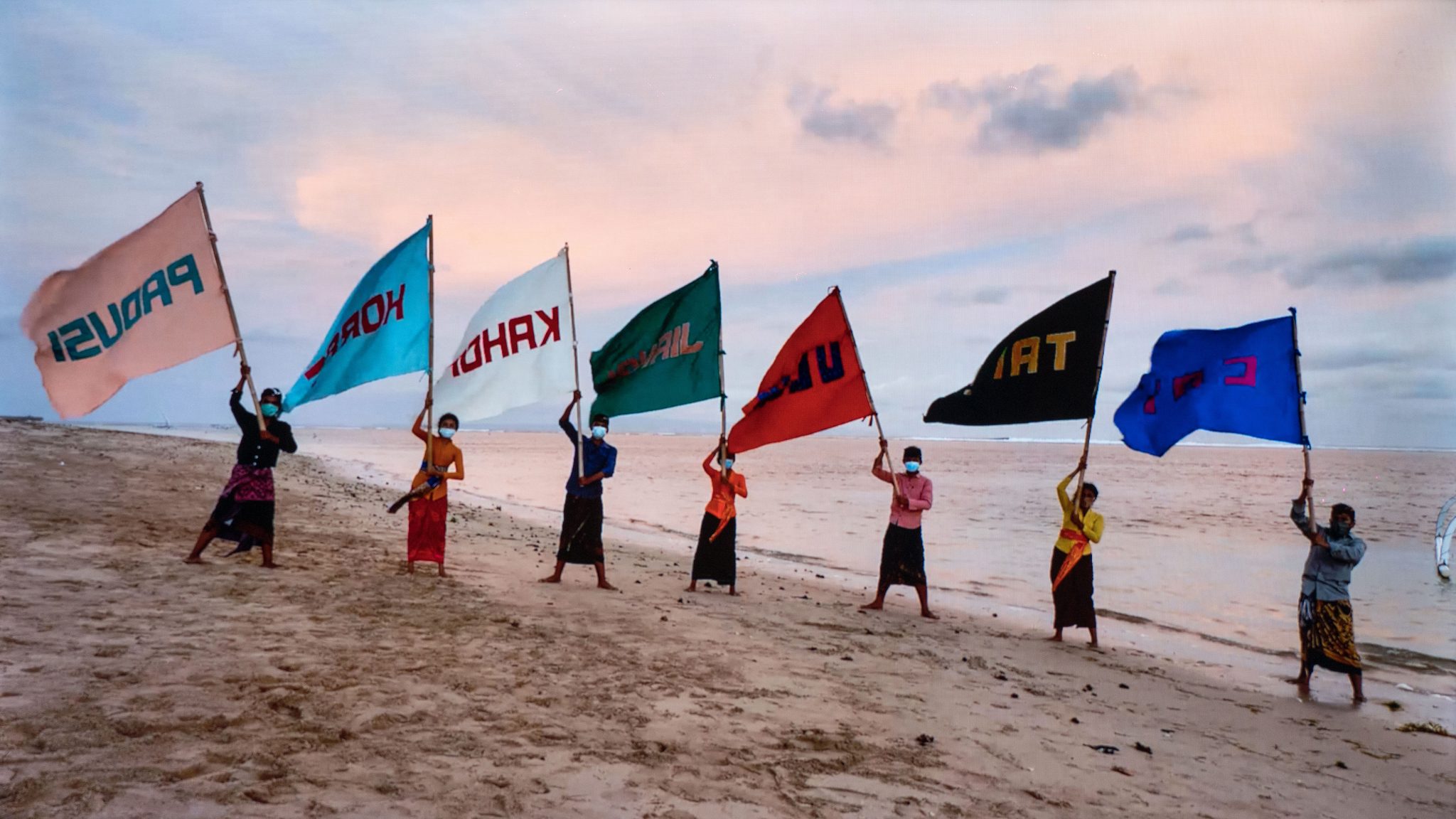
Continuing her experimentation with gold leaf, she put up gold Mylar blankets in various levels of her block of flats, in places where Singapore’s national flag is typically hung on National Day (Absent – Present, 2018). That work was removed by the authorities. In response, she took certain phrases from the public reactions to that artwork and printed them onto another set of golden flags, which were displayed in a commercial gallery (Golden Flags I, 2018). The words included ‘vandalism’ and ‘kim zua’, Hokkien for joss paper offerings for the dead and seen as vaguely inauspicious for Chinese Taoists because of the association with death. Another running theme in her work at the time was the exploration of brown and female identities, through the reappropriation of racist and misogynist slurs. In the Typical Indian Snake (2020) series of fabric works, named after insults she received online, she printed empowering slogans in gold leaf on chiffon cloth covered in a snake print – ‘she is the divine femme fatale’ and ‘no mortal man could ever hold her flame’.
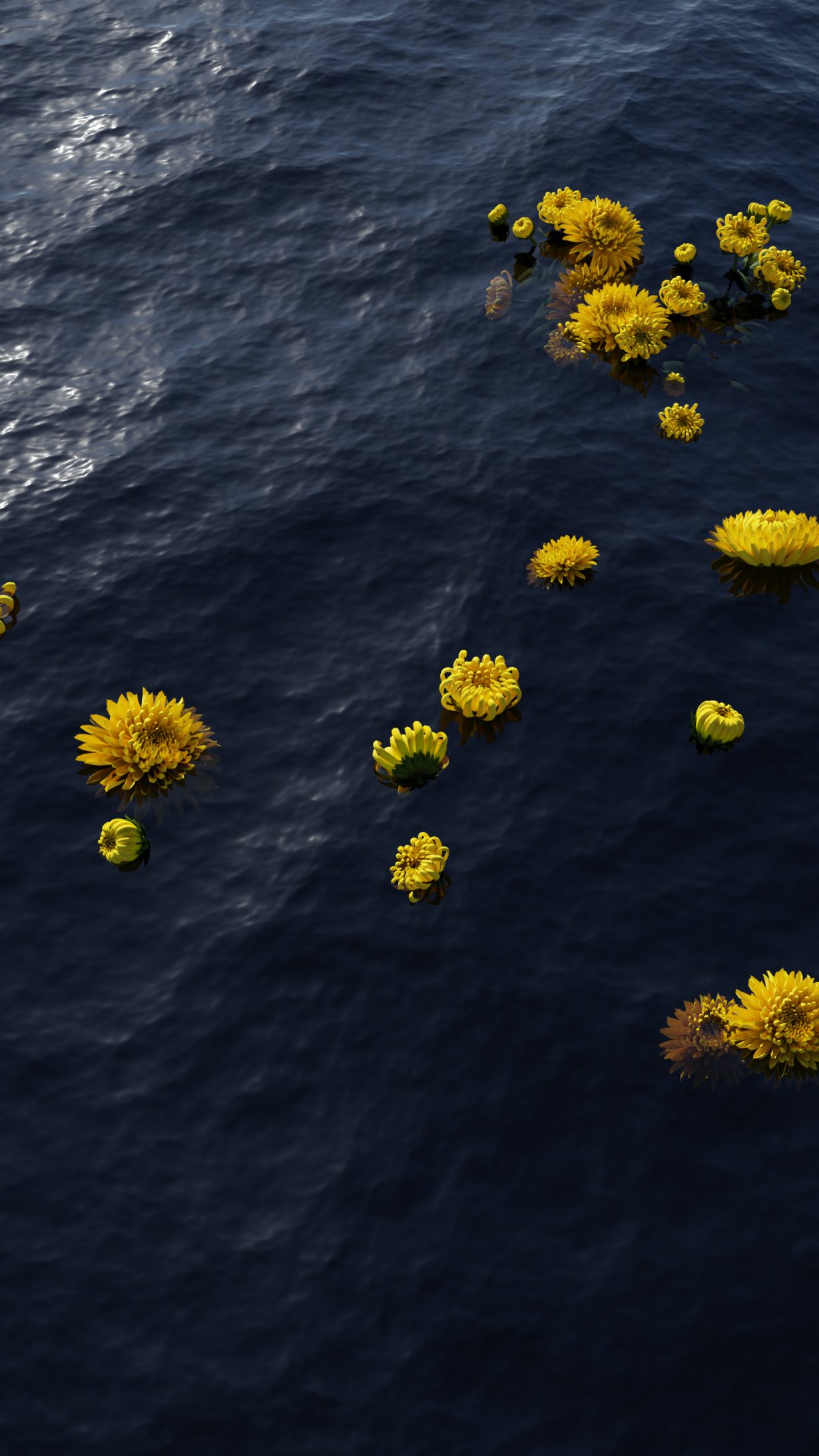
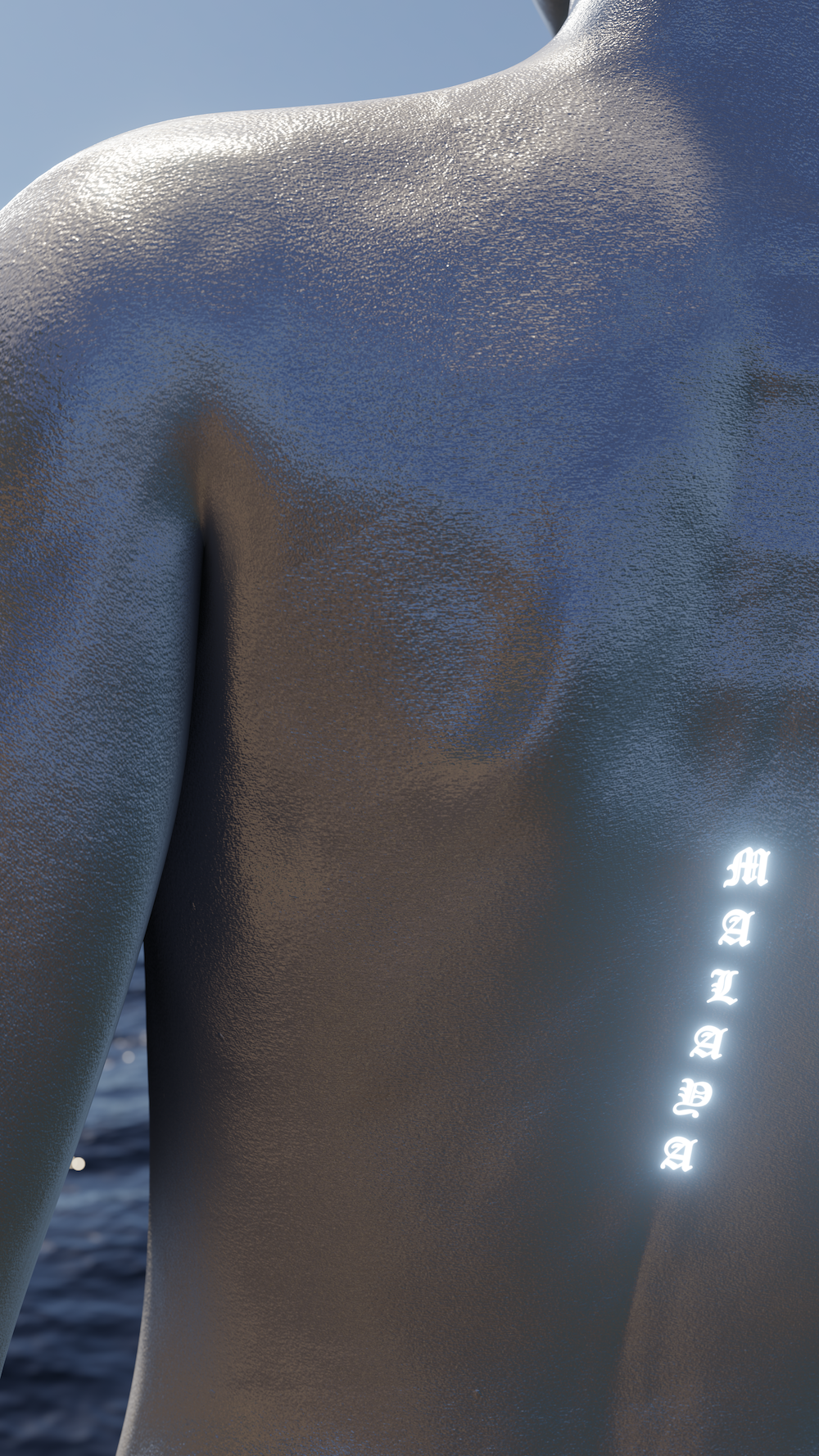
The COVID-19 pandemic marked a decisive shift in Dia’s practice. During lockdown, she taught herself to use digital animation software such as Blender and Unreal Engine, and immersed herself in the colonial histories of Southeast Asian plantations, especially those involving indentured labourers from South Asia. She started building speculative worlds in digital realms, and her strident politics gave way to a more open, non-linear poetics. In the digital animation The Sea is a Blue Memory (2022), she meditates on the sea journey taken by these migrant workers and explores the idea of the ocean as a vital, living repository of memory: a place of crossings, trauma and the birth of diasporic identities. In one scene, a broken palm frond and chrysanthemum petals (often used in Hindu offerings) float across the water’s surface. In another, an entire palm plantation is submerged; the viewer’s vantage is from the seabed, seeing the distant leaves frame the sun, a pale little circle in the centre. Interspersed with these moments are shots of a majestic, nude, silver-skinned woman with a shorn head, blue eyeshadow and alert, darting eyes. Glowing on her back like a magic brand is the word ‘MALAYA’ – a personification of a geographical territory, and which Dia describes as a ‘water spirit’– a departure from the usual notions of land.
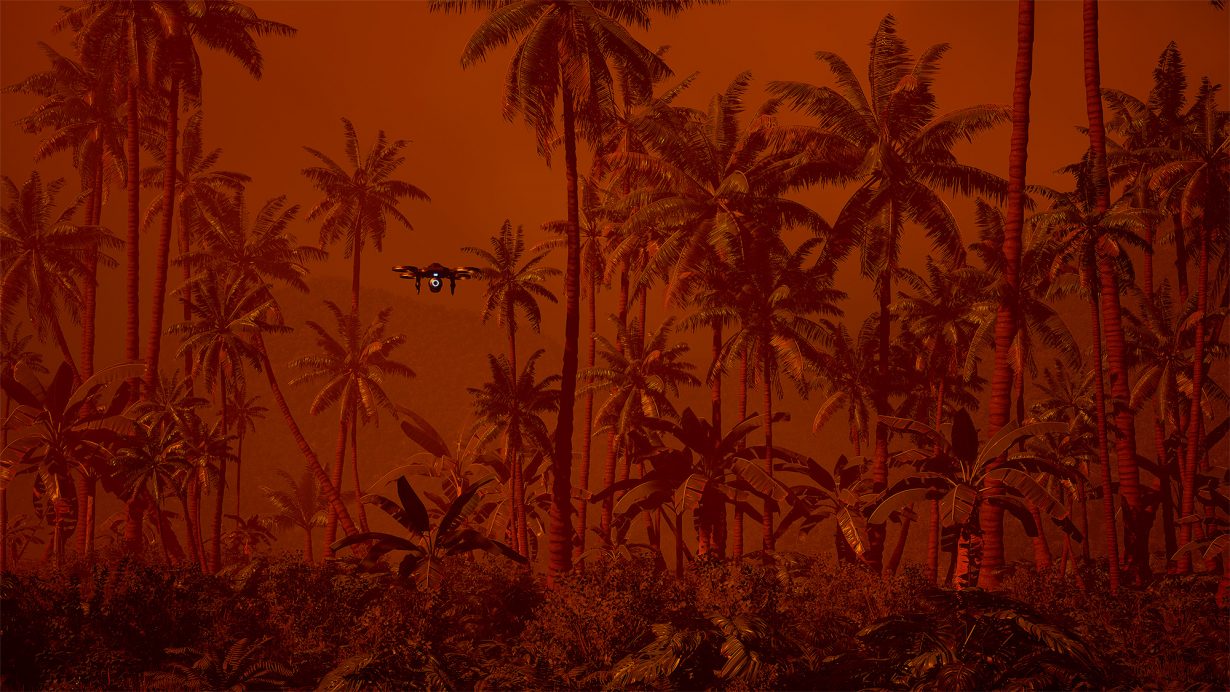
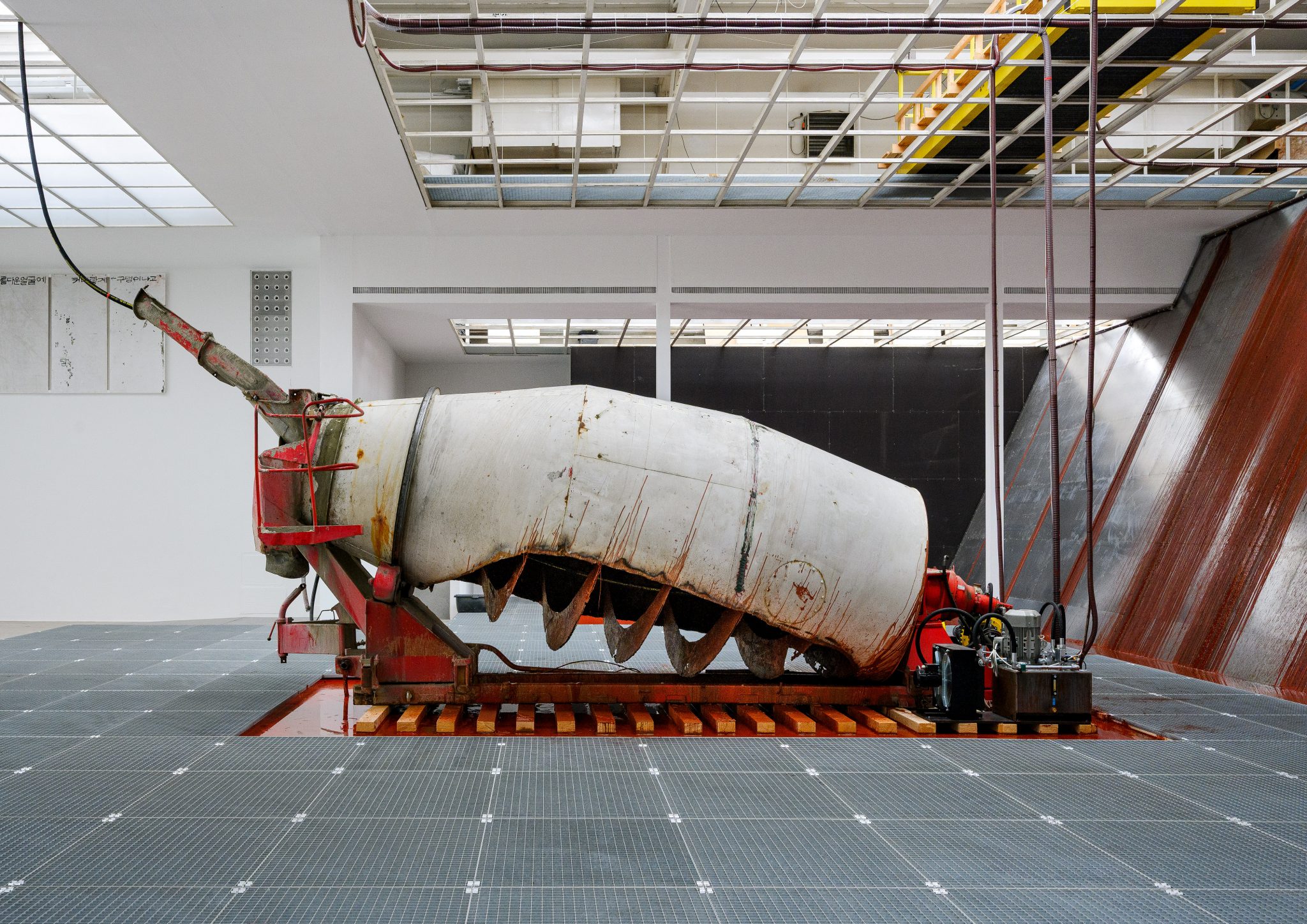
Dia returns to land in one of her most widely exhibited works, the multimedia installation LAMENT H.E.A.T (2023), which mourns the exploitative human histories of rubber plantations and their wider environmental devastation. Viewers sit in a box that is covered with a chevron pattern inspired by the diagonal cuts made on rubber trees to tap latex. Screening inside the box is a video of a plantation that gradually catches fire, the process of which is witnessed by a flying drone. Cut to a black screen where we hear the melodic, improvisational strains of oppāri, a genre of Tamil deathsong usually performed by women to mourn the dead, and a practice brought to Malayan plantations by South Asian workers. Dia says this version was generated by AI. ‘The earth is dimming, everything on earth is dimming, the green wilderness is blazing, all the wilderness is blazing,’ a female voice laments in Tamil, ‘And even if this wilderness fades, your scent will not part me, it will not part me yet.’ The work closes with views of blazing trees, with fast thrilling drumming from the parai drums that typically provide the percussive accompaniment to oppāri.
Dia’s engagement with oppāri music led to a deep dive into the possibilities of sound and its affective powers, and how sound could be a new dimension for attending to suppressed histories. In Sap Sonic (2023), using an imageto-acoustics software, she translated archival black-and-white images from the photo album of the Sumatra Caoutchouc Company, a rubber-planting company, held in the Rijksmuseum, Amsterdam, into ambient sound. Transposing the relationship between the coloniser, labourer and land into an atmosphere of palpable unease, the track pulses with electronic sounds, with sinister scratches, clicks and belllike chimes.
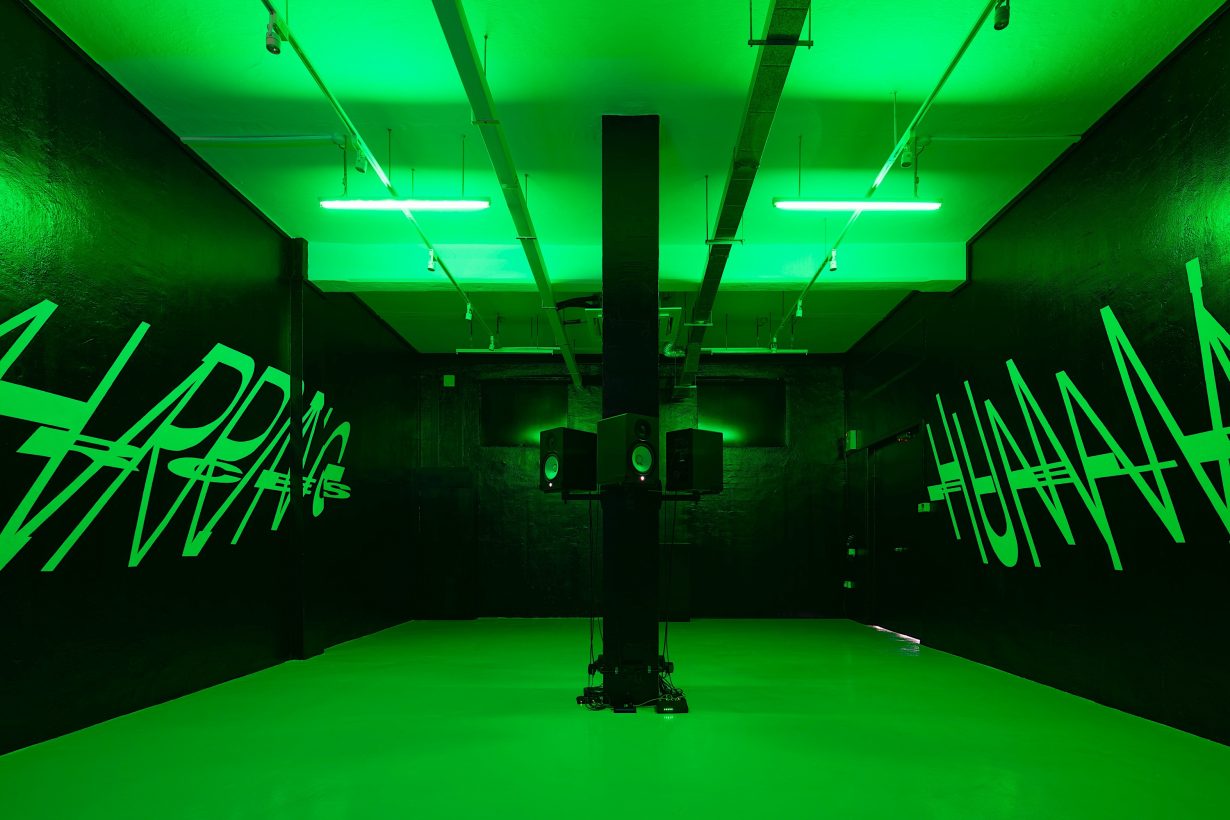
From excavating the histories of colonial extraction in her plantation works, she moved to examining similar logics in contemporary tech regimes. Recent reports of tech billionaire Peter Thiel’s closed-door lectures, in which he described Swedish climate activist Greta Thunberg and critics of AI as ‘legionnaires of the antichrist’, inspired Dia to bring together tech capitalism and religion in a new work. For her final-year project at the Royal Academy of Art, The Hague, where she is currently completing a master’s degree, Dia is presenting the sound installation litany for a failing machine (2026), where she leans into Thiel’s heroic embrace of AI and Christian eschatology. A cloned version of Thunberg’s voice delivers a sermon that blends prophecy, techspeak and pornography. The text was generated by feeding some initial lines into pattern-recognition software, which then came up with a long, associative chain of phrases: ‘And the power into prophecy again/ and the prophecy stops fucking/ and the fuckery into revelation/ and the revelation into porn/premium, adfree, obscene silicon/till the silicon turns into flesh/ and the flesh into light/ and light into God again/God is obsolete /God is horny/ and the horniness into hunger…’
Delivered in Thunberg’s girlish voice and careful English enunciation, the tech-informed blasphemous rhetoric is actually very relaxing to listen to. Dia had sent me a sound file and I played it on a bus ride, first enjoying how the lines mutated according to an algorithmic logic; as time wore on, the self-righteousness and conviction got a bit corny. It also got me thinking: whose voice was I listening to, exactly? In it, there is Thiel, Thunberg, the figure of the Antichrist, Dia and everything the large-language model employed to create the work. It is persuasive and faintly embarrassing in equal measure. Unlike the exhausted dancer in Night Shift, the contradictions in this voice – which delivers a stream of silky, fluent, confident nonsense – don’t elicit sympathy. Instead, it seems engineered to produce a peculiar sensation of being simultaneously impressed and repelled, a feeling that has become increasingly familiar in an AIsaturated world. Perhaps litany… offers another form of refusal. Rather than arguing against the ideological discourses of techno-capitalism, the work occupies them from within, amplifying their desires and letting their fantasies ramble unchecked, until they begin to sound monstrous and absurd.
Priyageetha Dia’s solo exhibition salt is on at Gertrude Contemporary, Melbourne, through 8 August
From the Summer 2026 issue of ArtReview Asia – get your copy.
Read next Priyageetha Dia in the 2026 Munch Triennale, Reviewed