Zajko’s The Egg Egg nods towards ideas of transformation, cyclicality and techno-futurist fantasies of cryogenic preservation
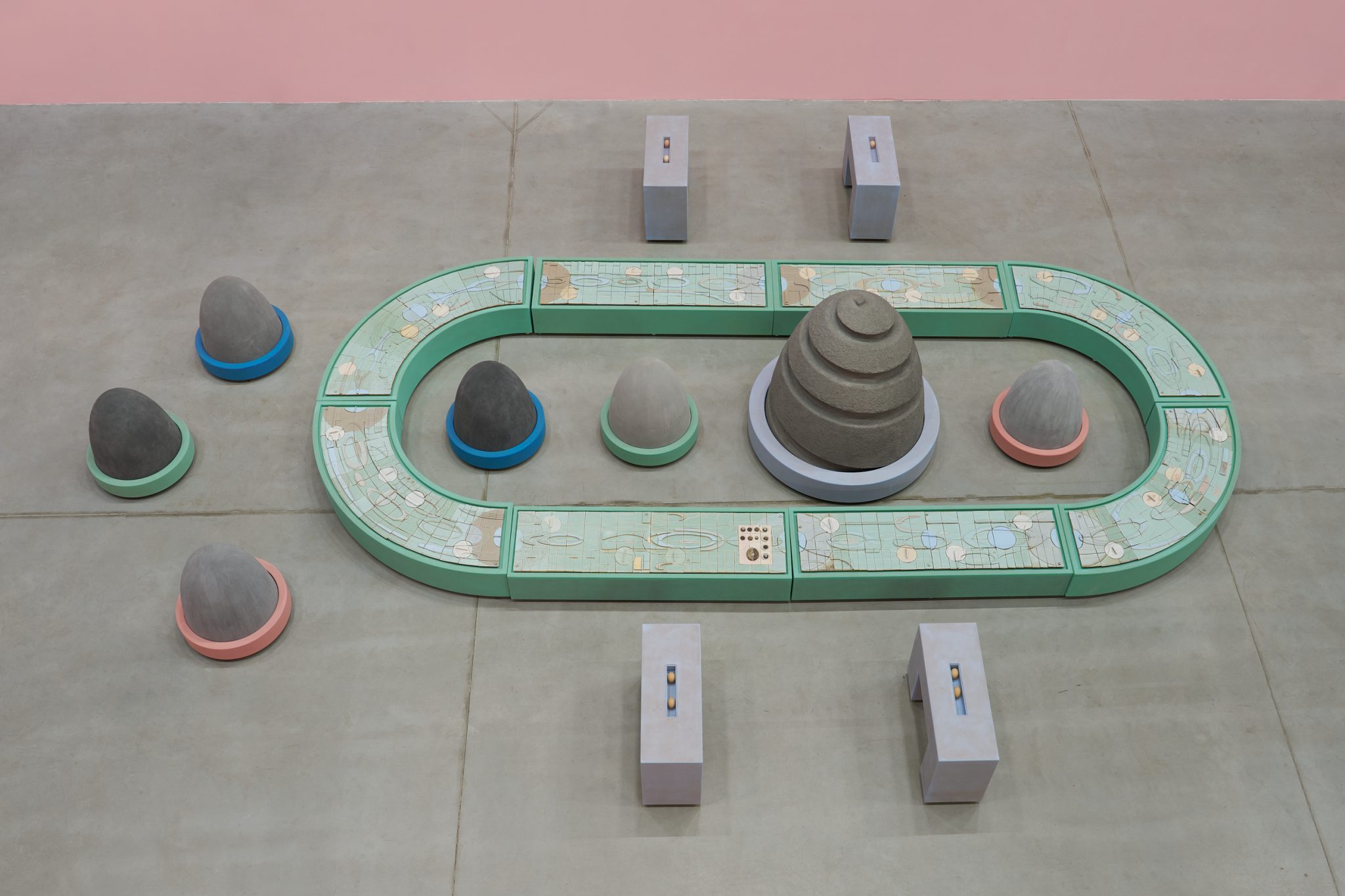
Born in Białystok in 1988, a year before Poland left the collapsing Soviet Union, Rafał Zajko spent his childhood amid the Eastern Bloc’s material and cultural afterlives. As one approaches the former power station that houses the Arsenal Gallery, communist housing blocks painted in faded oranges and pinks offer an origin story for his aesthetic language. The latter is shaped by brutalist architecture and industrial history but queered by a performative, camp sensibility and frequently offering the metaphoric possibility of remaking. In the main hall, for example, the modular installation Funny Games (2025) merges adult playground and brutalist public square. It’s composed of eight pastel-coloured platforms on wheels, their surfaces carved with glazed ceramic reliefs, that curve enclosingly around egg-shaped sculptural seats and a tall central totem. Zajko cites as an influence Frederick Kiesler’s Endless Theatre (c. 1924), a design for a reconfigurable immersive theatre without a fixed stage or seating; visitors and gallery staff can diversely rearrange Funny Games, including placing pickle jars from the nearby Larder I, II, III (2025) into its relief-compartments.
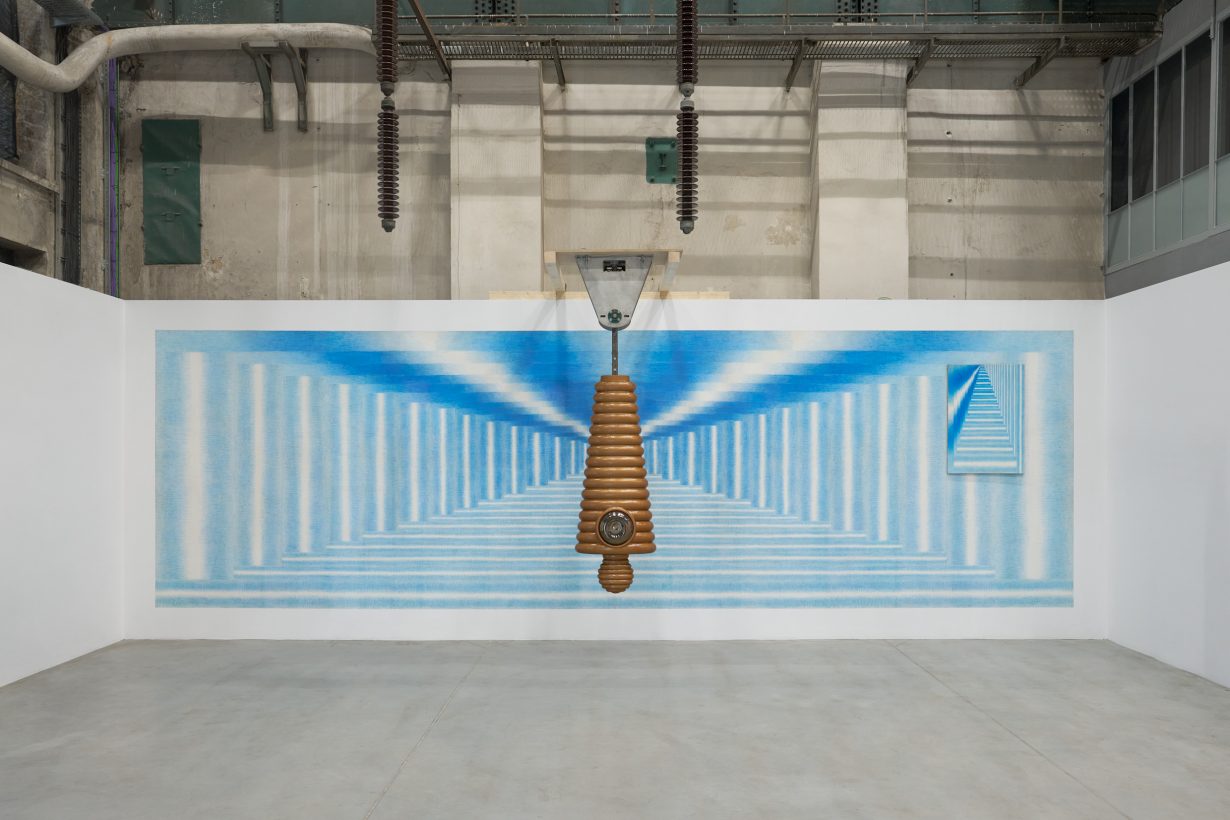
The Egg Egg brings together 50 works from the past decade on two floors of the vast building in nine ‘acts’. Its title plays on the rhyme between the artist’s surname and the Polish word jajko (egg), and egg shapes recur throughout, nodding towards an overarching, transtemporal complex of ideas: transformation, cyclicality and techno-futurist fantasies of cryogenic preservation and Singularity. The stage is set immediately by Sisyphus (2025), a monumental suspended ceramic bobbin, as used in textile factories like the one where Zajko’s grandparents worked and where he spent much of his childhood. Part worker’s body, part tool, this giant swinging bobbin-pendulum dictates time relentlessly, echoing the mythical figure of Sisyphus, condemned to endless labour.
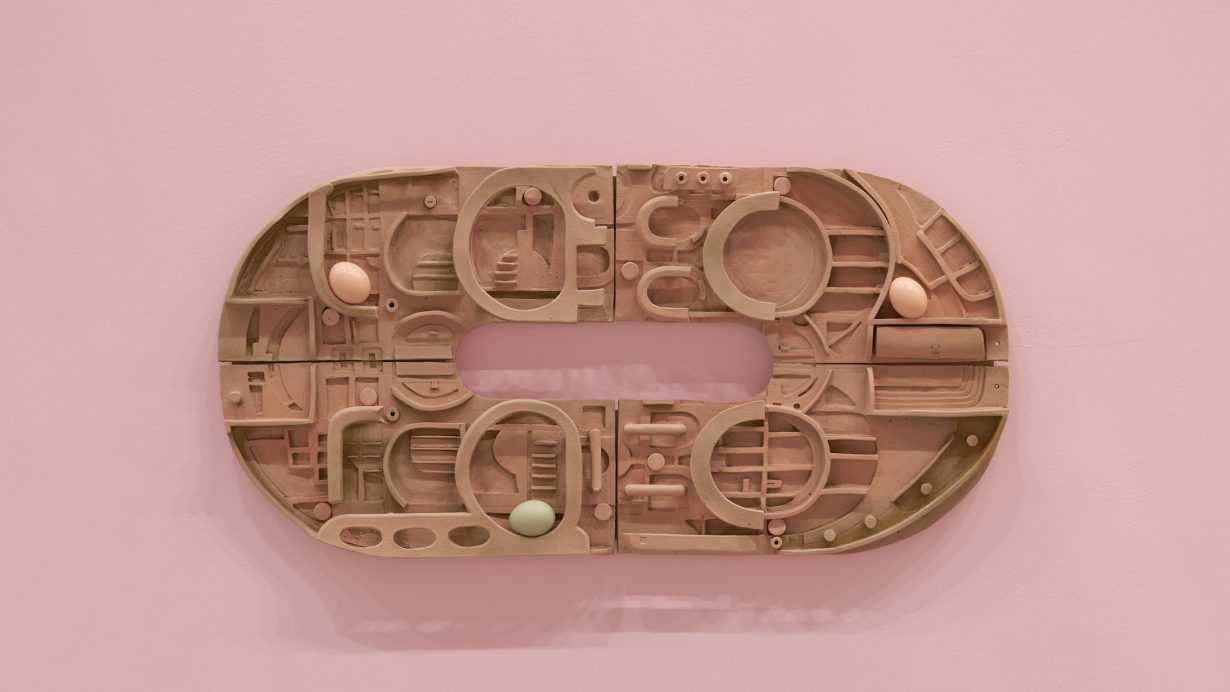
Another capsule, Amber Chamber III Echo (2025), stands upright, resembling a giant, bright orange cello case; its two side panels open onto an interior lined with carvings on handmade terracotta tiles, their biomechanical ornamentation recalling spaceship interiors from the Alien franchise. At the opening, performer Agnieszka Szczotka ‘activated’ the chamber via the deadpan durational performance Song to the Siren (2026), seated within and staring straight through its central transparent viewing dome – embodying, via the dual meaning of ‘siren’, both mythological seductresses and factory alarms structuring the working day. Works like this crystallise Zajko’s staging of tensions between archaism and futurism, the labouring body and the machine, and competing impulses of preservation and innovation. His sculptural bodies, machines and materials appear caught in ambiguous relations of dependency and control.
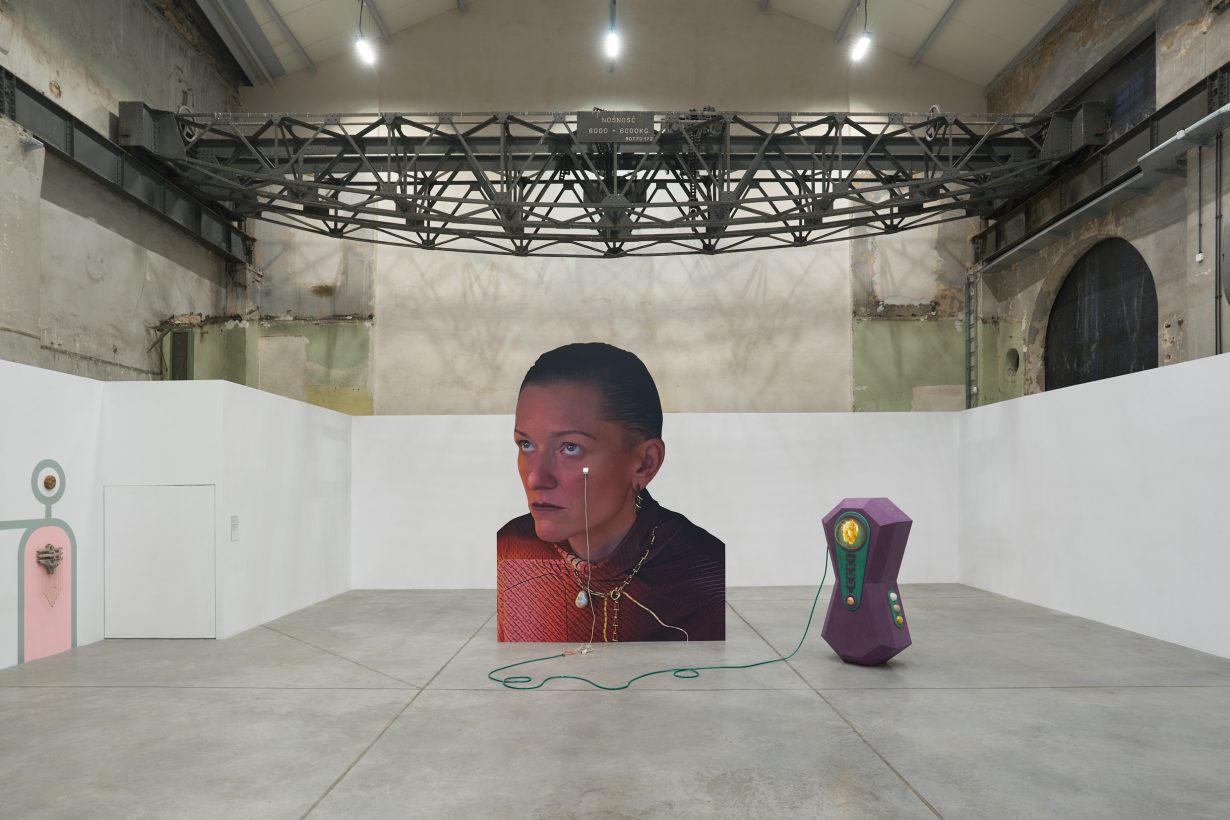
This is additionally illustrated by intricate drawings and etchings of internal machinic mechanisms, inspired by graphics found in an old television repair manual (once owned by the artist’s grandfather, rediscovered years later in a charity shop) that function as storyboards for the larger sculptural systems. The sense of entanglement, tinged with machinic eroticism, is also felt in the tubed wires that penetrate gallery walls and connect objects – messier interruptions keeping the exhibition from being overly pristine. In Matrix (2026), an image of the aforementioned Szczotka’s face midperformance is blown up to monumental scale, a plug protruding from just below her eye connecting it to another large capsule sculpture, Amber Chamber II (Resurgence) (2021). Elsewhere, systemic interdependencies are framed through the motif of wheat, rooted in the regional histories of agrarian industrialisation. His Progress Fatigue I, II and III (all 2023), small totemic sculptures of imagined wheat-deities, are positioned along the colourful wall-mural Bread and Milk (2026), which emplaces them in a broader codependent structure. Grain is positioned as an active participant in systems of cultivation and labour – domesticated and industrialised by humans, but still prescribing the seasonal rhythms organising life.
Among Zajko’s credited references here is tech theorist Grafton Tanner’s notion of ‘foreverism’: a cultural condition in which the past is endlessly recycled, binding past, present and future into a single codependent system. This logic structures the iconography of The Egg Egg, from its incubatory vessels and preservation jars to its modular installations, where new configurations may only result from existing building blocks. A repetitive, purgatorial temporality, from factory rhythms to mythological references, nevertheless governs these forms. To its question of whether foreverism’s loop can be interrupted, the exhibition proposes a curatorial answer, resisting a monographic takeover by including historical works from the venue’s collection, many by Białystok-based artists, marginalised within the institution’s exhibition history. Some dialogues are striking, like Andrzej Dworakowski’s creepy 1980s cocooned mannequin drawings alongside Zajko’s claustrophobic bobbins; others dilute his work’s sleek coherence – a risk willingly taken. This, then, becomes a broader, full-circle intervention into the existing structures of visibility and the cultural ecosystem of Zajko’s hometown.
The Egg Egg is on view at Arsenal Gallery, Białystok through 10 May
From the April & May 2026 issue of ArtReview – get your copy.