0. PROGRESS
Colombo is a city obsessed with the future.
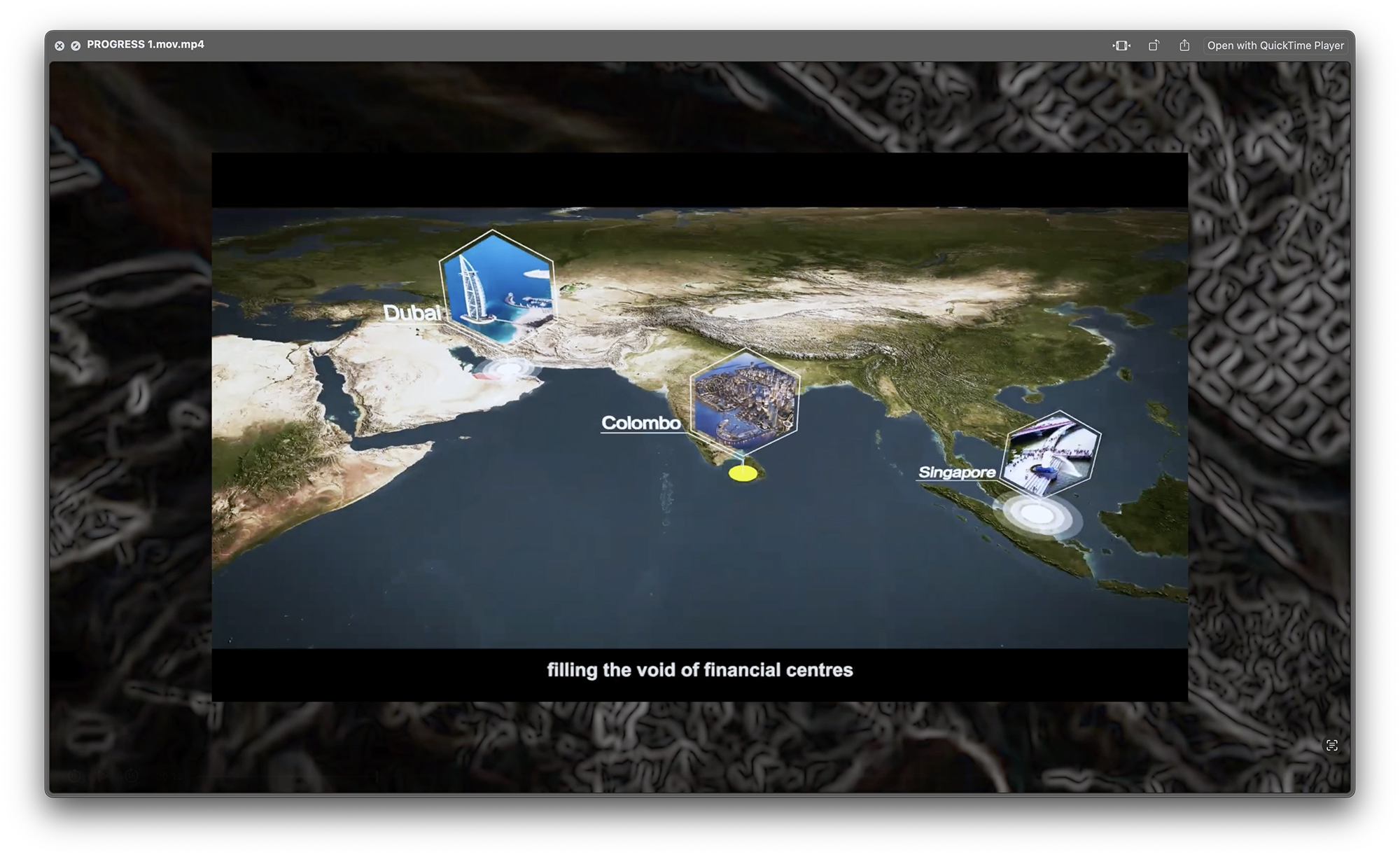
Its skyline rises in glass and steel; its billboards promise luxury, efficiency, progress. Planners speak of ‘world-class living’, as if the city could reinvent itself in the image of Dubai or Singapore, sleek, vertical and aspirational. And finally catch up to the potential it lost due to decades of conflict.
However, every new road, tower and reclamation project is also a monument to forgetting. Each layer of asphalt buries the past a little deeper. And yet, what is buried seeps through, leaving traces on the surface.
1. MELANCHOLONY
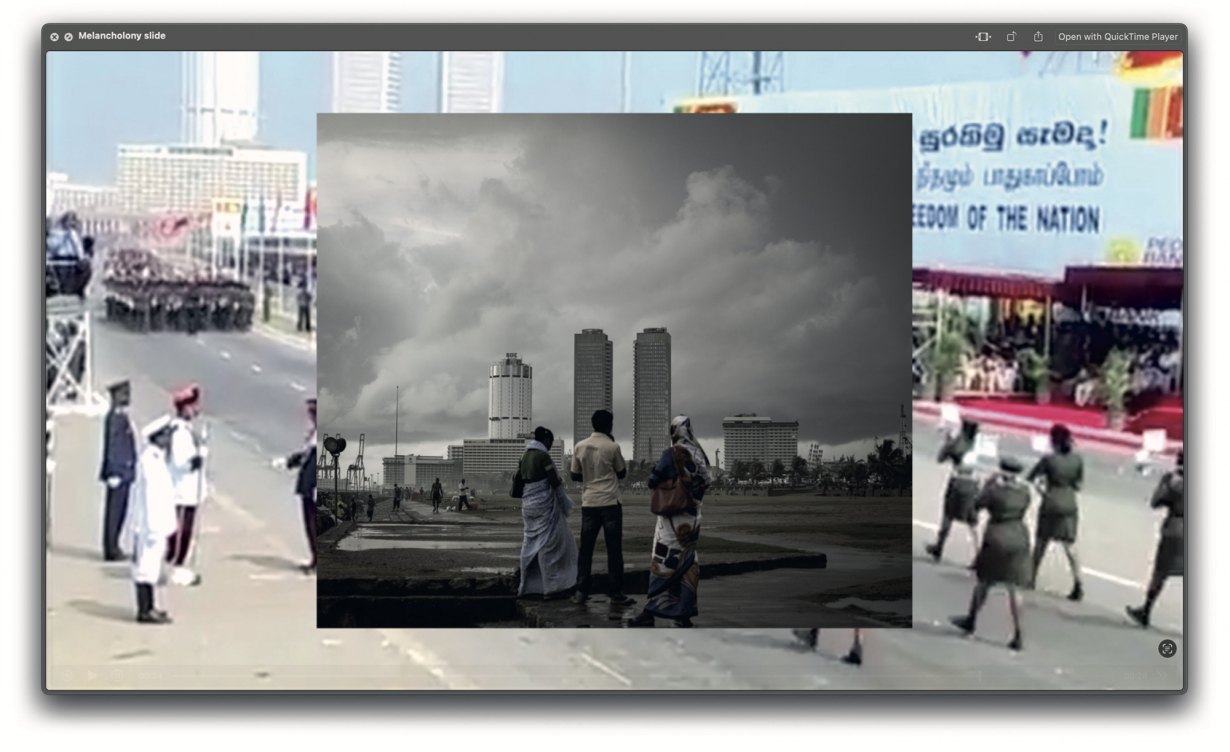
Much of Colombo’s new ‘progress’ is visually manifest in the area around Galle Face. Beginning its life as a colonial promenade, Galle Face is where the imperium, both British and Sinhalese, came to display strength, and survey itself by the sea.
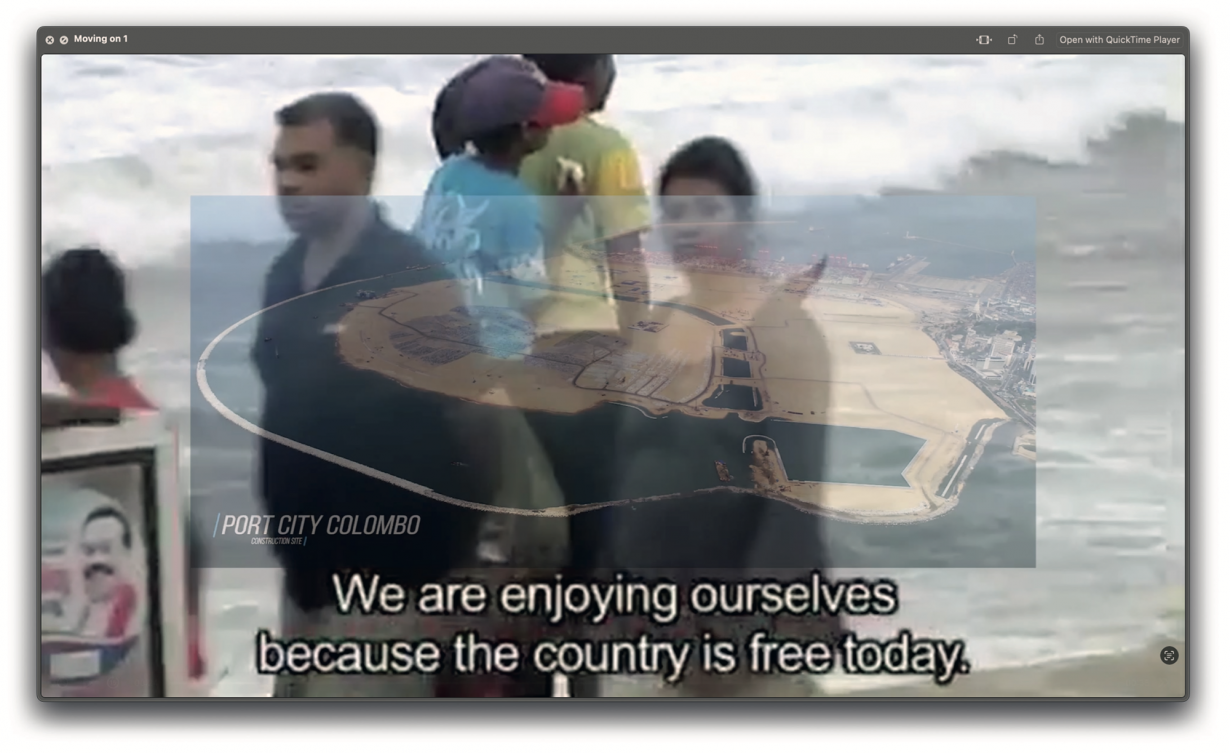
In 2009, after the civil war ended, the state declared a new ambition: Colombo must become a ‘World-Class City’. In the skyline I grew up with during the 1990s, the Bank of Ceylon tower and the World Trade Center were for decades the tallest buildings in Sri Lanka. Now a forest of new towers dwarf them completely. By 2014 the first outlines of Port City were already visible, 2.7 sq km of ocean filled in to host a future metropole meant to eclipse the present one.
2. MOVING ON
Several neighbourhoods in central Colombo had already been evicted by a militarised Urban Development Authority. Former residential areas became foundations for vast new structures of glass and steel. The new skyline became concretely manifest in its new symbol, the Lotus Tower, and other highrise developments such as the Shangri-La, One Galle Face, ITC Ratnadipa and Altair.
But even as they were displaced, their protests futile, people stood by and waited. From their own balcony-less highrises, elevators broken, garbage piling, they watched and perhaps they imagined that their lives, too, might shine soon.
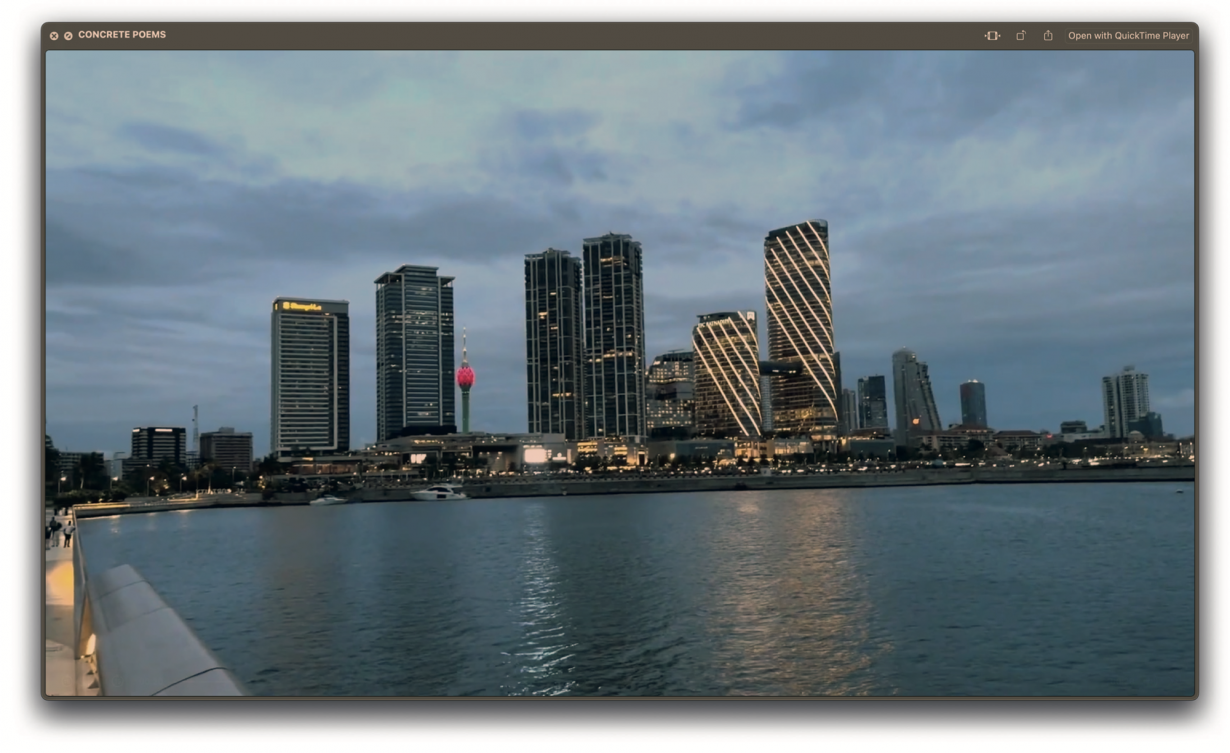
3. CONCRETE POEMS
Anthropologist Brian Larkin reminds us that infrastructures move more than goods; they move ideology and feeling too.
Big, beautiful buildings are aesthetic mediations of power.
The skyline demands faith in a future that refuses to come.
The city, sedated by the promise of progress, learns to live inside that contradiction.
4. THE QUASI-EVENT
This sedation segues into an ongoing endurance.
The new skyline is a monumental Event, a radical rupture from the landscape. It exists within the time of the future.
While another temporality persists beneath the spectacle:
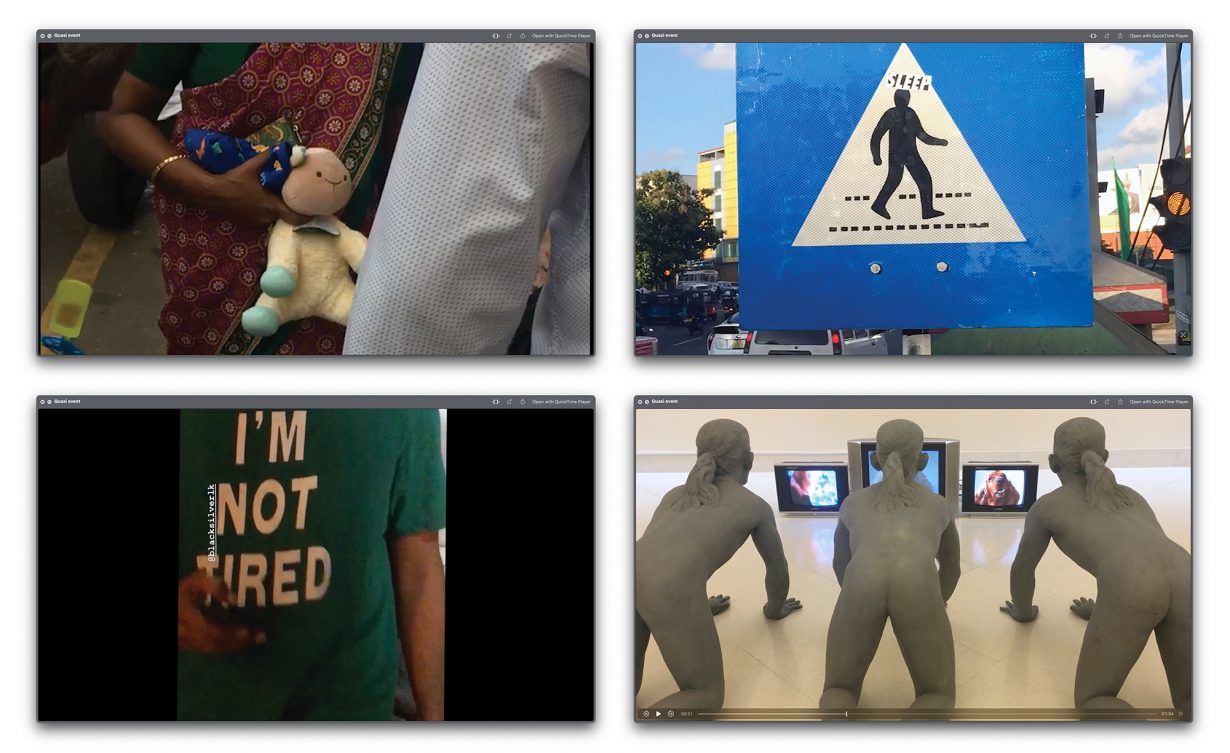
the slow time of exhaustion, the deferred dream, the grind of survival.
As another anthropologist, Elizabeth Povinelli, writes, the quasi-event is ordinary and ongoing, a form of pressure that rarely produces rupture. Late-liberal societies normalise these microscopic sufferings until they begin to feel natural. To literary and cultural critic Lauren Berlant, this is the cruel optimism of capitalism, its empty yet compelling promise fulfilled.
And yet, in Colombo, endurance finally reached its breaking point.
The rupture came in 2022.
5. THE PROTEST
As the economy collapsed, thousands gathered at Galle Face. They built a village, a library, cooked and sang together, and faced teargas and siege. And finally, they stormed and toppled the government itself. Images of protesters swimming in the former president’s pool, sleeping in his bed, handling his objets d’art flooded the internet.
But even as the uprising overthrew a government, it did not reconstitute a new political form. While highly romanticised, the Aragalaya (as the mass protests became known) was also a movement driven by the majority, and glossed over long-term issues of minority Tamils and Muslims.
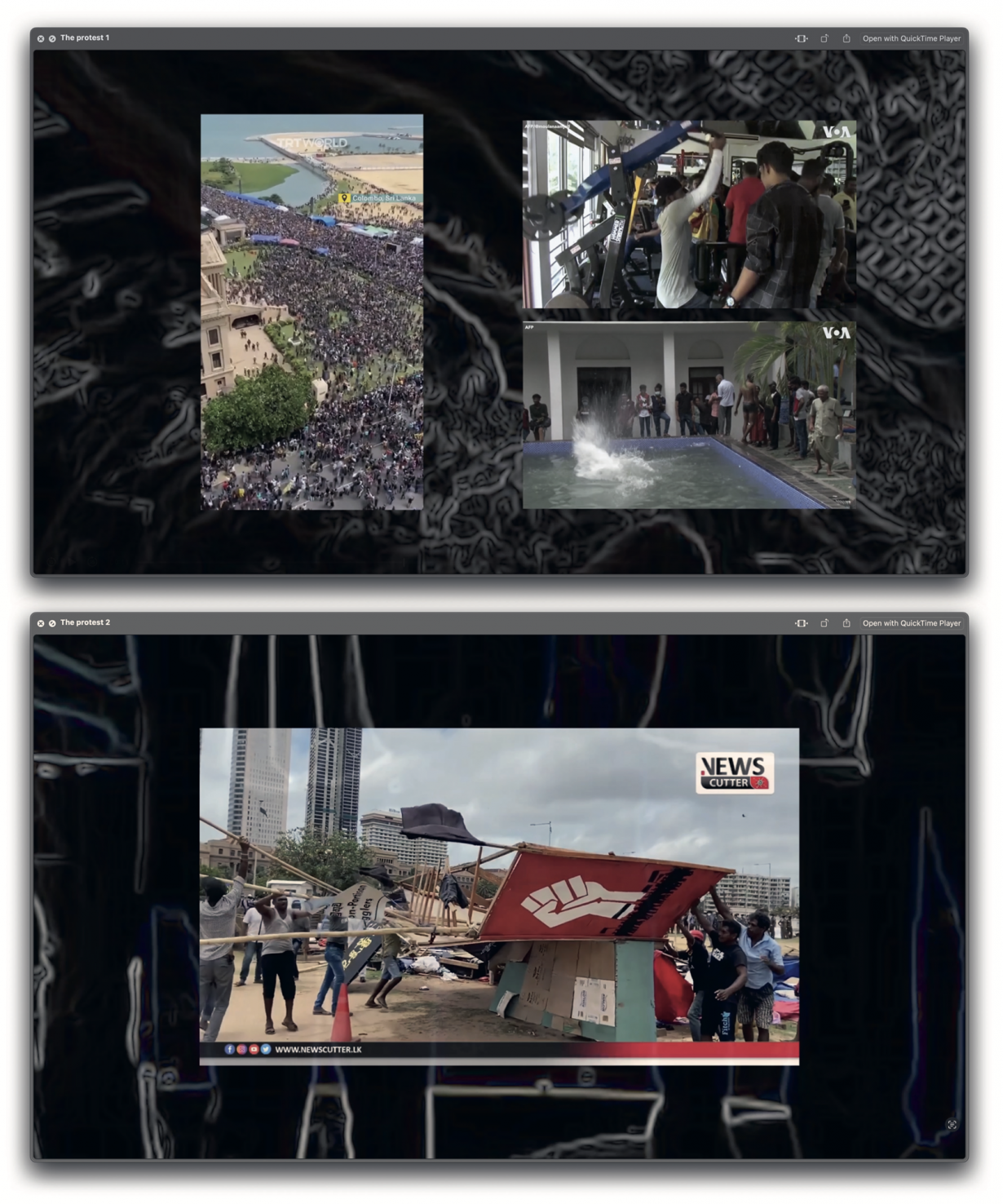
Just one day after the interim president took power, the protest village was destroyed. In the aftermath, hundreds of protesters were arrested under the Prevention of Terrorism Act.
Perhaps the Aragalaya was not an event at all, but the moment when the quasi-event became visible: the waiting in fuel lines, the tending of a tent village, all the labours of hope – gestures that briefly unsettled the establishment.
A new president, with roots in Marxist revolution, swept into power in September 2024, promising to eradicate corruption, recover stolen assets and institute a people-centred government. But arrests of minorities continue under the guise of counterterrorism, with complete impunity. And an IMF-brokered austerity has deepened the cost-of-living crisis.
6. THE INTERIM
Still, we continue to continue.
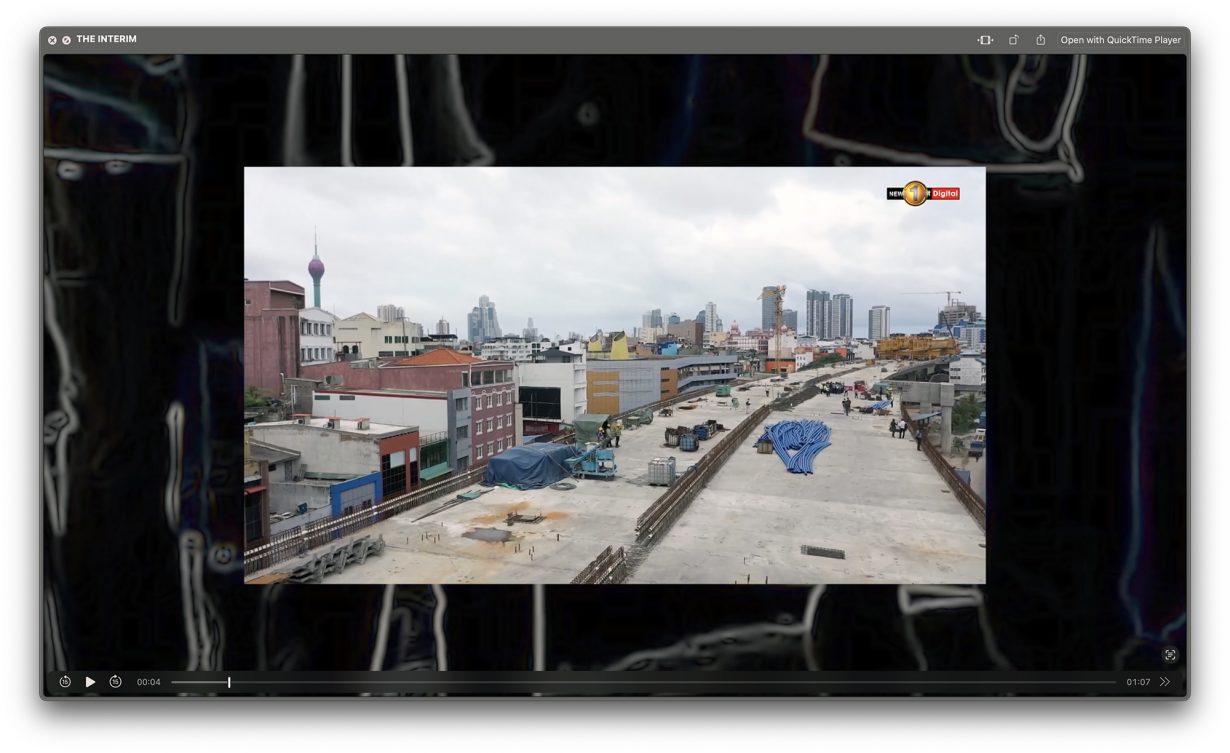
Even as the city resumes the hidden temporality of the quasi-event, hope hovers, uneasy in the air. And as ever, infrastructure is ready and willing to bolster it.
One such project is the Port Access Elevated Highway, linking Port City to the expressway and airport. But when workers broke ground in July 2024, they discovered skeletal remains later confirmed to be human. Nearly 100 skeletons have since been uncovered in what is now considered to be a mass grave.
The site points to atrocities from the war and its aftermath, their victims ranging from Tamil civilians to partisans of the same former rebel leader who is now the president.
Still, work on the highway continues, halted only briefly by the discovery. Despite the vast resources poured into infrastructure, little has been made available to investigate this mass grave or the many others across the island.
7. RUINS TO COME
If the stretch of coast at Galle Face Green is the city’s promenade of power, then Mount Lavinia Beach is its promenade of pleasure.
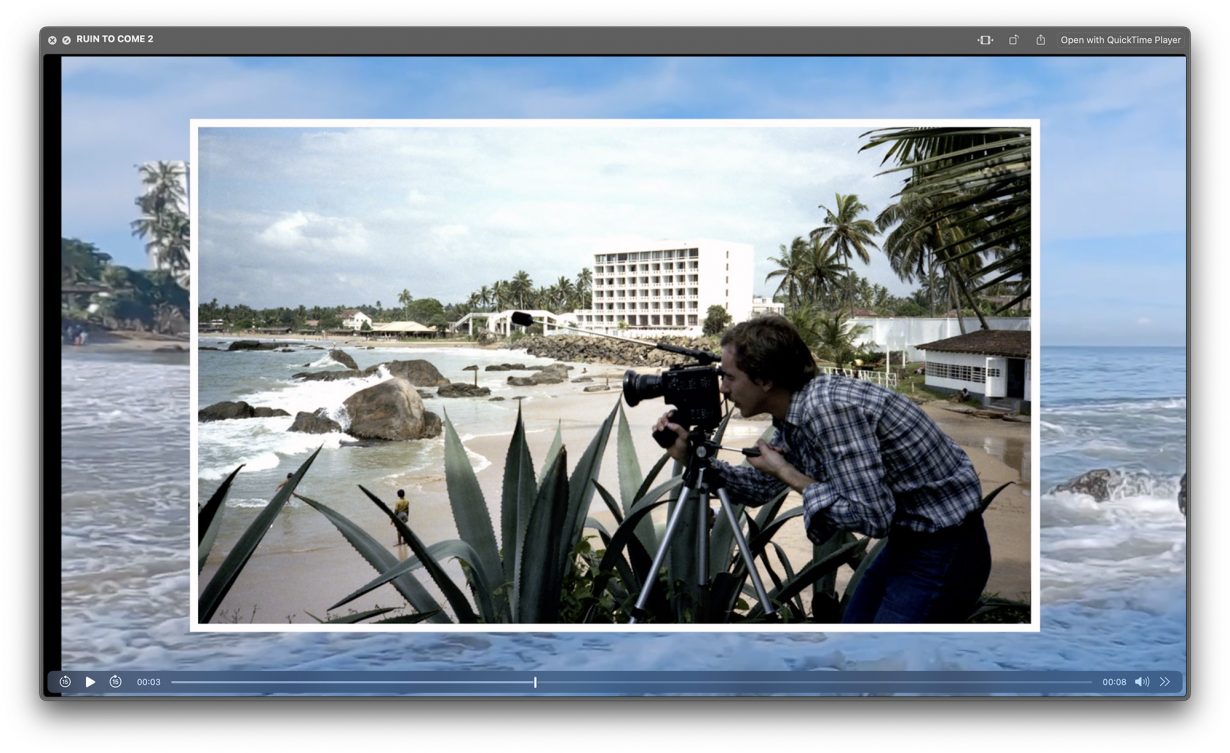
Beside the storied Mount Lavinia Hotel, once the colonial governor’s seaside mansion, stood Tilly’s Hotel, a modernist resort with a popular brunch buffet. During the anti-Tamil pogroms of 1983, which ignited the country’s near-30-year civil war, Tilly’s Hotel was looted and burned. Today its husk remains an unintended monument to the Eelam War.
From its wrecked rooftop ballroom, a spectral caretaker remembers the view.
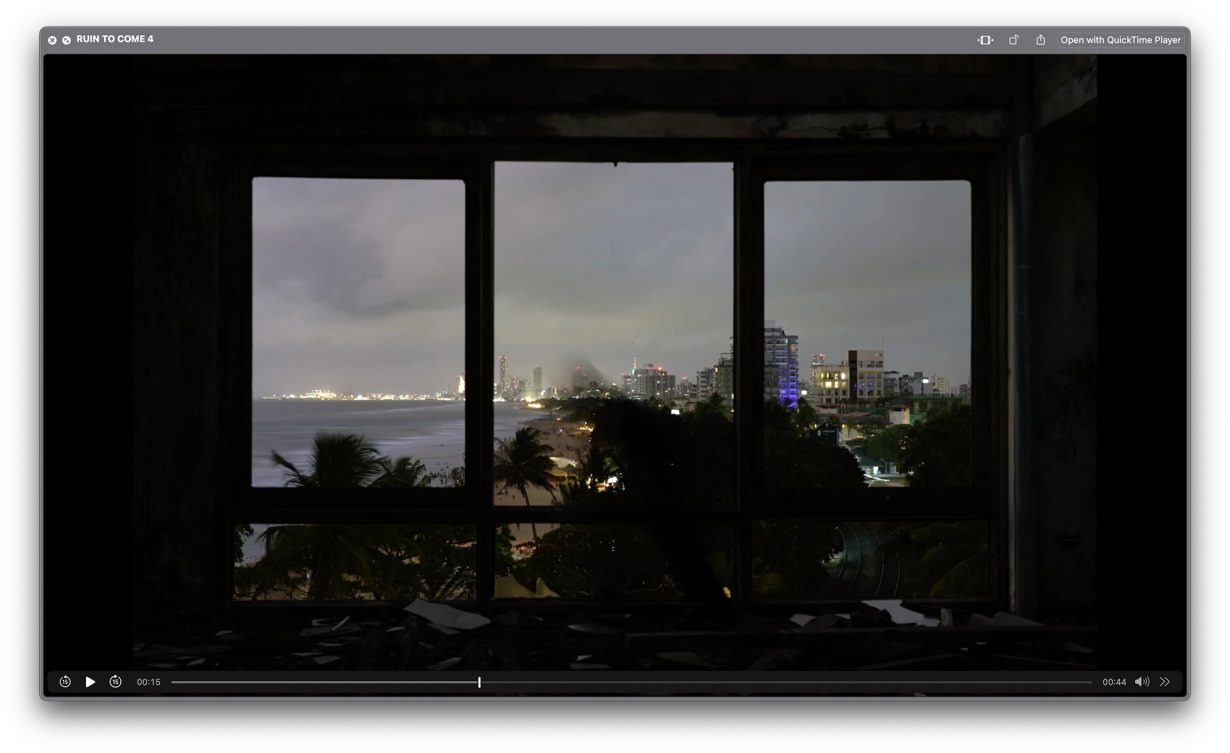
From here he can see the arc of the coastline, with Galle Face in the distance. Framed through the windows of Tilly’s Hotel, the needlepoints of Colombo’s new skyline and the glowing orb at the tip of the Lotus Tower appear, to borrow from artist and writer Walid Sadek, as Ruins to Come.
Future ruins, Overlivers existing in a time out of joint, continuing beyond catastrophe yet denied the possibility to fully process or justify that life.
8. MAY DAY
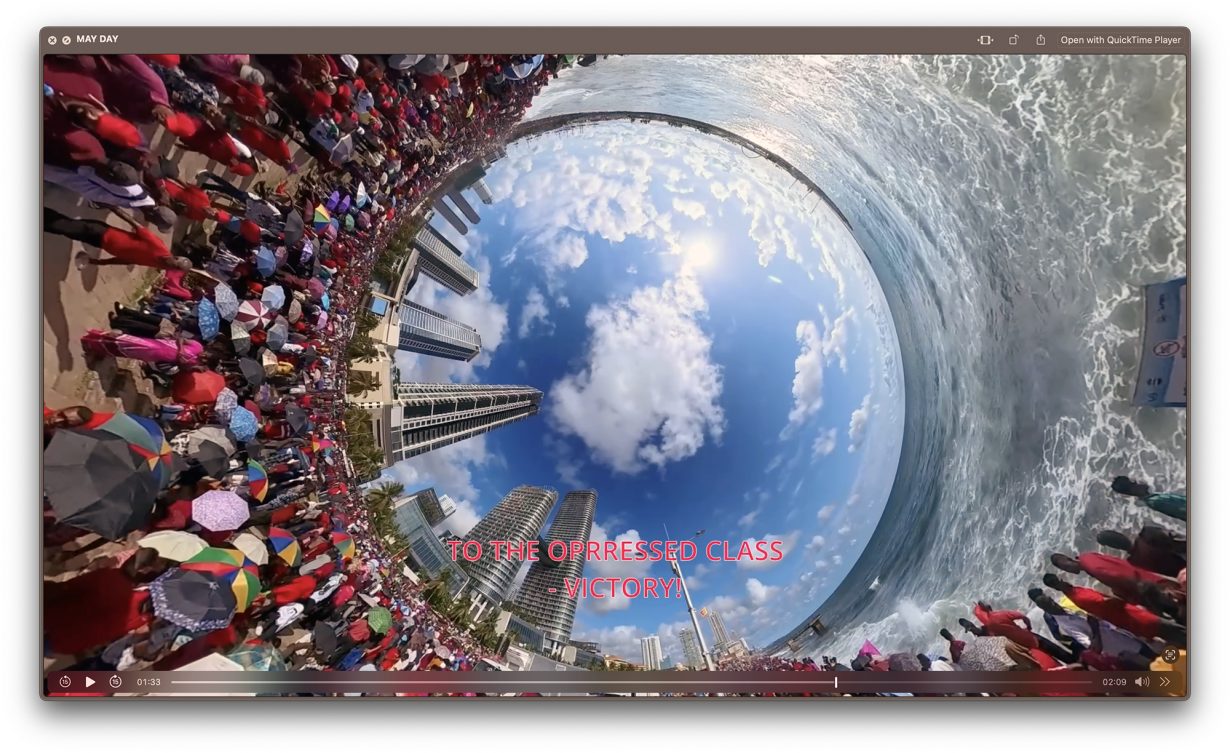
This is Galle Face in 2025.
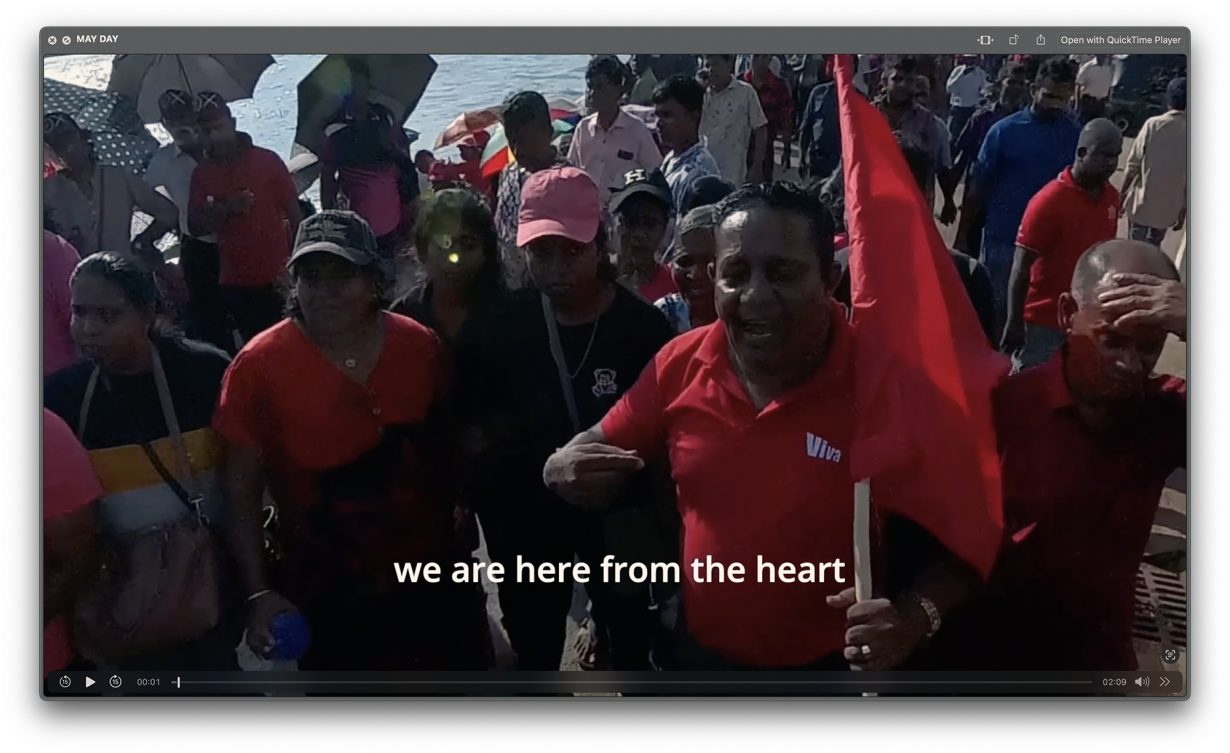
It is the first International Labour Day of the new era.
Ex-Marxist fighters, plantation workers, middle-class Colomboites, families with children in tow gather in solidarity.
They continue the labour of sustaining hope.
REFERENCES
Brian Larkin, ‘The Politics and Poetics of Infrastructure’, Annual Review of Anthropology, 42 (2013), 327–43.
Povinelli, Elizabeth A., Economies of Abandonment: Social Belonging and Endurance in Late Liberalism, Durham & London: Duke University Press, 2011.
Berlant, Lauren, Cruel Optimism, Durham, NC: Duke University Press, 2011.
Sadek, Walid, The Ruin to Come: Essays from a Protracted War (Motto Books & Taipei Biennial, 2016).
From the Spring 2026 issue of ArtReview Asia – get your copy.