The artist talks to Stephanie Bailey about her mission to find a way, beyond politics, to talk about Palestinian history
“There’s something beautiful about trying to communicate, and I say ‘trying’ because communication is a process in itself,” says Palestinian artist Shuruq Harb. To pursue that communicative impulse, Harb harnesses film, sculpture, installation and text to express an ever-shifting field of subjective and collective experiences that percolate in Palestine as both a lived reality and geopolitical condition. Navigating that spectrum, from everyday microcosm to macrocosmic global scale, has become an ongoing project for the artist, for whom compositions track like open roads. “That’s why I never see a work as finished,” Harb continues. “It feels more like I’ve come close to what I want to say, which makes me think: ‘let’s try again’. So I end up following these trails.”
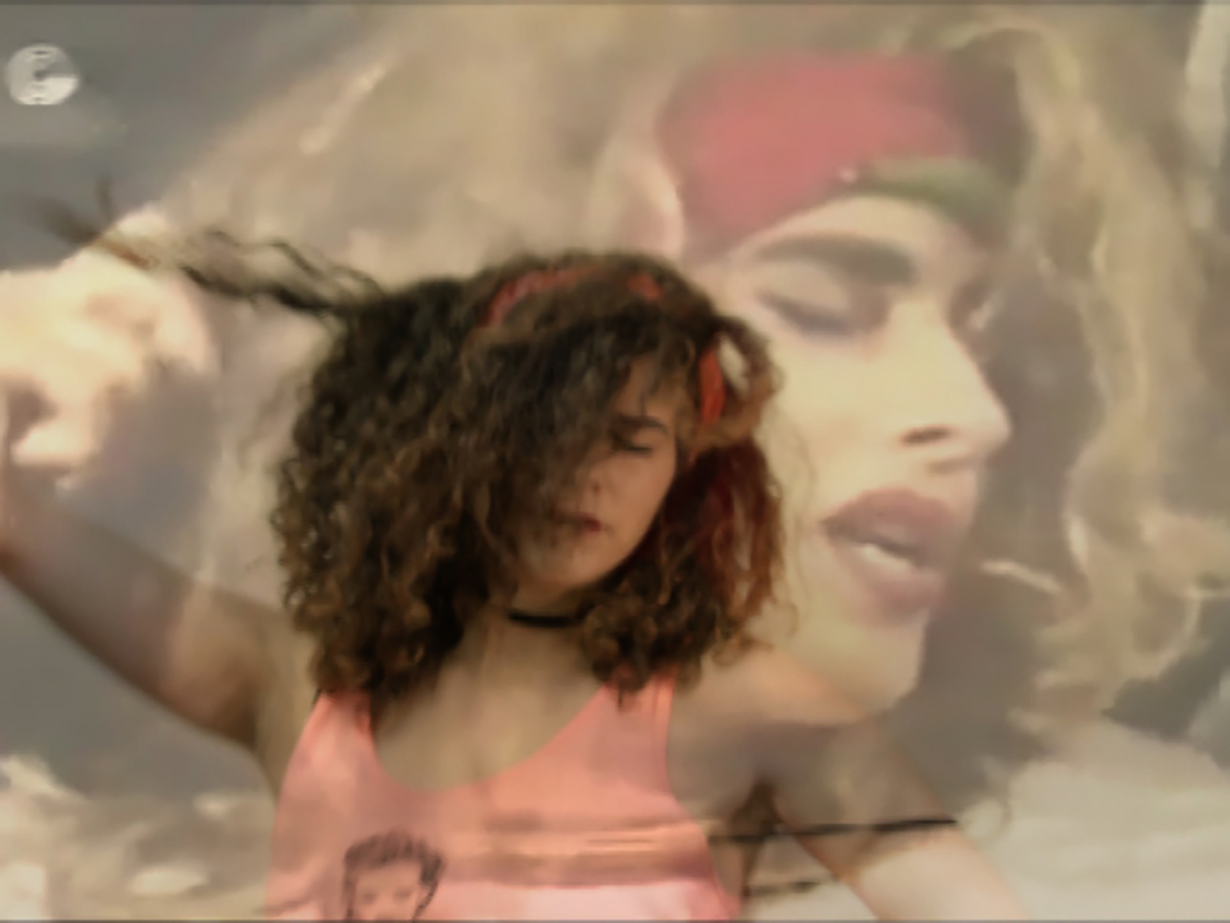
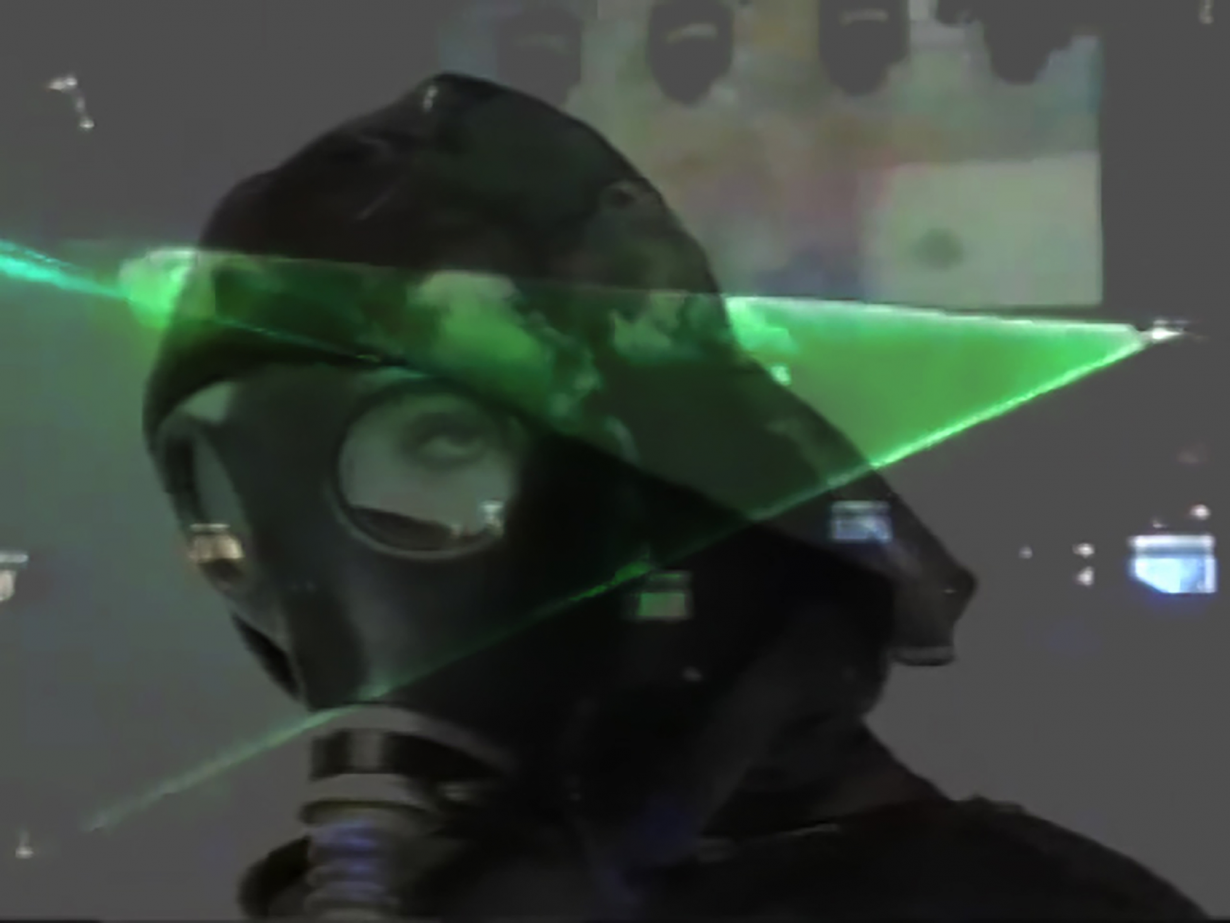
An instinct to navigate defines The White Elephant (2018). The film stitches together found footage taken by Israelis in the 1990s during the Gulf War, at rave parties and in the wake of the First Intifada, to illustrate the story of a Palestinian teenager, narrated by Harb, grappling with the cognitive dissonance of growing up under a colonial occupation structurally maintained by a so-called liberal world-order. Amplifying this psychic discord is video of an interview aired on Irish television with Israeli singer Dana International, the first openly transgender competitor to win Eurovision, in 1998, during which International congratulates Ireland on its recent Peace Agreement, expresses hopes for Israel to achieve something similar, criticises Benjamin Netanyahu and states her opposition to a powerful Orthodox minority influencing Israeli politics. Moments like this highlight the dissociative tenor Harb performs in the role of a rebellious teen coming of age between liberalism and apartheid. Like when she recalls sneaking into a rave by passing as an Israeli girl over clips of one such party, before cutting to shots of IDF soldiers expressing their love of trance. “I guess on the surface, we were all escaping something,” Harb muses. “He wanted to forget that he was a soldier, and we simply wanted to disappear.”
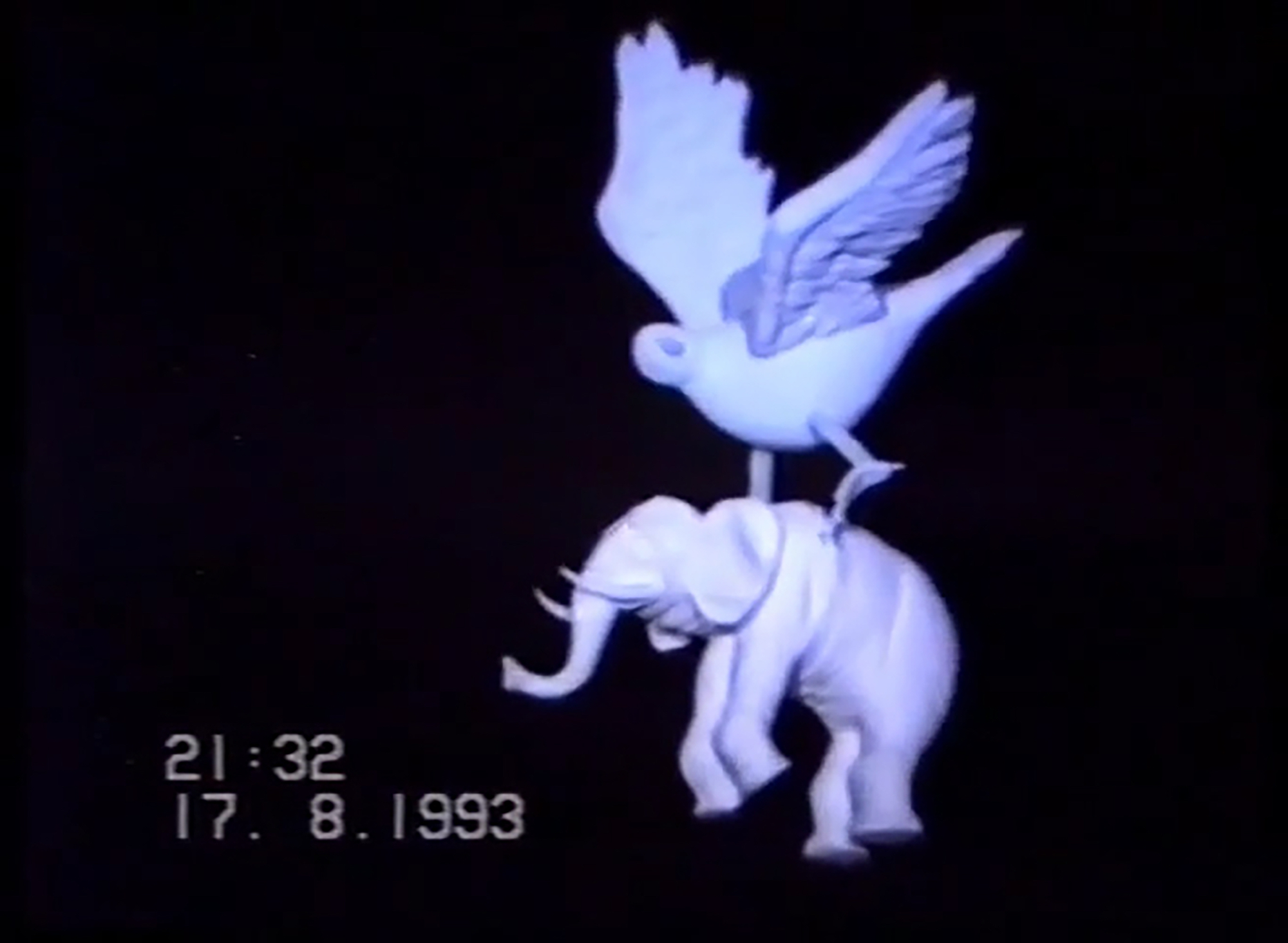
In The White Elephant, ‘fractures are visceral, and the political situation is not described but lived’, writes artist Noor Abed. Threading that fragmentation is the CGI-animated image of a white dove carrying a white elephant – which Harb turned into an inflatable sculpture in 2021 – that hovers onscreen when Harb describes “the stupid Oslo Agreement” as an excuse for Yasser Arafat to fly his helicopter from Gaza to Ramallah. (Maintained at great cost, the PLO leader’s helicopters were destroyed after the outbreak of the Second Intifada, during which time Israeli forces destroyed Gaza’s airport.) But the film’s title, a phrase describing something more burdensome than it’s worth, doesn’t just refer to Arafat’s fleet. “The white elephant for me also became about the peace process,” says Harb, referring to the 1993–95 Oslo Accords: “But I was trying to abstract that idea further by asking: is the elephant the state and the dove the peace, which the state will never be able to provide?” In the film, Harb seems to answer that question when the narration describes being stuck between both before concluding with a full-bodied rejection of existing terms: “I can also become someone else”.
The desire to transcend the confines of a present containment taps into the condition that the Palestinian struggle encapsulates – of alienation from an international system shaped by colonialism, which continues to fracture space and self alike, and the all-too-human impulse to overcome it. But even that generation-spanning desire for liberation becomes fractured when it enters the realm of practice, given the material conditions from which freedom – let alone justice, reparations, and recuperation – must be sought. As Harb asks in The White Elephant: “When you take something apart, how in the world do you remember how it’s supposed to go back together?”
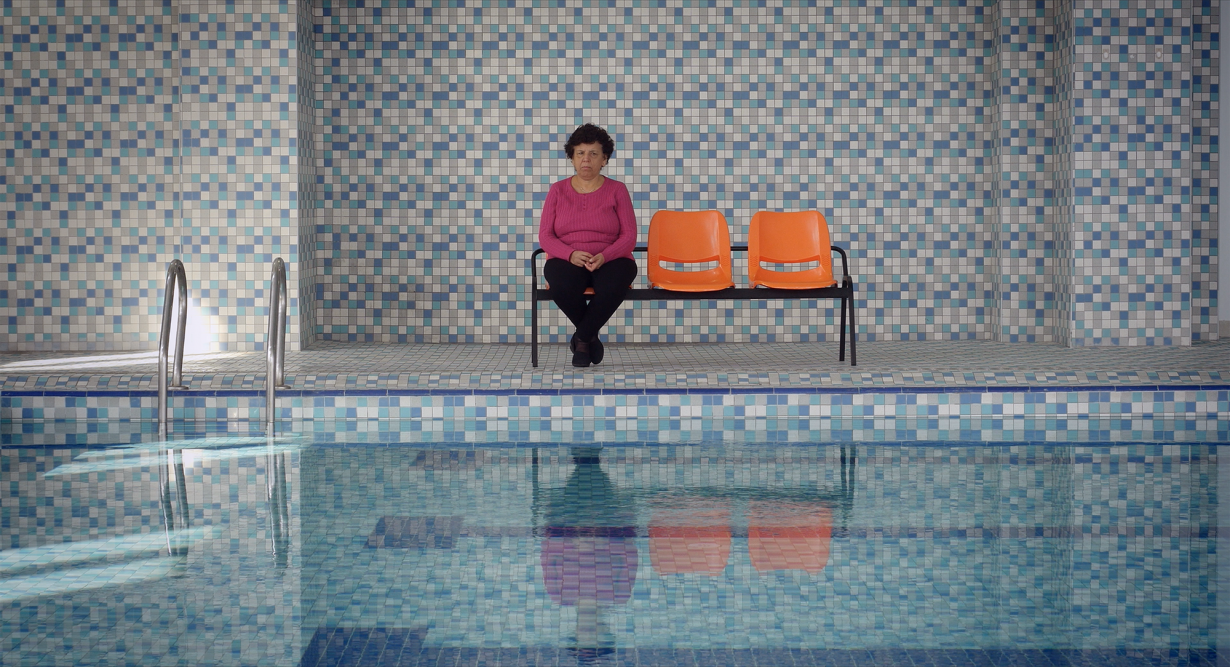
Harb’s query sets up The Jump (2021), a film about the leap into the void as both a viscerally embodied real-world experience and a psychological untethering of the body from that world. Anchored to the story of a Palestinian man who jumped into the Mediterranean, to his death, the artist invites literary professor Wafa Darwish and psychologist Laila Atshan to make sense of this apparent suicide. Each is filmed sitting by a swimming pool as they reflect on the act of jumping as a means to overcome the psychological experience that Palestinians constantly navigate as an occupied community. Atshan anchors that experience to senses of belonging, which she describes as not about being surrounded by people as much as it is about how you feel around them. “We exist in different temporalities,” states a robotic narrator, fleshing out scales of possible connection and alienation: “I don’t know at what point and at what speed I will meet you.” Harb taps into that uncertainty by interrogating the psychological space of a local isolation with an undeniably global resonance: where the urge to escape – to leap over a boundary – feels viscerally common.
“What you think is just a small incident in the beginning is actually something much bigger, and my work is a way of coming to terms with that,” Harb explains. “It’s about being able to see how your life fits into a bigger picture and why, and then thinking about how to have agency within that.” The artist finds that agency by navigating the world as a complex, temporal accumulation of narrative fragments rather than an impenetrable totality: where gaps define a porous field.
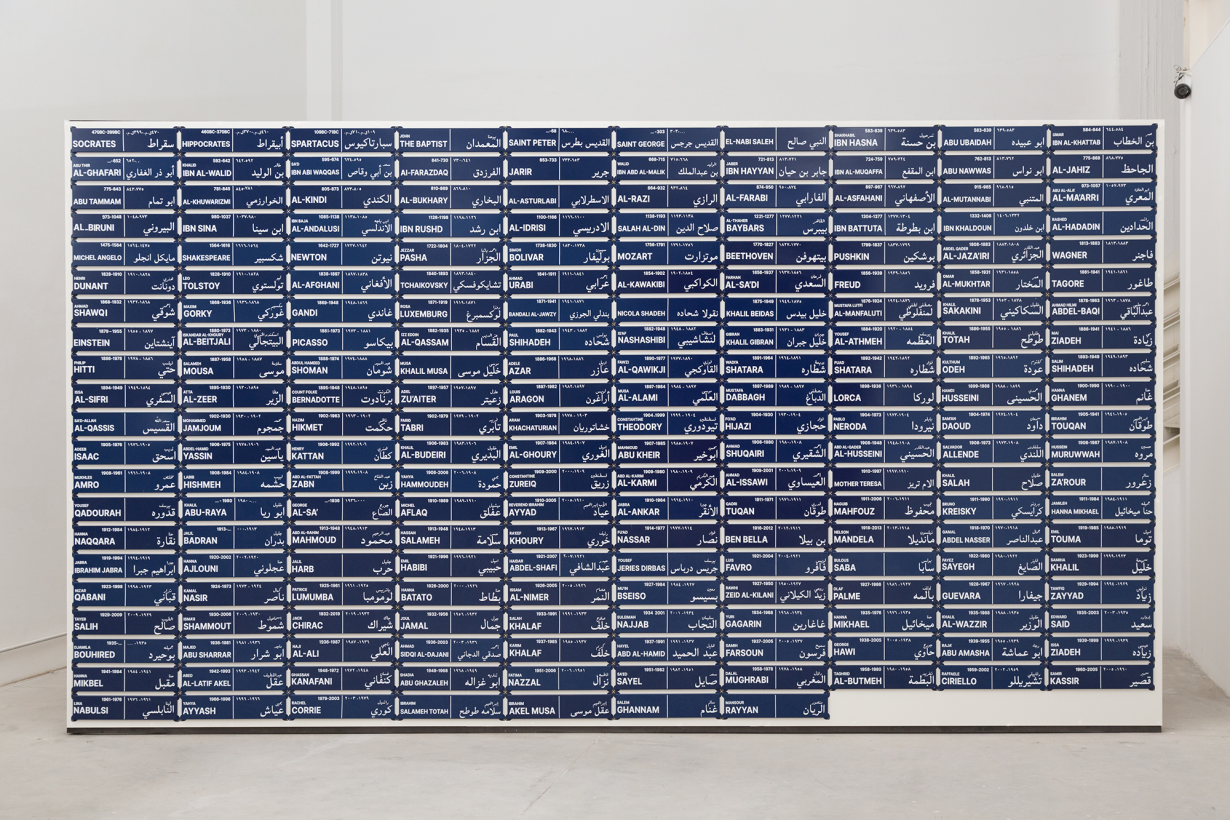
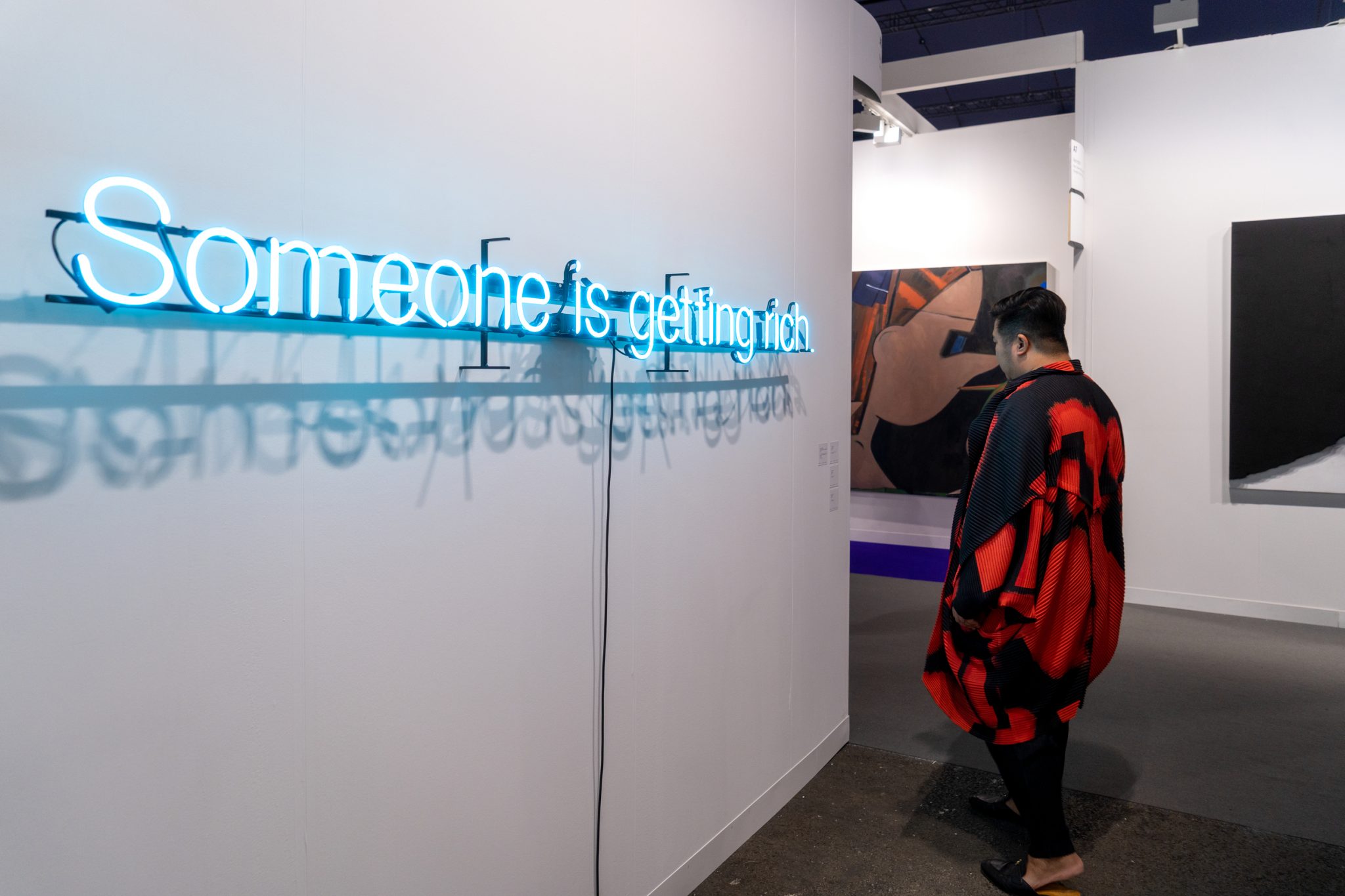
Take All the Names (2011/2021), originally produced as a billboard listing the 207 street names introduced to Ramallah in 2010, and installed in front of the city’s Municipality building near the Tourist Information Center. As Harb notes, the collection is eclectic. There are names from Palestinian history, like Izzeddin Al-Qassam, imam of Haifa’s Istiqlal Mosque and a militant opponent of British colonialism and Zionism; Adele Shamat Azar, a Ja«a-born advocate for the education of women and the impoverished; and revolutionary writer Ghassan Kanafani. There are others linked to the Palestinian cause: from French president Jacques Chirac, who clashed with Israeli police in Jerusalem in 1996, to American activist Rachel Corrie, who was killed by the IDF in 2003 while blocking a military bulldozer demolishing Palestinian homes in Gaza. Others trace a more expansive temporal and ideological terrain, from ancient philosophers Ibn Sina and Socrates, classical composer Wolfgang Amadeus Mozart, to twentieth-century Algerian freedom-fighter Djamila Bouhired and Patrice Lumumba, the First Congolese Republic’s first prime minister, whom Belgium- and US-backed conspirators murdered in 1961.
Organised by birth year, All the Names visualises what Harb describes as “an index and a portrait of Ramallah that highlights the city’s official narrative of its own history, as well as its cultural and political aspirations for the present and future”. A video of the same name, which the artist filmed in 2011, complicates the narrative further, with locals not knowing Ramallah by its official street names. One man, who claims no knowledge of who the person named on a new nearby street sign is, says to look for Abu Sufyan’s house when Harb asks how he instructs people to find him.
Harb has a tendency to trace histories through people rather than politics: as demonstrated in A Book of Signatures (2009), a handmade leather-bound book containing signatures of 250 individuals in Palestine named Mohammed, accompanied by a 20-minute video projection presenting these signatures as a slideshow. When the work was made, around 250,000 Mohammeds were counted in the West Bank and Gaza Strip by the Palestinian Central Bureau of Statistics, making it the population’s most common moniker. “The process of signature collection was indicative of an already existent social network, as each Mohammed introduced other Mohammeds,” Harb writes of the work. The result is an alternative map of Palestine that Harb created by following the trail of those living on its land: a cartography entropically defined by a natural horizon shaped by intimate cycles of life and death, which naturally pulls on the seams of any dominant geopolitical narrative.
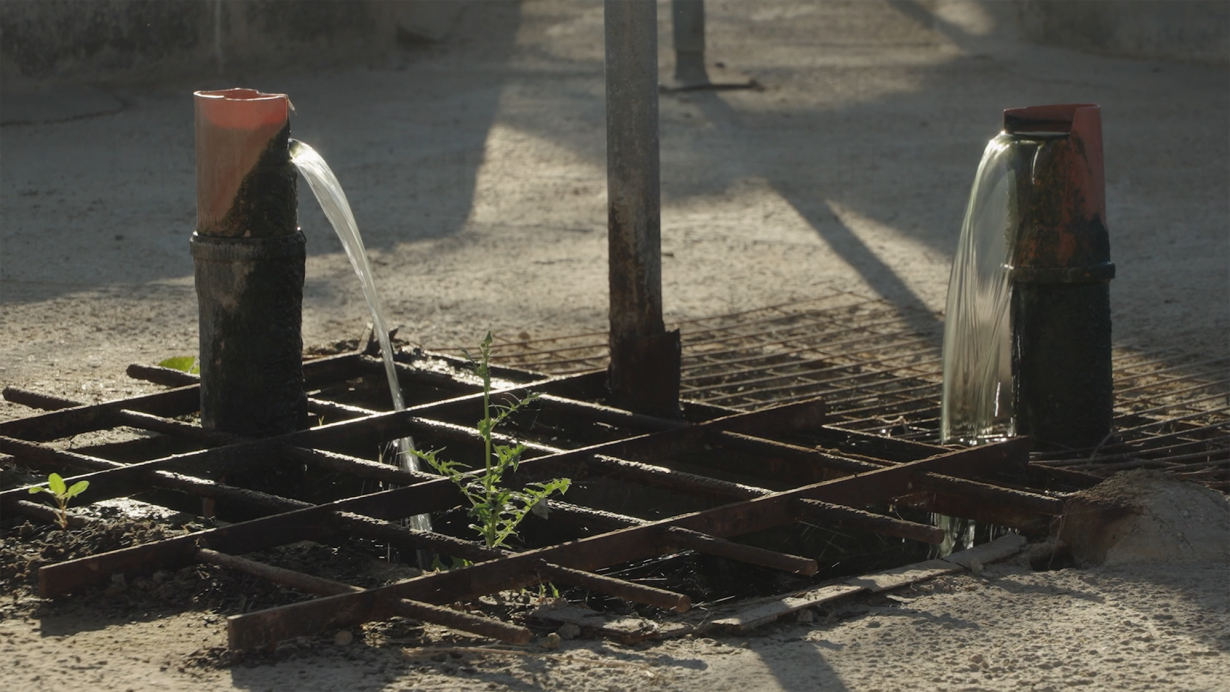
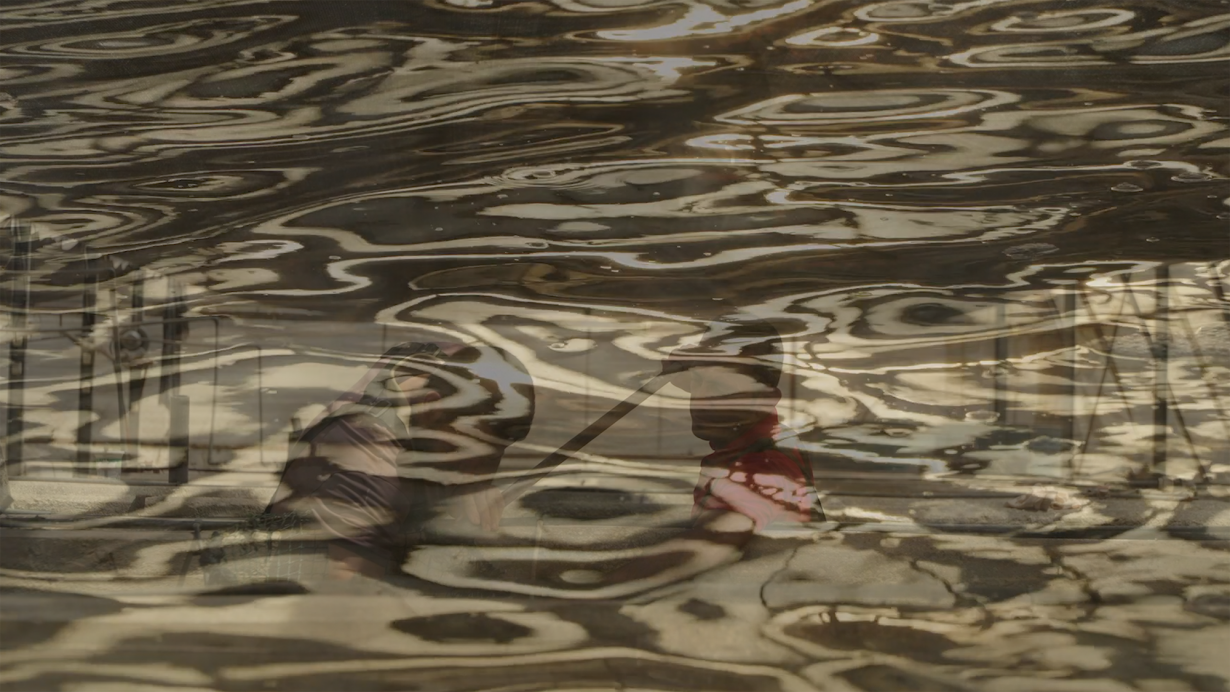
Al-Mashrou’ (2026), meaning ‘the project’, performs a similar movement. Developed with architectural historian Nadi Abusaada and commissioned for Interrupted Futures, her 2026 exhibition at Kunstnernes Hus in Oslo, the film revolves around the Arab Development Society (ADS). Dedicated to sustainability and established during the 1940s (with roots in the 1930s), this agricultural initiative has survived suffocating odds. After the 1948 Nakba, it pivoted to support orphaned Palestinian refugees, later suffering from the 1967 Arab–Israeli War and Israel’s subsequent West Bank occupation. The Oslo Accords was another blow, says ADS director Omar Bisharat in the film, with the resulting designation of Area C bringing some 61 percent of West Bank territory under Israeli control and cutting the organisation off from parts of its property. “The ADS has undergone multiple transformations over the decades,” Harb notes, “mirroring the region’s defining conflicts and the successive erosion of Palestinian autonomy.” An audiovisual tapestry of contemporary video and drone footage of the ADS grounds, overlapping with film from the 1960s used to promote the project and newscasts from the 1967 war, create that reflection. A restored fish farm, whose worth literally lies in the smiles of Palestinian children, cut off from the Mediterranean Sea, since their picture may well have convinced the World Bank to fund the project’s rehabilitation. A circular swimming pool that now stands empty fades into 1960s footage of children exercising on ADS grounds used to promote the project: a juxtaposition of past and present appeals for a future that never seems to land.
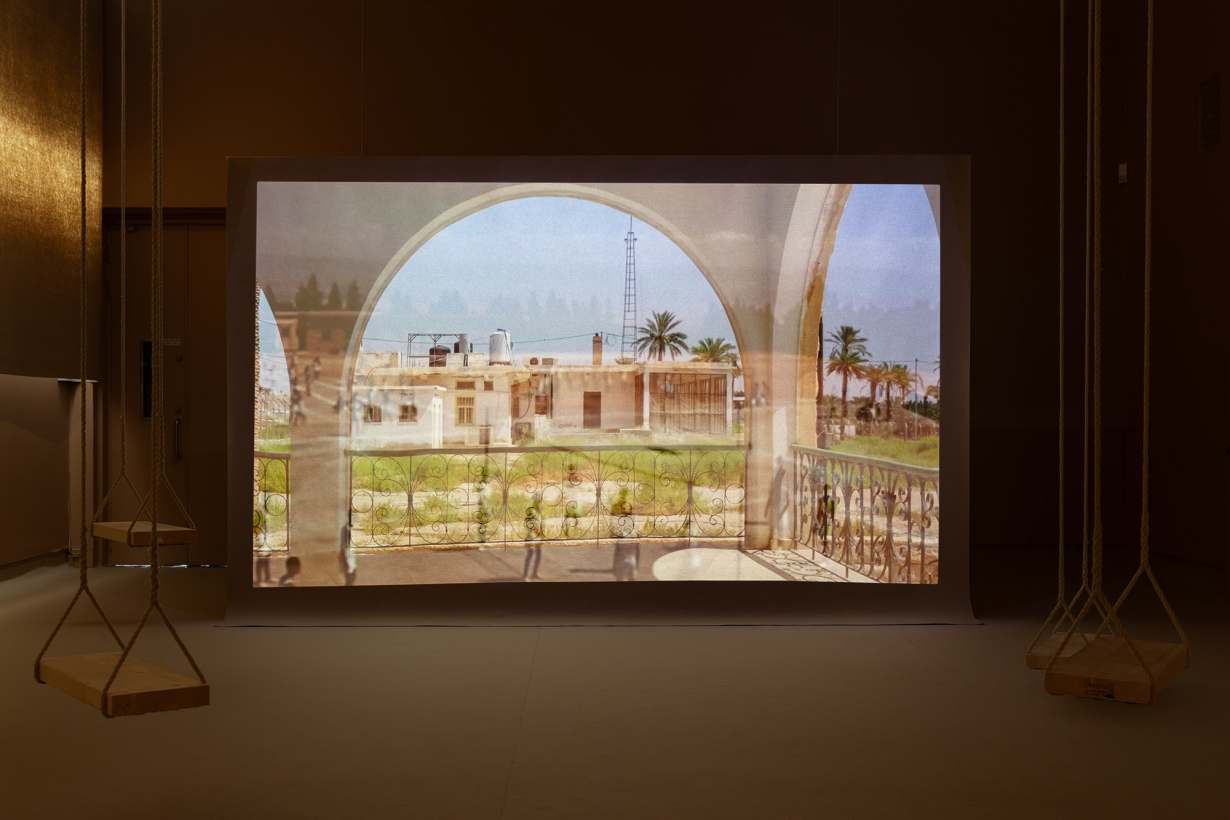
At one point, Harb, in her role as narrator, admits to struggling to find where the story starts: a cognitive whiplash of “parallel, conflicting and competing narratives”, which Interrupted Futures amplifies by installing swings as seats in front of the film. Does the plot begin when the ADS founder, Jerusalemite intellectual Musa Alami, discovered water on the site in 1949, Harb wonders, which made the project’s survival possible? (Interspersed across the film is video of Alami’s home, which Harb’s narration imagines as a future museum, describing text from English-language ADS brochures created in the 1960s appearing on the walls in Arabic, Chinese and Spanish.) Or, as asserted by a VisualPolitik clip stitched into the edit, does the story go back to the 1920s when the British Mandate, for whom Alami once worked, was warned that a lack of water resources made Jewish immigration to Palestine unsustainable?
Al-Mashrou’ offers an answer from the jump, with an opening reference to Zakaria Mohammed’s 2022 book The Serpent Year: The Calendars of the Stone Ages, which explores how Stone Age civilisations measured time by following freshwater underground. “Quickly, one thing became clear,” Harb states: “we had to follow the movement of the water.” Yet even water leads to occupation, as we learn of Israeli-imposed restrictions blocking Palestinians from digging deep enough to reach viable sources: just one example of how states can and do violate basic human rights and contravene international law by instrumentalising natural resources to serve oppressive ends, to the detriment of life itself. Perhaps that’s why Al-Mashrou’ is bookended by shots panning up from sea to sky and drone footage looking down at the ADS site from above, which frames the project in context: as an unfinished mission that is not Palestine’s alone.
From the Summer 2026 issue of ArtReview – get your copy.
Watch now The White Elephant (2018) by Shuruq Harb