Our editors on the exhibitions they’re looking forward to around the world this month – from Bangkok and Berlin to Yogyakarta and Tokyo

London
This September, the British Museum is rolling out the carpet: the Bayeux Tapestry. Seventy metres long (that’s about ten more than Wren’s London Monument is high) and 50 centimetres wide, the work, which despite its name is actually a wool on linen embroidery, tells the story of the events leading up to the Battle of Hastings in 1066: the ‘last time England was successfully invaded’, boasts the British Museum, and ‘the year from which the modern monarchy dates itself’. The work’s ‘return’ to England (it was most likely made in or around Canterbury) for the first time in around a thousand years is a great diplomatic success for the Frogs and Rosbifs. The Bayeux Tapestry Museum in Normandy gets storage space for its treasure while the building undergoes renovation, all transportation costs covered, and the British get to indulge in their famed humility by hosting the main visual source for one of their most significant military defeats. Jokes aside, the work is a historical and artistic delight, complete with all the makings of a great story: gore, a sex scandal and medieval fashion. That’s probably why tickets are sold out for now. But worry not, visitors have until July 2027 to catch this one. Mia Stern
British Museum, 10 September 2026 – 11 July 2027
Yogyakarta
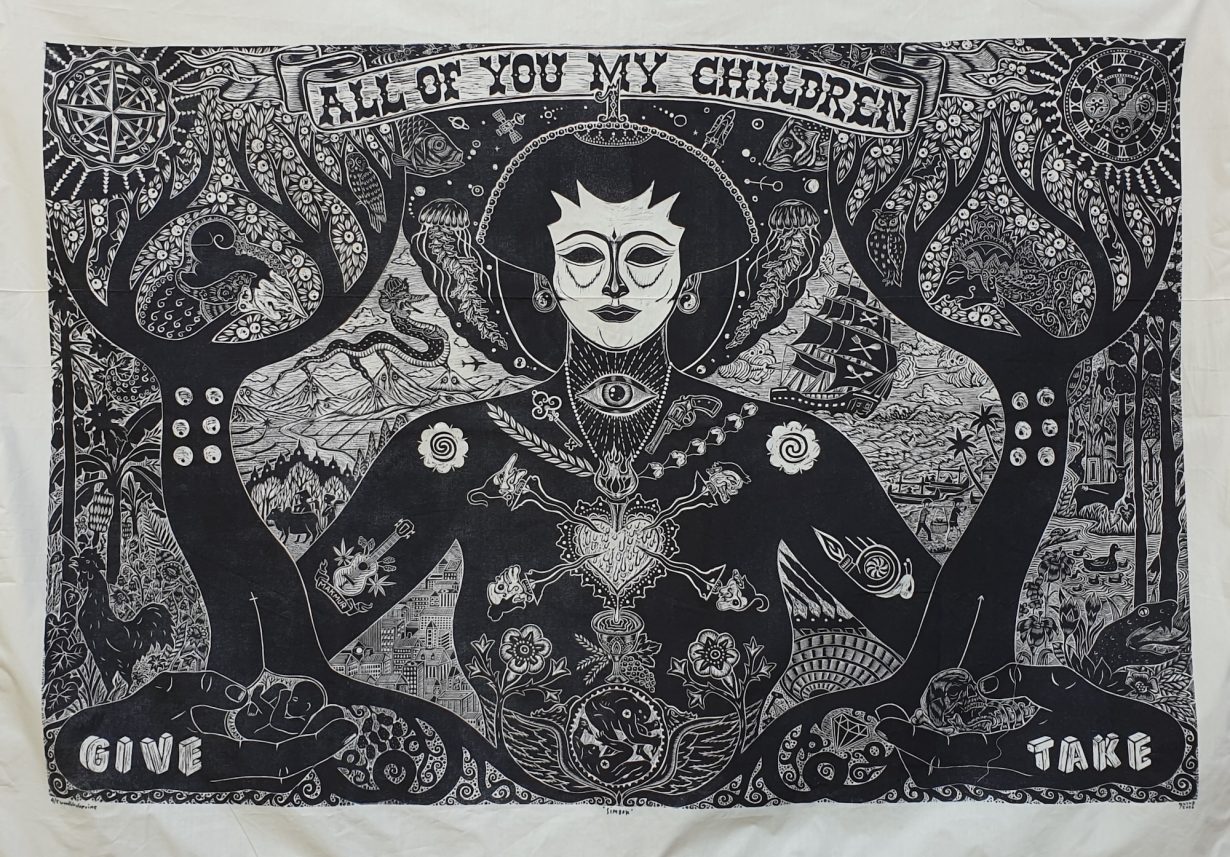
Throughout the work of Mohamad Yusof, one of the first-generation artists in Taring Padi better known by his nickname Ucup Baik, the figure of a Javanese bride called Sri occurs as a symbol of resistance as well as for proletariat and Javanese identity. With her distinctive bridal hairstyle, black geometric makeup drawn on the forehead to dramatically extend the hairline, and the Kiss-inspired dark circles under her eyes, she is a rock-and-roll figure who is both symbolic and human: she harvests, breastfeeds, reads poetry and takes the train. This extensive showcase brings together works from 2015 to 2026, and includes woodblock prints on paper and drawings on canvas. Taring Padi
SURVIVE! Garage, 6 – 20 September
Berlin
Ryuichi Sakamoto: seeing sound, hearing time
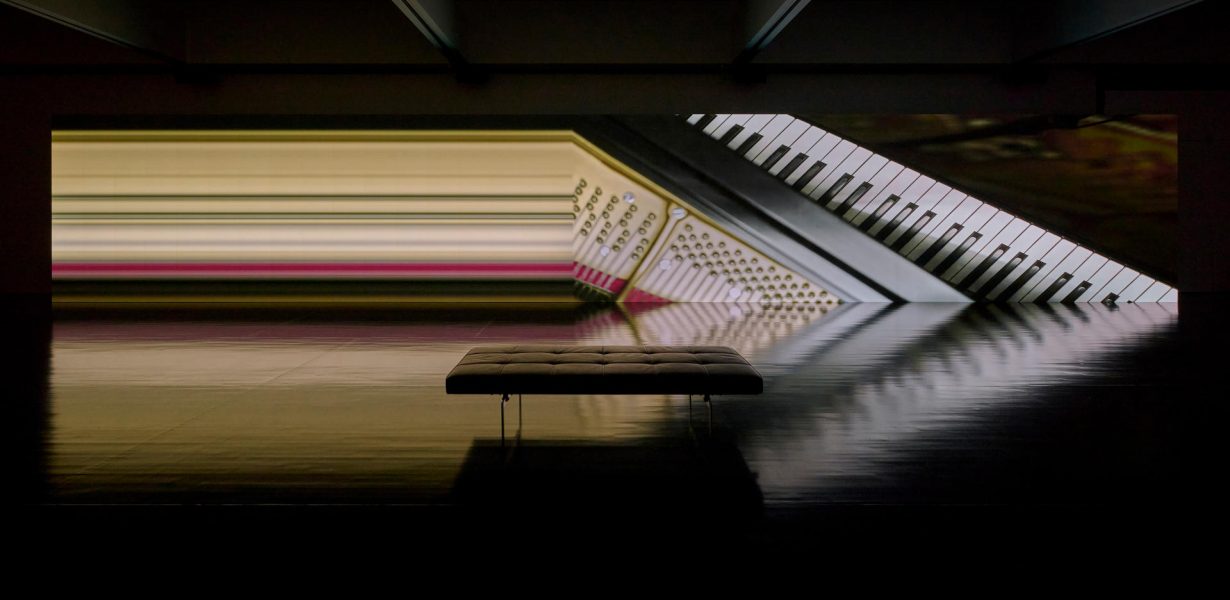
There’s a lot to look at during Berlin Art Week – good (Arash Nassiri at Fluentum; Wu Tsang at Galerie Isabella Bortolozzi; Nika Kutateladze at Molitor; Spore Initiative’s ongoing Fractured Lifeworlds) and bad (Marizio Cattelan, at Neue Nationalgalerie, whose chumminess with Klaus Biesenbach is a Bad Sign for Berlin’s art scene); sometimes you’re better off closing your eyes. This retrospective of the composer and artist Ryuichi Sakamoto is certainly overdue, if only to loosen the continent from Brian Eno’s fusty grip. Five largescale installations on view include those created from Sakamoto’s album async (2017) with artist Shiro Takatani and filmmaker Apichatpong Weerasethakul, and two films by Carsten Nicolai accompanied by Sakamoto’s final album, 12 (2023). Carve out a moment for IS YOUR TIME (2017), in which a piano damaged by the 2011 tsunami is robotically played by compositions based on digitally converted seismological data from earthquakes around the world – haunting the darkened room like, per Vladimir Nabokov’s elliptical foreword to Invitation to a Beheading (1959), ‘a violin in a void’. Which, at the very least, is an endlessly useful metaphor. Alexander Leissle
Hamburger Bahnhof – Nationalgalerie der Gegenwart, 11 September 2026 – 20 June 2027
Pittsburgh
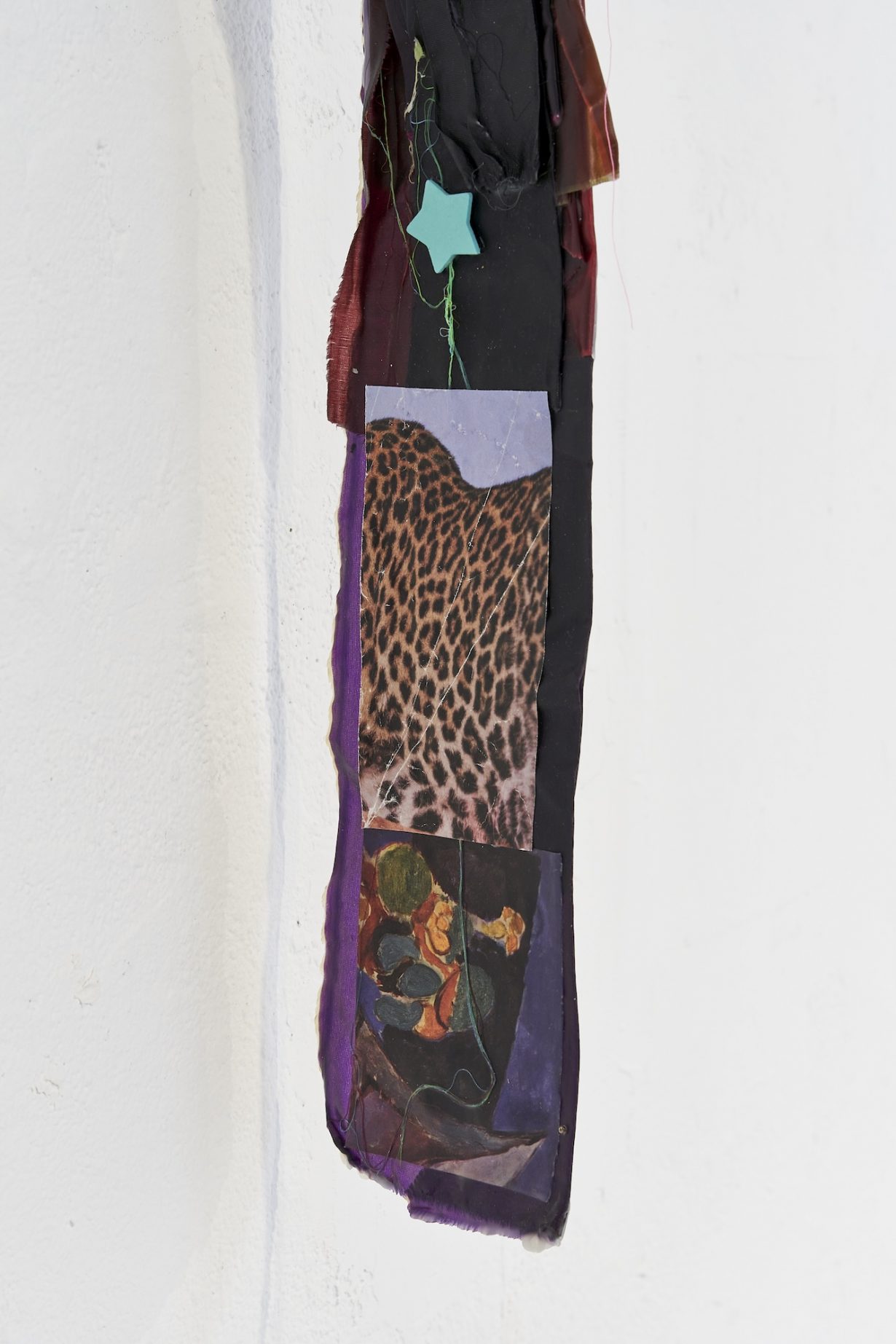
I’ll chalk it up to a happy coincidence that the ‘elusive’ Queens-based artist Faith Icecold has a name that sounds quite like that of the late American painter and writer Faith Ringgold. Both artists’ works, incidentally, involve textiles: the elder Faith covered hers with painted narratives about Black life in Harlem across the twentieth century; the living Faith stiffens theirs with hot wax and encrusts them with tactile elements such as leather cording, shells, buttons, bells and charms, influenced in part by ritual objects related to their own Haitian ancestry, and culturally diffuse, born-digital intertext (read: printed-out memes). The other distinguishing characteristic of Icecold’s work is the preponderance of loose threads one finds in it, both literally – see the wisps of teal trailing down the stacked lengths of silk taffeta that comprise All’s Well That Ends Well (2026), or the tangled black and white fibers crawling up the strips of dyed canvas that make up Call and Response (2026) – and figuratively. Where the handwritten stories of survival, freedom and flight on Ringgold’s quilts provide closure, assemblages by Icecold (known elsewhere for accusing Arthur Jafa of being ‘neoliberal’ and ‘anti-Black’) offer only fragments of modern signs arrayed in ancient encaustic, which scatter our senses of history and identity – and hold us in playful suspense. Jenny Wu
Romance, 19 September – 31 October
Tokyo
Rojō [shared ground] ― am i in your way?
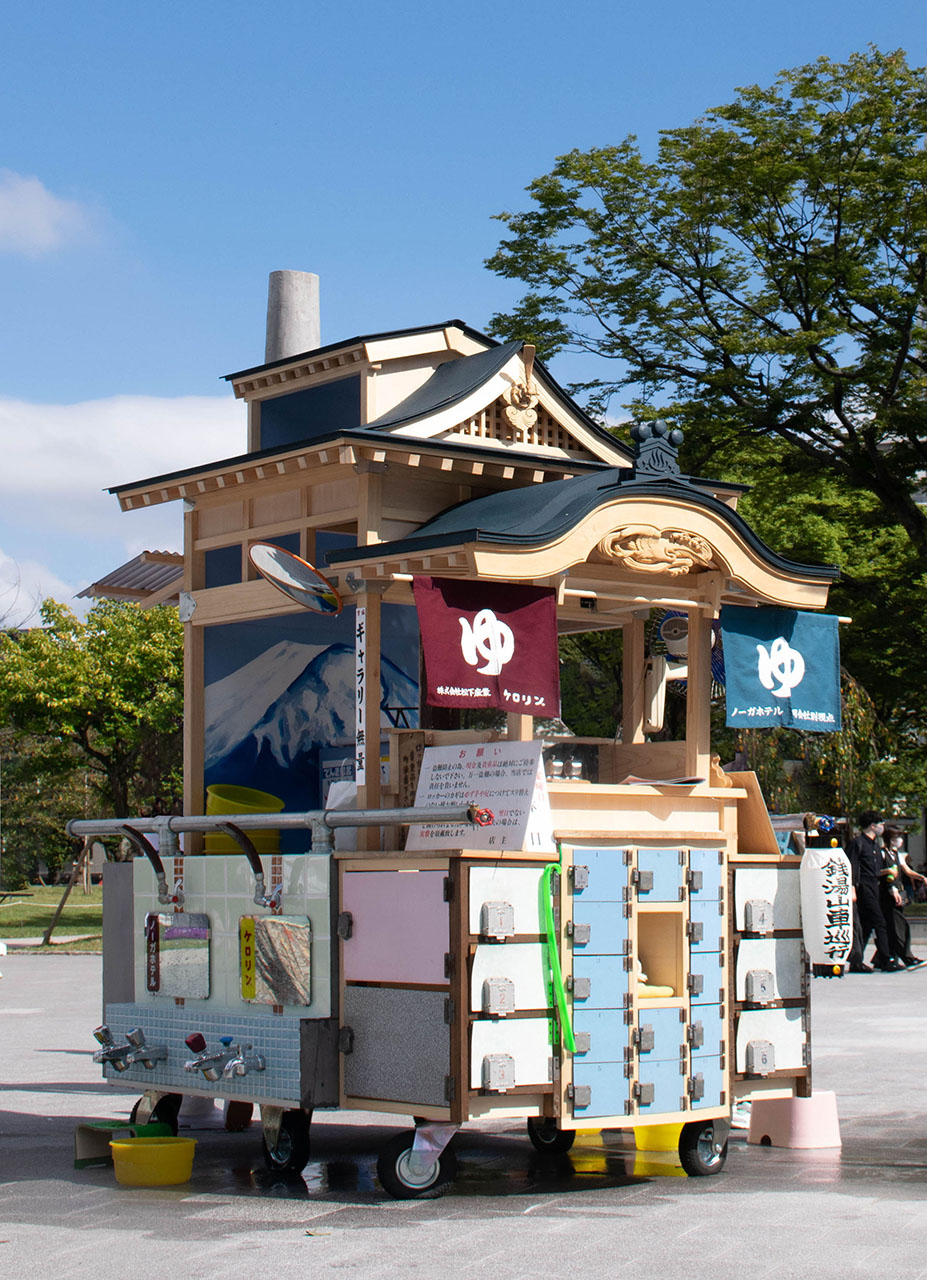
Judging from a spate of recent exhibitions in Japan, it seems there’s a waft of spatio-political concern in the air. This show marks the 40th anniversary of the ‘Rojō Kansatsu Gakkai’ [Street Observation Society], which counted Genpei Akasegawa of Hi Red Center fame among its founding members. The Society’s attitude was mainly anthropological and playful – one exhibit collects all of the pebbles caught in the sole of a member’s shoes in a day – but genealogically connected to direct political action of the 1960s. Chim↑Pom from Smappa!Group’s Street (2017-8), which built and negotiated the laws regulating a street connecting the interior of the National Taiwan Museum of Fine Arts to its exterior, certainly carries that torch. Am i in your way? would do well to rekindle memories of the recent struggles over the closures of public spaces sacrificed for development in Shibuya Ward, which operates the museum. Nearby Mitake Park, where soup kitchens had been held for years, is now closed, and Miyashita Park, long used as an encampment for unhoused people, is now a shopping mall. Taro Nettleton
The Shoto Museum of Art, 19 September-23 November
Napoli
Thomas Hirschhorn: EX-VOTO-TOMBOLA
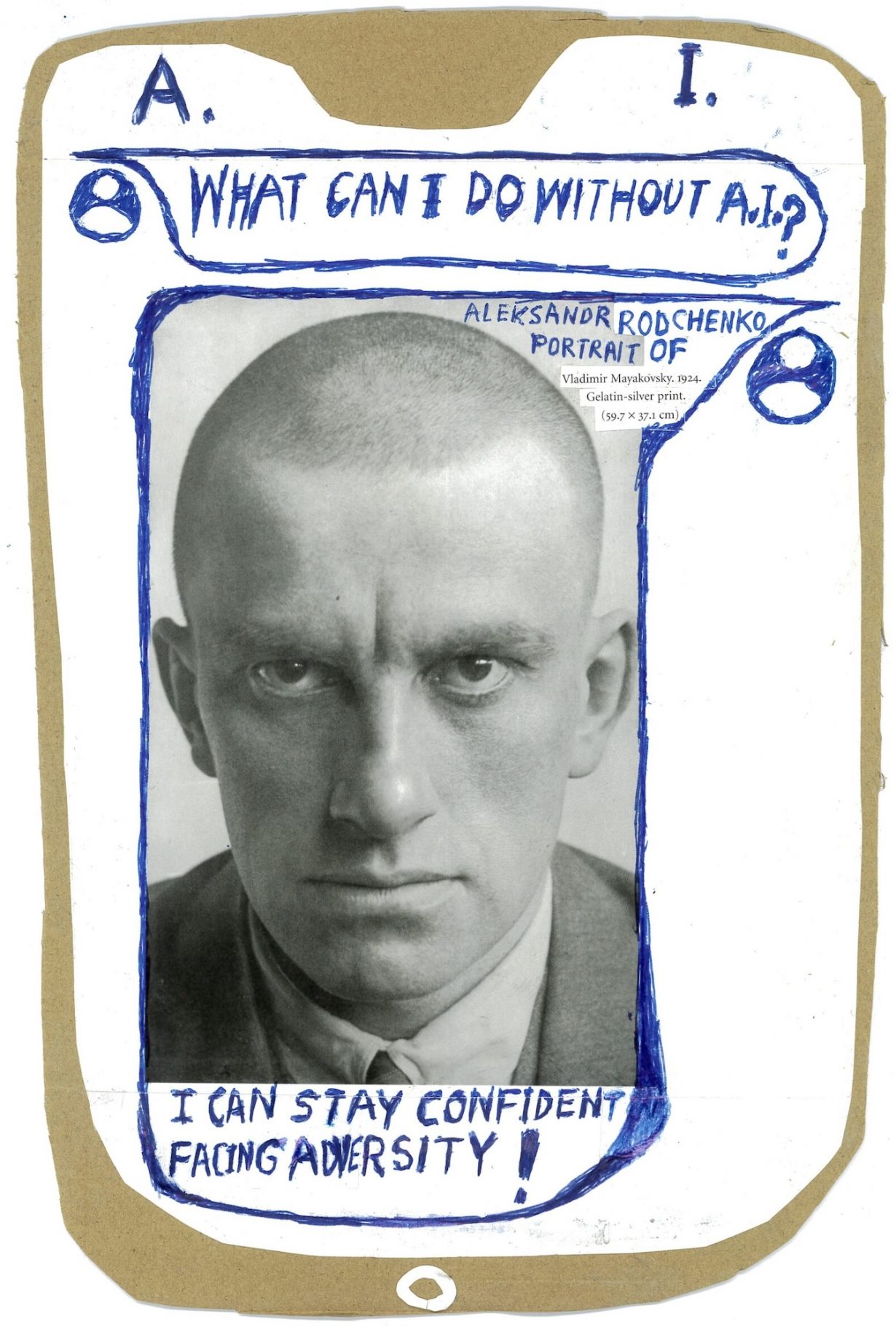
In recent years Thomas Hirschhorn has been posting almost daily to his Instagram account; not his dinners or pets, but artworks quickly assembled from cardboard and collaged printed matter, made to measure for the dimensions of the medium. Annotated commentary in thick felttip pen invariably ape the kind of pithy self-help advice that proliferates online: ‘What can I do without AI?’ asks one, the question posed in a speech bubble; ‘I can stay confident facing adversity!’ comes the answer. The Q&A is accompanied by a determined-looking Vladimir Mayakovsky, photographed by the Russian constructivist Alexander Rodchenko. Now Hirschhorn is selling off around 300 of these made-for-socials works, but maintaining something of their original democratising spirit: they’ll be on sale for €1000, a fraction of the artist’s market price. There’s a catch though: the buyer gets no say in which work they will receive, picking tomobola-style from a hat. It’s all of a type for a conceptualist whose work has long glided serious fun with fun seriousness. Oliver Basciano
Alfonso Artiaco, 4 September – 31 October
Bangkok
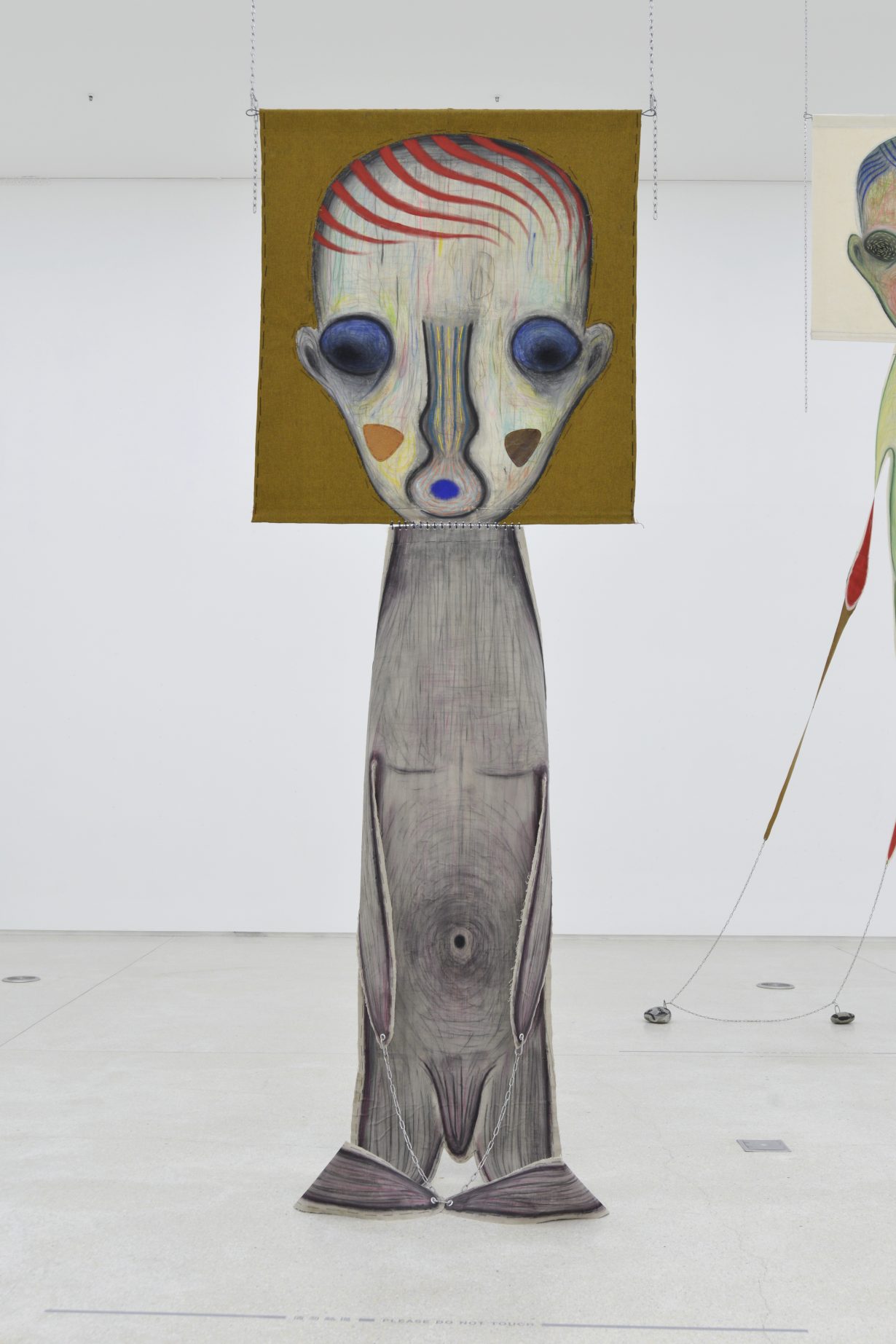
Last December, Dib Bangkok’s inaugural exhibition set in train a process of trying to reshape Thai art history. By placing works by Thai artists in conversation with those by international names, (In)visible Presence sought to usher in a less parochial understanding of contemporary art in the country, to situate it within a dynamic global context. The show itself was about memory and perception – a reflection of one facet of the vast private collection at Dib’s heart. Similarly, its more upbeat-sounding second exhibition will do some reshaping whilst pursuing its own proposition: 160 works will reveal how 33 artists ‘imbue inanimate materials with life’. Works such as Izumi Kato’s freestanding paintings and Sutee Kunavichayanont’s Elephant (Breath Donation) (1998–2001) – a latex elephant-skin sculpture that visitors blow into – will exemplify ‘movement’ and ‘transformation’. And, in a nod to Dib’s overarching mission (or one of them), Giving Life will be anchored by the gently dancing kinetic mobiles of Alexander Calder, whose 1975 exhibition at Bangkok’s now defunct Bhirasri Institute of Modern Art – and influence within Thailand – will get the archive treatment. Max Crosbie-Jones
Dib Bangkok, 26 September 2026 – 3 May 2027
Toronto
Rouzbeh Akhbari: Of Wool and Diesel
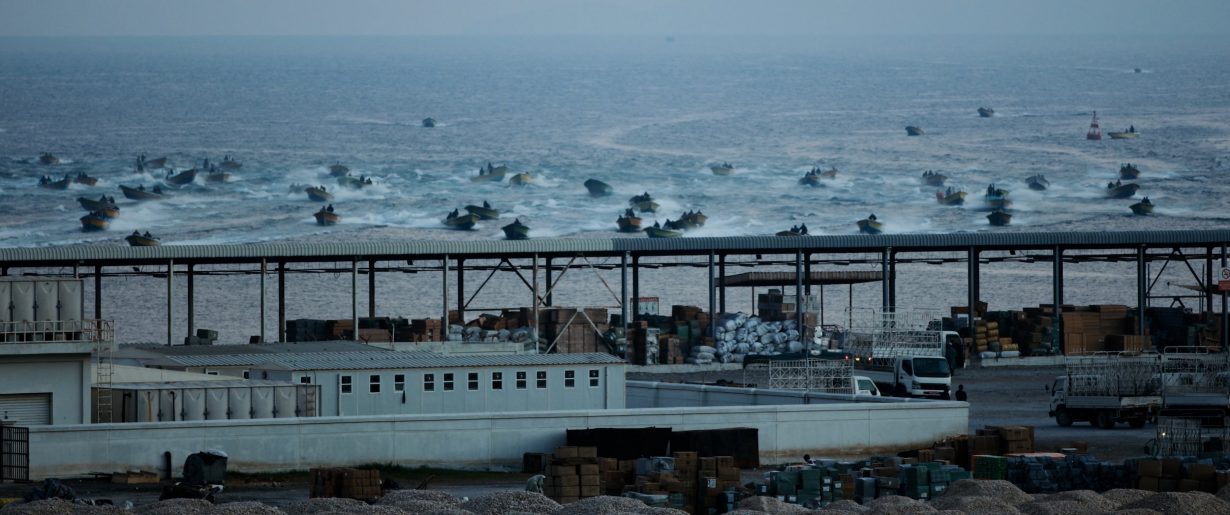
Until this year, surely few outside of the region could point to the Strait of Hormuz on a map, through which in 2025 some 25 percent of global maritime oil trade was funnelled. When the US and Israel attacked Iran on 28 February, violating international law (remember that?), Iran duly closed the Strait, and thus exposed the global economy as not some force of nature but rather a system subject to various operational valves. A new film by Rouzbeh Akhbari, Of Wool and Diesel, will look to pitch this present against parallel, often invisible networks of informal cross-border trade in the region, and similar ‘histories of maritime securitization and control’. Over four years, Akhbari followed herders, dockworkers, drivers, money changers and sailors from the Caspian basin down to the Strait, stitching the stories and impressions of each in expressive, dislocated cinematic passages. Useful timing too, as Canada finds itself in renewed trade conflict over what gets to cross its state lines, and how. It’s the destiny of borders, Akhbari’s work infers, to be made with steel while behaving like skin. Alexander Leissle
Mercer Union, 26 September 2026 – 23 January 2027
São Paulo
Uma língua nova (A New Language)
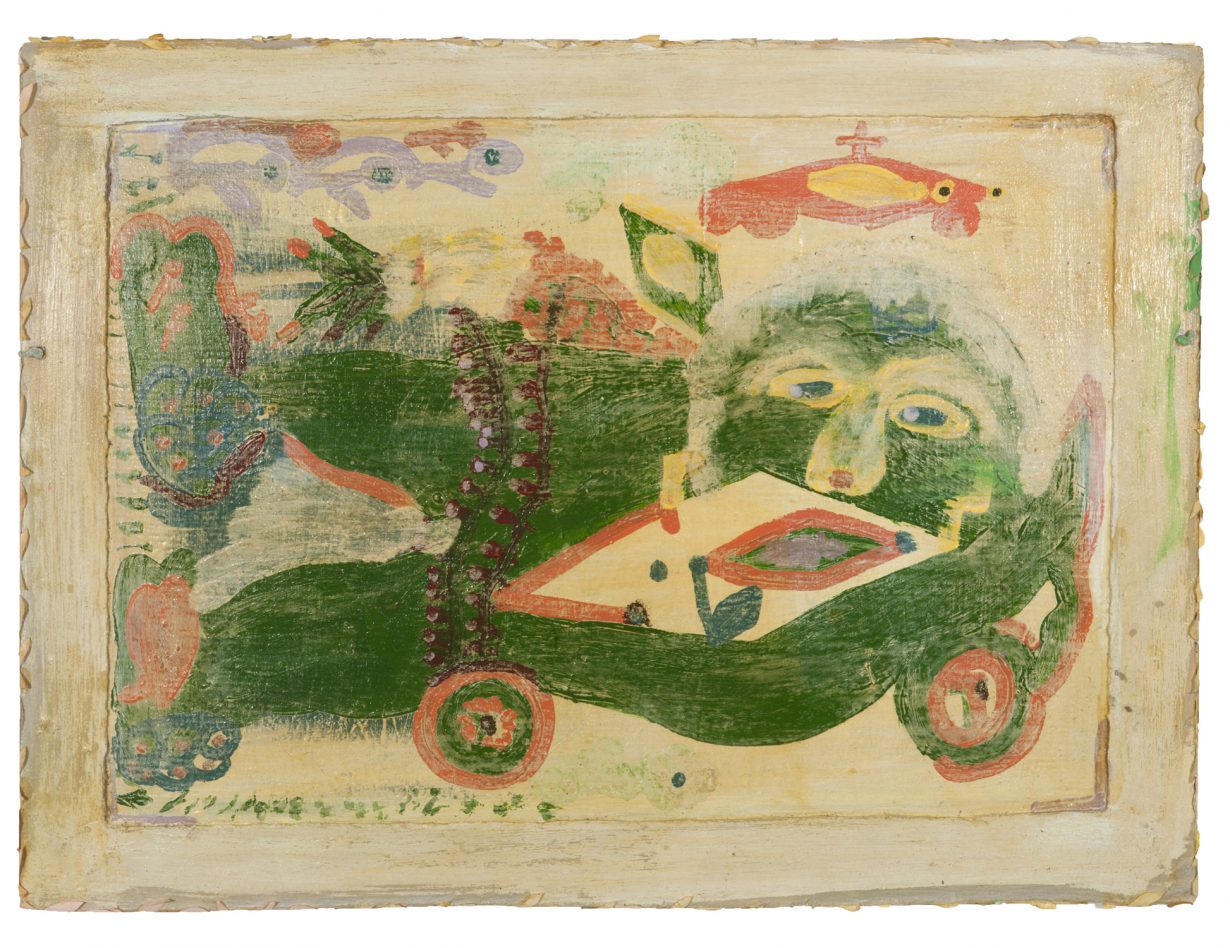
In Maura Lopes Cançado’s recently republished 1965 memoir, Hospício é Deus (Asylum Is God), the author recalls her time in a mental health facility, not without some humour. While in treatment, she dived into the writing of Sigmund Freud and Hermann Hesse, and spent time immersed in Indian literature. It made her a particularly self-aware patient. The Brazilian bemoans meeting psychiatrists, and their propensity to read everything through her illness. ‘Regarding sex, it’s a disaster,’ she recalls. ‘Pencils, pens, fingers, noses are phallic symbols. It’s irritating: I have the innocent habit of always having a finger or pencil in my mouth.’ Curator José Augusto Ribeiro borrows a line from the author to title this group show of seven artists, historic and living, all of whom have also lived with various mental health issues, and similarly questions to what extent their work should be read as symbolic or a product of their medical biography.
The Austrian artist Josef Hofer’s claustrophobic paintings frequently depict naked figures crammed into tight spaces, perhaps understandable for a man who was deaf and dumb and institutionalised as a result. Clovis Aparecido dos Santos’s hand-size papier-mâché sculptures of cars and animals, made amid the radical workshops of Rio de Janeiro’s Colônia Juliano Moreira, have by contrast a joyful tactility to them. A sense of freedom and expressiveness is similarly present in Ranchinho’s countryside paintings of cowboys and circus scenes. It is striking that these last two artists were never diagnosed, and their language never reduced to psychiatric screeds: their pencils, pens and fingers were allowed to remain merely tools of artmaking. Oliver Basciano
Galeria Estação, through 26 September
Surabaya
ARTSUBS 2026: Border, Threshold, Beyond
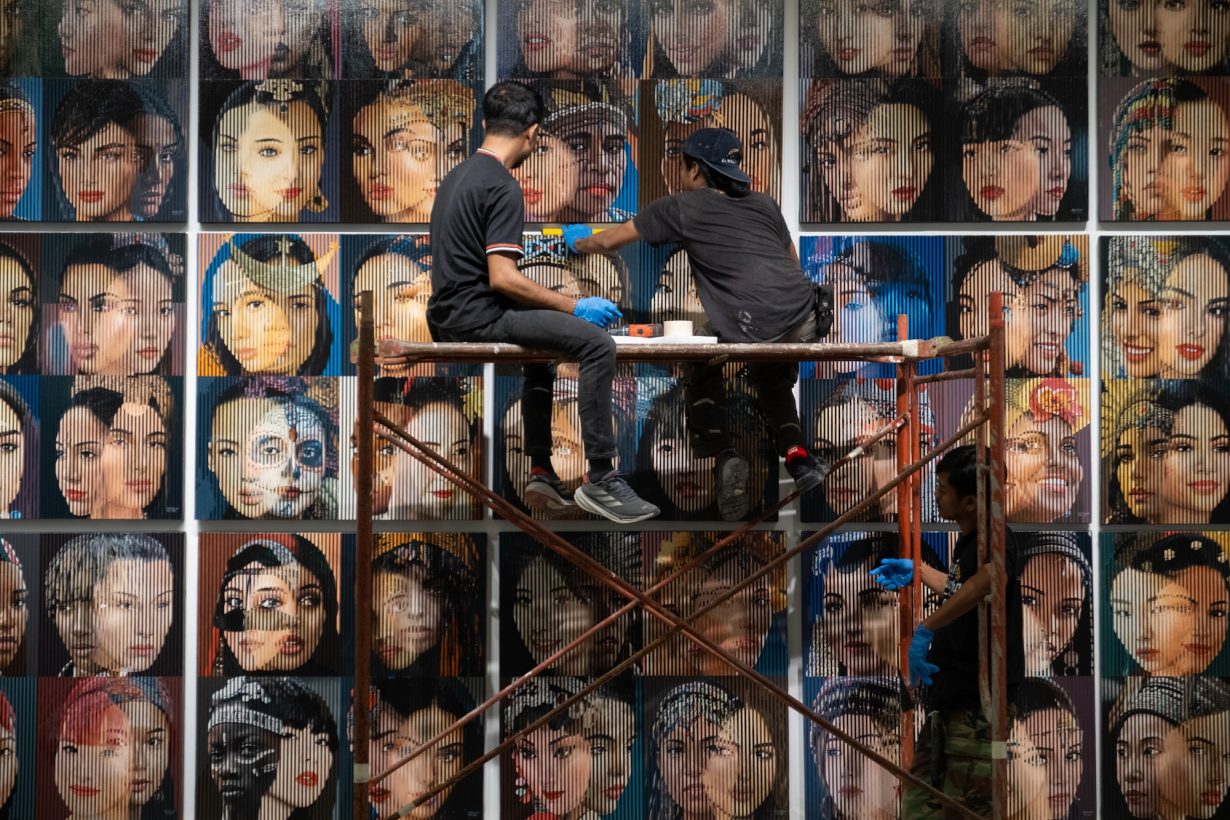
Surabaya, Indonesia’s second-largest city, is flexing its muscles as a new Indonesian hub for art. ARTSUBS was founded two years ago as the city’s major new art fair and exhibition, catering to art audiences in East Indonesia without their having to travel to the more established art centres of Jakarta, Yogyakarta or Bali. On show will be around 500 works by 140 Indonesian artists and collectives, this time in a curated, boothless format. The show will be spread out in a 3,900-square-metre space (for comparison: its closest cousin would be the more established ARTJOG in Yogyakarta, which takes up a quarter of the floor area). The theme is Border, Threshold, Beyond, exploring art as a field of encounter with other disciplines and practices. Adeline Chia
Balai Pemuda, 19 September – 8 November
This article was corrected on 7 September 2026. A previous iteration mistakenly identified the photographer of Thomas Hirschhorn’s POST (2026) as its subject.